Integrating natural compounds into one’s wellness routine can offer significant support for overall health, particularly for immune system modulation. In this context, understanding what is turkey tail mushroom becomes relevant for individuals seeking to explore traditional and scientifically-studied natural supplements. This highly regarded fungi, known scientifically as Trametes versicolor, has been utilized for centuries in various traditional medicine systems, especially in Asia. Modern research continues to investigate its diverse properties, focusing on its rich content of polysaccharides, notably polysaccharide-K (PSK) and polysaccharide-peptide (PSP). These bioactive compounds are key to the mushroom’s growing reputation as a beneficial dietary addition, offering a natural pathway to potentially enhance health and well-being.
What is Turkey Tail Mushroom? (Trametes Versicolor)
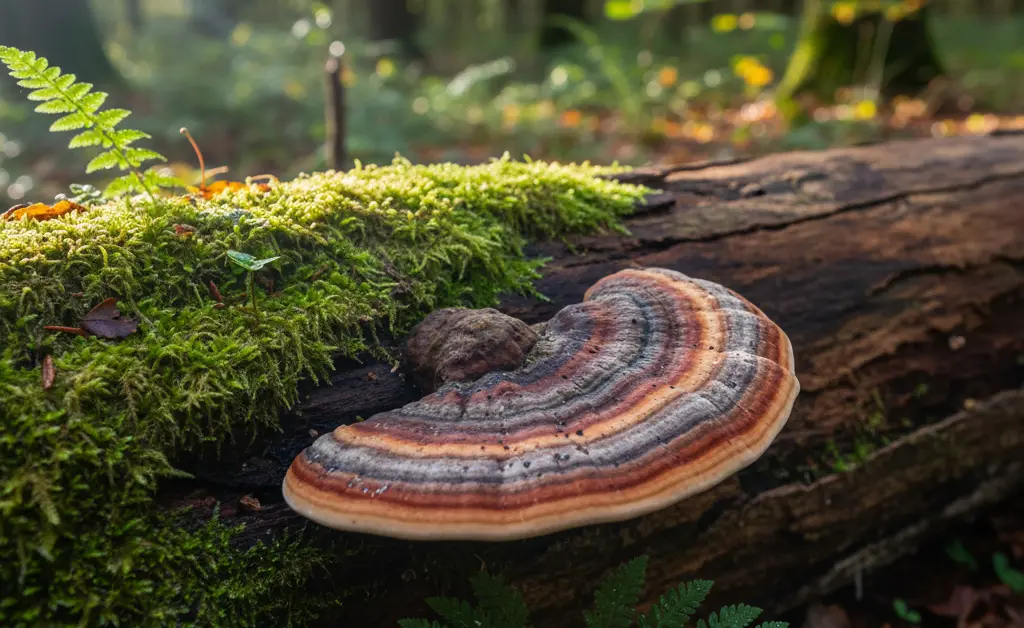
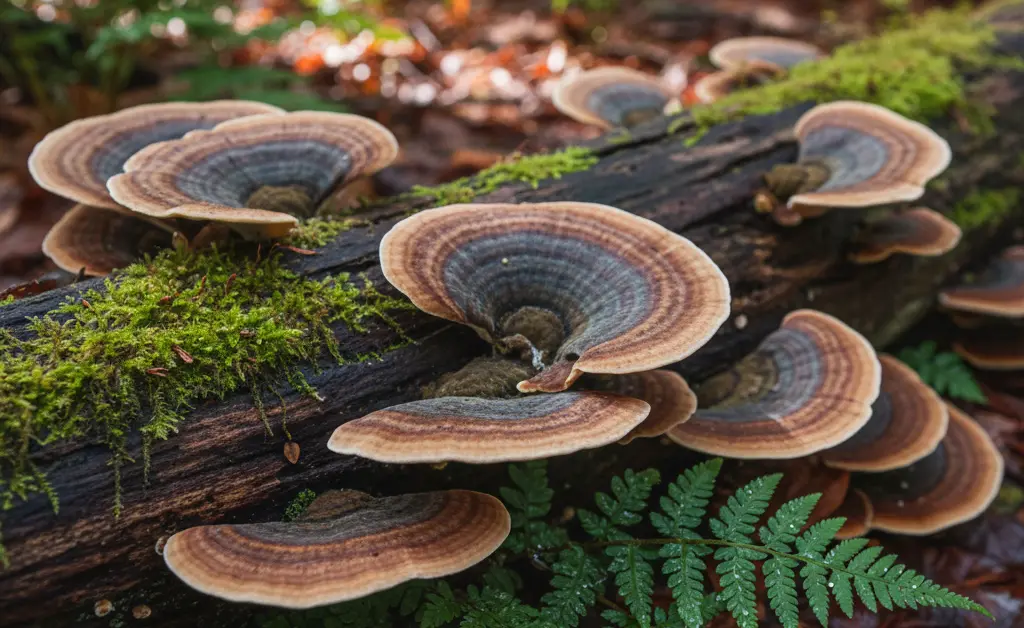
The turkey tail mushroom, scientifically known as Trametes versicolor, is a distinctive and widely recognized medicinal mushroom. It is named for its striking appearance, which resembles the fanned, colorful tail of a turkey, displaying concentric rings of various hues like brown, tan, gray, and even blue or purple. Exploring the turkey tail mushroom size can further illustrate its distinctive characteristics. This common fungi thrives globally, typically growing on decaying wood logs and tree stumps in forests, playing a vital role in nutrient cycling within ecosystems. Further details about the turkey tail mushroom on tree growth patterns are available. Traditionally, for centuries, indigenous cultures and practitioners of traditional medicine systems in Asia, particularly in China and Japan, have valued this mushroom for its potential health benefits. Understanding what is turkey tail mushroom reveals a rich history of its use as a decoction or tea, often employed for its purported properties in promoting general wellness and supporting the immune system.
Coriolus Versicolor: The Scientific Name
While Trametes versicolor is the most commonly accepted scientific name today, this versatile mushroom is also widely recognized by its former scientific designation, Coriolus versicolor. This name is frequently encountered in older scientific literature and is still used by some researchers and enthusiasts. Both names refer to the same species of basidiomycete fungus, highlighting its intricate classification within the fungal kingdom. The term Coriolus versicolor often appears in discussions of its historical use in traditional medicine, particularly in the context of research that has explored its immunomodulatory and therapeutic potential over the past several decades.
Key Bioactive Compounds: PSP and PSK
The significant interest in turkey tail mushroom stems largely from its rich composition of bioactive compounds, particularly two prominent polysaccharides: Polysaccharide-K (PSK) and Polysaccharide-Peptide (PSP). These complex carbohydrate molecules, along with other beta-glucans, are believed to be the primary agents responsible for many of the mushroom’s studied health benefits. PSP and PSK are potent immunomodulators, meaning they may help to balance and support the body’s immune system. Extracted and purified forms of these compounds are often utilized in health supplements, undergoing extensive research for their potential roles in promoting cellular health and maintaining robust immune function. Information regarding regulations for such supplements can often be found on the FDA website. Understanding the full range of turkey tail mushroom qualities is essential for appreciating its therapeutic value. Their presence underscores the therapeutic value and scientific intrigue surrounding this powerful fungi.
The turkey tail mushroom stands as a testament to nature’s profound capacity to offer compounds with significant health potential. From its distinctive appearance in forests worldwide to its centuries-long history in traditional medicine, and now to the forefront of modern scientific inquiry, Trametes versicolor continues to captivate interest. Its rich profile of bioactive polysaccharides, particularly PSP and PSK, positions it as a valuable subject for those exploring natural pathways to support wellness and immune health.
This information is provided for educational purposes only. It is not intended to be a substitute for professional medical advice, diagnosis, or treatment. Always seek the advice of your physician or other qualified health provider with any questions you may have regarding a medical condition. Never disregard professional medical advice or delay in seeking it because of something you have read here.
FAQ
— What is turkey tail mushroom scientifically known as?
Trametes versicolor is the scientific name for what is turkey tail mushroom, recognized for its distinctive fan-like appearance resembling a turkey’s tail. This widespread polypore mushroom grows on dead hardwoods and is a common sight in forests worldwide. Its unique form and vibrant colors make it easily identifiable by foragers and researchers alike.
— What active compounds does turkey tail mushroom contain?
This fascinating fungus contains a variety of bioactive compounds that contribute to its studied properties. Among the most well-known are polysaccharopeptide (PSP) and polysaccharide-K (PSK), which are complex carbohydrate-protein compounds. These specific compounds are relevant to immune system modulation and have been extensively researched for their biological activities.