
Just as a familiar vegetable might have different names depending on the region—like an “aubergine” in the UK and an “eggplant” in the US—the culinary world often encounters similar linguistic variations across different cultures. This holds true for the widely popular shiitake mushroom, which carries distinct names and nuances within the Chinese language. Navigating the various terms for shiitake mushroom in Chinese is crucial for cooks, linguists, and food enthusiasts alike, as a simple direct translation doesn’t always capture the full scope. From the general term 香菇 (xiānggū) to the more specific 花菇 (huāgū) for premium varieties, understanding these distinctions enhances both communication and appreciation of this versatile ingredient. This guide will clarify the primary Chinese names, their pronunciation, and the subtle differences that impact their use.
Shiitake Mushroom in Chinese Cooking
The shiitake mushroom holds an esteemed place in Chinese cuisine, celebrated for its rich umami flavor and meaty texture. It is a staple ingredient found in a vast array of dishes, from everyday home cooking to elaborate banquet meals. Its ability to absorb flavors while imparting its own distinct aroma makes it highly versatile. Whether used fresh or, more commonly, dried and rehydrated, the shiitake mushroom contributes depth and an earthy complexity that is characteristic of many traditional Chinese recipes. Many chefs consider the shiitake mushroom in Chinese cooking to be an essential element, crucial for achieving authentic taste profiles. For those interested in other fungi, it’s also worth learning what is turkey tail mushroom.
Dried Shiitake Mushrooms (香菇, xiang gu)
Dried shiitake mushrooms, known as 香菇 (xiānggū), are particularly prized in Chinese cooking. The drying process concentrates their flavor, intensifying their natural umami and aroma. Before use, these dried mushrooms are rehydrated in warm water, which not only softens them but also creates a flavorful liquid that is often incorporated into the dish as a stock. This mushroom essence is a culinary treasure, infusing stews, braised dishes, and stir-fries with a profound depth. For instance, in classic dishes like Braised Stuffed Shiitake Mushrooms, the rehydrated 香菇 serves as both a key ingredient and a foundational flavor component. Understanding the uses of shiitake mushroom stems can further enhance your culinary skills.
Chinese Translations for Shiitake Mushroom
Understanding the precise Chinese translations for shiitake mushroom is essential for anyone delving into Chinese culinary arts or language studies. While “shiitake” is a Japanese term, various Chinese characters and pronunciations are used to refer to this edible fungus across different regions. These terms often reflect not only the mushroom’s general identity but also specific characteristics or qualities, such as its fragrance or appearance. Distinguishing between these terms helps in accurately identifying and sourcing the correct type of shiitake mushroom in Chinese markets or recipes. Many fungi, like turkey tail mushroom on tree, are found growing naturally in various environments.
Shiitake Mushroom: Mandarin Chinese-English Meaning
In Mandarin Chinese, the most common and overarching term for shiitake mushroom is 香菇 (xiānggū). The characters literally translate to “fragrant mushroom,” a fitting description given its distinctive aroma. This term is widely understood and used across mainland China, Taiwan, and other Mandarin-speaking communities. It serves as the general vocabulary entry for the species. Sometimes, other descriptive names are used to denote specific varieties or qualities, which we will explore further, but 香菇 remains the primary Mandarin Chinese-English meaning for this versatile ingredient.
Correct Cantonese Word for Shiitake
While 香菇 (pronounced as “hoeng1 gu1” in Cantonese) is also understood, Cantonese speakers in Hong Kong and southern China often use similar terms, sometimes with slight phonetic variations or preferred local expressions. The term 香菇 itself is perfectly acceptable and widely recognized in Cantonese-speaking regions for shiitake. It carries the same meaning of “fragrant mushroom.” When discussing mushrooms in general, or this specific type, using 香菇 will ensure clear communication within Cantonese contexts, much like in Mandarin.
Nuances of Shiitake: 香菇 (Xiānggū) vs. 花菇 (Huāgū)
When discussing the shiitake mushroom in Chinese, it’s vital to recognize the nuances between different terms, especially 香菇 (xiānggū) and 花菇 (huāgū). While both refer to edible mushrooms within the shiitake family, they denote different grades or varieties, distinguished by appearance and quality. Understanding this distinction is key for appreciating the subtleties of Chinese cuisine and ingredient selection. This differentiation allows cooks and consumers to choose the appropriate mushroom for their specific culinary needs, reflecting a deep appreciation for ingredient quality. Additionally, understanding aspects such as turkey tail mushroom spores can provide insight into fungal reproduction.
Primary Term: 香菇 (Xiānggū)
香菇 (xiānggū) serves as the primary and most general term for shiitake mushrooms in Chinese. It refers to the common variety of shiitake, whether fresh or dried, characterized by its smooth, brown cap. These mushrooms are widely available and are a staple in many kitchens. They offer a robust earthy flavor and a satisfying texture, making them suitable for a broad spectrum of dishes, from stir-fries and soups to braises. The name “fragrant mushroom” accurately captures its pleasant aroma. For further scientific insights into fungi and their properties, resources like PubMed can be invaluable.
Alternative Term: 花菇 (Huāgū)
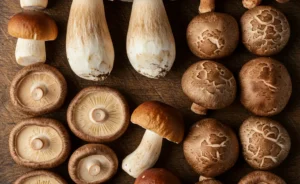
花菇 (huāgū) is an alternative and more specific term, referring to a premium variety of dried shiitake mushroom. The characters 花菇 literally mean “flower mushroom,” aptly describing its distinctive appearance: a cracked, flower-like pattern on its cap. This unique cracking occurs naturally during a specific drying process, often under cooler temperatures, resulting in a lighter-colored cap with prominent white cracks. 花菇 is prized for its thicker texture, richer flavor, and often higher price point due to its superior quality and appearance.
Distinguishing Between 香菇 and 花菇
The main distinction between 香菇 and 花菇 lies in their visual characteristics and perceived quality. 香菇 generally refers to standard shiitake with smooth, unbroken caps, which can vary in color from light to dark brown. 花菇, on the other hand, is specifically a high-grade dried shiitake defined by its deeply cracked, white-patterned cap, resembling a blooming flower. This “flower” pattern is a hallmark of premium quality, indicating a more intense flavor, a meatier texture, and a longer rehydration time that yields a more concentrated broth. While both are delicious, 花菇 is often reserved for special occasions or dishes where its superior qualities can truly shine.
Common Usage and Contexts of 香菇 and 花菇
In common usage, 香菇 is the everyday term, suitable for most recipes requiring shiitake mushrooms. It’s an excellent choice for general cooking, such as adding to soups, stir-fries, or as a vegetable component in various dishes. 花菇, with its premium status, is typically reserved for more refined or celebratory dishes. Its elegant appearance and robust flavor make it ideal for elaborate braises, high-end vegetarian dishes, or as a centerpiece in special occasion meals. For instance, in a luxurious stew or a meticulously prepared vegetarian banquet, 花菇 would be preferred for its visual appeal and deeper flavor contribution.
Pinyin Pronunciation for Shiitake Mushroom in Chinese
Accurate Pinyin pronunciation for shiitake mushroom in Chinese is fundamental for effective communication, especially when navigating culinary contexts or conversing with native speakers. Pinyin is the official romanization system for Standard Mandarin Chinese, providing a phonetic guide to Chinese characters. Mastering the pronunciation of key terms like 香菇 and 花菇 will enhance understanding and appreciation of these beloved ingredients. The tones are particularly important, as they can change the meaning of a word entirely.
How to Pronounce 香菇 (Xiānggū)
- 香 (xiāng): This syllable is pronounced with the first tone (flat tone). The “x” is similar to the “sh” in “she,” but with the tongue slightly more forward, almost like a soft “s” followed by “h.” The “iang” sound is similar to “young” but with a more nasal “ng” at the end.
- 菇 (gū): This syllable is pronounced with the first tone (flat tone). The “g” is like the “g” in “go.” The “u” is like the “oo” in “moon.”
When combined, “xiānggū” should sound like “shyang-goo,” both with a flat, sustained tone.
How to Pronounce 花菇 (Huāgū)
The Pinyin for 花菇 is “huāgū”. Here’s how to pronounce it:
- 花 (huā): This syllable is pronounced with the first tone (flat tone). The “h” is a regular English “h.” The “ua” sound is similar to “wah” in “water.”
- 菇 (gū): As explained above, this syllable is pronounced with the first tone (flat tone). The “g” is like the “g” in “go.” The “u” is like the “oo” in “moon.”
So, “huāgū” sounds like “hwah-goo,” with both syllables maintaining a flat, even tone.
Understanding the distinctions between 香菇 and 花菇, along with their correct pronunciations, greatly enriches one’s appreciation of the shiitake mushroom’s place in Chinese culture and cuisine. From its general fragrant form to its prized ‘flower mushroom’ variety, each term tells a story of tradition, quality, and flavor. Navigating these linguistic nuances not only aids in culinary pursuits but also offers a deeper insight into the meticulous world of Chinese ingredient selection.
not applicable
FAQ
— What is the Chinese translation for shiitake mushroom?
The direct translation for shiitake mushroom in Chinese is “xiānggū,” typically written as 香菇. This term is widely recognized and used to refer to this popular edible fungus.
— How do you write shiitake mushroom in Chinese characters?
Shiitake mushroom is written using the Chinese characters 香菇. The first character, “香” (xiāng), signifies fragrant, while the second, “菇” (gū), denotes mushroom.
— What is the Pinyin for 香菇?
The Pinyin for 香菇 is xiānggū. Both “xiāng” and “gū” carry the first tone in Mandarin Chinese.
— Are 香菇 and 花菇 both types of shiitake mushrooms?
Yes, both 香菇 (xiānggū) and 花菇 (huāgū) are types of shiitake mushrooms. 花菇, often called “flower mushroom,” represents a premium grade of shiitake characterized by its distinctively cracked, flower-like cap, which develops due to specific growing conditions.
— What is the meaning of 香菇 in Chinese?
In Chinese, 香菇 literally translates to “fragrant mushroom.” This name accurately reflects the characteristic earthy and robust aroma that shiitake mushrooms are known for, making them a prized ingredient in various cuisines.