The chaga mushroom on birch tree is a fascinating natural phenomenon that has intrigued researchers, herbalists, and nature enthusiasts alike. This unique fungal growth, often found protruding from the bark of birch trees, serves not only as a subject of ecological interest but also as a source of traditional medicinal compounds. Understanding its biology, growth patterns, and relationship with its birch hosts provides valuable insight into forest ecosystems and sustainable harvesting practices. This article delves into various aspects of the chaga mushroom, from identification and habitat to its symbiotic interactions and ecological significance, offering a comprehensive overview for anyone interested in this remarkable organism.
Exploring the Chaga Mushroom on Birch Tree
What is Chaga Mushroom on Birch Tree?
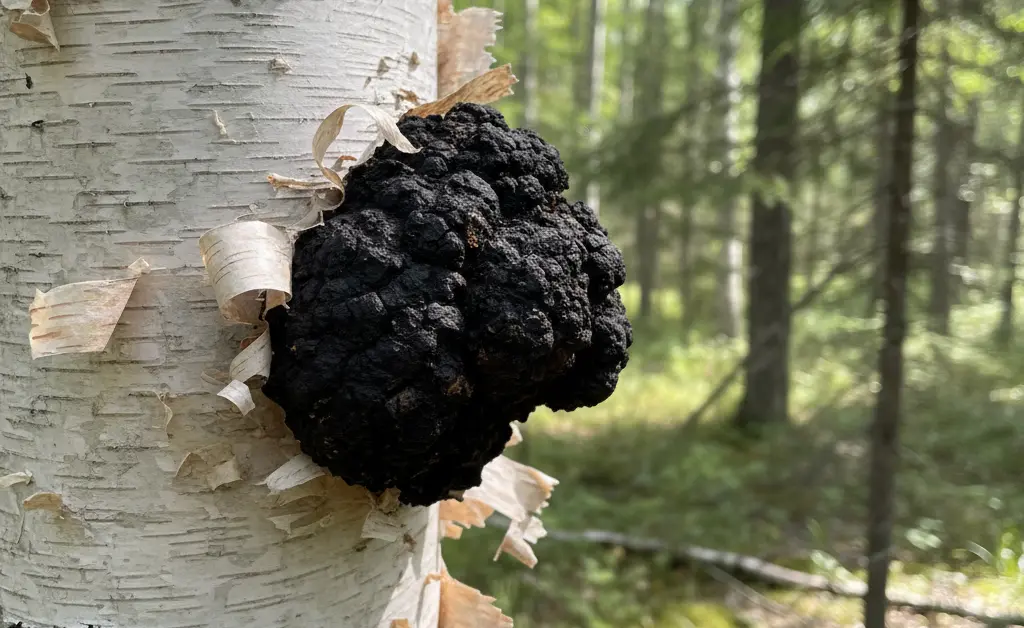
The organism commonly known as chaga is not a mushroom in the typical sense with a cap and gills. Instead, it is a sterile conk, or sclerotium, of the fungus Inonotus obliquus. This parasitic fungus infects a host tree, most famously the birch, and grows over many years. What is visible on the outside of the tree is a dense, black, charcoal-like mass that erupts from the bark. This outer layer is hard and cracked, while the interior reveals a softer, cork-like texture with a rusty or golden-orange color. The chaga conk itself is sterile, meaning it does not produce spores. The fungus’s actual reproductive fruiting body only forms after the host tree has died, often appearing underneath the bark.
All About the Chaga Mushroom on Birch Tree
Does Chaga Grow Exclusively on Birch Trees?
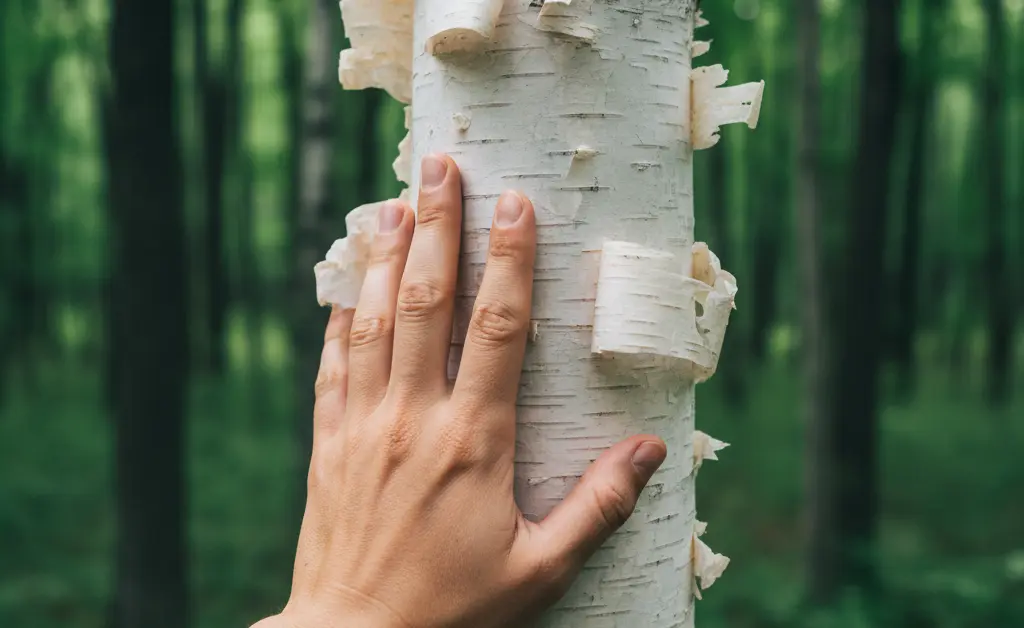
While chaga is most famously and abundantly found on birch trees (Betula species), it is not entirely exclusive to them. Inonotus obliquus can also infect other hardwood trees, though this is far less common. It has been observed growing on alder, elm, aspen, and hornbeam. However, the chemical composition and traditional significance of chaga are strongly tied to its growth on birch. The fungus absorbs and concentrates compounds from its host, and the unique phytochemicals found in birch trees, such as betulin and betulinic acid, are believed to contribute significantly to the properties of chaga. For this reason, chaga harvested from non-birch hosts is often considered different or less desirable. Therefore, focusing on sustainable chaga mushroom harvesting from birch trees is essential for obtaining high-quality material.
Inoculating Birch Trees with Chaga
In response to growing demand and concerns about overharvesting wild chaga, methods for cultivating the fungus have been developed. This process involves inoculating living birch trees with the mycelium of Inonotus obliquus. Small plugs of wood colonized by the fungal culture are inserted into holes drilled into the tree’s trunk. Over several years, the mycelium establishes itself within the tree’s heartwood, eventually leading to the formation of the external chaga conk. This cultivation practice allows for a more sustainable production of chaga, helping to preserve wild populations and the health of forest ecosystems while still allowing the fungus to grow in its natural host environment.
Identifying Chaga Mushrooms on Birch Trees
Distinctive Appearance and Characteristics on Birch Bark
The appearance of chaga on birch bark is highly distinctive and unlike other fungal growths. It presents as a large, irregular, dark mass that looks like a chunk of burnt charcoal stuck to the side of the tree. The surface is deeply cracked and fissured, creating a rough, crumbly texture. This black outer layer is the sterile conk, rich in melanin. If a piece is broken off, the interior reveals a starkly different appearance: a dense, corky mass that is golden-brown or vibrant orange. This combination of a black, crusty exterior and a bright, rusty interior is a key identification feature of the chaga mushroom growing on a birch tree. Due to its dense, corky nature, a specialized chaga mushroom grinder is often needed to process it into a usable powder.
Visual Cues for Chaga Identification on Birch
When searching for chaga, several visual cues can help with accurate identification. Look for a pronounced, dark growth protruding from the trunk of a mature birch tree, often at the site of a wound or branch scar. It can range in size from a small lump to a very large mass. Chaga does not have a defined shape like a shelf fungus; its form is amorphous and lumpy. It should be hard and dense to the touch, not soft or spongy. The contrast between the dark exterior and the bright inner material is one of the most reliable indicators. It is also important to observe the host tree itself, as true chaga is predominantly found on species like paper birch and yellow birch.
Differentiating Chaga from Other Burls
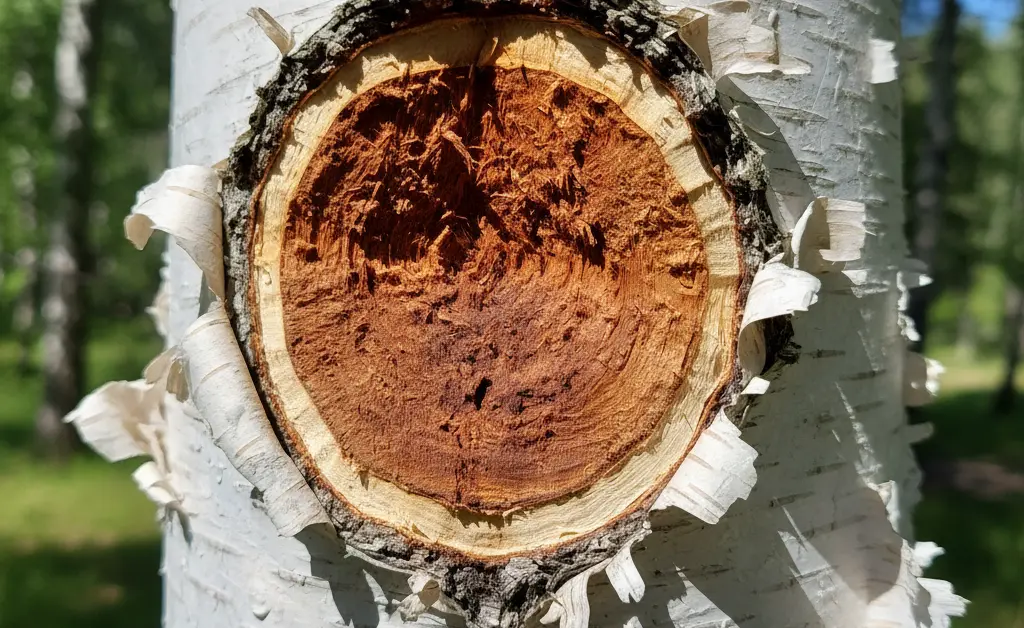
It is crucial to distinguish chaga from other growths on trees, particularly burls and other fungi. Burls are woody, rounded outgrowths of a tree’s trunk or branch, formed from dormant bud tissue. A key difference is that a burl is covered in the tree’s own bark and is composed of wood grain. If you cut into a burl, you will see tree rings and wood tissue. Chaga, by contrast, is a distinct fungal mass that bursts through the bark and has no wood grain. Its interior is corky and orange, not woody. Other black fungi, like the “tinder conk” or “black knot fungus,” can be mistaken for chaga, but they typically have a different shape, texture, or are not found on birch trees.
Natural Habitat and Growth Patterns of Chaga on Birch
Common Locations and Growth on Birch Trees
Chaga typically grows on the main trunk of living birch trees. The infection often starts at a wound, such as a broken branch, an insect burrow, or damage from frost cracking. From this entry point, the fungal mycelium colonizes the heartwood of the tree. The visible chaga conk can appear anywhere on the trunk, from near the base to high up in the canopy. The growth is perennial and can persist for 10 to 20 years or more, slowly increasing in size as the fungus continues to draw nutrients from its host. The presence of a chaga mushroom on birch tree is a clear indicator of an internal heart rot infection.
Geographic Distribution of Birch-Host Chaga
The natural habitat of Inonotus obliquus is closely tied to the distribution of its primary host, the birch tree. As such, chaga is found predominantly in the cold climates of the Northern Hemisphere. Its range spans across the boreal forests of Russia, Northern and Eastern Europe, Canada, and the northern United States. These circumboreal regions provide the ideal conditions for both birch trees and the chaga fungus to thrive. It flourishes in environments with long, harsh winters, which are characteristic of these northern latitudes.
Preferred Environmental Conditions for Chaga Growth
Chaga requires specific environmental conditions to establish and grow. It thrives in cold climates where its host birch trees are abundant. The fungus favors mature forests with older trees, as they have had more time to sustain the types of wounds that allow for fungal infection. The lifecycle of the fungus is slow, and its development is heavily influenced by the health of the host tree and the surrounding environmental stressors. Consistently cold temperatures are essential, as chaga does not typically grow in warmer, more temperate climates. The combination of a suitable host and a cold climate creates the perfect niche for this parasitic fungus.
Lifecycle Stages on Birch Trees
The lifecycle of chaga is a slow, parasitic process. It begins when airborne spores of Inonotus obliquus land on a wound in a susceptible birch tree. The spores germinate, and the mycelium begins to grow into the tree’s heartwood. This internal phase can last for several years without any external signs. During this time, the fungus causes a white rot, decaying the wood from the inside out. Eventually, the pressure from the growing internal fungal mass causes the sterile conk—the black chaga growth—to erupt through the bark. This conk will continue to grow for many years while the tree is alive. Only after the host tree dies does the fungus enter its reproductive stage, producing a true, spore-bearing fruiting body that grows beneath the bark. Understanding these stages is crucial for anyone interested in the details of chaga mushroom growing.
The Symbiotic Relationship: Chaga and Birch Trees
Why Chaga Prefers Birch as a Host
The strong association between chaga and birch trees is not coincidental. Birch trees contain unique chemical compounds, most notably betulin and its derivative, betulinic acid. These substances have potent properties and are found in high concentrations within birch bark. The chaga fungus has an incredible ability to extract these compounds from the host tree and concentrate them within its own sclerotium. This process is believed to be a key reason for the fungus’s preference for birch, as these compounds may play a role in the fungus’s survival and defense mechanisms. The resulting chaga conk is a rich source of these birch-derived phytochemicals. While traditional medicine values these compounds, it’s important to consult reliable health resources like the NHS for information on any health-related supplement.
The Fungal-Host Interaction Explained
The relationship between chaga and its host tree is parasitic, not symbiotic in a mutual sense. The fungus is a pathogen that infects the tree and feeds on its resources. It causes a type of wood decay known as white rot, where the fungus breaks down lignin and cellulose, the structural components of the tree’s wood. This interaction is a long-term battle between the tree’s defense systems and the advancing fungus. While the tree may live with the infection for many years, the presence of chaga is an indication that the tree is compromised.
Nutrient Exchange Between Chaga and Birch
The flow of nutrients in this relationship is unidirectional. The chaga fungus draws carbohydrates and other vital nutrients directly from the birch tree’s heartwood and sapwood. There is no beneficial exchange for the host tree. The fungus acts as a nutrient sink, diverting the tree’s resources to fuel its own growth and development. This continuous drain of energy and nutrients contributes to the slow decline of the host tree’s vitality over the course of the infection.
Is Chaga Harmful to Birch Trees?
Yes, chaga is harmful to birch trees. As a pathogenic fungus, Inonotus obliquus causes a disease that ultimately weakens and can eventually kill its host. The fungal infection leads to extensive internal decay of the heartwood. While the tree can live with the infection for a long time, sometimes decades, its structural integrity is progressively compromised. The chaga conk is the external symptom of this serious internal disease. Therefore, chaga is not a benign growth but a sign of a significant and damaging fungal infection.
Impact on Birch Tree Health
The long-term impact of a chaga infection on a birch tree’s health is significant. The white rot caused by the fungus hollows out the tree from the inside, making it brittle and highly susceptible to wind and storm damage. A tree weakened by chaga is more vulnerable to other pests and diseases. The nutrient drain also reduces the tree’s overall vigor, potentially affecting its ability to grow and reproduce. Over time, the extensive decay will lead to the tree’s structural failure and death, at which point the fungus completes its lifecycle by producing its fruiting body.
Ecological Role of Chaga in Birch Forests
Role in Forest Ecosystem Dynamics
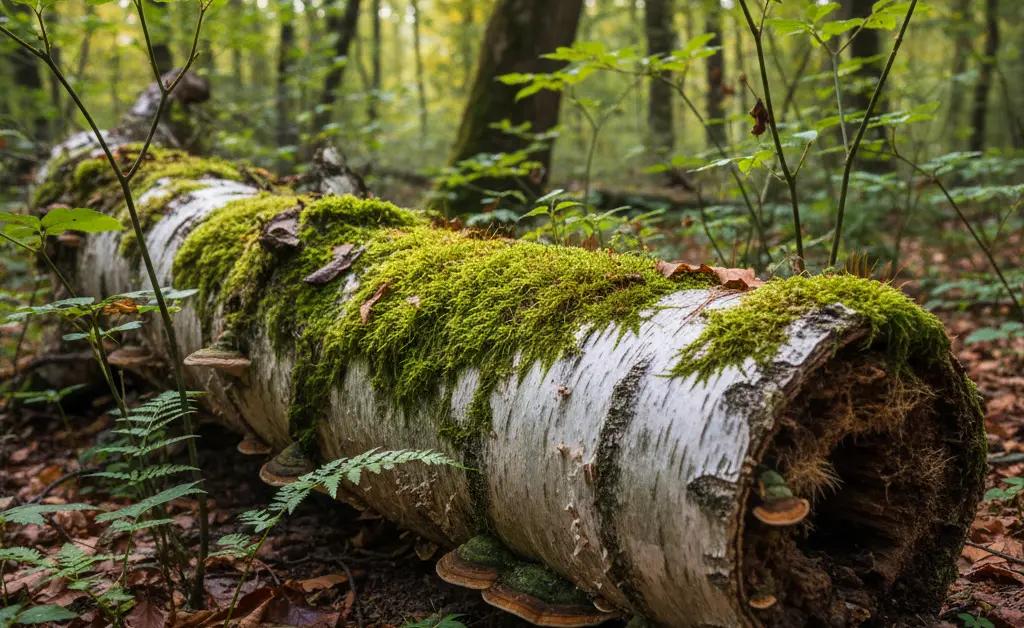
Despite its parasitic nature, the chaga mushroom on birch tree plays an important role in the broader forest ecosystem. As a primary decomposer, it initiates the process of breaking down the wood of living trees. This slow decay creates habitats and food sources for various insects, microorganisms, and other fungi. When the host tree eventually dies and falls, the advanced decay caused by chaga accelerates its decomposition, returning vital nutrients to the forest floor. This process of decay and nutrient cycling is fundamental to forest health and regeneration, making chaga a key player in the natural life and death cycles within boreal forests.
In summary, the relationship between this fungus and its host is a complex dance of parasitism and ecological function. Identifying it requires attention to its unique charcoal-like appearance and vibrant orange interior, which distinguish it from other growths. While it is detrimental to the individual host, the fungus is an integral part of the boreal forest ecosystem, contributing to natural decay and nutrient cycles. A proper understanding of its lifecycle, habitat, and impact is essential for anyone interested in the remarkable chaga mushroom on birch tree.
This article is for informational purposes only and does not constitute medical advice. The information provided is not intended to diagnose, treat, cure, or prevent any disease. Always consult with a qualified healthcare professional or a knowledgeable expert before using or foraging for any wild fungi. Misidentification of mushrooms can lead to serious health consequences.
FAQ
— Why does chaga only grow on birch trees?
Chaga typically grows on birch trees because it thrives on the specific chemical compounds found in birch bark. These compounds create an environment conducive to the fungus’s development, which is why chaga is rarely found on other tree species.
— How can you identify chaga on a birch tree?
Chaga often appears as a dark, irregularly shaped mass protruding from the trunk of the birch tree. It has a rough, cracked exterior that contrasts with the smooth, white bark of the host tree, making it somewhat distinctive.
— Is chaga considered a parasite to birch trees?
Chaga is generally classified as a parasitic fungus because it extracts nutrients from the birch tree, potentially causing harm over time. However, the relationship is complex and may vary depending on environmental factors and tree health.
— What does chaga look like on a birch tree?
On a birch tree, chaga resembles a blackened, charred, or burnt-looking growth that can be bumpy or cracked. Its surface is often uneven, and the interior may contain a rusty orange color, contrasting with the outer black crust.
— Where are chaga mushrooms typically found on birch trees?
Chaga mushrooms usually develop on the lower trunk or at the base of birch trees where the bark has been damaged or weakened. These areas provide an entry point for the fungus to colonize and grow.
— How long can chaga remain on a birch tree?
Chaga can persist on a birch tree for several years, as it grows slowly and continuously extracts nutrients from the host. Its longevity depends on the tree’s condition and environmental circumstances.
— Which types of birch trees are known to host chaga?
Chaga is most commonly found on species such as white birch and paper birch, which have the right chemical composition to support the fungus. Other birch varieties may also host chaga, but these are traditionally referenced in research.
— Is it possible for chaga to grow on trees other than birch?
While chaga is predominantly associated with birch trees, there are rare reports of similar fungi on other hardwoods, but these occurrences are uncommon. The primary keyword chaga mushroom on birch tree highlights the specialized relationship between the fungus and its host.