
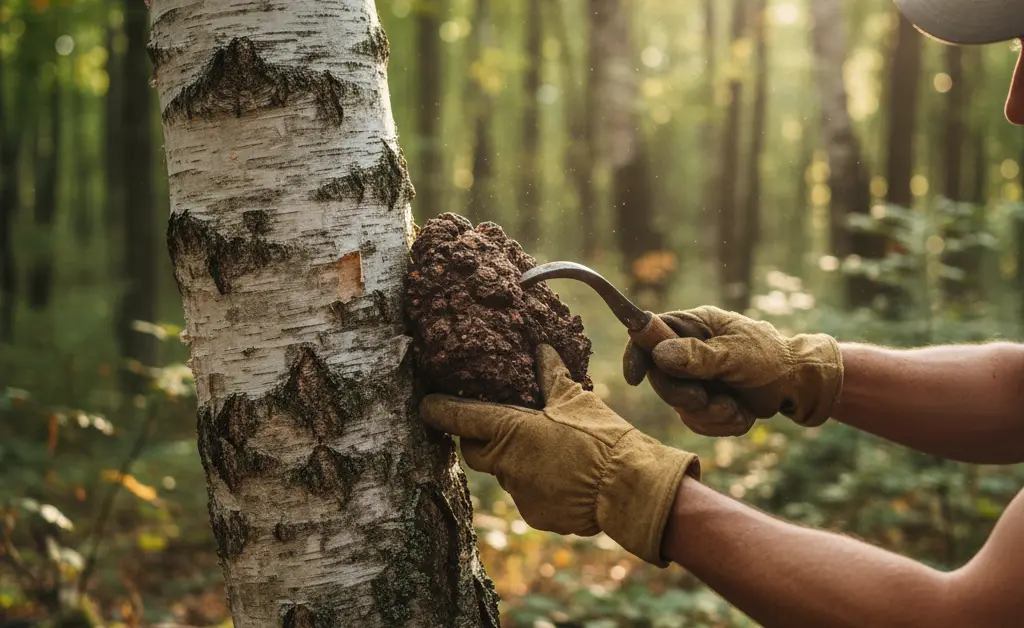
Chaga mushrooms, valued for their unique health benefits and natural properties, require a careful and informed approach to harvesting. Unlike common mushrooms that grow on the forest floor, chaga develops as a parasitic growth on specific trees, demanding precise knowledge for sustainable collection. This process involves recognizing the right time and place to harvest, ensuring the preservation of both the chaga and its host tree. By understanding the nuances of chaga mushroom harvesting, foragers can contribute to ecological balance while obtaining high-quality material. This guide explores the habitat, identification, ethical harvesting methods, necessary tools, and post-harvest care essential for responsible and effective chaga collection.
Where to Find Chaga Mushrooms: Habitat and Ecology
The quest for chaga begins with understanding its specific ecological niche. This unique fungus, known scientifically as Inonotus obliquus, does not grow on the ground but is a parasite found on living trees. Its presence is a sign of a long-term interaction between the fungus and its host, making the choice of location critical for a successful outing.
Common Host Trees for Chaga Growth
Chaga is most famously associated with birch trees. It thrives particularly on paper birch (Betula papyrifera), yellow birch (Betula alleghaniensis), and white birch. The symbiotic relationship it has with birch is what many believe contributes to its unique composition. While birch is its primary host, chaga can occasionally be found on other deciduous trees, including alder, aspen, beech, and cherry, though this is far less common. Foragers should focus their efforts on forests rich in mature birch trees. Correctly identifying a chaga mushroom on a birch tree is a key skill for any forager.
Preferred Geographic Regions for Chaga
This fungus prefers cold climates and is found in circumboreal forests across the Northern Hemisphere. Its habitat spans across Siberia, Northern and Eastern Europe, Canada, and the northern regions of the United States, including Alaska, the Great Lakes region, and New England. The harsh, cold winters of these locations are thought to play a role in concentrating the compounds within the chaga sclerotium, making specimens from these areas highly sought after.
Identifying Suitable Forest Environments
To find chaga, one must venture into mature hardwood forests. Look for areas with a high population of older birch trees. The fungus typically infects trees through wounds in the bark, such as those caused by storm damage, broken branches, or animal activity. Therefore, forests with a mix of healthy and aging trees often provide the ideal environment. Areas with good moisture, such as those near streams or in low-lying parts of a forest, can also be promising locations for this specialized fungus. The entire process of locating this resource is the first step in successful **chaga mushroom harvesting**.
Identifying Chaga Mushrooms in the Wild
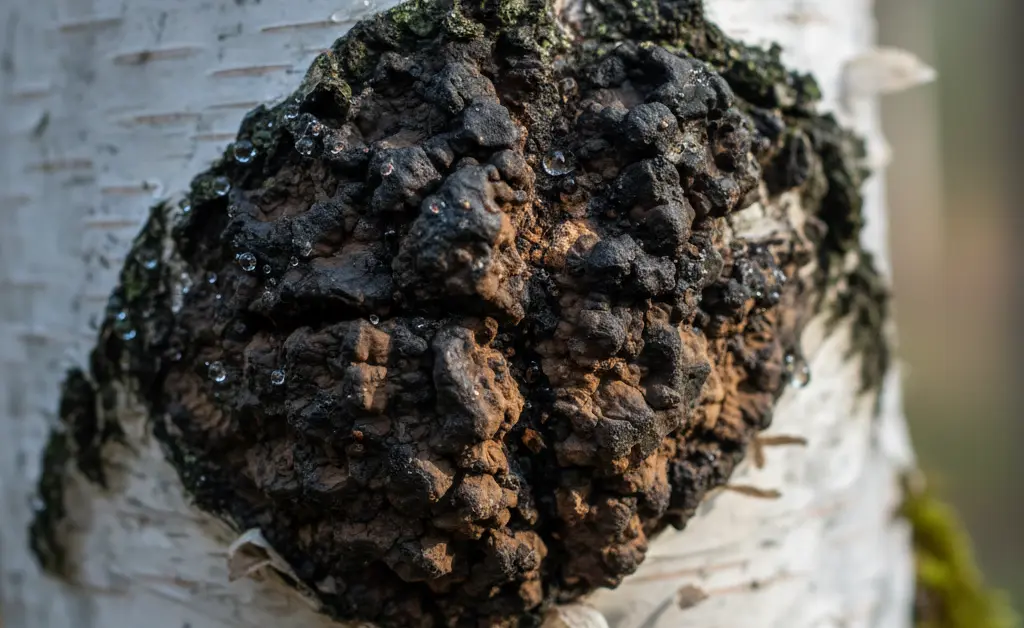
Proper identification is the most critical skill for any forager. Mistaking another fungus or tree growth for chaga can be ineffective at best and unsafe at worst. Learning to recognize its distinct features ensures you are collecting the correct specimen.
Key Visual Characteristics of Mature Chaga
The visible part of chaga, often called the conk or sclerotium, is a sterile mass of fungal mycelium mixed with wood from the host tree. Its exterior is hard, deeply cracked, and black, closely resembling a chunk of burnt charcoal. This dark, crusty surface is a key identifier. In stark contrast, the interior of the chaga is a much softer, cork-like substance with a vibrant rusty orange or yellowish-brown color. A mature chaga conk can vary greatly in size and has an irregular, lumpy shape rather than a classic mushroom form.
Distinguishing Chaga from Other Tree Growths
Chaga is often confused with other natural formations on trees, most commonly burls and cankers. A burl is a woody, rounded outgrowth composed entirely of tree tissue, and it will be covered in the tree’s own bark. Cankers are dead sections of bark on a tree, which can appear dark but lack the distinct cracked, charcoal-like texture and bright orange interior of chaga. Chaga is a distinct growth that appears to be attached to the outside of the bark, whereas burls are an integrated part of the tree’s trunk or branches.
Chaga Look-Alikes to Be Aware Of
While chaga is quite distinct, a few other fungi can cause confusion. The tinder conk (Fomes fomentarius) is another common polypore found on birch trees, but it has a smooth, hoof-shaped appearance, is typically grayish or brownish, and lacks the cracked black exterior and golden interior of chaga. Another potential chaga mushroom look alike is the black knot fungus (Apiosporina morbosa), which grows primarily on cherry and plum trees. It forms elongated, black, lumpy galls that are hard but do not have the characteristic orange core of true chaga.
Sustainable and Ethical Chaga Harvesting Practices & Timing
Responsible foraging is paramount to ensure the long-term health of the forest ecosystem and the continued availability of chaga. Ethical practices protect both the fungus and its host tree, allowing for regeneration and future harvests.
Optimal Seasons for Chaga Harvesting
While chaga can be collected at any time of year, the late fall and winter months are traditionally considered the best season. During this dormant period for the host tree, nutrient and energy flow is directed inward, and it is believed that the chaga conk is at its most potent. Furthermore, the absence of leaves on deciduous trees makes spotting the dark chaga growths against the pale bark of birch trees much easier for the forager.
Minimizing Damage to the Host Tree
The golden rule of ethical harvesting is to cause no further harm to the living host tree. Never cut into the tree itself. The goal is only to remove a portion of the external chaga growth. Digging into the trunk can create a new wound, making the tree vulnerable to other infections and potentially killing it. Use sharp, clean tools to make a clean break of the chaga from the bark.
Understanding Chaga Regeneration
The black conk on the outside of the tree is the sterile mass (sclerotium), while the active mycelium lives deep within the tree’s heartwood. By harvesting only a part of the external growth—never more than one-third to one-half of the conk—the forager allows the sclerotium to potentially continue growing. This sustainable practice may allow for a future harvest from the same tree several years later, preserving the resource for others. While wild harvesting is common, understanding the conditions for chaga mushroom growing can provide deeper insight into its life cycle.
Guidelines for Avoiding Over-Harvesting
To prevent depleting local chaga populations, follow a few simple guidelines. Only harvest from large, mature trees that can withstand the removal of the parasite. Choose chaga growths that are well-established and sizable, leaving smaller, younger conks to mature. If you see multiple chaga growths on a single tree, consider taking only from one to reduce the stress on the host. This mindful approach is at the core of sustainable **chaga mushroom harvesting**.
Legal and Respectful Foraging Considerations
Always be aware of the regulations governing the land where you plan to forage. Collecting on private property requires explicit permission from the landowner. Foraging on public lands, such as state or national forests, may require a permit or be subject to specific rules about what and how much can be collected. Respect for the land, wildlife, and property rights is a fundamental part of ethical wildcrafting.
Essential Tools and Equipment for Chaga Harvesting
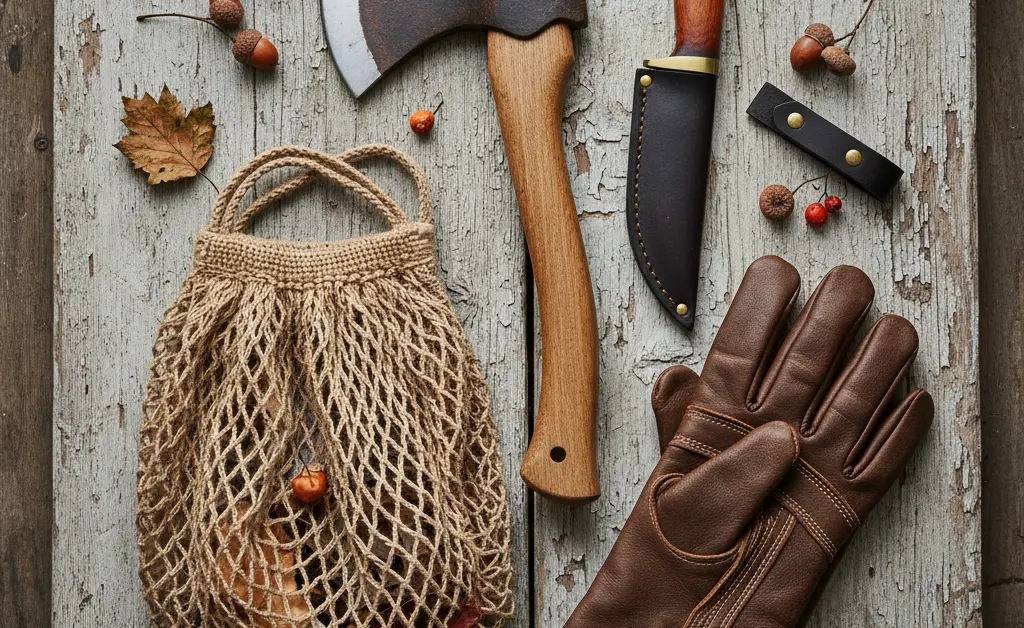
Arriving in the forest with the right tools makes the harvesting process safer, more efficient, and less damaging to the tree. The hard, woody nature of chaga requires sturdy equipment for its removal.
Recommended Cutting Tools (Hatchet, Saw, Chisel)
A small, sharp hatchet or axe is the most common tool for harvesting chaga. It provides enough force to break off pieces of the hard conk. For more precise work or for chaga that is awkwardly positioned, a hammer and a sturdy chisel can be very effective. A small hand saw may also be useful for larger growths, allowing for a cleaner cut. Regardless of the tool, ensuring it is sharp is key to a clean removal that minimizes impact.
Safety Gear for Harvesters
Personal safety is a top priority. Wear durable gloves to protect your hands from the rough bark and sharp tools. Safety glasses or goggles are highly recommended to shield your eyes from any flying fragments of chaga or wood. Sturdy, closed-toe boots with good traction are essential for navigating uneven and potentially slippery forest terrain. Also, be aware of your surroundings, particularly the risk of falling branches from the host tree. Following general safety recommendations from global health authorities like the WHO is always a good practice when engaging in outdoor activities.
Temporary Storage and Transport Tips
As you collect chaga, it is important to store it properly for the journey home. Use a breathable container, such as a canvas bag, mesh sack, or a traditional wicker basket. Avoid plastic bags, which trap moisture and can promote the growth of mold on your fresh chaga before you have a chance to process it.
The chaga mushroom harvesting process
With the right knowledge, location, and tools, the actual process of harvesting can be straightforward and rewarding. It requires a final assessment of the chaga conk and a careful technique for removal.
Assessing the Chaga Conk for Harvest Readiness
Before making any cuts, inspect the chaga closely. It should be hard and solid. Avoid any specimens that feel soft, crumbly, or appear moldy. Check the size—if it’s smaller than a fist, it’s best to leave it to grow for a few more years. Also, consider its position on the tree. A chaga that is too high up or in a difficult-to-reach spot may not be worth the risk of injury to yourself or damage to the tree from climbing.
Techniques for Safely Removing Chaga from the Tree
Once you’ve selected a suitable conk, position yourself securely. Using your hatchet or axe, strike the base of the chaga where it connects to the tree. The goal is to use sharp, decisive blows to break a chunk off cleanly. Aim to remove only a portion of the growth, leaving the rest on the tree for regeneration. Do not swing wildly or hack into the tree’s bark. A controlled, focused technique is essential for an effective and safe **chaga mushroom harvesting** experience.
Transporting Harvested Chaga Safely
After successfully removing a piece of chaga, place it in your breathable bag or basket. This ensures good air circulation during your hike out of the forest, which is the first step in preventing mold. Keep the harvested chunks separate from other items to avoid contamination and bruising. Secure transport prevents loss or damage to your valuable find.
Post-Harvest Handling and Preparation of Chaga
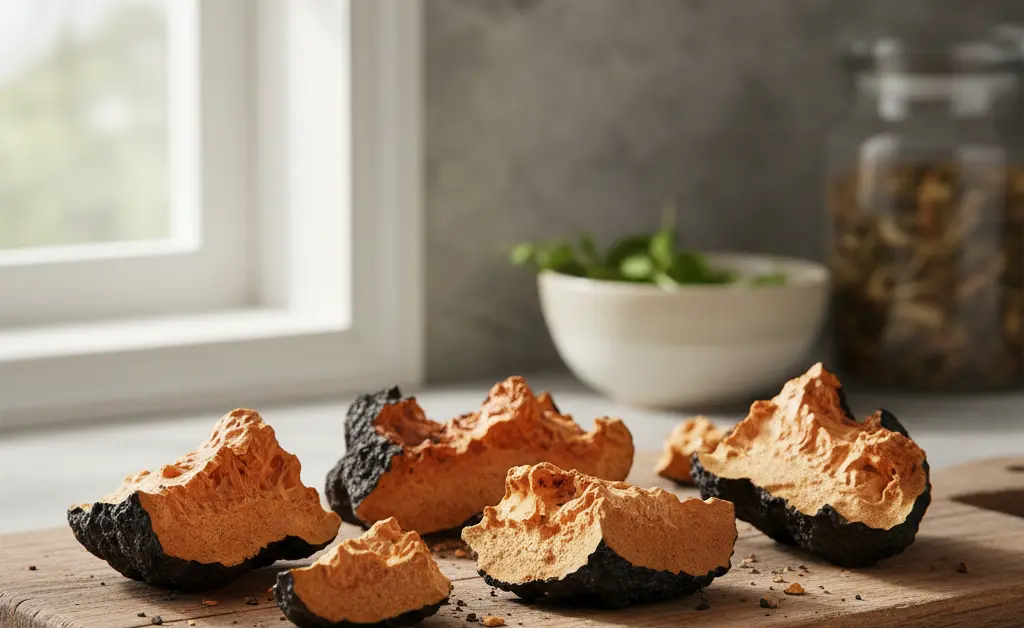
The work isn’t finished once you leave the forest. Proper cleaning, drying, and storage are crucial steps to preserve the quality of your harvested chaga and prepare it for long-term use.
Cleaning Freshly Harvested Chaga
Upon returning home, the first step is to clean your chaga. Use a stiff brush to scrub away any loose dirt, bits of bark, lichen, or insects from the exterior. It’s best to do this while the chaga is fresh, before it hardens further upon drying. Try to avoid using water, as it will prolong the drying time. If you must rinse it, do so quickly and pat it dry immediately.
Drying Methods for Preserving Chaga
Thorough drying is essential to prevent mold and preserve the chaga. First, break the large piece into smaller, more manageable chunks, about one to two inches in size. This greatly increases the surface area and speeds up the drying process. You can air-dry the chunks by spreading them on a screen or tray in a warm, dry, well-ventilated room. This can take several weeks or longer. A faster method is to use a food dehydrator on its lowest temperature setting until the chunks are completely dry, which may take one to two days. The chaga is ready when it is rock-hard and brittle, with no moisture remaining. Proper drying is a vital part of the post-**chaga mushroom harvesting** phase.
Storing Chaga for Long-Term Use
Once your chaga is completely dry, it can be stored for a very long time. Place the dried chunks or chaga powder into airtight containers, such as glass jars with tight-fitting lids. Store these containers in a cool, dark, and dry place, like a pantry or cupboard. Keeping it away from direct sunlight, heat, and moisture will protect its integrity and ensure it is ready for use whenever you need it. To create a fine powder for teas or tinctures, using a dedicated chaga mushroom grinder is highly effective.
In conclusion, a successful and respectful approach to chaga requires more than just finding it. It involves a deep understanding of its ecology, correct identification, and a commitment to ethical collection. By carefully selecting tools, minimizing harm to the host tree, and leaving plenty behind for regeneration, foragers can ensure this natural resource remains available for years to come. The entire journey, from locating the fungus to proper post-harvest processing, is a rewarding practice when done with knowledge and care. Following these sustainable guidelines is the foundation of responsible **chaga mushroom harvesting**.
This article is for informational purposes only and does not constitute medical advice. The information presented here is not intended to diagnose, treat, cure, or prevent any disease. Always consult with a qualified healthcare professional before using any herbs or supplements, especially if you are pregnant, nursing, have a medical condition, or are taking medication. The practice of foraging requires expert knowledge for proper identification, and misidentification can be dangerous.
FAQ
— What tools are needed to harvest chaga?
A sturdy knife or hatchet is often used to carefully cut chaga from the tree. Some harvesters also prefer gloves to protect their hands and a small saw for larger growths. The choice of tools depends on the size and location of the chaga on the tree.
— When is the best time to harvest chaga?
Chaga is typically harvested during cooler months when the tree’s sap flow is slower, which may help preserve the fungus’s quality. Timing can vary based on regional climate and local traditions. Harvesting during dormancy periods is often discussed in relation to sustainability.
— How can I harvest chaga without harming the tree?
To minimize harm, it is advised to remove only the outer portion of the chaga while leaving part of the fungus intact. Avoid cutting deeply into the tree bark, as this could damage the host tree. Sustainable practices emphasize careful and selective harvesting to allow the fungus to regenerate.
— Is it legal to harvest chaga?
Legality varies depending on local regulations, ownership of the land, and protected species status. In many public forests, permission may be required, and some regions have restrictions to preserve natural resources. It is important to check with local authorities before harvesting.
— How do you identify chaga mushrooms in the wild?
Chaga appears as a dark, irregularly shaped mass growing primarily on birch trees, often resembling burnt charcoal. Its texture is hard and cracked on the outside, contrasting with a rusty orange interior. Accurate identification is crucial, as several fungi may look similar.
— What trees does chaga grow on?
Chaga is most commonly found on birch trees, particularly those in cooler climates. While birch is the primary host, it can occasionally be found on other hardwood species. The relationship between chaga and its host tree is a focus of ecological research.
— What should I do after harvesting chaga?
After harvesting, drying the chaga thoroughly is an important step to prevent mold and preserve its properties. It may then be stored in a cool, dry place away from direct sunlight. Preparing chaga for use often involves grinding or breaking it into smaller pieces.
— What are common chaga look-alikes?
Some fungi and tree growths resemble chaga but lack its characteristic texture and interior color. For instance, certain types of conks or bracket fungi might be mistaken for chaga by beginners. Proper identification resources and expert consultation help avoid confusion. The term chaga mushroom harvesting is often associated with careful and knowledgeable collection practices.