Many enthusiasts encounter the challenge of distinguishing between beneficial fungi and their less desirable look-alikes. Initially, what appears to be a promising find in the forest can lead to uncertainty regarding its true identity, potentially diminishing confidence in foraging or medicinal application. However, by focusing on specific, observable characteristics, this ambiguity can be effectively resolved. This guide provides the essential knowledge to confidently navigate the subtle yet crucial differences, transforming a speculative observation into an accurate identification. Understanding the fundamental distinctions in turkey tail mushroom vs false turkey tail ensures that foragers and users can correctly identify the genuine species, unlocking its renowned properties with certainty and peace of mind.
Turkey Tail Mushroom vs False Turkey Tail: Key Differentiating Factors
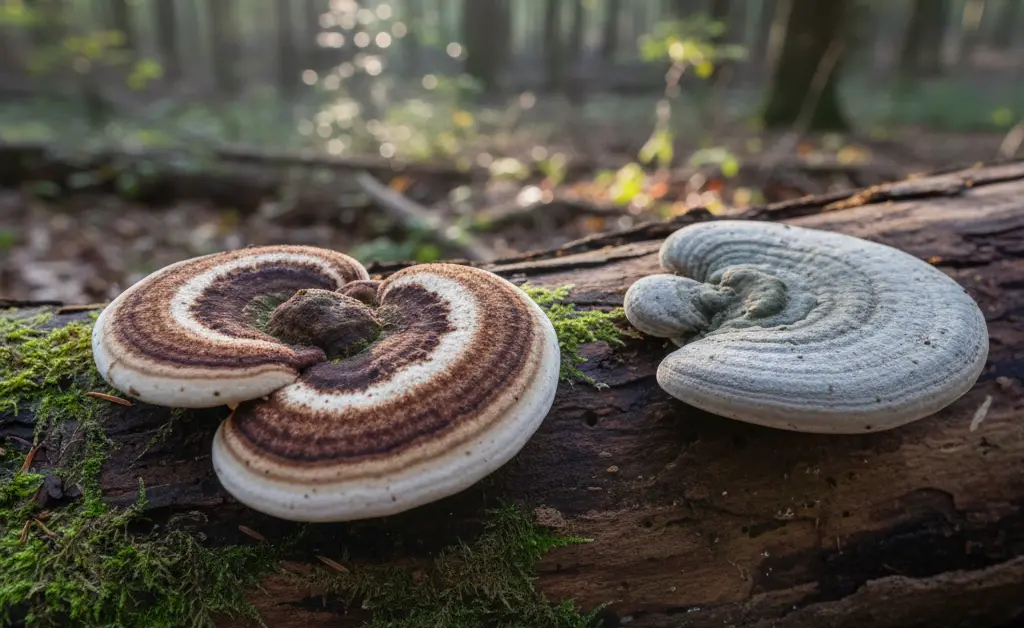
Differentiating between the true turkey tail mushroom (Trametes versicolor) and its common lookalike, the false turkey tail (Stereum hirsutum), is a cornerstone of responsible mushroom identification. While both are common bracket fungi found on wood, their distinct morphological characteristics reveal the crucial differences that inform whether you have found the valuable polypore or merely its harmless mimic. A thorough comparison of the turkey tail mushroom vs false turkey tail is essential for foragers to avoid misidentification risks and understand the implications of incorrect identification.
Visual Comparison: Cap, Zonation, and Texture
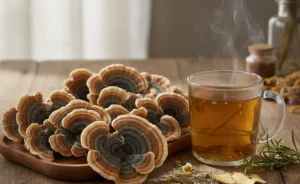
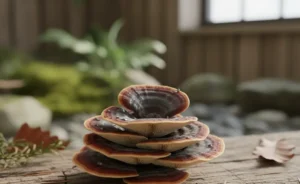
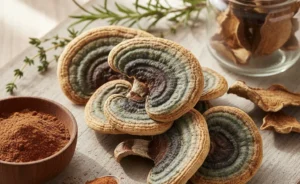
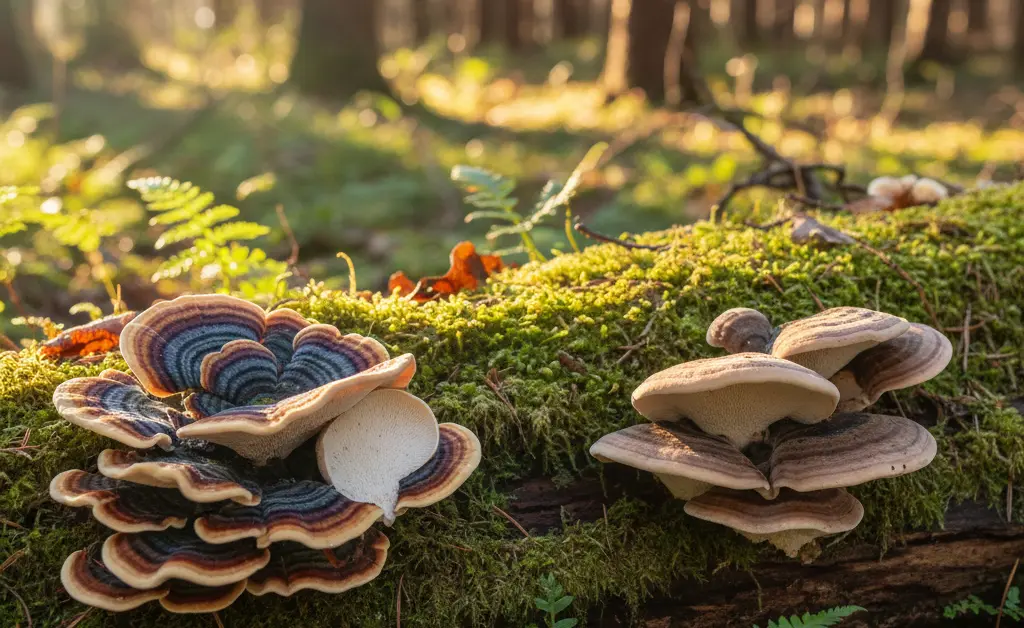
The cap of the true turkey tail mushroom typically displays vibrant, concentric bands of various colors, including browns, grays, blues, and reds, often with a white or lighter margin. These zones are usually velvety or finely hairy, giving it a soft, textural feel. The margin itself is often thin and wavy. In contrast, the false turkey tail (Stereum hirsutum) also exhibits concentric zones, but these are generally less vibrant and tend to be in shades of yellow, orange, or brown, often with a fuzzy or hairy texture across the entire upper surface, not just a velvety feel. Its cap margin can be thicker and less undulating than that of the genuine species. For further scientific understanding of fungi and their classifications, resources like NCBI provide extensive databases.
Underside Structure: Pores vs. Smooth Surface
Perhaps the most critical distinguishing feature lies on the underside. The true turkey tail mushroom is a polypore, meaning its underside is covered in countless tiny, visible pores. These pores are typically white or cream-colored, becoming slightly yellowish with age. To answer “What does the underside of a real turkey tail mushroom look like?“, it reveals a minutely textured surface, almost like fine sandpaper, due to these pores. Conversely, the false turkey tail possesses a completely smooth, untextured underside, lacking any visible pores or gills. It is typically buff to pale yellowish or orange, and can sometimes appear somewhat waxy or crusty. This fundamental difference helps answer “Do false turkey tail mushrooms have pores?” with a definitive no.
Thickness, Flexibility, and Growth Habits
True turkey tail mushrooms are generally thin and quite flexible, especially when fresh, allowing them to bend without breaking easily. They often grow in overlapping clusters or rosette patterns on decaying hardwood logs and stumps. Their flexibility allows them to adapt to the contours of the wood. The false turkey tail, while also growing on dead wood, tends to be thicker and more rigid, feeling more brittle to the touch. It may also grow in overlapping layers, but its individual fruiting bodies often appear less organized and more randomly attached to the substrate, sometimes forming shelf-like structures.
Spore Print Differences
For more advanced mushroom identification, a spore print can offer additional clues, though it’s less commonly used for these particular species due to other obvious distinguishing features. The true turkey tail mushroom produces a white spore print. The false turkey tail also produces a white spore print, which means this characteristic alone is not sufficient to differentiate between them. However, when combined with other morphological characteristics, it can contribute to the overall picture.
Common Habitat and Substrate
Both the true and false turkey tail mushrooms are saprophytic fungi, meaning they grow on dead and decaying wood, primarily hardwoods. They are commonly found in forests worldwide. True turkey tail (Trametes versicolor) shows a preference for deciduous trees, such as oak, maple, and beech, and thrives in damp, shaded environments. The false turkey tail (Stereum hirsutum) also colonizes various hardwoods, often appearing on fallen branches and logs. Their shared habitat can sometimes make initial visual identification tricky, underscoring the importance of examining multiple characteristics rather than just one.
Summary of Key Distinctions
To quickly summarize the defining characteristics for distinguishing between these similar lookalikes, consider the following table:
| Feature | True Turkey Tail (Trametes versicolor) | False Turkey Tail (Stereum hirsutum) |
|---|---|---|
| Cap Zonation | Vibrant, multi-colored concentric bands; often velvety. | Less vibrant, yellowish-brown concentric bands; often hairy/fuzzy. |
| Underside | Porous (tiny visible pores); white/cream. | Smooth; pale yellowish to orange, waxy/crusty. |
| Flexibility | Thin and flexible. | Thicker and more rigid/brittle. |
| Spore Print | White. | White. |
| Preferred Substrate | Decaying hardwood (e.g., oak, maple). | Decaying hardwood. |
Quick Identification Checklist and Visual Guide
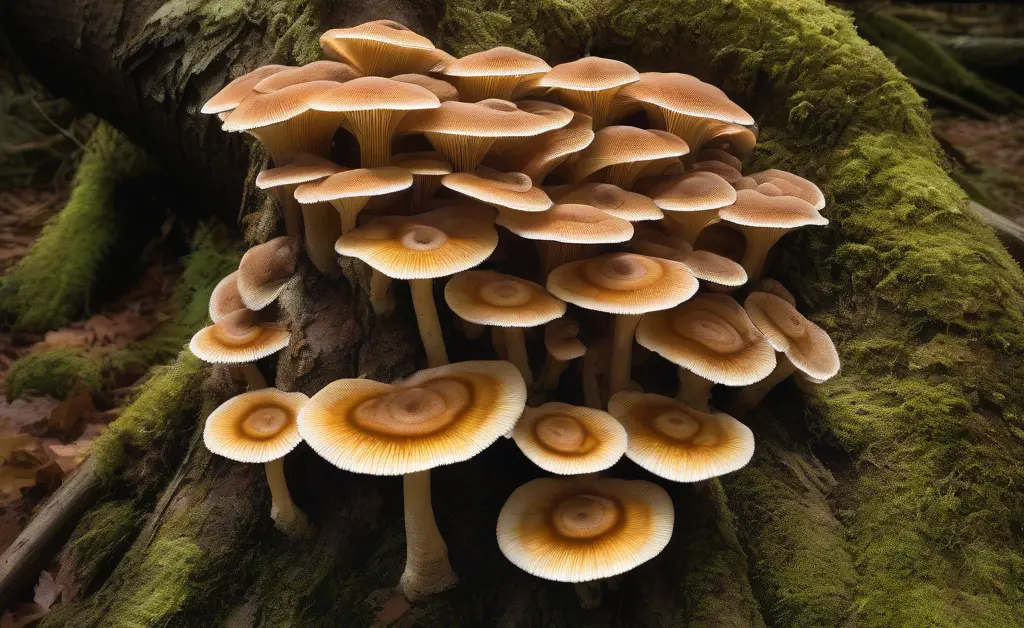
Foragers seeking to confidently identify their finds need a systematic approach. This quick identification checklist serves as a practical visual guide to ascertain whether you have found the genuine article. By following these steps, you can effectively navigate the differences in turkey tail mushroom vs false turkey tail, avoiding common lookalikes and ensuring accurate species identification.
Step-by-Step Visual Reference
1. Examine the Cap: Start by looking at the top surface. Is it distinctly zoned with multiple colors, creating a rainbow effect? Does it feel velvety or finely hairy to the touch? A vibrant, velvety cap with concentric rings is a strong indicator of true turkey tail. “What color is a true turkey tail mushroom?” Often, it’s a mix of earthy tones, blues, and reds.
2. Inspect the Underside: This is the most crucial step. Gently flip the mushroom over. Does the underside have countless tiny, visible pores, giving it a finely textured appearance? This characteristic is definitive for Trametes versicolor. If the underside is completely smooth, resembling a plain, untextured surface that might be whitish, yellowish, or orange, then it is likely the false turkey tail. “Is true turkey tail mushroom always velvety?” While often velvety, the porous underside is the most reliable feature. Unlike gilled mushrooms, neither true nor false turkey tails possess true gills on their undersides.
3. Assess Thickness and Flexibility: Carefully try to bend a portion of the mushroom. Is it thin and somewhat pliable, or does it feel rigid and prone to snapping? True turkey tail is notably flexible. The false turkey tail is typically thicker and more rigid.
4. Observe Growth Habit and Substrate: Note how the mushroom is growing. Is it on dead hardwood? Is it in overlapping shelves or rosettes? Both grow on wood, but understanding their typical morphology can offer supplementary insight, especially for experienced foragers seeking to confirm initial observations. These defining characteristics help in understanding “What is True Turkey Tail Mushroom (Trametes versicolor)?” versus “What is False Turkey Tail Mushroom (Stereum hirsutum)?”.
By diligently checking these distinguishing features, especially the presence or absence of pores on the underside, foragers can significantly improve their mushroom identification skills and confidently differentiate the genuine turkey tail from its less-desirable lookalike. Why accurate identification is crucial for foragers stems from both the desire to utilize the correct species and to avoid any misidentification risks.
Readers should understand that this article does not offer medical diagnosis or treatment. The information provided is for educational and informational purposes only and is not intended as a substitute for professional medical advice. Individuals should consult with qualified healthcare professionals for any health concerns or before making any decisions related to their health or well-being. This content does not endorse self-treatment or provide medical instructions.
FAQ
— How can you tell the difference between turkey tail and false turkey tail?
One of the most reliable ways to differentiate between turkey tail mushroom vs false turkey tail involves examining the underside of the cap. True turkey tail (*Trametes versicolor*) exhibits a white or cream-colored pore surface with tiny, visible pores, along with a distinct velvety texture on its multi-banded top. False turkey tail (*Stereum hirsutum*), on the other hand, lacks these pores and typically has a smooth or slightly ridged underside, often appearing yellowish-orange.