Knowing how to reliably distinguish beneficial wild mushrooms is a valuable skill for foragers and enthusiasts alike. Among these, the Turkey Tail mushroom (Trametes versicolor) stands out for its distinctive appearance and recognized health applications, making accurate identification essential. This fungus is commonly found globally, yet its similarities to several lookalikes necessitate careful observation to ensure correct harvesting and usage. Mastering its unique features prevents misidentification, which is crucial for safety and efficacy. This guide will provide clear, practical insights on how to identify turkey tail mushroom by focusing on its key characteristics, empowering you to confidently differentiate it from other species in its natural habitat.
How to Identify Turkey Tail Mushroom: A Comprehensive Guide
Cap Appearance: Concentric Zones and Hues
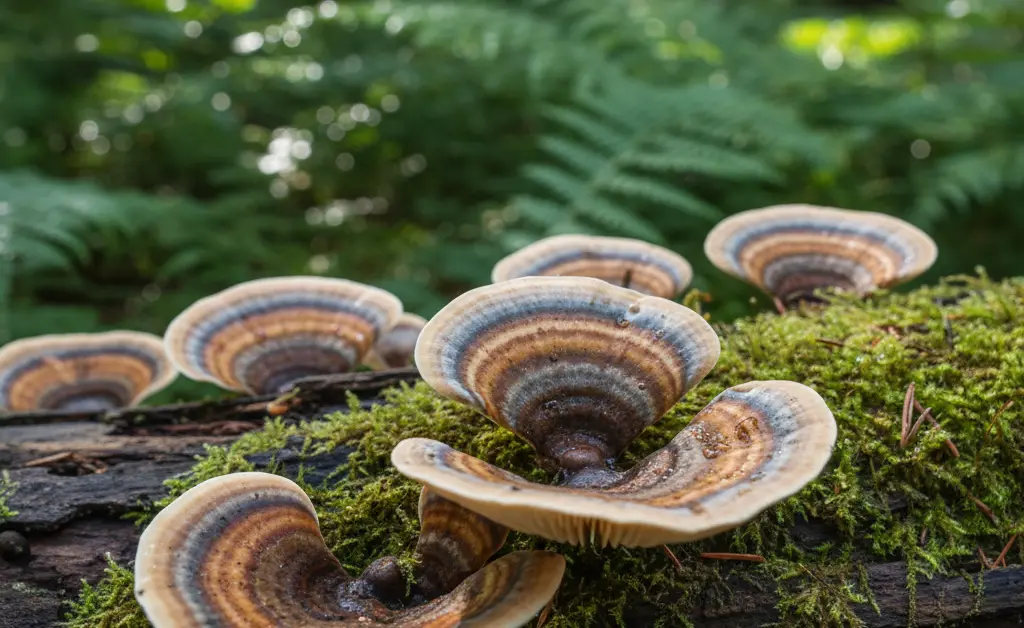
The cap of the Turkey Tail mushroom is one of its most striking features, crucial for accurate identification. It typically exhibits distinct concentric zones of varying colors, often resembling the fanned tail feathers of a wild turkey, which gives the mushroom its common name. These zones can display a wide spectrum of hues, including shades of brown, gray, black, rust, and even hints of blue or green, especially at the outer edges. The texture is usually velvety or finely hairy, becoming smoother with age. This fibrous, often thin, shelf fungus typically grows in a semi-circular or fan-like shape, often overlapping with other caps in a tiered arrangement on dead wood. Understanding these cap characteristics is a primary step in how to identify turkey tail mushroom.
Underside: Pores and Color
Inspecting the underside of the Turkey Tail mushroom is perhaps the most definitive way to distinguish it from many imposters. A true Turkey Tail, a type of polypore, will have a pore surface rather than gills or a smooth underside. These pores are incredibly tiny and appear as a uniform, velvety texture. They are typically white to cream-colored, maintaining this hue even as the cap darkens. If you can clearly see individual pores, they will be minute, numbering several per millimeter. The absence of a central stipe (stem) and the presence of these fine pores are critical “how to identify turkey tail mushroom” indicators, confirming it as a genuine *Trametes versicolor*.
Growth Habit and Texture
The growth habit of the Turkey Tail mushroom provides further clues for identification. It is a saprobic fungus, meaning it grows on dead or decaying hardwood logs, stumps, and branches. It almost exclusively prefers deciduous trees and is rarely found on conifers. It grows in a tiered or overlapping fashion, forming shelf-like structures that are typically thin and flexible when fresh, becoming more rigid and brittle with age. The overall texture of the cap is generally tough and leathery, not easily broken. This resilience and its preference for specific substrates are important aspects to consider when assessing a potential specimen.
Spore Print Analysis
While often not the primary identification method for Turkey Tail due to its distinct visual characteristics, performing a spore print can offer confirmatory evidence. To obtain a spore print, place a cap with the pore surface facing down on a piece of dark paper, cover it with a bowl to maintain humidity, and leave it for several hours. The true Turkey Tail mushroom will yield a white spore print. This analysis can be particularly useful when distinguishing it from certain lookalikes that might have differently colored spores, although visual inspection of the pores usually suffices for experienced foragers.
Distinguishing True Turkey Tail from Lookalikes
Common Lookalikes and Imposters
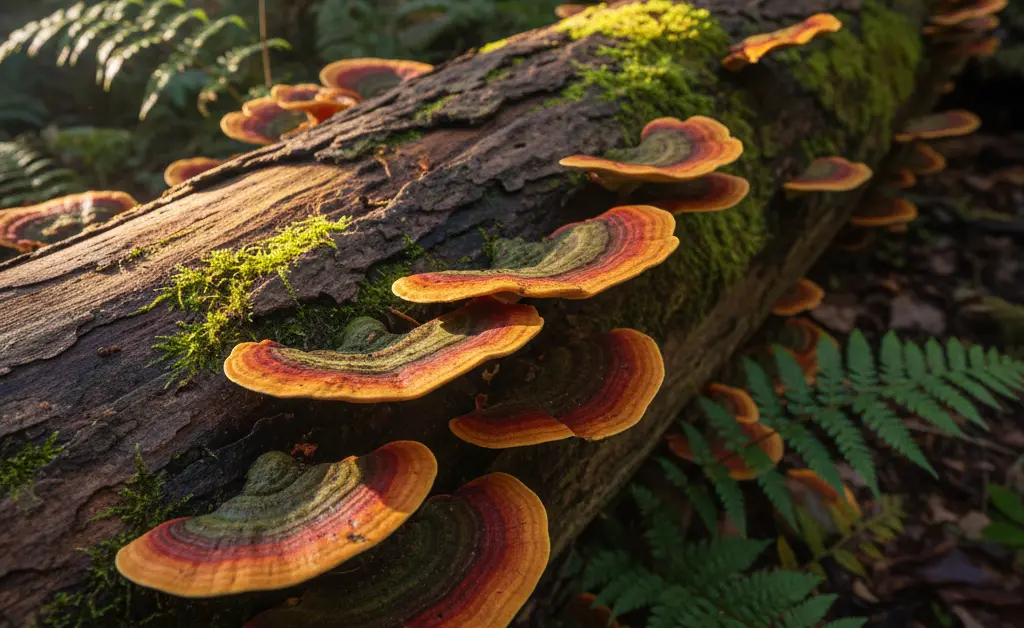
When learning how to identify turkey tail mushroom, understanding its lookalikes is just as important as knowing its own features. Several other fungi share some superficial similarities with *Trametes versicolor*, leading to potential misidentification. These common imposters are often other types of shelf fungus or polypores that grow on wood. They might exhibit concentric zones or similar color patterns, making careful examination crucial. The challenge lies in differentiating the real turkey tail from these numerous mushroom lookalikes, ensuring only genuine specimens are collected for their recognized Turkey Tail mushroom benefits.
Identifying False Turkey Tail (Stereum ostrea)
One of the most common lookalikes, often referred to as “False Turkey Tail,” is *Stereum ostrea*. While it shares the fanned shape and concentric color zones of *Trametes versicolor*, a key difference lies in its underside. *Stereum ostrea* has a smooth, sometimes slightly wrinkled or gill-like underside, lacking the distinct tiny pores that are characteristic of the true Turkey Tail. Its underside might be a uniform tan or yellowish color, but it will never have visible pores. This differentiation is paramount for accurate identification and prevents confusing a common wood-rotting fungus with the sought-after medicinal mushroom.
Key Differences for Accurate Identification
To confidently distinguish the true Turkey Tail, *Trametes versicolor*, from its lookalikes, focus on a few key differences. The pore surface is the primary identifier: true Turkey Tail has visible, tiny pores (3-8 pores per millimeter) on its white or cream underside. False Turkey Tail (*Stereum ostrea*) has a smooth, gill-less, or slightly ridged underside. Other polypores might have pores, but they are often larger or differently colored. Additionally, the true Turkey Tail is typically thin and flexible, especially when fresh, while many imposters can be thicker or more rigid. Running a fingernail over the underside can often help reveal the presence or absence of these characteristic pores, aiding in distinguishing turkey tail with precision.
Understanding Potential Poisonous Lookalikes
While many Turkey Tail lookalikes are not considered toxic, they generally lack the properties associated with the true Turkey Tail mushroom. However, exercising caution is always advised in mushroom foraging. There are other types of fungi, though less visually similar, that could be poisonous if consumed. Therefore, a thorough understanding of all identifying features is essential for Safety Considerations for Foraging. Never consume a wild mushroom unless you are 100% certain of its identification. The focus should always be on positive identification of *Trametes versicolor* rather than merely ruling out known toxic species. This vigilance is a core part of Understanding Turkey Tail Mushrooms comprehensively.
Why Accurate Identification is Crucial
Accurate identification of the Turkey Tail mushroom is paramount for several reasons, directly impacting both safety and the intended use. Firstly, misidentification can lead to consuming a different species, which might be inedible, have no beneficial properties, or in rare cases, even be mildly toxic. For those seeking the potential Turkey Tail mushroom benefits, ensuring you have the correct species is fundamental to experiencing any purported effects. Research from organizations like NCBI often explores the potential health benefits of such fungi. Incorrect identification means you might be consuming a mushroom without the desired compounds, rendering your efforts ineffective. Furthermore, for anyone considering how to eat turkey tail mushroom, whether as a tea or in other preparations, safety demands absolute certainty. The unique chemical profile of *Trametes versicolor* is what contributes to its reputation, and without accurate identification, one cannot be sure of obtaining these specific compounds. Therefore, mastering how to identify turkey tail mushroom is not just about academic knowledge, but about practical safety and efficacy in its utilization.
The purpose of this content is to educate, not to diagnose or treat. This information is provided for general knowledge and informational purposes only, and does not constitute medical advice. It is essential to consult with a qualified healthcare professional before making any decisions related to your health or incorporating any new supplements or practices into your routine. Always exercise caution and consult with experts when foraging for wild mushrooms.
FAQ
— How can you tell if a turkey tail mushroom is real?
To confirm a true Turkey Tail mushroom, look for distinctive concentric zones of color, often in shades of brown, gray, and even blue. The thin, leathery, shelf-like fruiting body also has a velvety or finely hairy texture on its upper surface. Its unique pore surface on the underside is also a crucial indicator.
— What are the identifying features of turkey tail mushroom?
Understanding how to identify turkey tail mushroom involves observing several distinct characteristics. The cap displays vibrant, multi-colored concentric rings, which often resemble a turkey’s tail, and typically has a velvety texture. On its underside, true Turkey Tail presents a white to light tan pore surface, featuring very tiny, almost invisible pores. This combination of visual cues helps distinguish it from similar-looking fungi.
— Does true turkey tail mushroom have pores?
Yes, true Turkey Tail mushrooms are polypores, meaning they have a pore surface on their underside rather than gills. These pores are remarkably small, typically numbering three to eight per millimeter, making them almost imperceptible to the naked eye. This fine, white to cream-colored pore layer is a definitive characteristic.
— How do you differentiate turkey tail from false turkey tail?
Differentiating true Turkey Tail from its lookalikes, often called “false Turkey Tail,” primarily comes down to examining the underside. While false Turkey Tail (like *Stereum hirsutum*) typically has a smooth underside or very subtle, gill-like ridges, true Turkey Tail consistently exhibits a dense layer of tiny pores. Additionally, the colors on the true Turkey Tail are often more vibrant and distinct, and its texture is velvety on top compared to the often rougher or hairier false versions.
— What does the underside of a turkey tail mushroom look like?
The underside of a true Turkey Tail mushroom is characterized by a smooth, white to cream-colored surface densely covered with incredibly tiny pores. These pores are so small that they are barely visible without magnification, creating a velvety or finely textured appearance. This distinct pore surface is a key feature distinguishing it from many other shelf fungi.