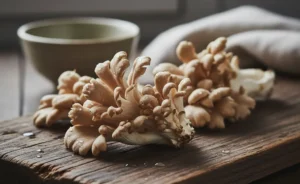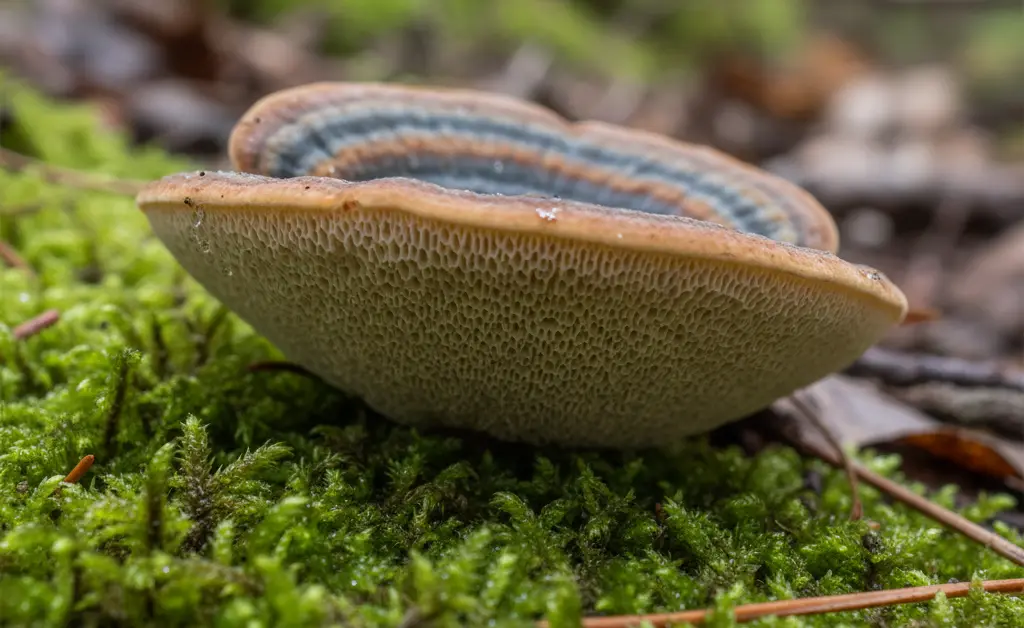
Identifying wild mushrooms for culinary or wellness purposes requires careful attention to detail, and few details are as crucial as those found on the underside. While the colorful, fan-shaped caps of turkey tail mushrooms are often recognized from above, relying solely on this visual can lead to misidentification. The true key to discerning this beneficial fungus from its less desirable look-alikes lies in a thorough examination of the turkey tail mushroom underside. This specific part holds unique characteristics that serve as a definitive guide for foragers and enthusiasts alike, ensuring proper identification and safe harvesting. Understanding these distinct features is paramount for anyone seeking to confidently incorporate turkey tail into their health regimen.
The Turkey Tail Mushroom Underside: A Definitive Identification Guide
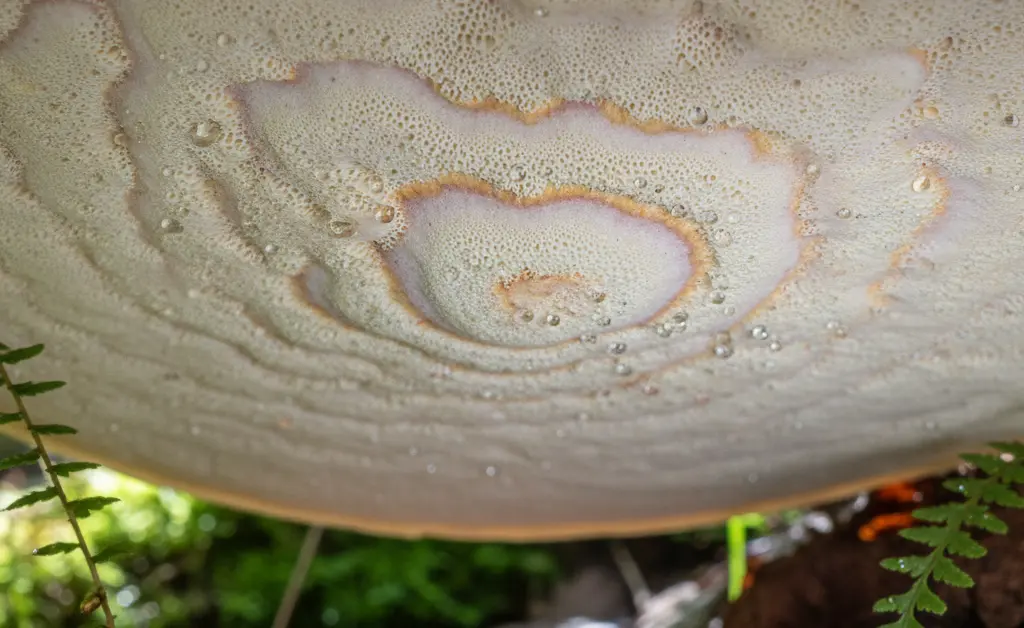
The intricate details found on the turkey tail mushroom underside are invaluable for accurate identification, helping enthusiasts distinguish the sought-after Trametes versicolor from other fungi. Mastering these visual cues is a fundamental step in mushroom identification, moving beyond mere cap color to truly understand the structure of this distinct bracket fungus. A thorough inspection of the undersurface provides clear evidence for determining whether you have found a true turkey tail specimen. Reliable scientific resources, such as those found on NCBI, provide extensive information on fungal identification.
Importance of the Underside for Identification
Foraging for wild mushrooms demands precision, and focusing on the underside of a specimen is often the most critical step. While the top surface of a turkey tail mushroom, known for its concentric zones of color, can be visually appealing, it shares similarities with numerous other fungi. The true identifiers are hidden beneath. This is where the unique structure of the hymenium, the spore-bearing surface, reveals its secrets, offering definitive characteristics that separate a true turkey tail from its various impostors.
Visible Pores: The Hallmark of True Turkey Tail
The most defining characteristic of a true turkey tail is its pore surface. Unlike mushrooms with gills or a completely smooth underside, Trametes versicolor is a polypore, meaning it has a multitude of tiny, visible pores. These pores are the openings of minute tubes that line the undersurface, where spores are produced and released. Examining these visible pores closely, ideally with a magnifying glass, will reveal a finely textured, spongy appearance, a key trait for accurate mushroom identification. The presence of these distinct pores is a non-negotiable feature for identifying this specific fungus.
The Characteristic White Underside
Beyond the pore structure, the color of the turkey tail mushroom underside is another significant indicator. A true turkey tail typically exhibits a white underside, or a creamy, off-white hue, which can sometimes yellow slightly with age or handling. This consistent color is a reliable feature. As the mushroom matures, the white underside generally maintains its pale coloration, distinguishing it from look-alikes that may have darker or different colored undersides, or even discolor rapidly upon bruising.
Texture and Feel of the Undersurface
The texture of the undersurface also plays a role in identification. When touched, the underside of a true turkey tail feels velvety or finely fuzzy due to the dense arrangement of its pores. It is firm yet pliable, not brittle. While not as definitive as the presence of pores or their color, understanding the tactile qualities of the undersurface can offer supplementary clues. This combination of visual and tactile examination ensures a more confident assessment of the fruiting body.
Understanding False Turkey Tail (Stereum ostrea) Undersides
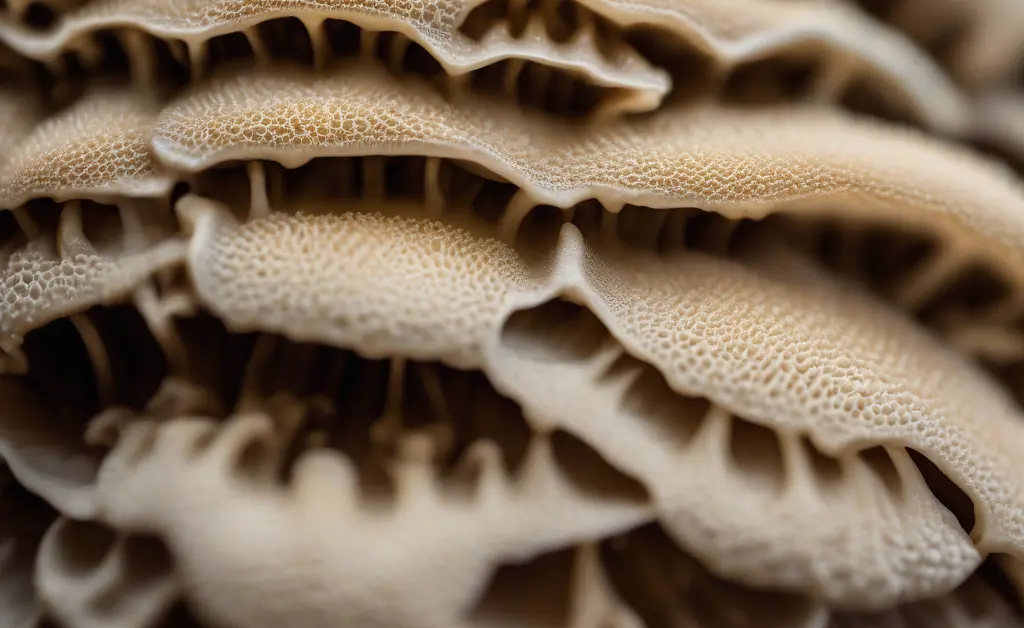
When examining potential specimens, distinguishing between a true turkey tail and its common look-alikes is essential. The most prominent impostor, Stereum ostrea, often referred to as false turkey tail, shares a similar overall shape and color patterns on its upper surface. However, a close look at the turkey tail mushroom underside of this particular fungus reveals the critical differences that separate it from the beneficial Trametes versicolor, highlighting why careful inspection is so important for reliable identification.
Key Differences in Pore Structure (or lack thereof)
The most crucial distinction between true turkey tail and false turkey tail lies in their undersides: Stereum ostrea lacks pores. Instead of the numerous tiny openings seen on Trametes versicolor, the false turkey tail possesses a smooth underside, or at most, a slightly ridged or wrinkled surface, but never true pores or tubes. This absence of a distinct pore surface is the definitive characteristic that separates false turkey tail from the genuine article. It is not a polypore, and therefore, its hymenium does not feature the visible pores typical of many bracket fungus species.
Variations in Underside Color and Texture Among Impostors
While the true turkey tail typically maintains its white or creamy underside, impostors like Stereum ostrea often display varying colors. The underside of false turkey tail can range from yellowish to reddish-brown, sometimes with a purplish or orange tint, especially near the edges. The texture also differs; instead of the velvety, finely porous feel, the underside of Stereum ostrea is smooth and leathery or slightly fuzzy but lacks any discernible pores. Other impostors might have gills or even darker pore surfaces that bruise blue or black, further differentiating them from the consistent characteristics of a true turkey tail.
Accurate identification of turkey tail mushrooms hinges on a thorough examination of their underside. The presence of minute, visible pores, a consistently white or creamy color, and a finely textured feel are the definitive markers of Trametes versicolor. Conversely, the smooth undersurface and varied coloration of look-alikes like Stereum ostrea provide clear contrasting features. By prioritizing these specific characteristics of the turkey tail mushroom underside, foragers and enthusiasts can confidently distinguish this beneficial fungus from its impostors, ensuring safe and correct identification for all their mycological endeavors.
This article is meant for general informational use and awareness. It is not intended to provide medical advice, diagnosis, or treatment. Always consult with a qualified healthcare professional before making any decisions about your health, diet, or lifestyle, especially concerning wild foraging or the use of natural substances. The information provided should not be used as a substitute for professional medical advice.
FAQ
— Does true turkey tail have pores?
Indeed, a true turkey tail mushroom, *Trametes versicolor*, possesses a distinct pore surface on its underside, not gills. These tiny pores are essential for the mushroom’s reproduction, releasing microscopic spores into the environment. This characteristic pore structure is a key identifying feature for this polypore fungus.
— What color is the underside of turkey tail?
The underside of turkey tail mushroom is typically white to an off-white or light tan color when fresh and young. This lighter coloration tends to darken slightly with age or handling, sometimes developing a creamy or yellowish tint. Observing the color of the turkey tail mushroom underside is a critical step in identification.
— Are turkey tail mushrooms smooth underneath?
Turkey tail mushrooms are not smooth underneath in the way many gilled mushrooms are. Instead, their underside is covered in many tiny, dense pores, giving it a velvety or finely textured feel rather than a completely smooth surface. This unique texture is a direct result of its pore structure.
— What does the underside of Trametes versicolor look like?
The underside of *Trametes versicolor*, commonly known as turkey tail, presents a fine, minutely porous surface. These pores are incredibly small and tightly packed, often barely visible to the naked eye without close inspection. Its coloration generally ranges from white to a pale cream or buff, which distinguishes it from many look-alike species.