
The turkey tail mushroom (Trametes versicolor) holds a significant place in traditional wellness practices across various cultures. When exploring its presence in different languages, understanding the precise terminology becomes crucial, especially for those seeking information in Central European contexts. Navigating linguistic nuances ensures accuracy and avoids confusion, whether for culinary interests, health applications, or botanical study. This exploration delves into the specific German names and phrases used to refer to this distinctive fungi. We will clarify the most common and accurate ways to identify the turkey tail mushroom in German, considering regional variations and formal applications to provide a comprehensive guide for English speakers.
What is turkey tail mushroom in German?
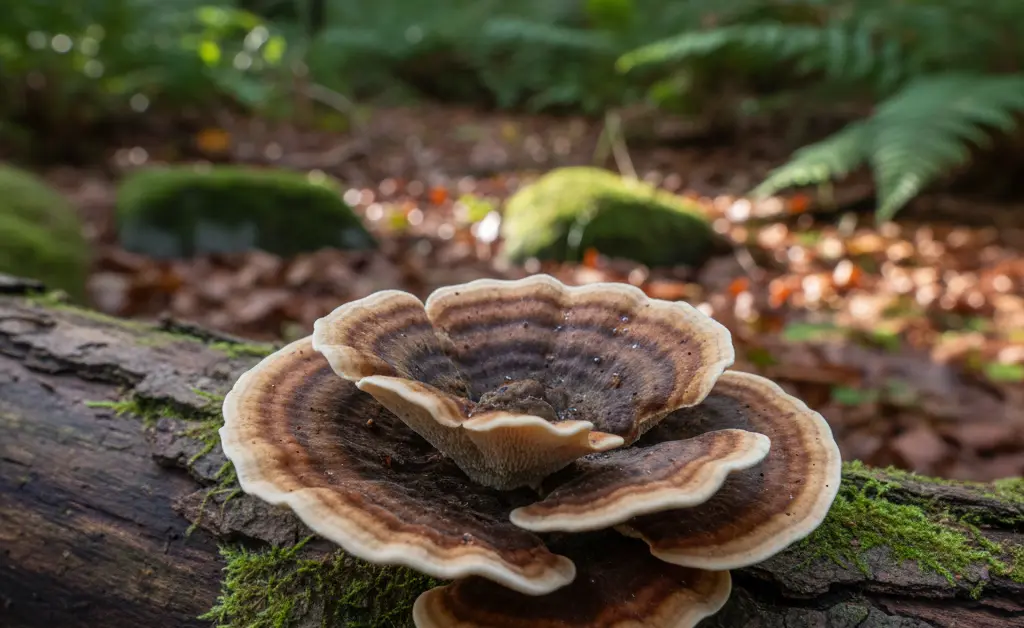
For individuals seeking information about this distinctive fungus in German-speaking regions, understanding the correct terminology is the first step. The primary German term for this mushroom is well-established, though regional variations and alternative descriptions also exist. Delving into these terms reveals how German nomenclature often describes a mushroom’s visual characteristics or its scientific classification rather than a direct translation of common English names.
Identifying the Most Common German Term
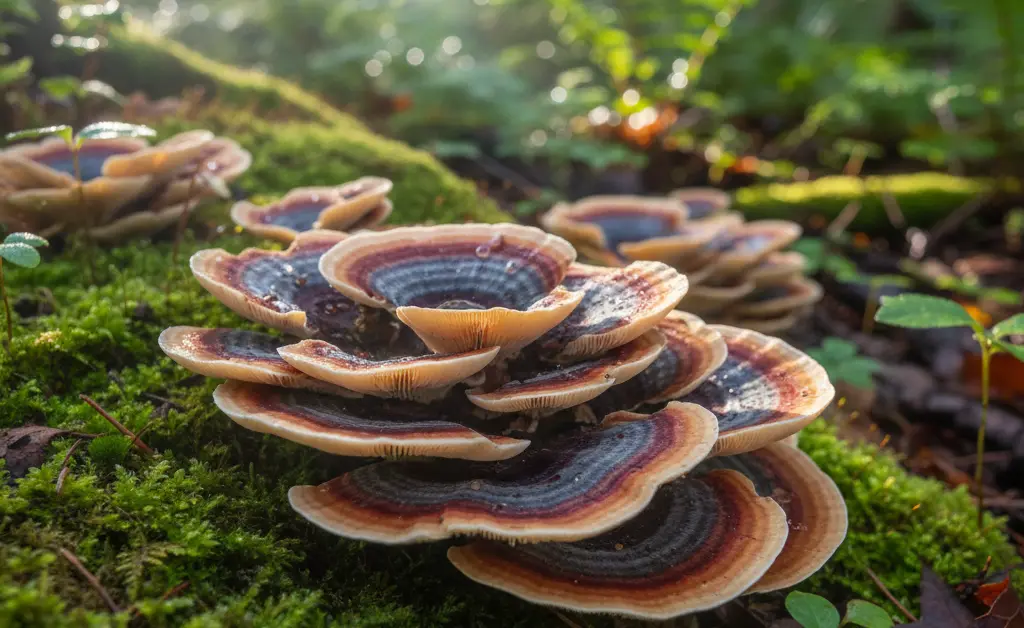
The most widely recognized German term for the turkey tail mushroom is “Schmetterlingstramete.” This name directly translates to “butterfly bracket” or “butterfly tramete,” offering a vivid description of its fan-like, colorful appearance, reminiscent of a butterfly’s wings. It is important for anyone researching the turkey tail mushroom in German to be familiar with this primary designation, as it is used in both popular science and general discussions.
Commonly Used German Equivalents
Beyond “Schmetterlingstramete,” other phrases or descriptive names might be encountered, though they are less precise or less frequently used. These often reflect regional usage or more colloquial language. For example, some might refer to it simply as “Bunte Tramete” (colorful tramete), emphasizing its varied hues, or generally as a “Baumpilz” (tree mushroom). However, “Schmetterlingstramete” remains the standard German equivalent. The scientific name, Trametes versicolor, serves as the universally recognized term in mycology, providing clarity across all languages. Understanding how turkey tail mushroom is referenced in different languages offers a broader perspective.
Literal Meaning vs. Common Usage
The literal translation of “turkey tail” doesn’t directly map to a commonly used German term for the mushroom. German nomenclature often describes the mushroom’s visual characteristics or its genus, as seen with “Schmetterlingstramete.” Unlike English, where “turkey tail” evokes the fan-like plumage of a turkey, German terms for fungi tend to be more descriptive of their form or habitat. This highlights a fascinating difference in linguistic approaches to naming natural elements.
Understanding the Nuances of German Terms
Exploring the nuances of German terms for this fungi involves recognizing how formal botanical language differs from everyday speech. The scientific community uniformly uses Trametes versicolor. In contrast, the general public and nature enthusiasts primarily use “Schmetterlingstramete.” Understanding these distinctions is key to accurate communication when discussing the turkey tail mushroom in German, especially when differentiating between scientific discourse and common parlance or when exploring regional variations.
Main German Translations for Turkey Tail Mushroom
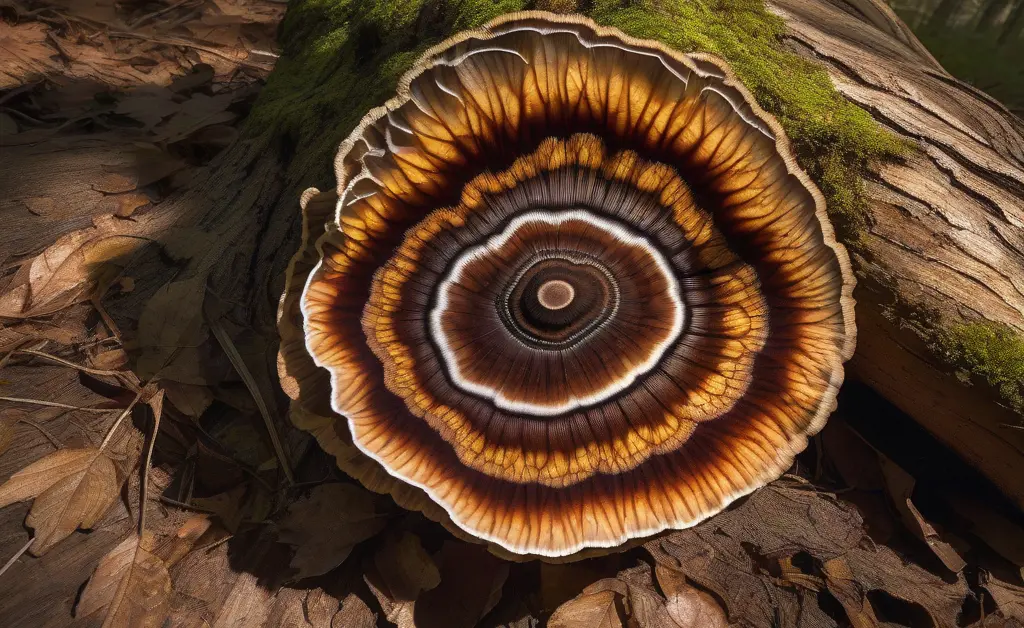
When discussing the turkey tail mushroom in German, it’s beneficial to be aware of the range of terms, from the most common to more specific or regional expressions. This section explores these different facets, providing a comprehensive overview of how this notable fungus is referred to across German-speaking territories. Beyond German, one might explore the terminology for turkey tail mushroom in Spanish to understand its presence in other major languages.
Common German Synonyms and Alternative Names
While “Schmetterlingstramete” is the standard German term, certain synonyms or alternative names might appear, albeit less frequently. Some older botanical texts or specific regional dialects might occasionally use “Vielfarbige Tramete” (multicolored tramete) or simply “Bunte Tramete.” These names invariably emphasize the mushroom’s characteristic vibrant colors. It’s rare to find a widely adopted synonym that completely replaces “Schmetterlingstramete” in general usage for the turkey tail mushroom in German. For example, specific terms are used for turkey tail mushroom in Korean.
Direct Translation of “Turkey Tail”
A direct, word-for-word translation of “Turkey Tail” into German (e.g., “Truthahnschwanz” or “Putenschwanz”) is not a recognized or common name for the mushroom in German-speaking regions. Such a term would sound foreign and incorrect to a native German speaker in the context of mycology. German terminology prefers descriptive names like “Schmetterlingstramete” that focus on the mushroom’s visual attributes rather than a literal animal comparison.
Grammatical Gender and Plural Forms
The German word “Schmetterlingstramete” is feminine, requiring the definite article “die” (die Schmetterlingstramete). Its plural form is “die Schmetterlingstrameten.” Understanding the grammatical gender and correct pluralization is important for accurate usage within German sentences and formal discussions. Similarly, for the scientific genus name, “Trametes,” it is often treated as feminine when used in a German sentence, though scientific names generally stand outside strict grammatical gender rules.
Southern German and Bavarian Terms
In southern Germany and Bavaria, while “Schmetterlingstramete” is widely understood and accepted, local dialects are rich in their own vocabulary. However, there isn’t a universally recognized, distinct Bavarian-only term for the turkey tail mushroom that would entirely replace the standard German name. Regional terminology for fungi tends to align with standard German botanical names for well-known species, even if pronunciation or surrounding vocabulary differs.
Austrian German Terminology
Similar to Bavaria, Austrian German typically defaults to “Schmetterlingstramete” for the turkey tail mushroom. While the Austrian dialect can vary significantly for everyday objects and phrases, specialized botanical terms and common names for fungi usually align with standard German. Scientific publications and health-related contexts in Austria would exclusively use Trametes versicolor or “Schmetterlingstramete.” Global health guidelines, often developed by organizations like the WHO, frequently rely on scientific nomenclature for clarity.
Swiss German Expressions
In Switzerland, particularly in the German-speaking cantons, “Schmetterlingstramete” is also the prevalent term for the turkey tail mushroom. Swiss German, while distinct in pronunciation and some vocabulary, generally relies on standard German for most scientific and formal botanical designations. Local colloquialisms for fungi are less likely to apply to specific, well-documented species like the turkey tail mushroom.
Formal vs. Informal Designations
Formally, particularly in scientific literature and mycology, the scientific name Trametes versicolor is universally used. This ensures precision and avoids any linguistic ambiguity. Informally, “Schmetterlingstramete” serves as the common German name among enthusiasts and the general public. In very casual contexts, someone might simply say “ein Pilz” (a mushroom) without further specification, relying on visual cues or context for identification, but this lacks the specificity needed for clear communication regarding the turkey tail mushroom in German. Similar variations exist for turkey tail mushroom in French, reflecting different contexts of usage.
Understanding the varied ways the turkey tail mushroom is referenced in German, from the universally accepted scientific name Trametes versicolor to the common “Schmetterlingstramete,” provides a clearer picture for anyone exploring this fungi. While direct translations of “turkey tail” are not used, the descriptive German terms offer their own insights into the mushroom’s appearance. Navigating these linguistic differences is key to accurate research and communication within German-speaking contexts.
Readers should understand that this article does not offer medical diagnosis or treatment. The information provided is for general knowledge and educational purposes only and should not be considered a substitute for professional medical advice. Always consult with a qualified healthcare provider for any health concerns or before making any decisions related to your health or well-being.
FAQ
— What is the most common German word for turkey tail mushroom?
The most widely recognized term for turkey tail mushroom in German is “Schmetterlings-Tramete.” This name clearly references its butterfly-like, fan-shaped appearance and is the standard way to refer to this particular fungus. It is the common and precise descriptor in German-speaking regions.
— Are there different German names for turkey tail mushroom?
While “Schmetterlings-Tramete” is the official and most common scientific name, some regional or older colloquial terms for this mushroom might exist. However, these are generally less widespread and might refer to similar bracket fungi rather than specifically identifying turkey tail. For clear communication, the official term is preferred.
— How do you say ‘turkey tail mushroom’ in Austrian German?
In Austrian German, the term “Schmetterlings-Tramete” remains the standard and most accurate way to refer to the turkey tail mushroom. There isn’t a widely recognized distinct Austrian German equivalent that differs significantly from the general German usage. Botanical and mycological terminology tends to be consistent across the German-speaking world.
— What is the grammatical gender of the German term for turkey tail mushroom?
The grammatical gender of “Schmetterlings-Tramete” is feminine, denoted by the article “die.” This gender is determined by the noun “Tramete,” which is a feminine noun in German. Therefore, one would always refer to “die Schmetterlings-Tramete” in a German sentence.
— Is “Schwamm” the correct German term for turkey tail mushroom?
No, “Schwamm” is a general term for a fungus or a sponge and is not specific to turkey tail mushroom. While turkey tail is indeed a type of fungus, using “Schwamm” would be too vague and wouldn’t precisely identify it. To be accurate, the specific term “Schmetterlings-Tramete” is required.
— How to correctly refer to turkey tail mushroom in German sentences?
To correctly refer to turkey tail mushroom in German sentences, always use its full and precise name, “die Schmetterlings-Tramete.” This ensures clarity and avoids confusion with other fungi. For instance, you might say, “Die Schmetterlings-Tramete wächst an Baumstämmen,” to indicate it grows on tree trunks.