Navigating the world of natural health often involves understanding the terminology across different languages, especially for well-regarded natural elements like the turkey tail mushroom. As an experienced observer of wellness trends and botanical nomenclature, I find that accurately identifying this beneficial fungus in French requires more than a simple word-for-word translation. Its scientific and common names diverge, each offering a unique insight into how French culture perceives and categorizes this distinctive organism. This exploration delves into the precise mycological terms and everyday expressions used to describe the turkey tail mushroom in French, ensuring clarity for anyone interested in its properties or looking to discuss it within a Francophone context. Understanding these nuances is crucial for both mycologists and wellness enthusiasts alike.
Key French Translations for “Turkey Tail”: From Mycological to Colloquial
When discussing the turkey tail mushroom in French, it’s essential to recognize that there isn’t a single, universally accepted translation that covers all contexts. The French language, like many others, differentiates between scientific classifications and popular, descriptive names. Understanding these distinctions is crucial for anyone looking for the accurate French equivalent or trying to communicate about this fungus effectively in an English to French context. To fully grasp its global recognition, exploring the turkey tail mushroom in different languages provides a broader perspective. This section clarifies the various terms used to describe this fascinating organism, moving from precise mycological terminology to more common, everyday expressions.
To ensure accuracy in health-related discussions, consulting reputable sources like the CDC is always recommended.
“Tramète versicolore”: The Mycological Term in French
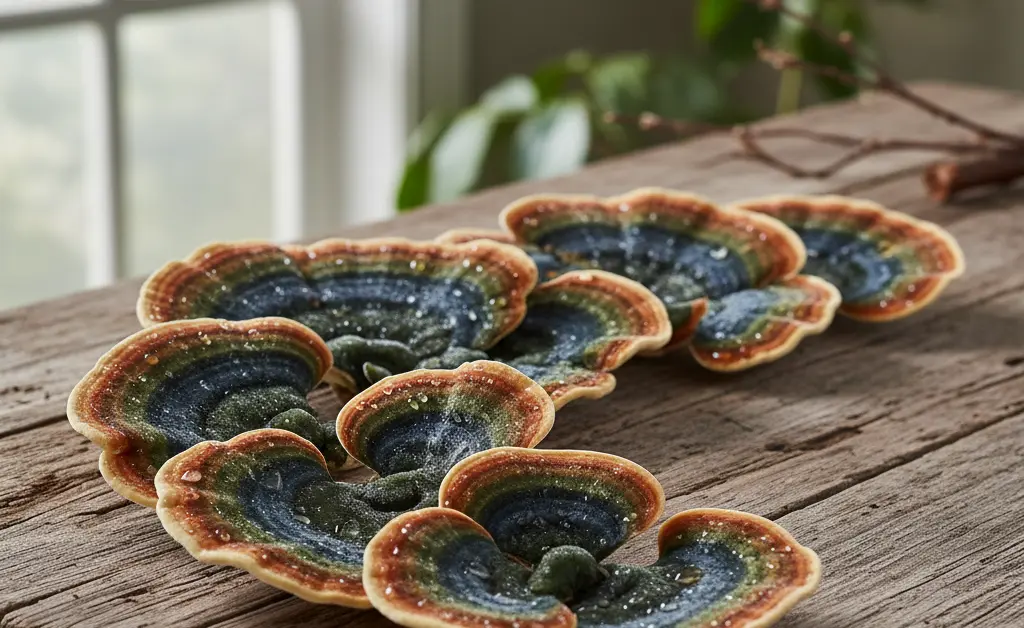
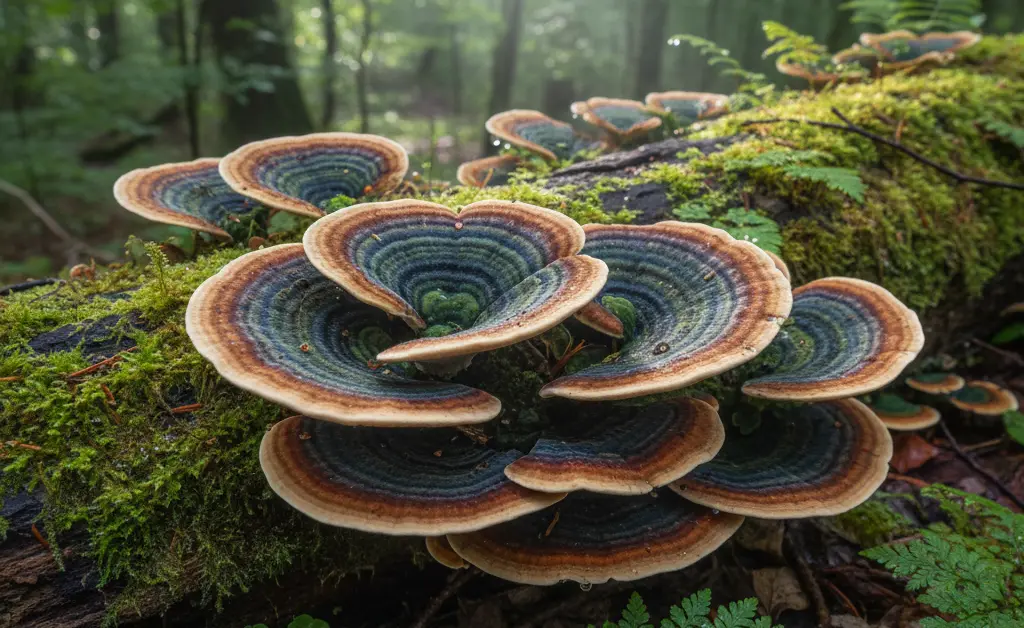
The most accurate and widely recognized mycological term for the turkey tail mushroom in French is “tramète versicolore.” This name directly corresponds to its scientific classification, Trametes versicolor, which is universally accepted within the scientific community. The term “tramète” refers to its genus, aligning with the “Trametes versicolor: The Scientific Identification.” The adjective “versicolore” literally means “multicolored” or “having various colors,” which perfectly describes the distinctive concentric bands of varying hues seen on the cap of the fungus. Understanding its proper identification is essential, especially when exploring turkey tail mushroom para que sirve (what it is used for). This precise terminology is paramount for mycologists and researchers, ensuring clarity and avoiding ambiguity when discussing the turkey tail mushroom in French or any scientific context.
Common French Names and Usage Context
Beyond its formal mycological designation, the turkey tail mushroom in French may be referred to by several common names, though these are less standardized than “tramète versicolore.” These common names often emerge from visual characteristics or traditional uses, much like how many plants and fungi acquire their popular monikers. However, it’s important to note that a single, widely adopted common name equivalent to “turkey tail” doesn’t hold the same prevalence in everyday French as “turkey tail” does in English. While some might attempt descriptive phrases, they generally lack the immediate recognition of the scientific term. For instance, discussions often highlight how the turkey tail mushroom in Chinese also has distinct linguistic and cultural significance. Discussions about common French names for Trametes versicolor often highlight the preference for the scientific or mycological term in more formal settings, even among enthusiasts.
Literal Translation: “Queue de Dindon”
A direct, literal translation of “turkey tail” into French would be “queue de dindon.” While this phrase precisely conveys the meaning of the English name, it is not traditionally used in French to refer to the turkey tail mushroom itself. French mycological and herbal traditions primarily favor “tramète versicolore” when discussing this specific fungus. Using “queue de dindon” might be understood as a direct translation of the English term, but it would not typically be recognized as the name of the mushroom by native French speakers familiar with mycology. Similarly, understanding the nuances of the turkey tail mushroom in Spanish also requires careful attention to cultural and linguistic contexts. Other bird-related French terms, such as “croupion de dinde,” “plumes de dindon,” or “panache de dindon,” refer to different parts of a turkey and are not associated with the mushroom. This highlights the importance of precise terminology and understanding the nuances when seeking the correct translation for the turkey tail mushroom in French.
Understanding the varied terminology for the turkey tail mushroom in French, from the precise “tramète versicolore” to the literal “queue de dindon,” is vital for accurate communication. While “tramète versicolore” stands as the definitive mycological name, recognizing the contexts in which each term might appear can enhance comprehension and discussion. This clarity is not only beneficial for academic discourse but also for individuals exploring the potential turkey tail mushroom benefits within Francophone communities, ensuring they access reliable information and products.
The information in this article is intended for knowledge purposes only. It is not a substitute for professional medical advice, diagnosis, or treatment. Always seek the advice of a qualified healthcare provider for any questions regarding a medical condition. Never disregard professional medical advice or delay in seeking it because of something you have read in this article.
FAQ
— What is the correct French name for turkey tail mushroom?
The most precise and widely accepted common name for this beneficial fungus, known in English as turkey tail mushroom in French, is “coriole versicolore.” This term, which literally translates to “versicolor coriole,” directly corresponds to its scientific designation, *Trametes versicolor*. It’s the standard terminology used in mycological and health-related discussions within French-speaking contexts.
— How do you translate “Trametes versicolor” into French?
The scientific name *Trametes versicolor* is universally recognized and does not require translation in scientific literature, as scientific names are standardized across languages. However, its common French equivalent is “coriole versicolore,” which reflects its key characteristics. This common name is widely used when referring to the fungus outside of formal scientific classification.
— Is “queue de dindon” the right translation for turkey tail mushroom?
While “queue de dindon” is a literal translation of “turkey tail” into French, it is not the scientifically or popularly recognized common name for the mushroom in French. The more accurate and accepted term is “coriole versicolore.” Using “queue de dindon” might be understood in informal contexts, but it lacks the precision and widespread recognition of the established name.
— What are the different French translations for “turkey tail”?
The primary and most accurate French designation for the turkey tail mushroom is “coriole versicolore.” While “queue de dindon” serves as a direct, literal translation of “turkey tail,” it is not the standard common name used in mycology or wellness discussions. Some regional or informal contexts might use “polypore versicolore,” also referring to the same species due to its polypore characteristics.