As more home cooks embrace the practice of foraging for unique, wild ingredients, the annual hunt for morel mushrooms has gained remarkable popularity. These elusive fungi are prized for their rich, earthy flavor and distinctive honeycomb appearance, making them a gourmet addition to any dish. However, the excitement of the search must be tempered with caution, as look-alike species can be toxic. For any aspiring forager, successfully and safely identifying these delicacies hinges on a thorough understanding of key morel mushroom characteristics. This knowledge is not just beneficial—it is essential for distinguishing true morels from their dangerous counterparts, ensuring a rewarding and safe culinary experience. This guide will explore the specific features to look for, from their hollow interior to their unique cap structure.
Morel Mushroom Characteristics
Morel mushroom scientific name
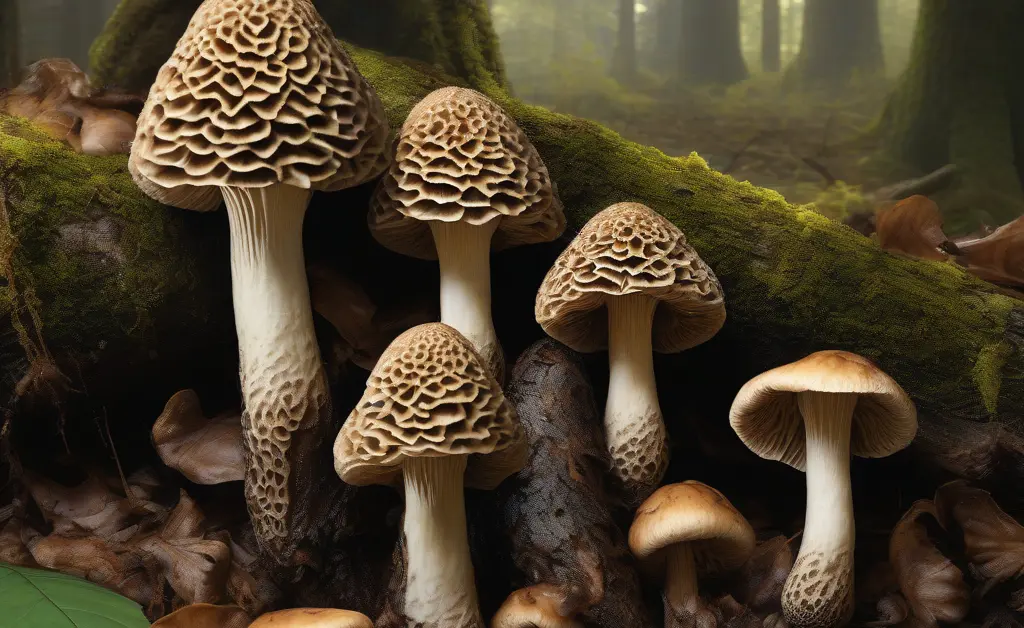
All true morel mushrooms belong to the genus Morchella. This scientific name is the umbrella classification for the dozens of species of true morels found across the globe, including black morels, yellow morels, and half-free morels. When foragers and mycologists refer to a mushroom as a member of the Morchella genus, they are confirming it is a true, edible morel, distinct from any potentially harmful look-alikes. Knowing this scientific name is the first step in precise and safe morel mushroom identification.
Key Characteristics of True Morels
Successful morel mushroom identification hinges on recognizing a consistent set of features. True morels are defined by a unique combination of traits that, when observed together, provide a reliable confirmation of their identity. The most crucial features include a distinctly pitted and ridged cap that resembles a honeycomb, a stem and cap that form a single, continuous hollow chamber, and the way the cap is fully attached to the stem. Understanding these core morel mushroom characteristics is non-negotiable for anyone venturing into foraging for these prized fungi, as it is the primary way to differentiate them from non-edible or toxic species. For more on identifying these mushrooms, consult this morel mushroom identification guide.
The Unique Structure of Morel Caps
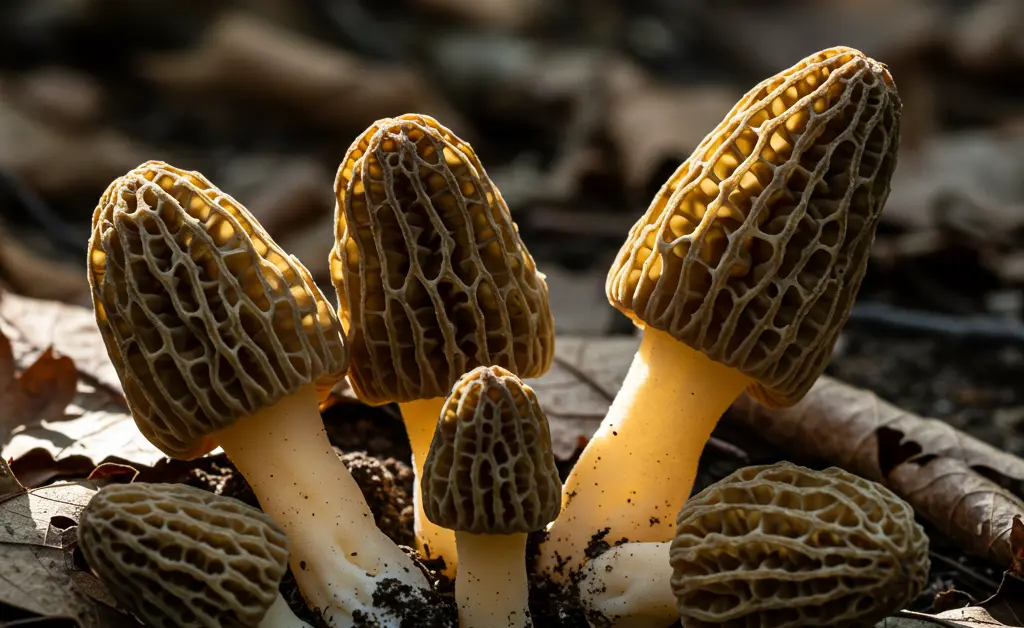
The cap, or pileus, of a true morel is its most recognizable feature. It does not have gills or pores like many other mushrooms. Instead, its surface is covered in a network of pits and ridges that give it a distinctive honeycomb or sponge-like appearance. These ridges are typically irregular and wavy, creating deep, hollowed-out pits across the entire cap. This complex, webbed structure is integral to the mushroom’s identity and is a stark contrast to the smoother, wrinkled, or brain-like caps of false morels.
Cap Shape and Texture
While the pitted surface is consistent, the overall cap shape of a morel can vary considerably. Shapes range from nearly round or globular to tall and conical like a Christmas tree. Common shapes include oblong, bulbous, and pointed. The color can also vary widely, from a pale, creamy yellow to a deep grayish-brown or nearly black, often depending on the specific species and its environment. The texture of the cap is firm but brittle, and the ridged surface feels waxy or slightly velvety to the touch. The pits themselves are deep and clearly defined.
Stem Characteristics
The stem, or stipe, of a true morel is typically lighter in color than the cap, often appearing whitish, creamy, or pale tan. It is relatively thick and sturdy, supporting the cap directly from its base. One of the most important identifying features is the attachment point: in all true morels, the bottom edge of the cap is fused directly to the stem. There is no skirt or hanging cap edge. The texture of the stem can be smooth or have a slightly grainy or mealy feel. Like the cap, the stem is also completely hollow.
Hollow Interior
The single most definitive test to confirm a true morel is to slice it lengthwise from the top of the cap all the way through the stem. A genuine morel will be completely hollow inside, forming one continuous, uninterrupted chamber. There should be no fleshy tissue, cotton-like fibers, or separate chambers within the mushroom. This hollow nature is a consistent feature across all species within the Morchella genus and is a critical safety check. If a mushroom that looks like a morel is solid or filled with material inside, it is not a true morel and should be considered dangerous.
Edible vs. False Morels
What does a false morel mushroom look like
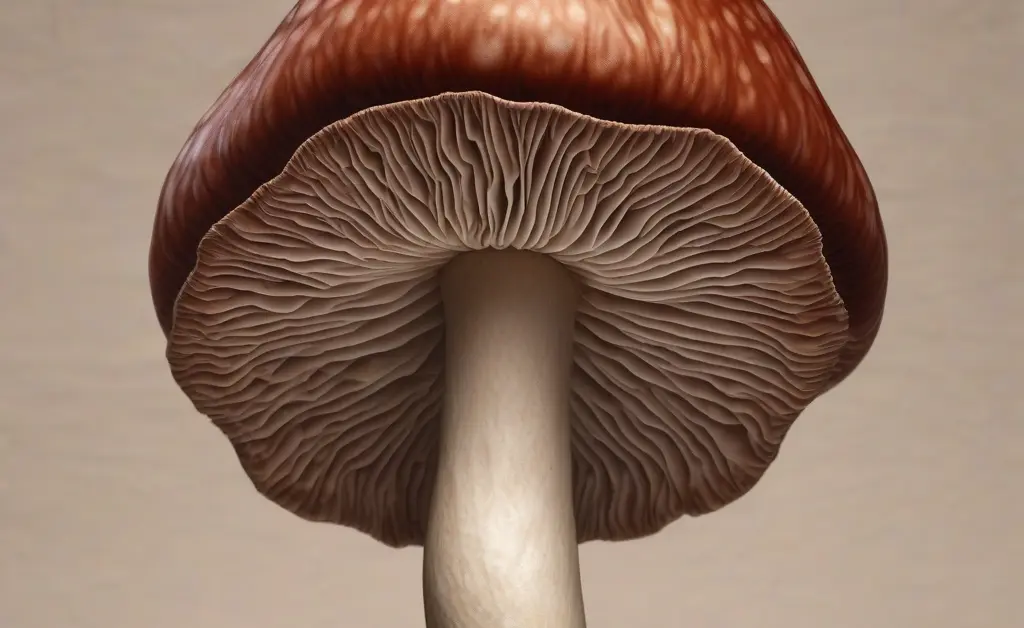
False morels, which are often from the Gyromitra genus, can superficially resemble true morels but have distinct differences. Their caps are not honeycombed with pits and ridges. Instead, they typically appear wrinkled, lobed, or folded, resembling a brain or a misshapen saddle. Their color is often a reddish-brown or yellowish-brown. When sliced open, a false morel is not hollow. Its interior is typically filled with cottony fibers, tissue, or a series of chambers, and the cap often hangs over the stem like a skirt rather than being fully attached.
Distinguishing True Morels from False Morels
Differentiating between true and false morels is a critical skill for any forager. The distinction relies on carefully observing a few key features. The primary points of comparison are:
- The Cap: True morels have a deeply pitted and ridged cap that looks like a honeycomb. False morels have a wrinkled, wavy, or brain-like cap.
- The Interior: A true morel is completely hollow from the tip of its cap to the bottom of its stem. A false morel is solid or filled with fibrous tissue.
- The Attachment: On a true morel, the cap is fully attached to the stem. On many false morels, the cap hangs freely around the top of the stem, attached only at the very top.
Verifying all these morel mushroom characteristics is essential for safety, as false morels contain compounds that can be toxic. This is part of a comprehensive morel mushrooms identification process.
How to Spot and Identify Morel Mushrooms
Finding morels in the wild requires knowledge of their preferred habitats and seasonal availability. They typically appear in the spring, with the exact timing dependent on climate and weather factors like ground temperature and rainfall. Morels often show an association with certain trees, frequently found near ash, elm, apple, and sycamore trees, especially those that are dying or recently dead. They also favor disturbed ground, such as burned areas from the previous year, logged forests, or along the edges of dirt roads. When you find a potential morel, the identification process must be meticulous. Always check for the pitted cap, full attachment to the stem, and the completely hollow interior. This thorough review of morel mushroom characteristics should be performed on every single mushroom you collect. Learn more about morel mushrooms.
Morchella: The True Morels
To be certain you have an edible morel, it must be a member of the Morchella genus. This group encompasses all true morel mushroom varieties, from the coveted yellow morels (Morchella esculenta complex) to the dark and mysterious black morels (Morchella elata complex). While their appearances may vary in color and shape, they all share the same fundamental identifying traits. Every species of Morchella has a distinctly pitted, honeycomb-like cap that is fully attached to the stem, and the entire mushroom is hollow from top to bottom. Any mushroom that fails this three-part test, regardless of its outward resemblance, is not a true morel and should not be consumed. A solid understanding of these foundational morel mushroom characteristics is the only reliable way to ensure a safe forage. Knowing which are edible is crucial.
After a successful forage, proper preparation is key. Cleaning morel mushrooms should be done carefully to remove dirt and any insects hiding within the pits, often with a soft brush or a quick rinse. Because they are wild, they must always be thoroughly cooked; they should never be eaten raw. Common cooking methods include sautéing in butter, which brings out their nutty, earthy flavor, or incorporating them into cream sauces, pastas, and risottos.
This information is provided for educational purposes only. It is not a substitute for expert, in-person identification, and you should never consume a wild mushroom unless you are 100% certain of its identity. Misidentification of mushrooms can lead to serious illness or death. When in doubt, consult a local mycological society or an experienced forager before consumption. For health advice, consult the NHS.
FAQ
What do morel mushrooms look like?
Morel mushrooms are easily recognizable by their unique honeycomb-like appearance. Their caps are deeply pitted and ridged, resembling a sponge or a brain, and they are typically conical or oval in shape. These distinctive morel mushroom characteristics set them apart from other wild mushrooms.
How can you tell if a mushroom is a morel?
To identify a morel, look for the characteristic honeycomb cap structure that is directly attached to the stem, with no skirt or ring. True morels have a hollow interior throughout the cap and stem, which you can confirm by slicing one lengthwise. Always be certain of your identification before consuming any wild mushroom.