
There’s a unique thrill that comes with foraging in the spring woods, a sense of discovery as you scan the forest floor for a glimpse of that distinctive, honeycombed cap. Morels are a prized culinary treasure, and finding them is a rewarding experience. However, this excitement must be balanced with caution. For both new and seasoned foragers, the ability to confidently distinguish a true morel from its toxic look-alikes is a non-negotiable skill. This guide is designed to build that confidence, focusing on the critical details of proper Morel Mushroom Identification. We will explore the key characteristics of true morels, compare them directly with false morels, and provide the safety precautions necessary for a successful and enjoyable hunt.
Morel Mushroom Identification
The process of identifying morel mushrooms involves a careful examination of several distinct features. Unlike many other mushrooms, morels have a unique set of characteristics that, when assessed together, allow for a confident identification. Relying on a single feature, such as color, is a common mistake that can lead to misidentification. A thorough approach requires inspecting the mushroom’s cap, stem, and interior structure as a cohesive whole.
Key Characteristics of True Morels
True morels, belonging to the genus Morchella, are defined by a consistent combination of traits. The most reliable method of identification is to confirm that every key characteristic is present. If even one feature does not match the description of a true morel, the specimen should be considered suspect and left alone. Mastering these details is the foundation of safe and successful foraging. For more on the scientific name, see morel mushroom scientific name.
Cap Structure (Pitted vs. Ridged)
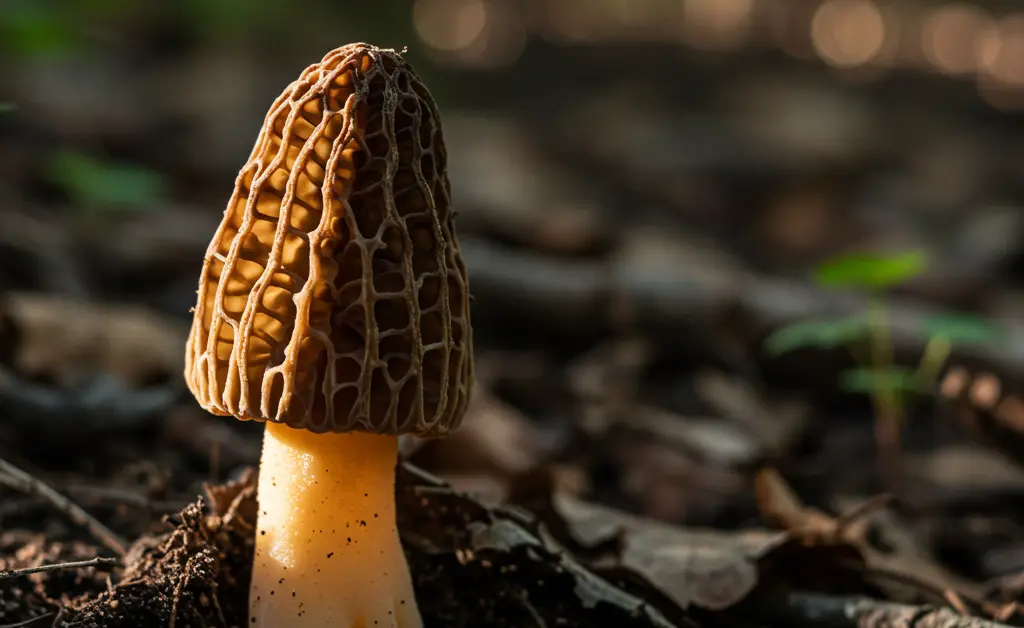
The cap of a true morel is its most recognizable feature. It does not have gills or pores like many other fungi. Instead, its surface is covered in a network of deep pits and well-defined ridges, giving it a distinctive honeycombed or sponge-like appearance. The pits are the indented parts, while the ridges form the interwoven structure around them. This complex, integrated structure is very different from the wavy, wrinkled, or brain-like surface of false morels. These sometimes called the sponge mushroom morels have a distinct appearance.
Stem Characteristics
The stem, or stipe, of a true morel is typically pale, ranging from whitish to a creamy yellow. A critical identification point is how the stem attaches to the cap. In a true morel, the stem and cap are fully fused into one continuous piece. When you look at the base of the cap, you will see that the stem flows directly into it without any overhanging lip or skirt. The connection is seamless.
Hollow Interior
This is arguably the most crucial test for identifying a true morel. When sliced in half lengthwise, from the tip of the cap straight down through the stem, a true morel will be completely hollow. This single, uninterrupted chamber extends from the top of the cap all the way to the bottom of the stem. There are no fibers, cottony substances, or separate chambers inside. If the mushroom is filled or sectioned, it is not a true morel.
Color Variations
True morels come in a spectrum of colors, which often causes confusion for beginners. Common variations include black morels, which are often the first to appear in the spring and can range from gray to nearly black; and yellow morels, which can be tan, yellow, or even a pale cream color. While color can be a helpful clue, it varies significantly based on species, age, and environmental conditions. It should never be used as the sole factor for identification.
Morel Mushroom Identification App
In recent years, several smartphone applications have been developed to assist with mushroom identification. These apps typically use image recognition to suggest possible species. While they can be a useful tool for learning and cross-referencing, they should never be treated as the final authority. Image quality, lighting, and the subtle variations between species can easily fool an algorithm. It is essential to use apps as a supplementary guide and to always confirm an identification using the physical characteristics outlined in this guide.
Morel Mushroom Identification Tips
Building confidence in your identification skills takes practice. Here are some tips to keep in mind:
- When in doubt, throw it out. This is the number one rule of foraging. There is no mushroom worth the risk of illness.
- Always slice it lengthwise. The hollow interior is a key giveaway for a true morel. Make this a mandatory step for every specimen you consider.
- Learn the look-alikes first. Before you even begin searching for true morels, you should be an expert on identifying the false morels common to your area.
- Forage with an expert. The best way to learn is by going out with an experienced forager or joining a local mycological society.
Morel Mushroom Identification Pictures
Studying photographs is an excellent way to train your eye to recognize the distinct features of morels. Use reputable sources such as university extension websites, mycological club pages, and field guides. Pay close attention to pictures that show the mushroom in its natural habitat, as well as images of the mushroom sliced in half. Be aware that pictures can sometimes be deceiving, so use them to supplement, not replace, hands-on knowledge of physical characteristics.
How to Spot and Identify Morel Mushrooms
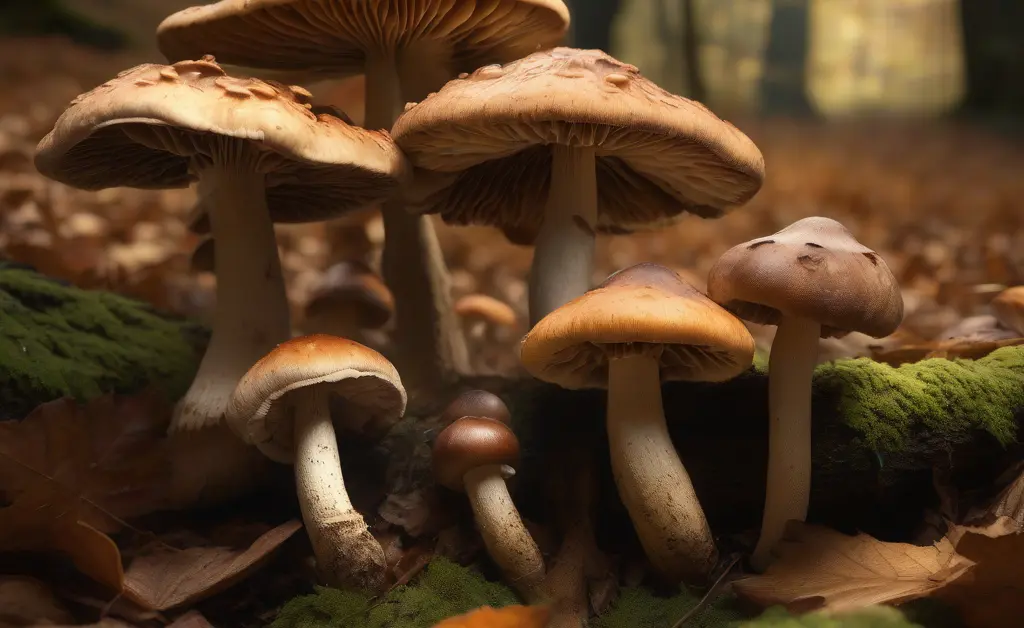
Finding morels is as much an art as it is a science. Successful foraging begins with understanding their preferred habitats and seasonal timing. Morels typically emerge in the spring, once soil temperatures are consistently warmer and after spring rains have moistened the ground. They are often found in deciduous forests, with a well-known association with certain trees. Foragers often have luck searching around dead or dying elm trees, old apple orchards, and near ash and poplar trees. They can be masters of camouflage, so learning to scan the forest floor for their unique pattern is a skill that develops over time. Accurate field identification requires applying all the key characteristics in a real-world setting.
False Morel vs Morel
Distinguishing a true morel from a false morel is the most important skill in foraging. A direct comparison highlights the critical differences. A true morel has a honeycombed cap with pits and ridges, which is fully attached to the stem, and a completely hollow interior. In contrast, a false morel typically has a wavy, lobed, or brain-like cap that often hangs down over the stem like a skirt. When cut open, a false morel is not hollow; it is filled with cottony fibers, chambers, or solid tissue. These stark contrasts are the foundation of safe **Morel Mushroom Identification**.
Distinguishing True Morels from False Morels
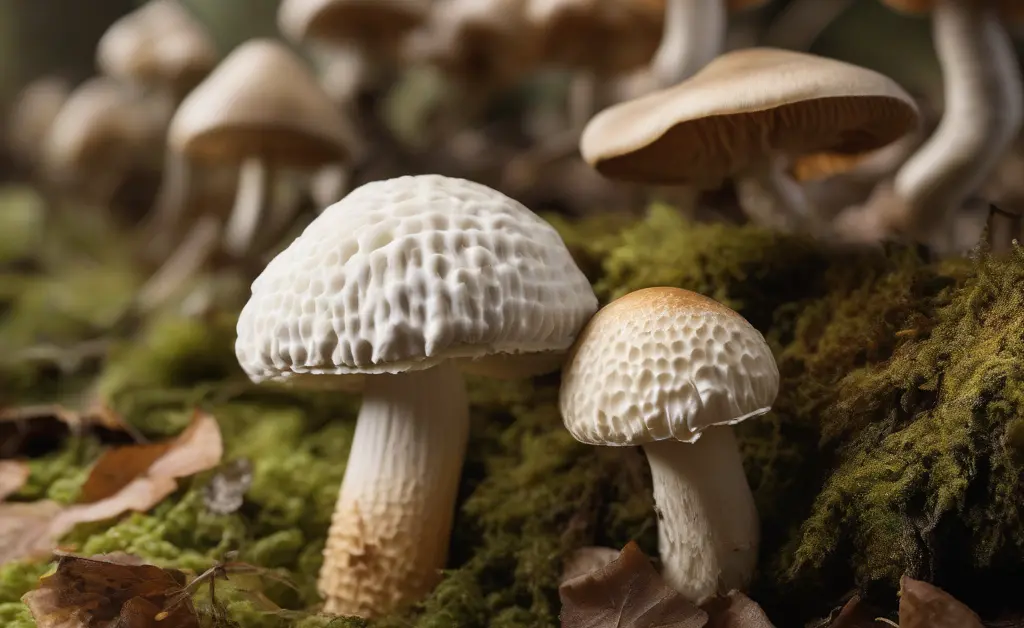
The term “false morel” refers to several species of mushrooms that bear a superficial resemblance to true morels but can be toxic. Because they can grow in the same habitats and at the same time of year, learning to definitively separate them is a matter of safety. The differences are clear and consistent, but they require a careful and methodical inspection. Understanding the specific morel mushroom characteristics is key to this distinction.
False Morel Identification
The primary features of false morels stand in stark contrast to true morels. Their caps are not truly pitted but are often wrinkled, folded, or convoluted, resembling a brain or a saddle. A key giveaway is the attachment of the cap to the stem. In many false morels, like those in the Verpa genus, the cap hangs freely from the top of the stem, much like a thimble on a finger. Slicing them open reveals another major difference: the interior is not hollow but is chambered or filled with a wispy, cotton-like material. Trusting these anatomical clues over a fleeting resemblance is the essence of correct **Morel Mushroom Identification**.
False Morel Types to Avoid
Two main groups of fungi are commonly referred to as false morels: Gyromitra species and Verpa species. Gyromitra mushrooms, sometimes called “beefsteaks,” have reddish-brown, brain-like caps and are known to contain compounds that can be toxic. Verpa species, or “thimble caps,” are distinguished by their cap attachment, which hangs free from the stem. Both of these groups pose a potential health risk and should be avoided by foragers. The potential toxicity of false morels is serious, and no beginner should ever experiment with them.
Safety Precautions for Foraging Morels
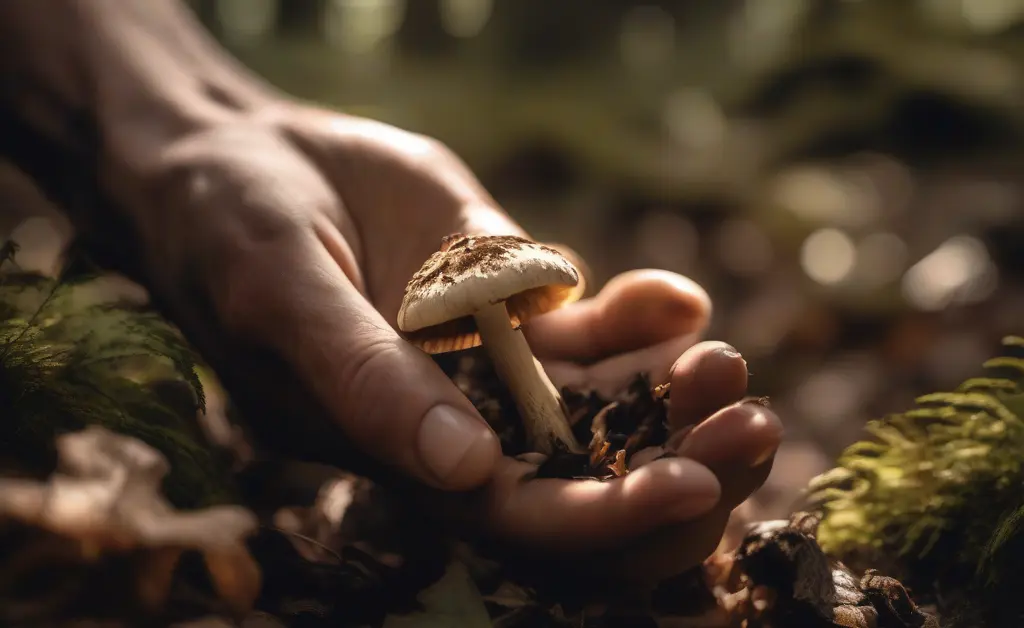
Enjoying wild foraged foods comes with a responsibility to prioritize safety above all else. The most important precaution is to be 100% certain of your mushroom’s identity before it is ever considered for consumption. If you have any hesitation, it is best to discard the specimen. Forage in clean environments, away from roadsides, industrial areas, or properties that may have been treated with pesticides or other chemicals. Consulting with local experts through mycological societies or extension offices is an invaluable way to verify your findings and deepen your knowledge. Even with a positive identification, it is crucial to always cook true morels thoroughly, as consuming them raw can lead to digestive upset. Careful practice and adherence to these rules are the final steps in safe **Morel Mushroom Identification**.
The rewarding journey of morel foraging is rooted in knowledge and caution. By patiently learning to recognize the distinct characteristics of true morels—the pitted cap, hollow interior, and attached stem—you can confidently distinguish them from their toxic look-alikes. This skill, combined with a deep respect for safety rules and the natural environment, transforms a simple walk in the woods into a thrilling and delicious treasure hunt. Always remember the forager’s most important rule: when in doubt, go without.
This comprehensive guide to morel foraging offers valuable insights for enthusiasts. For general information on mushroom hunting and safety, resources from organizations like the WHO can be beneficial. Always remember the forager’s most important rule: when in doubt, go without.
While this article discusses health-related topics, it does not provide medical guidance. The information presented is for educational purposes only and is not a substitute for professional advice from a qualified expert, such as a certified mycologist. Never consume any wild mushroom unless you are absolutely certain of its identification. Misidentification of mushrooms can lead to severe illness or death. The author and publisher are not responsible for any adverse effects resulting from the use of information contained in this article.
FAQ
How can I tell if a morel mushroom is real?
A true morel has a distinct honeycomb-like cap that is pitted and ridged, with the cap attached directly to the stem. The stem of a true morel is hollow all the way through, from the cap to the base. Observing these structural characteristics is key for accurate Morel Mushroom Identification.
What do false morels look like?
False morels often have irregular, brain-like caps that are wrinkled or lobed, rather than distinctly pitted. Their caps may appear to hang loosely from the stem, and unlike true morels, their stems and caps are typically filled with a cottony or irregular fleshy material. The surface of a false morel’s cap may also be smooth or have irregular folds instead of distinct pits.
Are morel mushrooms poisonous if not cooked?
Raw morels contain toxins that can cause gastrointestinal upset in some individuals. Cooking morels thoroughly breaks down these compounds, rendering them safe for consumption. Always ensure morels are fully cooked before eating.
Where are the best places to find morel mushrooms?
Morels often grow in wooded areas, particularly near certain tree species like ash, elm, oak, and apple trees, and they are frequently found in disturbed areas such as old burn sites or along riverbanks. They tend to favor damp soil and leaf litter, often emerging in patches. Look for them where sunlight can reach the forest floor.
When is morel season?
Morel mushroom season typically begins in early spring, generally starting around March or April in warmer climates and extending into May or even early June in cooler regions. The exact timing depends heavily on local weather conditions, particularly soil temperature and moisture levels. Peak fruiting often occurs after a period of rain following warmer weather.