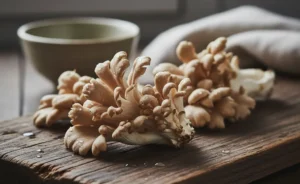

The thrill of discovering wild edible mushrooms is unparalleled, and among the most sought-after species is the oyster mushroom. Known for its delicate flavor and versatility in the kitchen, these fungi are a favorite among foragers. However, success in the field isn’t just about finding them; it’s crucially about safe oyster mushroom identification. This guide provides the comprehensive insights needed to confidently distinguish these desirable edibles from their less savory, or even dangerous, lookalikes. Mastering the subtle characteristics of caps, gills, stems, and habitats ensures a rewarding and safe foraging experience, transforming your woodland excursions into successful culinary adventures.
Oyster Mushroom Identification: A Comprehensive Guide
Successful foraging hinges on precise oyster mushroom identification, a skill that combines knowledge of their physical traits with an understanding of their preferred environments. There are several types of oyster mushrooms, scientifically classified under the genus Pleurotus, including the widely recognized Pleurotus ostreatus. While they share many common features, understanding the nuances between different types can enhance your foraging success and culinary diversity. For those interested, the oyster mushroom name in different languages often reflects its unique appearance or growing habits. This section will delve into specific varieties and practical tools to aid your identification journey.
Elm Oyster Mushroom Identification
The Elm oyster mushroom (Hypsizygus ulmarius, though sometimes historically grouped with Pleurotus) stands out with its robust nature. Unlike many true oyster mushrooms that grow directly from the wood without a distinct stem, the Elm oyster often features a more central, well-developed stipe. Its cap is typically white to off-white, sometimes brownish, and can grow quite large. The gills are usually white and run down the stem. A key aspect of its identification is its growth habit; it commonly grows on elm trees, but can also be found on other hardwoods, often higher up on the trunks.
Brown Oyster Mushroom Identification
The brown oyster mushroom, often a variant or close relative of Pleurotus ostreatus, displays caps ranging from light tan to dark brown or grayish-brown. Its coloration can vary significantly based on environmental factors like light and humidity. These `mushroom species` typically grow in shelf-like `clusters` on dead or dying `deciduous trees`. The underside reveals white to creamy `gills` that descend down a short, often eccentric or absent `stipe`. `Brown oyster mushroom identification` relies on observing these `coloration` patterns alongside the typical `growth pattern` and `habitat`.
Golden Oyster Mushroom Identification
The golden oyster mushroom (Pleurotus citrinopileatus) is easily recognizable by its vibrant yellow `cap color`. These `fungi` grow in spectacular, often dense `clusters`, sometimes appearing like a cascade of bright yellow petals on `decomposing wood`. The `gills` are white to yellowish and decurrent, extending down a short, sometimes fuzzy `stipe`. While beautiful and edible, `golden oyster mushroom identification` is essential as their bright color can sometimes attract attention, making accurate recognition critical for `safe identification`.
Visual Aids for Identification
Visual aids are indispensable tools for accurate `oyster mushroom identification`. High-quality photographs and detailed illustrations can highlight `distinguishing features` that might be subtle in the field. These resources provide a comparative reference, allowing foragers to match their findings against known examples. Paying close attention to the `oyster mushroom diagram` or `oyster mushroom underside` can reveal crucial characteristics that differentiate species.
Oyster Mushroom Identification Pictures
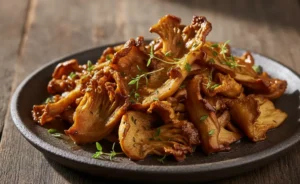
Utilizing a wide range of `oyster mushroom identification pictures` is a fundamental step in learning to identify these `wild edible mushrooms`. Look for images that show the mushroom from various angles: top, side, and underside, as well as pictures demonstrating its `growth pattern` in its natural `habitat`. Comparing the `cap shape`, `gill attachment`, and presence or absence of a `stipe` against multiple reliable images helps to build a comprehensive mental library for `safe identification`.
Oyster Mushroom Identification Apps
In the digital age, `oyster mushroom identification apps` offer a convenient way to access vast amounts of information in the field. Many apps use artificial intelligence or crowdsourced data to help suggest potential identifications based on uploaded photos and user input. While helpful, it’s crucial to use these apps as a supplementary tool and always cross-reference their suggestions with traditional field guides and expert advice, especially when dealing with `edible oyster mushrooms` to ensure `safe oyster mushroom identification`.
Key Physical Characteristics of Oyster Mushrooms
Understanding the `key identification features` of oyster mushrooms is paramount for successful foraging. These `fungi` exhibit a range of physical traits that, when observed together, provide a reliable profile for `oyster mushroom identification`. From their distinctive `oyster-shaped cap` to their unique `gill attachment` and `flesh texture`, each characteristic contributes to a confident identification.
Characteristics of Healthy Oyster Mushrooms
Identifying `healthy oyster mushrooms` involves looking for firm, plump `fruiting body` with fresh `coloration` appropriate to the species. The caps should be moist but not slimy, and free from extensive insect damage, mold (`oyster mushroom mold`), or `oyster mushroom white fuzz` indicating decay. The `cap margin` should be smooth and intact, not ragged or shriveled. Healthy specimens typically grow in robust `clusters` and show no signs of wilting or discoloration that might suggest age or spoilage.
Cap Shape, Color, and Texture
The `cap shape` of an oyster mushroom is typically fan-shaped or spatulate, resembling an oyster shell, hence its common name. It can vary from flat to convex and often has an enrolled `cap margin` when young. `Cap color` ranges widely depending on the species and environmental conditions, from white, gray, and brown to vibrant yellow or pink. The `cap texture` is generally smooth, though it can sometimes be slightly velvety or fuzzy, especially near the point of attachment to the wood. The `coloration` can be a significant indicator, but should always be considered alongside other features for accurate `oyster mushroom identification`.
Gill Attachment, Color, and Spacing
The `gills` of oyster mushrooms are a critical identification feature. They are almost always decurrent, meaning they run down the `stipe` (if present) or directly down the `substrate` they are growing on. The `gill attachment` is distinct. `Gill color` is typically white to creamy, though it can become yellowish with age. `Gill spacing` is usually close to crowded. Observing these `distinguishing features` helps differentiate true oyster mushrooms from many `lookalikes`.
Stem (Stipe) Presence and Characteristics
The `stem` or `stipe` of oyster mushrooms is highly variable. Many `wild edible mushrooms` in the Pleurotus genus have a very short, lateral `stipe` that is off-center (eccentric) or almost absent, with the `cap` appearing to grow directly from the `wood types`. If a `stipe` is present, it is usually firm, whitish, and can be hairy or fuzzy near the base. The lack of a prominent, central `stipe` is a key characteristic to note during `oyster mushroom identification`.
Spore Print Color and Collection
A `spore print` is a definitive `distinguishing feature` for many `mushroom species`. To collect an `oyster mushroom spore print`, place the `cap` (gill-side down) on a piece of dark paper and a piece of white paper, cover with a bowl, and leave for several hours. The `spore color` of most oyster mushrooms is white to lilac-gray, a crucial piece of information for `oyster mushroom identification` that helps rule out many `lookalikes` with darker `spore print` colors. This method provides an objective piece of data when visual cues are ambiguous.
Flesh Texture and Color
The `flesh` of a healthy oyster mushroom is typically thick, firm, and white throughout. It should have a somewhat rubbery or fibrous `texture`, especially in older specimens. The `flesh color` remains consistently white and does not change significantly when cut or bruised. Any discoloration or watery `texture` could indicate a less desirable or even rotting `fruiting body`.
Distinctive Smell
Many `edible oyster mushrooms` possess a mild, distinctive `smell` that can be described as slightly sweet, somewhat earthy, or sometimes reminiscent of anise or seafood. This `distinctive smell` is another useful `key identification feature` to consider. The specific oyster mushroom taste can vary slightly among different species, but all edible varieties are highly regarded for their culinary appeal. While not always present or strong, a pleasant aroma can further confirm `oyster mushroom identification` when combined with other physical traits.
Preferred Habitat and Growing Conditions of Oyster Mushrooms
The habitat and specific `growing conditions` are as vital to `oyster mushroom identification` as their physical traits. These `fungi` are `saprobic`, meaning they obtain nutrients from dead or decaying organic matter. Knowing `where do oyster mushrooms grow` and on what `substrate` can significantly narrow down possibilities and aid `safe identification`.
Typical Substrates (Wood Types)
Oyster mushrooms are primarily found growing on `decomposing wood`, including `logs`, `stumps`, and dying `deciduous trees`. Common `wood types` include oak, beech, maple, poplar, and elm. While less common, some varieties can also be found on `coniferous trees`. The `mycelium` of the oyster mushroom permeates the wood, breaking it down and deriving nutrients. Observing the specific `substrate` helps confirm `oyster mushroom identification`, as many `lookalikes` prefer different growing media.
Environmental Preferences (Forests, Deadwood)
Oyster mushrooms thrive in `forests` and woodlands where there is an abundance of `deadwood`. They prefer moist, humid conditions, which are often found in shaded areas of forests. They can be found growing in `clusters` on standing dead trees or fallen `logs`. Their presence is a good indicator of a healthy forest ecosystem. The microclimate created by a forest environment provides the ideal conditions for these `mushroom species` to fruit.
Seasonal Appearance
The `seasonal appearance` of oyster mushrooms varies by region and specific `mushroom species`. Generally, the common oyster mushroom (Pleurotus ostreatus) can be found from late autumn through spring, and sometimes even in mild winters. Other `different types of oyster mushrooms`, like the golden oyster, prefer warmer temperatures and typically appear in summer and early autumn. Knowing the typical `fruiting body` season for your local area is an important `key identification feature` that can assist `oyster mushroom identification` efforts.
Oyster Mushroom Lookalikes and How to Differentiate Them
A critical step in `safe oyster mushroom identification` is understanding their `lookalikes`. Several other `mushroom species` can resemble oyster mushrooms, some of which are inedible or even toxic. Oyster mushroom lookalikes identification requires careful attention to `distinguishing features` to avoid `misidentification` and ensure safety.
Identifying False Oyster Mushrooms and Poisonous Varieties
The term “false oyster mushroom” often refers to various species that superficially resemble true oyster mushrooms but lack their desirable qualities or possess harmful ones. `Identifying false oyster mushrooms and poisonous varieties` is not about memorizing every single difference, but rather consistently applying the `key identification features` of true oyster mushrooms. Any deviation from these characteristics should trigger caution. Remember the adage: “When in Doubt, Throw it Out.”
Angel Wing Mushroom (Pleurocybella porrigens) vs. Oyster Mushroom
The `Angel Wing Mushroom` (`Pleurocybella porrigens`) is a classic `lookalike`, especially concerning for its potential toxicity, particularly to individuals with certain health conditions. It shares the same fan-like shape and white `coloration` with some oyster mushrooms. However, `distinguishing from Crepidotus species` often involves subtle differences. Angel wings are typically thinner, more delicate, and grow exclusively on `coniferous trees`. True oyster mushrooms are generally thicker-fleshed and predominantly found on `deciduous trees`. Always confirm the `substrate` and `flesh texture` when considering `oyster mushroom identification` near `angel wings`.
Distinguishing from Crepidotus Species
Crepidotus species are another common `oyster mushroom lookalike`. These `fungi` also grow in a shelf-like fashion on wood and can have similar `cap shapes` and `texture`. However, `distinguishing from Crepidotus species` is crucial due to their different spore color. Crepidotus mushrooms produce a brown `spore print`, while oyster mushrooms produce a white to lilac-gray `spore print`. Their `flesh` is often thinner, and they lack the distinct pleasant aroma of oyster mushrooms. Always perform a `spore print` to confirm `oyster mushroom identification`.
Differentiating from Mock Oyster (Phyllotopsis nidulans)
The `Mock Oyster` (`Phyllotopsis nidulans`) presents another `false oyster mushroom` challenge. It has a similar `oyster-shaped cap` and `growth pattern` on wood. However, `differentiating from Mock Oyster` is relatively straightforward once you know what to look for. The Mock Oyster has a distinctive orange to reddish-orange `cap color` and `gills` (though it can fade to yellowish). Crucially, its `spore print` is pinkish or brownish, not white. It also emits a distinctly unpleasant or chemical `smell`, unlike the mild aroma of edible oyster mushrooms.
Other Potential Lookalikes
Beyond the main ones, other `mushroom species` might occasionally be mistaken for oyster mushrooms, depending on their `growth pattern` and stage of development. These could include some types of bracket fungi or other saprobic species. The key to avoiding `misidentification` is to always consider the full suite of `key identification features` – `cap shape`, `gill attachment`, `stipe` characteristics, `spore print color`, `flesh texture`, and `distinctive smell`. Never rely on a single feature for `oyster mushroom identification`.
Tips for Safe Oyster Mushroom Foraging and Identification
Foraging for `wild edible mushrooms` is a rewarding activity, but safety must always be the top priority. Following best practices for `safe oyster mushroom foraging and identification` ensures that your culinary adventures remain free from harm. Thoroughness and caution are your best allies in the field.
Always Cross-Reference Multiple Features
The most important rule in `oyster mushroom identification` is to `always cross-reference multiple features`. Never rely on just one or two characteristics. Check the `cap shape`, `cap color`, `gill attachment`, `gill color`, `stem` presence/absence, `spore print color`, `flesh texture`, `distinctive smell`, and `habitat`. If any feature does not align perfectly with the description of a known `edible oyster mushroom`, err on the side of caution. This comprehensive approach significantly reduces the risk of `misidentification`.
Consult Field Guides and Experts
Before heading out, familiarize yourself with comprehensive `field guides` specific to your region. These guides often contain detailed descriptions, `oyster mushroom identification pictures`, and information on `lookalikes`. Furthermore, consider joining a local mycological society or seeking guidance from `experts` or experienced foragers. Their practical knowledge and ability to assess `wild oyster mushroom identification` in person can be invaluable for learning and confirming your findings. Reliable health information can often be found on trusted sites like the National Library of Medicine. Never consume a mushroom unless you are 100% certain of its identity.
Mastering the art of oyster mushroom identification involves a blend of careful observation, knowledge of key characteristics, and a healthy dose of caution. By understanding the various types of oyster mushrooms, their physical traits, preferred habitats, and common lookalikes, foragers can confidently and safely enjoy these delicious fungi. Always prioritize safety, utilize reliable resources, and when in doubt, it is best to leave the mushroom undisturbed.
This material is shared for educational insight, not for clinical decision-making. The information provided is intended for general knowledge and informational purposes only, and does not constitute medical advice, diagnosis, or treatment. Always consult with qualified professionals for any health concerns or before making any decisions related to your health or well-being, especially when foraging for wild edibles.
FAQ
— How do you identify an oyster mushroom in the wild?
Identifying an oyster mushroom in the wild involves observing its distinctive fan or oyster-shaped cap, often growing in cascading clusters on dead or dying trees and logs. The gills typically run down the short, absent, or lateral stem, converging at the point of attachment to the wood. Before considering any wild mushroom for consumption, it’s crucial to confirm its identity using multiple reliable sources.
— What are the key identification features of an oyster mushroom?
The key identification features relevant to oyster mushroom identification include its fan-shaped or spatulate cap, which can vary in color from white, grey, brown, to even pink or yellow depending on the species. Its gills are prominent, descending down a short or absent stem, often meeting at the base where it attaches to the wood. These mushrooms characteristically grow in layered clusters on decaying hardwood trees.
— What color is an oyster mushroom spore print?
The spore print of an oyster mushroom is typically white or, in some species, a pale lilac-gray. This light color is a significant diagnostic feature used by mycologists to differentiate them from other fungi. Observing the spore print provides a crucial detail in the overall identification process.
— Do oyster mushrooms have a stem?
Oyster mushrooms can present with a very short stem, or sometimes no noticeable stem at all. When a stem is present, it is typically lateral, emerging from the side of the cap and attaching to the wood substrate. This unique growth habit is a defining characteristic of the genus.
— What kind of wood do oyster mushrooms grow on?
Oyster mushrooms are primarily saprophytic, meaning they decompose dead or dying wood. They show a strong preference for hardwoods such as oak, maple, birch, and poplar, though some varieties can also be found on conifers. These fungi play a vital role in nutrient cycling by breaking down tough woody material.
— What mushrooms look like oyster mushrooms but are poisonous?
A prominent lookalike to be aware of is the Jack O’Lantern mushroom (Omphalotus illudens), which, while not deadly, is toxic and causes significant gastrointestinal upset. Unlike true oyster mushrooms, Jack O’Lanterns have deep orange caps, possess true gills that do not descend the stem, and glow in the dark, a phenomenon called bioluminescence. Always confirm identification carefully to avoid ingesting potentially harmful fungi.
— How can I tell the difference between edible oyster mushrooms and lookalikes?
Distinguishing edible oyster mushrooms from potential lookalikes requires a thorough examination of several characteristics. Key indicators include the gill structure, which in oysters descends the stem or runs to the point of attachment, and their white to lilac-gray spore print. Additionally, observing the specific wood type they are growing on and their characteristic clustered growth pattern can help confirm identification.
— What are the different types of oyster mushrooms and how do you identify them?
Various types of oyster mushrooms exist, such as the common oyster (Pleurotus ostreatus), phoenix oyster (Pleurotus pulmonarius), and king oyster (Pleurotus eryngii). Identifying these variations often involves noting differences in cap color, size, texture, and growth patterns. For example, the king oyster mushroom stands apart with its thick, central stem and smaller cap, contrasting with the more typical shelf-like growth of other Pleurotus species.