Fungi are essential components of forest ecosystems, driving critical decomposition processes that recycle nutrients. Among the most recognizable and scientifically significant is the mushroom known as turkey tail. This species, scientifically named trametes versicolor, offers a compelling subject for mycological study due to its distinctive appearance and widespread distribution. Its vibrant, concentric zones and shelf-like growth make it relatively easy to identify in various woodland habitats. This article delves into the scientific characteristics of this fascinating fungus, exploring its key identifying features, its crucial ecological niche as a decomposer, and its taxonomic classification, providing a comprehensive overview for enthusiasts and researchers alike.
Introduction to Trametes versicolor (Turkey Tail Mushroom)
Understanding the Turkey Tail (Trametes versicolor)
The fungus known as turkey tail, or `trametes versicolor`, is a widely recognized `polypore` species found in `forests` around the globe. This resilient `fungi` is celebrated for its striking visual characteristics, which often resemble the fanned tail of a turkey, giving rise to its popular common name. As a `saprobic` organism, `trametes versicolor` plays a vital role in `forest ecosystems` by contributing to the natural process of decomposition. Its presence often indicates a healthy woodland environment where natural recycling processes are actively occurring. Information regarding turkey tail mushroom other names provides further insight into its widespread recognition.
Identifying Features of Trametes versicolor (Turkey Tail Mushroom)
Cap Characteristics and Zonation
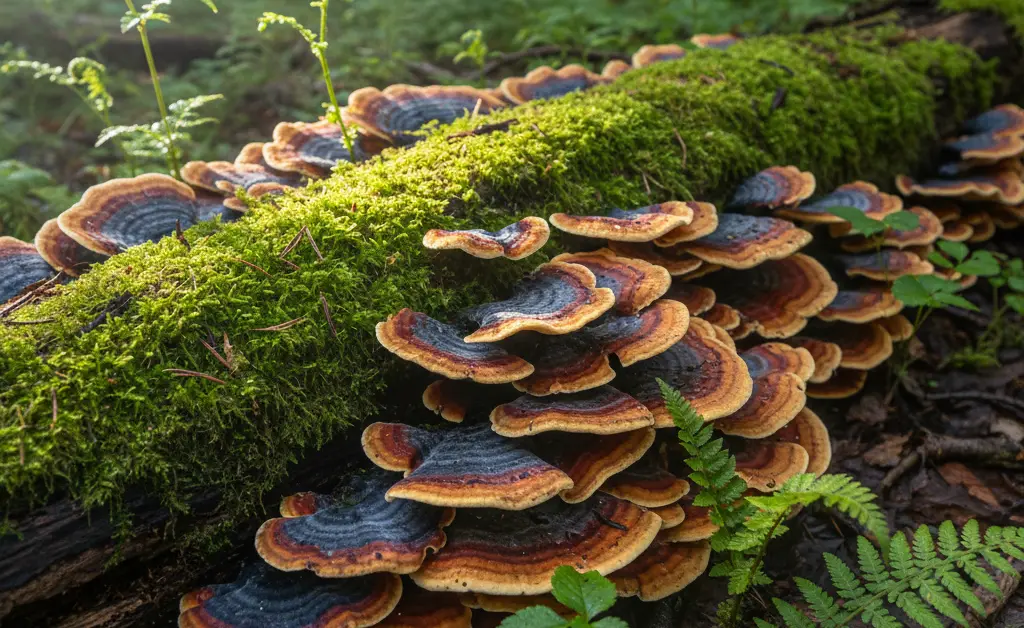
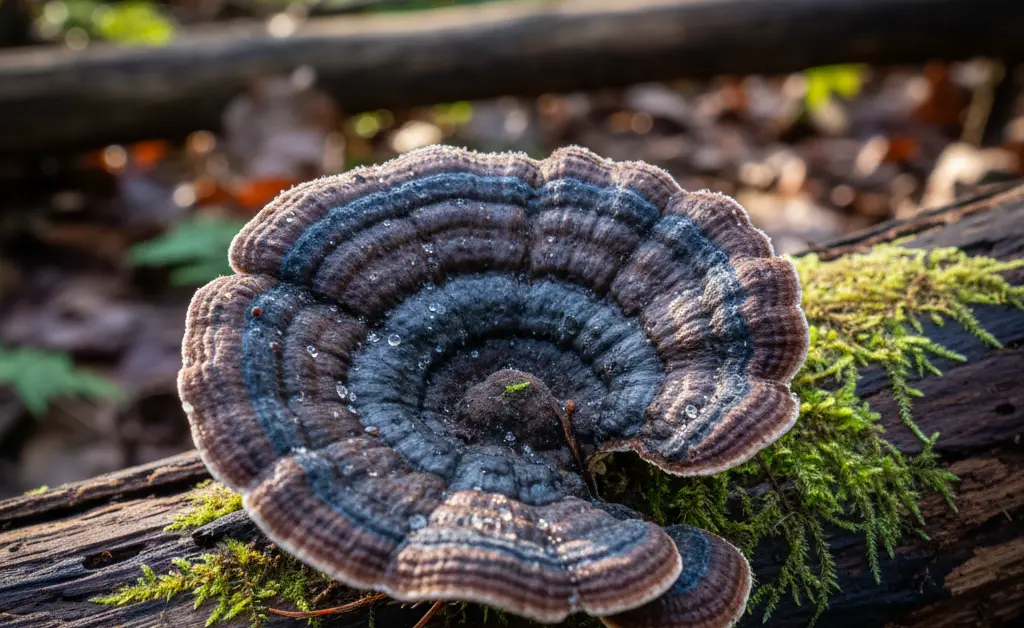
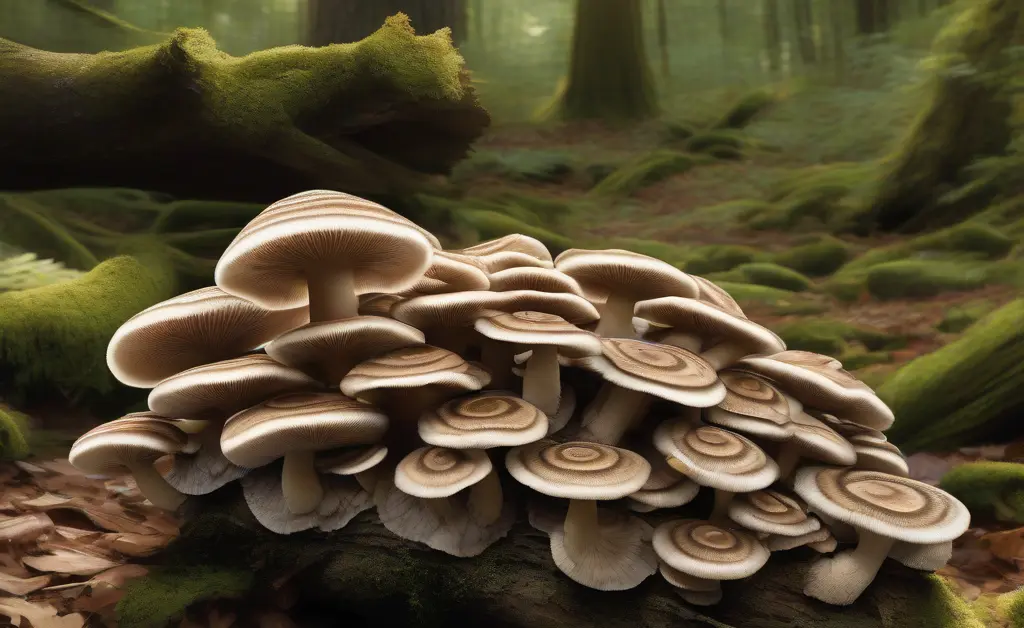
One of the most distinctive aspects for `identification` of the `Turkey Tail fungus` is its `cap`. The `cap` of `trametes versicolor` is typically thin and leathery, often growing in a `fan-shaped` or semi-circular form. What truly sets it apart are the vibrant, `colorful`, and often velvety `concentric zones` that adorn its upper surface. These zones can display a wide array of hues, including browns, grays, blues, purples, and even green (often due to algae growth), creating a visually appealing pattern that is highly characteristic of the species. The texture of the cap is usually `velvety` or finely hairy, especially near the point of attachment.
Pore Surface and Underside
The `underside` of the `Turkey Tail mushroom` is crucial for its proper identification. As a true `polypore`, `trametes versicolor` possesses a smooth to minutely porous surface rather than gills. These `pores` are typically very small, almost invisible to the naked eye, appearing as a finely textured white or cream-colored layer. Observing the `pore surface` is essential, as some impostor species may have gills or much larger pores. The absence of distinct gills and the presence of these tiny pores are key indicators for `Turkey Tail`.
Growth Patterns and Texture
`Trametes versicolor` typically grows in overlapping clusters, forming `shelf fungus` or `bracket fungus` arrangements on its substrate. These `fruiting body` structures can sometimes merge, creating intricate formations. The overall texture of the `fruiting body` is leathery and flexible when fresh, becoming more rigid and brittle as it dries. Its growth patterns are often numerous and widespread, making it a common sight on various types of `dead wood` throughout its geographical range. Scientific accuracy in observations, including public health aspects, can be supported by consulting trusted bodies like the NHS.
Habitat and Ecological Role of Trametes versicolor
Trametes versicolor as a Lignicolous Fungus
`Trametes versicolor` is classified as a `lignicolous fungus`, meaning it primarily grows on wood. Its `ecological role` as a `decomposer` is paramount in `forest ecosystems`. This `wood-rotting fungus` actively breaks down lignin and cellulose in dead trees, contributing to what is known as `white rot`. By performing this `saprobic` function, `Turkey Tail` facilitates the recycling of nutrients back into the soil, making them available for other plants and organisms. This critical process helps maintain the health and vitality of the forest.
Preferred Substrates (Wood Types)
While `trametes versicolor` can be found on a variety of wood types, it shows a strong preference for `hardwood logs` and `stumps` of `deciduous` trees. Common host trees include oak, maple, birch, and beech. It thrives on dead or dying wood, where it can access the necessary organic compounds for its growth. The presence of `Turkey Tail` often signifies a stage of active `decay` in fallen timber, indicating the ongoing nutrient cycle within the `forest`. This adaptability to various `hardwood` substrates contributes to its widespread `abundance`.
Geographical Distribution and Abundance
The `Turkey Tail mushroom` boasts an impressive `geographical distribution`, being one of the most common and widespread `fungi` in the world. It is particularly abundant in temperate `forests` across continents, including `North America`, Europe, and Asia. Its ability to grow in diverse climatic conditions and on various `dead wood` substrates contributes to its ubiquity. It can be found almost year-round in many regions, especially after rainfall, making it a readily observable species for `mycology` enthusiasts.
Common Name, Scientific Classification, and Taxonomy of Trametes versicolor
Common Names and Taxonomy
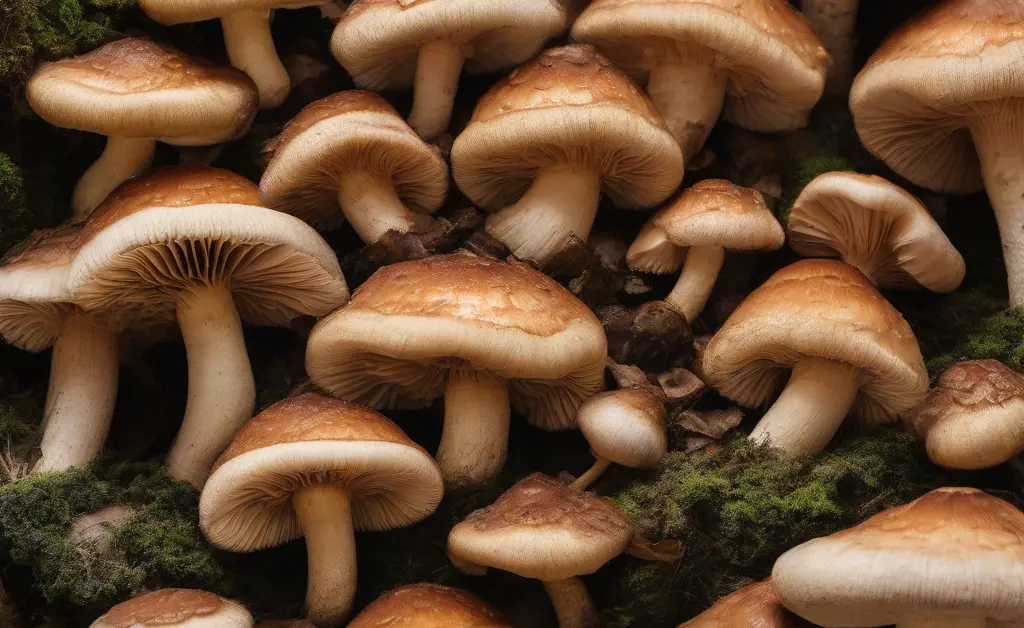
The common name `Turkey Tail` is universally recognized for `trametes versicolor`, owing to the mushroom’s resemblance to the fanned tail feathers of a wild turkey. Other variations include `Turkey Tail Fungus` or `Turkey Tail mushroom`. From a `scientific classification` standpoint, `trametes versicolor` belongs to the kingdom Fungi, phylum Basidiomycota, class Agaricomycetes, order Polyporales, and family Polyporaceae. It is a `basidiomycetes` fungus. Historically, it was also known by the scientific name Coriolus versicolor, a synonym that is still occasionally encountered in literature. Understanding its precise `taxonomy` helps researchers accurately identify and study this ubiquitous species.
In summary, `trametes versicolor`, commonly known as the `Turkey Tail mushroom`, is a remarkable fungus distinguished by its vibrant, `concentric zones` and `shelf-like` growth. Its `identification` is aided by its unique `cap characteristics` and the presence of fine `pores` on its `underside`. Ecologically, it plays a crucial `role as a decomposer in ecosystems`, primarily breaking down `dead wood` and recycling nutrients. Its widespread `geographical distribution` and `abundance` make it a significant component of `forest ecosystems` globally. The study of this fascinating `polypore` continues to reveal its complex biological functions and ecological importance.
Readers should understand that this article does not offer medical diagnosis or treatment. The information provided is for educational purposes only, focusing on the identification and ecological aspects of `trametes versicolor`. It is not intended to provide medical advice or substitute for professional healthcare. Always consult with a qualified healthcare provider for any health concerns or before making any decisions related to your health or treatment.
FAQ
— What is Trametes versicolor commonly known as?
Trametes versicolor is commonly known as Turkey Tail mushroom, a name derived from its striking coloration and fanned growth pattern, which distinctly resemble the tail feathers of a wild turkey. This descriptive name helps in its easy recognition among a diverse range of fungi.
— Where does Trametes versicolor grow?
This widespread fungus is found globally, primarily growing on dead hardwood trees, logs, and stumps. *Trametes versicolor* acts as a significant decomposer in forest ecosystems, contributing to nutrient recycling. Its preference for decaying wood makes it a common sight in woodlands and forests worldwide.
— How do you identify Turkey Tail mushrooms?
Identifying Turkey Tail mushrooms involves observing several key characteristics. Look for their thin, leathery, fan-shaped caps that typically grow in overlapping layers, often displaying concentric zones of various colors like brown, grey, blue, and reddish-brown. Crucially, the underside should have a white pore surface rather than gills, distinguishing it from look-alike species.
— Is Trametes versicolor a common mushroom?
Yes, Turkey Tail is indeed considered one of the most common and widely distributed functional mushrooms. Its robust nature allows it to grow on various types of dead hardwood trees across diverse climates, significantly contributing to its widespread presence. This adaptability makes it a familiar sight for anyone exploring forests and natural areas.