
Have you ever wondered what truly distinguishes lion’s mane from oyster mushrooms, beyond their unique appearances? For many culinary enthusiasts and health-conscious individuals, these two fungi frequently come up in discussions about their distinct flavors, textures, and potential benefits. While both are highly valued, they offer significantly different experiences, whether you’re cultivating them at home or preparing them in the kitchen. This detailed guide delves into the specifics, providing a clear comparison between lion’s mane mushroom vs oyster mushroom. We will explore everything from their visual characteristics and taste profiles to their nutritional content and preferred growing conditions, empowering you to make the best choice for your particular needs and preferences.
Direct Comparison: Lion’s Mane Mushroom vs Oyster Mushroom
When considering the various gourmet mushroom varieties available, distinguishing between species like lion’s mane mushroom vs oyster mushroom is essential for both culinary and cultivation purposes. While both are highly valued for their unique attributes, they present stark differences across numerous aspects. Understanding these fundamental variations is the first step in appreciating what each fungus brings to the table, literally and figuratively. Beyond these two, it’s also interesting to consider the differences when comparing lion’s mane mushroom vs turkey tail.
Key Differences in Appearance
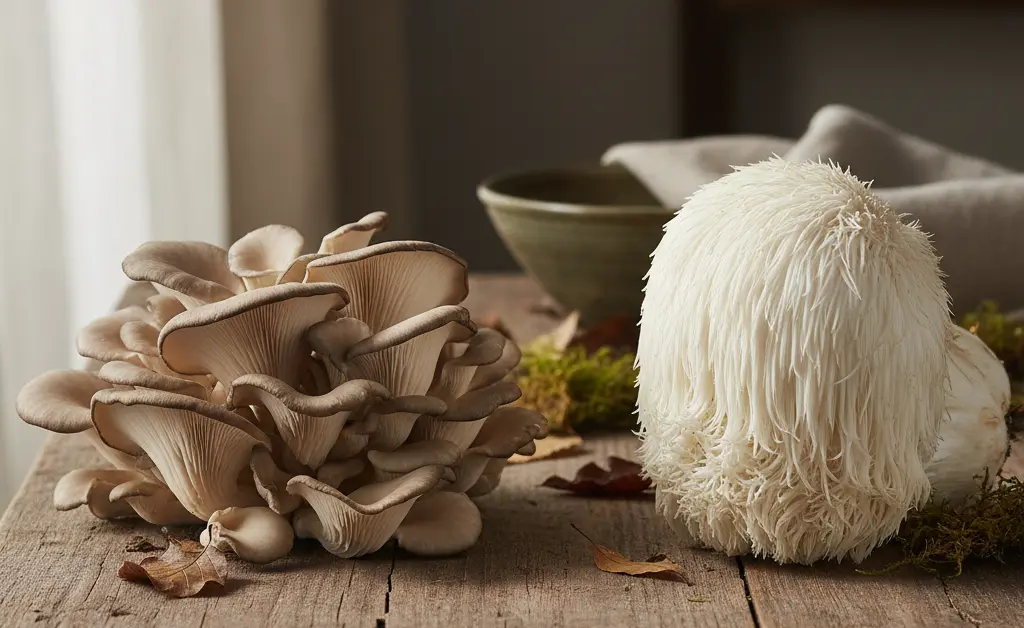
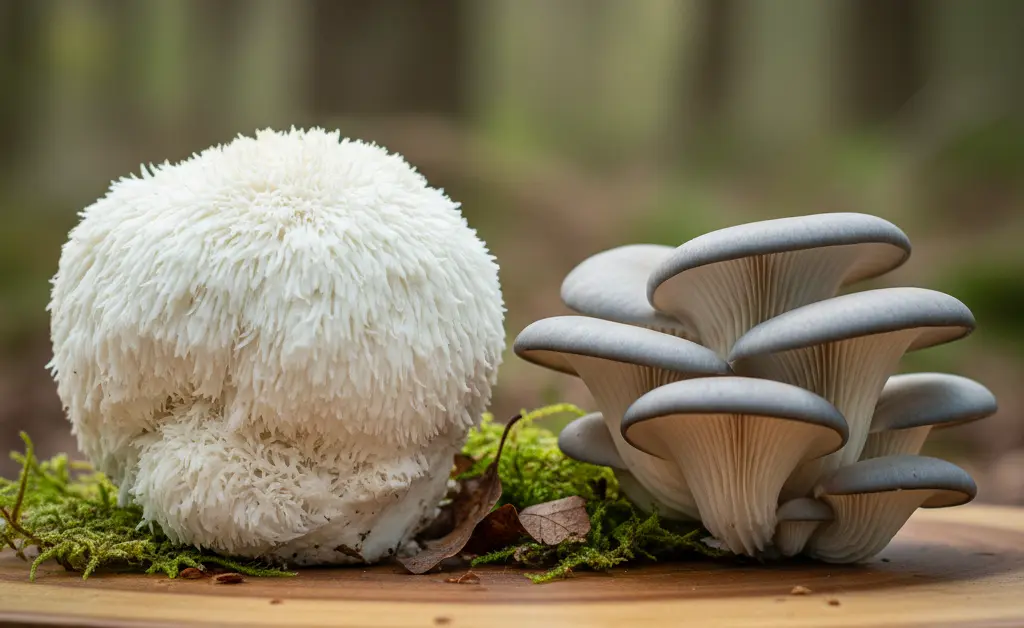
The most immediate and striking differences between lion’s mane and oyster mushrooms lie in their physical appearance. Lion’s Mane, scientifically known as Hericium erinaceus, is easily identifiable by its cascading, shaggy spines that resemble a white waterfall or, as its name suggests, a lion’s mane. This unique structure sets it apart from almost any other mushroom. It typically grows as a single, large mass, often white to creamy in color, and lacks a traditional cap and gills. Its distinct appearance is a major identifier.
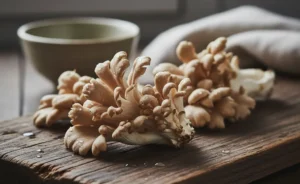
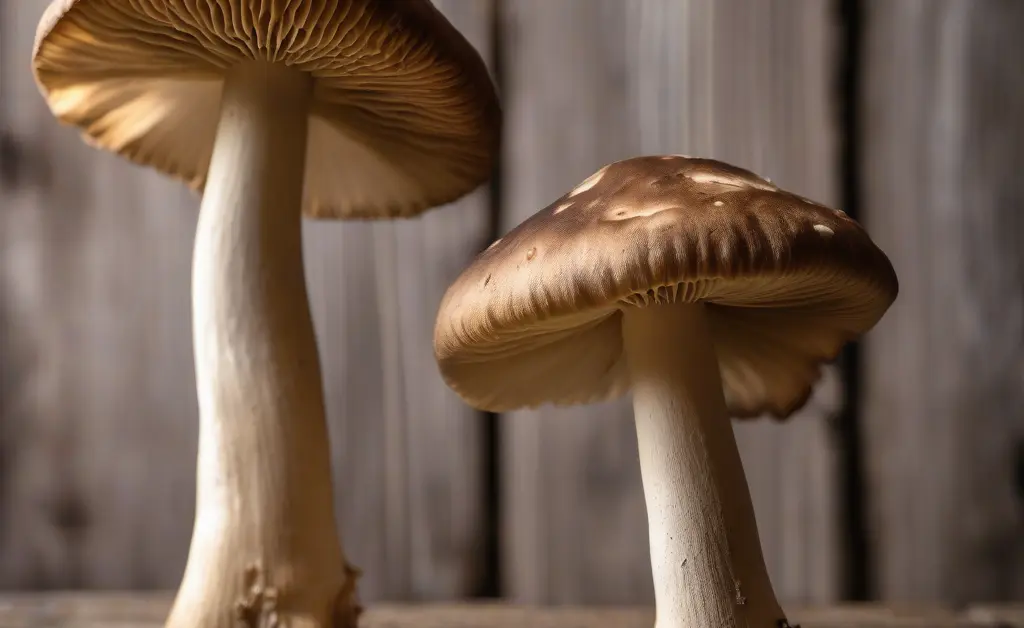
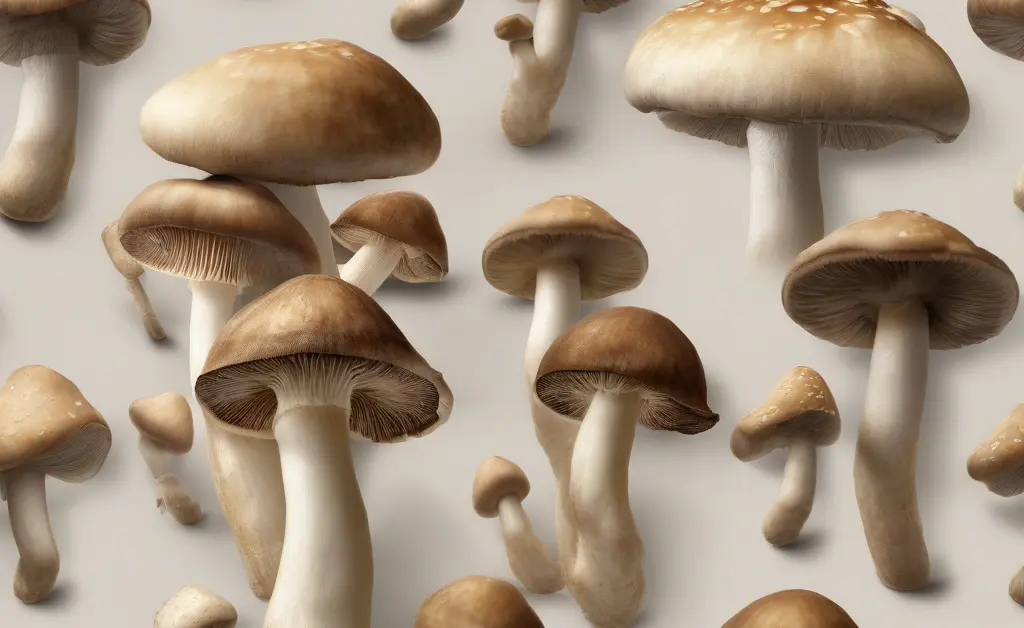
Oyster mushrooms, encompassing several species within the Pleurotus genus, exhibit a more conventional mushroom shape, though they often grow in shelf-like clusters. They feature broad, fan-shaped caps and prominent gills running down a short, off-center stem or sometimes no stem at all. The color of oyster mushrooms can vary widely, from the common grey or off-white of the Pearl oyster mushroom to vibrant shades like pink, yellow, and blue. Their cap-and-gill structure and clustered growth habit are key characteristics that differentiate them from the spine-covered Lion’s Mane.
Pink Oyster vs Lion’s Mane Differences
Specifically comparing the Pink Oyster mushroom to Lion’s Mane highlights even more distinct visual contrasts. The Pink Oyster (Pleurotus djamor) is renowned for its vivid, almost fluorescent pink coloration, making it one of the most visually stunning oyster varieties. It shares the characteristic fan-shaped cap and prominent gills of other oyster mushrooms, often growing in dense, layered clusters. Its vibrant hue stands in stark contrast to the creamy white of Lion’s Mane. The texture of the Pink Oyster is also generally more delicate and wavy compared to the dense, fibrous structure of Lion’s Mane’s spines. These differences in appearance are not just aesthetic; they often correlate with variations in texture, flavor, and how they are best utilized in culinary applications.
Taste and Texture: Lion’s Mane vs Oyster Mushrooms
Beyond their visual distinctions, the `taste` and `texture` represent another critical area of difference when evaluating `lion’s mane mushroom vs oyster mushroom`. Each offers a unique `flavor profile` that dictates its best `culinary uses` and `cooking methods`. For any food enthusiast, understanding these sensory attributes is key to maximizing their gastronomic potential.
Comparing Flavor and Texture
Lion’s Mane mushroom is celebrated for its truly unique `flavor profile`, often described as seafood-like, reminiscent of crab or lobster, with a distinct `umami` and `savoury` richness. It doesn’t possess the typical `earthy` or `woodsy` notes commonly associated with many fungi. The `texture` of Lion’s Mane is similarly distinctive: it is tender, juicy, and `meaty` when cooked, offering a satisfying bite that can mimic shellfish. This makes it a popular ingredient in vegetarian and vegan dishes aiming to replicate seafood experiences, contributing a `refined` and substantial quality.
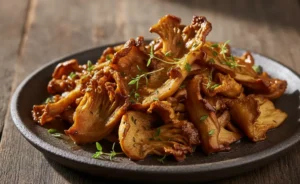
In contrast, oyster mushrooms, including the `Pearl oyster mushroom`, generally have a more `delicate` and `subtle` `flavor profile`. Their `taste` is often described as mild, slightly `earthy`, and sometimes `woodsy`, making them incredibly `adaptable` to a wide range of dishes without overpowering other ingredients. The `texture` of oyster mushrooms is typically tender yet slightly chewy, becoming silky and smooth when properly cooked. They are not as `meaty` as Lion’s Mane, often providing a more `dependable` and straightforward fungal character that works well in stir-fries, soups, and sautéed preparations.
Nutritional Profiles: Lion’s Mane vs Oyster Mushrooms
Both lion’s mane and oyster mushrooms are not only culinary delights but also offer noteworthy `nutritional value` and potential `health benefits`. While both contribute positively to a balanced diet, their specific compositions and associated benefits differ, making the comparison of `lion’s mane mushroom vs oyster mushroom` particularly interesting from a health perspective.
Nutritional Value Showdown
Lion’s Mane mushroom has garnered significant attention for its unique bioactive compounds. It contains polysaccharides, hericenones, and erinacines, which are studied for their potential to support `brain health` and `nerve growth`. Traditionally used in various cultures, Lion’s Mane is often explored for cognitive support. Beyond these specific compounds, it also provides dietary fiber, protein, and various vitamins and minerals, contributing to overall well-being. For those exploring various adaptogens, a comparison of lion’s mane mushroom vs ashwagandha often arises in discussions about cognitive well-being.
Oyster mushrooms, on the other hand, are a fantastic source of a broader spectrum of essential nutrients. They are typically rich in B vitamins (like niacin, riboflavin, and pantothenic acid), potassium, copper, and iron. They also contain dietary fiber and protein, making them a nutritious addition to any meal. Oyster mushrooms are known for their antioxidant properties and may contribute to general immune system support, offering a solid nutritional foundation without the highly specific compounds found in Lion’s Mane for `brain health`. For more comprehensive information on dietary nutrients and health, resources like the NIH offer valuable insights.
Growing Lion’s Mane vs Oyster Mushrooms
For those interested in `cultivation`, understanding the differences in growing requirements between `lion’s mane mushroom vs oyster mushroom` is crucial. While both are popular choices for home growers, their specific needs regarding `habitat`, substrate, and `spawn colonization` rates can influence the success and ease of cultivation.
Spawn Colonization for Lion’s Mane vs Oyster
Lion’s Mane mushroom generally prefers hardwood substrates such as oak, maple, or beech sawdust, often supplemented with bran. Its `spawn colonization` can be a bit slower and more particular than some other gourmet varieties. It requires a specific balance of humidity, temperature, and fresh air exchange to develop its characteristic spines. Patience is often key when cultivating Lion’s Mane, as it may take a little longer to establish and fruit compared to faster-growing species. It typically fruits as a single, rounded mass.
Oyster mushrooms, in contrast, are renowned for their aggressive `spawn colonization` and remarkable versatility across a wide range of substrates. They can grow on straw, sawdust, coffee grounds, and even cardboard, making them a forgiving and popular choice for beginners. Oyster varieties, including the `Pearl oyster mushroom`, tend to colonize substrates relatively quickly and fruit abundantly in clusters, given adequate humidity and fresh air. Their faster growth rate and less stringent substrate requirements often make them a more accessible and dependable option for new mushroom cultivators.
Making Your Choice: Lion’s Mane or Oyster Mushroom?
The decision between Lion’s Mane and oyster mushrooms ultimately depends on your specific priorities, whether they are `culinary applications`, `nutritional needs`, or desired `taste` and `texture` experiences. Both are `gourmet mushroom varieties` that can enhance your diet and culinary repertoire, but their distinct qualities cater to different preferences.
Choosing for Culinary Applications
If your goal is to explore unique `culinary uses` and create specific `mushroom flavor profiles`, Lion’s Mane might be your choice. Its `meaty`, seafood-like `flavor profile` makes it an excellent substitute for crab or lobster in `Lion’s Mane Mushroom Recipes` such as “crab” cakes, vegan scallops, or stir-fries where a substantial, savory, and umami element is desired. Its firm texture holds up well to various `cooking methods` like searing, roasting, and frying.
Oyster mushrooms, with their `delicate` `taste` and `adaptable` `texture`, offer immense `versatility` for everyday cooking. They absorb flavors well and are perfect for adding bulk and an `earthy` `woodsy` note to soups, stews, stir-fries, omelets, and pastas. Varieties like the `Pearl oyster mushroom` are especially great for quick sautés, providing a `subtle` yet satisfying complement to other ingredients. Their ease of preparation and ability to blend into diverse dishes make them a `dependable` kitchen staple.
Choosing for Nutritional Needs
For those prioritizing potential `health benefits`, Lion’s Mane is often sought after for its specific compounds associated with `brain health` and `nerve growth` support. While research continues, it has become a popular supplement for cognitive well-being. If specific neurological support is a primary concern, Lion’s Mane may be a preferred option. Another common comparison for cognitive support is lion’s mane mushroom vs ginkgo biloba.
Oyster mushrooms, while not having the same targeted neurological compounds, provide a robust `nutritional value` profile, including essential vitamins, minerals, and antioxidants. They are an excellent choice for general wellness, contributing to a balanced diet and providing a good source of fiber and protein. If you’re looking for a nutrient-dense food to support overall health without specific targeted benefits, oyster mushrooms are a fantastic option.
Choosing for Taste and Texture
When `taste` and `texture` are the deciding factors, the choice becomes a matter of personal preference. If you enjoy a `meaty`, almost seafood-like `umami` `flavor` and a firm, substantial bite, Lion’s Mane will likely be more appealing. It offers a unique and memorable sensory experience that stands out among fungi.
If you prefer a more `delicate`, `subtle`, `earthy`, and `woodsy` `taste` with a tender yet slightly chewy `texture` that readily absorbs other flavors, then oyster mushrooms will be more suitable. Their milder profile and versatile consistency make them an excellent choice for integrating into a wide array of dishes where they can either shine gently or provide a complementary background. Both types of mushrooms offer a unique experience, making the best choice depend entirely on your desired culinary adventure.
Ultimately, the choice between lion’s mane mushroom vs oyster mushroom boils down to individual preference, culinary intent, and specific interests in their potential benefits or ease of cultivation. Lion’s Mane offers a distinct visual appeal, a seafood-like flavor profile, and unique compounds studied for cognitive support, making it a gourmet choice for specific dishes and health-conscious consumers. Oyster mushrooms, on the other hand, are celebrated for their versatile culinary applications, broad nutritional benefits, and relatively straightforward cultivation, making them a dependable and accessible option for a wide range of cooks and growers. Both fungi enrich the world of edible mushrooms, each contributing its own set of remarkable characteristics.
The information in this article is intended for knowledge purposes only. It is not a substitute for professional medical advice, diagnosis, or treatment. Always consult with a qualified healthcare provider for any health concerns or before making any decisions related to your health or diet. This content aims to inform and educate, not to prescribe or endorse specific treatments.
FAQ
— What is the main difference between lion’s mane and oyster mushrooms?
Lion’s mane has a unique shaggy appearance and a firm, somewhat seafood-like texture, while oyster mushrooms typically feature a fan or shell shape and a more delicate, tender texture. Beyond their culinary distinctions, the core difference in lion’s mane mushroom vs oyster mushroom lies in their studied functional properties, with lion’s mane being particularly researched for its potential neurotrophic factors and cognitive support.
— Which mushroom tastes better, lion’s mane or oyster?
The preference for taste is highly subjective, as both mushrooms offer distinct culinary experiences. Lion’s mane is frequently celebrated for its unique savory flavor and firm, almost seafood-like texture, often compared to crab or lobster. In contrast, oyster mushrooms provide a milder, earthy, and sometimes slightly sweet flavor with a more tender, delicate texture, making them versatile for various dishes.
— Is lion’s mane healthier than oyster mushroom?
Rather than one being inherently “healthier,” lion’s mane and oyster mushrooms offer distinct nutritional profiles and functional benefits. Lion’s mane is particularly recognized for compounds like hericenones and erinacines, which are relevant to cognitive function and nerve support. Oyster mushrooms, on the other hand, are a good source of B vitamins, protein, and antioxidants, playing a role in general wellness and immune system modulation.
— Can you substitute oyster mushrooms for lion’s mane in recipes?
While you can technically substitute oyster mushrooms for lion’s mane in many recipes, it’s important to recognize that the final dish will have a different texture and flavor profile. Lion’s mane offers a unique firm, meaty texture and distinct flavor that absorbs seasonings well, making it a prominent ingredient. Oyster mushrooms, with their softer texture and milder taste, will alter the dish’s overall mouthfeel and savory depth.
— Which is easier to cook: lion’s mane or oyster mushroom?
Both lion’s mane and oyster mushrooms are relatively straightforward to cook, though their ideal preparations might differ slightly. Oyster mushrooms tend to cook quickly and are highly versatile, excellent in stir-fries, sautés, or even grilled due to their thinner structure. Lion’s mane benefits from a slightly longer cook time to achieve a desirable golden crust and tender interior, often pan-fried or seared to highlight its unique texture.