
It’s often tempting to view natural supplements aimed at enhancing well-being, such as adaptogens and nootropics, as largely interchangeable tools for overall health. However, presuming that all plant-based remedies with overlapping reported benefits operate identically can lead to suboptimal choices for specific wellness objectives. Despite their rising popularity in the health community, the functional differences between these powerful botanicals are more pronounced than casual observation might suggest. This comprehensive guide delves into the distinct characteristics of lion’s mane mushroom vs ashwagandha, providing a detailed analysis of their unique properties, mechanisms of action, and targeted benefits. Our goal is to empower you to make a discerning decision, ensuring your chosen supplement precisely supports your personal health aspirations.
Lion’s Mane Mushroom vs Ashwagandha: A Comprehensive Comparison
When considering natural health support, the discussion of lion’s mane mushroom vs ashwagandha frequently arises, as both are celebrated for their various potential benefits. While both are esteemed in their respective traditional practices, they offer distinct profiles that cater to different physiological needs. Understanding these nuances is crucial for selecting the most appropriate supplement to align with individual health goals. Further comparisons might explore the differences between lion’s mane mushroom vs turkey tail for various health benefits.
Key Differences in Benefits and Effects
Lion’s Mane mushroom, or Hericium erinaceus, is primarily recognized for its nootropic effects, traditionally associated with supporting cognitive function and nervous system health. It is often studied for its role in potentially promoting brain health and mental clarity. Ashwagandha, or Withania somnifera, on the other hand, is a cornerstone of Ayurvedic medicine, revered as an adaptogen. Its primary effects are traditionally linked to stress reduction, mood regulation, and supporting overall vitality. While both may contribute to general well-being, their focal points of action differ significantly.
Mechanisms of Action Compared
The distinct benefits of these two powerful botanicals stem from their unique bioactive compounds and corresponding mechanisms of action. Lion’s Mane mushroom contains compounds such as hericenones and erinacines, which are studied for their potential to support nerve growth factor (NGF) synthesis. This particular mechanism may play a role in neurogenesis and overall brain health. Ashwagandha’s efficacy is largely attributed to its adaptogenic compounds called withanolides. These compounds are thought to interact with the body’s stress response system, potentially helping to regulate cortisol levels and support the adrenal glands, thereby promoting resilience to stress and maintaining physiological balance. Further research and systematic reviews, such as those found on the Cochrane Library, can provide more evidence on the efficacy of these compounds.
Comparing Cognitive Function and Brain Health Support
For those prioritizing cognitive function and brain health, Lion’s Mane mushroom is frequently a top consideration. Its potential to support NGF production means it may play a role in neuronal health, potentially enhancing focus, memory improvement, and overall mental stimulation. Individuals seeking to address brain fog or maintain long-term cognitive vitality may find Lion’s Mane particularly appealing. While Ashwagandha is not primarily a nootropic, by reducing stress and improving sleep, it may indirectly support cognitive clarity and mental performance, as a calm mind often functions more effectively. It’s also interesting to consider how lion’s mane mushroom vs oyster mushroom stack up in terms of their nutritional profiles and benefits.
Comparing Stress Reduction and Mood Support
Ashwagandha shines particularly brightly in the realm of stress reduction and mood support due to its classification as an adaptogen. It is widely recognized for its traditional use in helping the body adapt to various stressors, both physical and psychological. This may lead to improved mood regulation and a greater sense of calm, making it a popular choice for those experiencing high levels of stress or anxiety. While Lion’s Mane doesn’t directly target stress in the same adaptogenic way, its potential to improve nervous system support and cognitive function may contribute to a more stable mental state, indirectly benefiting mood.
Comparing Sleep Quality Improvement
Improving sleep quality is another area where the differences between these two supplements become apparent. Ashwagandha is often traditionally used to promote restful sleep, primarily through its ability to reduce stress and calm the nervous system. By mitigating factors that interfere with sleep, such as anxiety, it may contribute to improved sleep patterns. Lion’s Mane, while not directly sedative, might support sleep indirectly by improving overall brain health and potentially fostering a more balanced neurological environment. However, its primary impact is not typically on inducing sleep but rather on cognitive and neural support.
Comparing Energy and Vitality Boost
Both Lion’s Mane and Ashwagandha may contribute to an increase in energy and vitality, though through different pathways. Ashwagandha, as an adaptogen, supports the body’s overall resilience and ability to cope with stress, which can naturally lead to sustained energy levels and a greater sense of vitality. It helps normalize physiological functions that can be depleted by chronic stress. Lion’s Mane, by supporting brain health and mental clarity, may provide a sense of mental stimulation and reduce brain fog, which can translate into perceived energy and alertness. It helps optimize the efficiency of mental processes rather than directly boosting physical energy like a stimulant.
Choosing Between Lion’s Mane and Ashwagandha
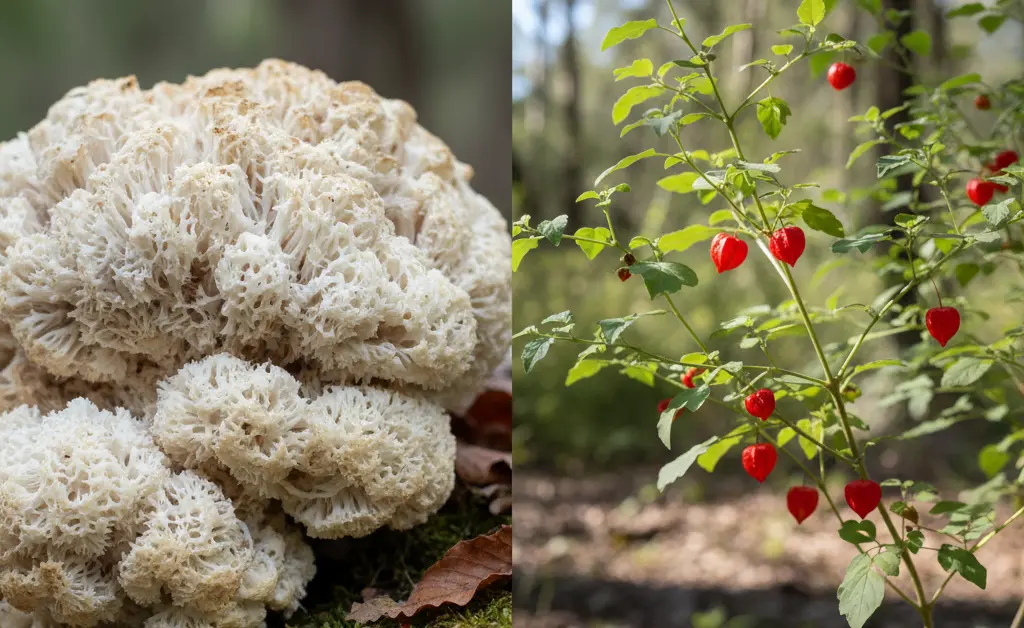
The decision of choosing between lion’s mane mushroom vs ashwagandha ultimately depends on your primary health objectives. While both offer valuable benefits, their strengths lie in different areas of well-being. A careful assessment of your personal needs will guide you toward the more suitable option.
When to Choose Lion’s Mane
You might consider choosing Lion’s Mane if your main goal is to support cognitive function, improve focus, enhance memory, or generally promote brain health. It is often favored by students, professionals, or individuals seeking mental stimulation and clarity, particularly when dealing with issues like brain fog. Its unique compounds are specifically studied for their potential neuroprotective and neuroregenerative properties, making it an excellent choice for targeted brain support and nervous system health. Comparing lion’s mane mushroom vs ginkgo biloba can offer further insights into natural cognitive enhancers.
When to Choose Ashwagandha
Ashwagandha is often the preferred choice for those looking to manage stress, reduce anxiety, improve mood regulation, and enhance overall resilience. As a powerful adaptogen, it is particularly beneficial for individuals experiencing chronic stress, seeking to balance cortisol levels, or aiming to improve their body’s ability to cope with daily pressures. It may also be beneficial for supporting restful sleep indirectly by calming the nervous system and fostering a sense of well-being.
Can You Take Lion’s Mane and Ashwagandha Together?

Exploring the combined use of lion’s mane mushroom vs ashwagandha is a common inquiry for individuals looking to maximize their wellness regimen. Many people consider taking both supplements simultaneously to leverage their distinct yet complementary benefits. While Lion’s Mane primarily targets cognitive enhancement and brain health, Ashwagandha focuses on stress reduction and adaptogenic support. Integrating them may offer a broader spectrum of benefits, potentially supporting both mental clarity and emotional resilience.
Generally, there are no known direct contraindications for combining these two natural remedies. Their different mechanisms of action suggest they may work synergistically rather than adversarially. For instance, while Lion’s Mane may sharpen focus and memory, Ashwagandha might reduce the underlying stress that can often hinder cognitive performance. This combination could potentially lead to a holistic improvement in both mental and emotional well-being. However, as with any supplement regimen, it is always advisable to consult with a healthcare professional before combining them, especially if you have underlying health conditions or are taking other medications. Starting with lower amounts of each and observing your body’s response is also a prudent approach.
Ultimately, the choice between lion’s mane mushroom vs ashwagandha, or even the decision to combine them, depends on an individual’s specific health goals and current physiological state. While Lion’s Mane is often sought for its nootropic effects and support for cognitive function, Ashwagandha stands out for its profound adaptogenic properties, aiding in stress reduction and promoting overall vitality. Both offer unique benefits that can contribute significantly to well-being, but understanding their distinct roles is key to making an informed decision that best supports your personal health journey.
This article is meant for general informational use and awareness. It is not intended to provide medical advice, diagnosis, or treatment. Always consult with a qualified healthcare professional before starting any new supplement regimen or making changes to an existing one. Individual responses to supplements can vary, and what works for one person may not be suitable for another. For personalized guidance and to ensure safe use, professional medical consultation is essential.
FAQ
— Is Lion’s Mane better than Ashwagandha for anxiety?
Ashwagandha is an adaptogenic herb widely recognized for its ability to help the body manage stress and support a calmer state, which can be relevant to feelings of anxiety. Lion’s Mane, a functional mushroom, is studied for its potential to support nerve growth factors and overall brain health, which might indirectly influence mood stability. Their distinct mechanisms mean they approach emotional well-being differently.
— Which is better for focus: Ashwagandha or Lion’s Mane?
Lion’s Mane is extensively researched for its compounds that support neural pathways, playing a role in cognitive functions like focus and mental clarity. Ashwagandha, by contrast, is known for its stress-modulating effects, which can indirectly enhance focus by promoting a more relaxed and less distracted mind. Each offers support for concentration through different physiological routes.
— What are the main differences between Ashwagandha and Lion’s Mane?
The fundamental difference in lion’s mane mushroom vs ashwagandha lies in their biological classification and primary traditional applications. Lion’s Mane is a functional mushroom known for its neurotrophic compounds that support brain health, while Ashwagandha is an adaptogenic herb celebrated for its ability to help the body adapt to stress and promote balance. These distinct profiles mean they interact with different physiological pathways.
— Which supplement is better for sleep, Lion’s Mane or Ashwagandha?
Ashwagandha is often utilized for its adaptogenic properties that help calm the nervous system, which can contribute to more restful sleep by alleviating stress-related disturbances. Lion’s Mane is not traditionally associated with sleep directly; its primary focus is on cognitive function and neural support, which can support overall well-being but isn’t typically sought for sleep induction. Their contributions to sleep quality are through different pathways.
— Does Lion’s Mane help with stress like Ashwagandha?
Ashwagandha is a well-known adaptogen that directly influences the body’s stress response system, helping to regulate both physiological and psychological reactions to stressors. While Lion’s Mane is not classified as an adaptogen, its support for brain health and cognitive function may indirectly assist in managing the mental aspects of stress. These two natural wellness aids therefore address stress through distinct biological mechanisms.