
H1: Maitake vs. Chicken of the Woods: A Detailed Comparison
Modern culinary enthusiasts and health-conscious individuals are increasingly exploring the diverse world of wild mushrooms, valuing them for their unique flavors, textures, and potential health benefits. Among the most sought-after varieties are maitake and chicken of the woods, two distinctive fungi that often inspire curiosity due to their similar appearances and shared habitat. While both are prized edibles, understanding their individual characteristics is crucial for proper identification, optimal preparation, and appreciating their unique culinary contributions. This comprehensive guide will delve into the nuanced differences and similarities, helping foragers and cooks alike confidently distinguish between maitake mushroom vs chicken of the woods, ensuring a more informed and enjoyable experience with these woodland treasures.
Maitake Mushroom vs Chicken of the Woods: Key Differences
Distinguishing Maitake (Hen of the Woods) from Chicken of the Woods
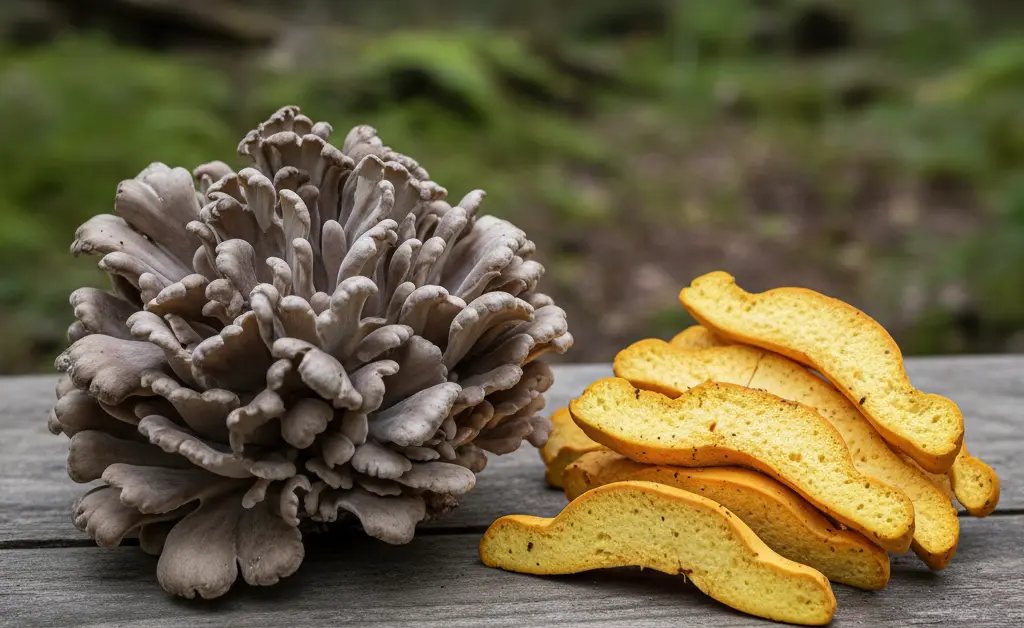
While both maitake and chicken of the woods are celebrated edible wild mushrooms, they belong to entirely different genera and possess distinct characteristics that differentiate them. Maitake, scientifically known as Grifola frondosa, is commonly referred to as “hen of the woods” due to its resemblance to a ruffled hen’s feathers. Chicken of the woods, on the other hand, comprises several species within the Laetiporus genus, most notably Laetiporus sulphureus and Laetiporus cincinnatus, often recognized by its vibrant colors. Understanding these fundamental biological distinctions is the first step in differentiating maitake mushroom vs chicken of the woods during wild foraging. Further comparisons, such as maitake mushroom vs oyster mushroom, also highlight the diversity within edible fungi.
Key Distinctive Features
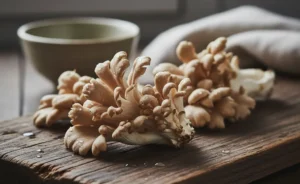
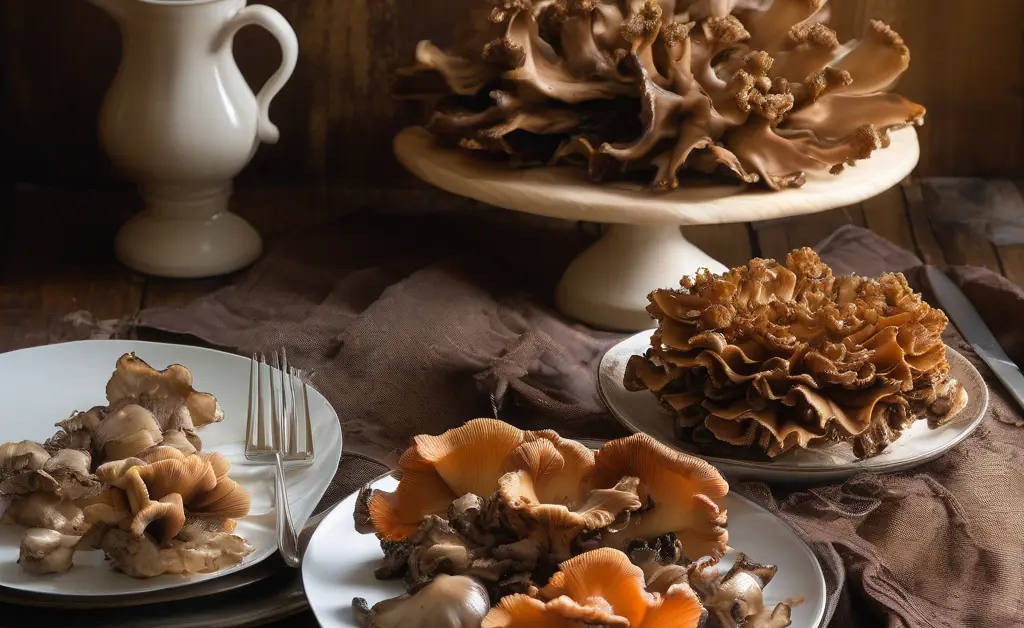
The most immediate distinction lies in their growth pattern and physical structure. Maitake typically grows as a large, rosette-like clump of overlapping, wavy fronds that are grayish-brown with white undersides and stems. It usually emerges from the base of deciduous trees, particularly oak trees. Chicken of the woods, conversely, forms shelf-like or bracket-like structures, often in bright orange, yellow, or salmon hues, and can grow high up on tree trunks or stumps. Its pore surface is typically yellow or white, and it lacks the distinct central stem common to many maitake specimens. These visual cues are critical for accurate mushroom identification in the field.
Identification Tips and Visual Characteristics
Visual Characteristics of Maitake (Hen of the Woods)
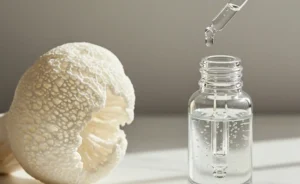
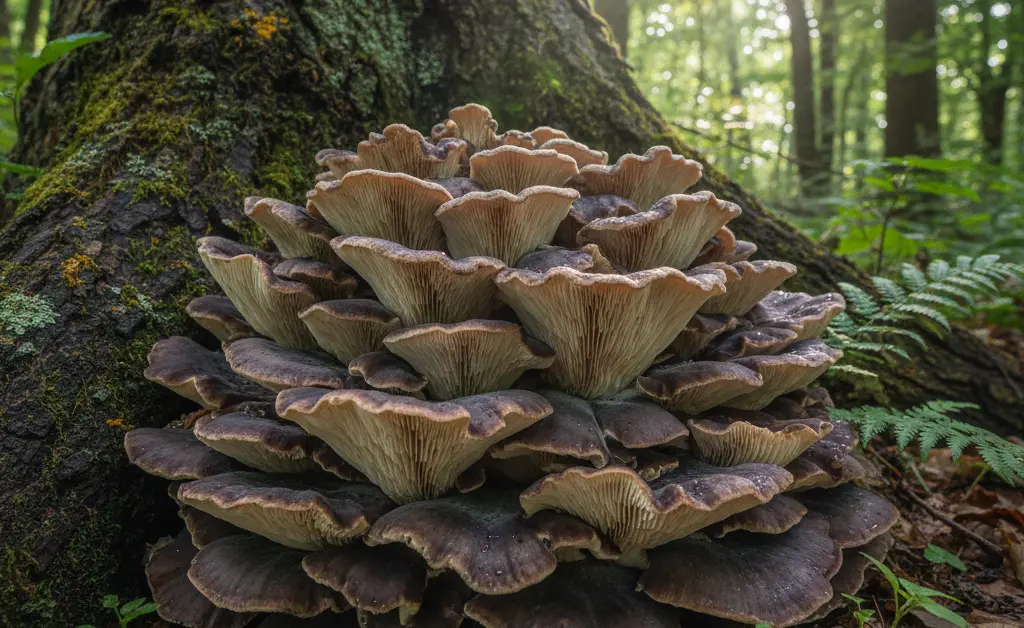
Maitake, also known as hen of the woods, is characterized by its large, dense clusters of multiple caps, or fronds, that resemble a brain or a coral formation. The individual fronds are fan-shaped or spatulate, with wavy or lobed margins, and can range in color from light gray to dark grayish-brown on the upper surface, with a pure white underside. The pore surface, which replaces gills in this polypore mushroom, is white or creamy white and runs down a branching stalk that converges into a single, often buried, base. The overall fruiting body can be quite large, sometimes weighing many pounds, and grows in a distinct rosette.
Visual Characteristics of Chicken of the Woods
Chicken of the woods (Laetiporus species) is renowned for its striking, vivid colors, which can range from bright yellow to fiery orange, sometimes with pinkish or salmon tones. It grows in overlapping shelf-like layers or brackets directly on tree trunks, stumps, or fallen logs. The individual “shelves” are typically thick and fleshy with a wavy, irregular margin. The pore surface on the underside is smooth and has a distinctly yellow or sometimes white color, contrasting with the vibrant upper surface. Unlike maitake, it does not have a central stem or branching fronds, but rather broad, flat segments that extend out from the wood. This distinct growth habit and coloration are key for mushroom identification, providing clear markers when evaluating maitake mushroom vs chicken of the woods.
Growth Habits and Habitat
Maitake mushrooms are primarily saprobic, meaning they decompose dead organic matter, but they can also be parasitic, particularly to oak trees, where they cause a white rot. They typically grow at the base of living or dead deciduous trees, with a strong preference for oak, but can also be found on maple, elm, or beech. They form dense clumps, often at the base of the tree or from underground roots. Chicken of the woods species are also parasitic or saprobic, causing a brown rot in the wood. They are commonly found on a wider variety of host trees, including oak, cherry, willow, and even some conifers (though those on conifers should be avoided for consumption due to potential toxins). For reliable information on food safety standards, consult bodies like the European Food Safety Authority. They grow in spectacular, often large, shelf-like clusters on the sides of trees or logs, sometimes high up.
Seasonal Availability
Both mushrooms are primarily associated with the autumn foraging season, though their exact appearance can vary with regional climate and rainfall. Maitake (hen of the woods) typically emerges from late summer through late autumn, often after periods of rain, making it a prized find for autumn foraging. Chicken of the woods also favors late summer and autumn, but some species can appear earlier in the summer months, especially after significant rainfall. Factors like temperature and moisture play a crucial role in the fruiting of these edible wild mushrooms.
Are Hen of the Woods and Maitake the Same Thing?
Yes, “Hen of the Woods” is a common folk name for the mushroom scientifically known as Maitake (Grifola frondosa). The name “Hen of the Woods” is derived from its appearance, which many foragers believe resembles the ruffled feathers of a sitting hen. Therefore, when people refer to hen of the woods, they are referring to the same species as maitake, which is a key distinction to understand when comparing maitake mushroom vs chicken of the woods, as chicken of the woods is a different fungal genus entirely.
Culinary Uses, Flavor Profiles, and Taste
Flavor Profile of Maitake
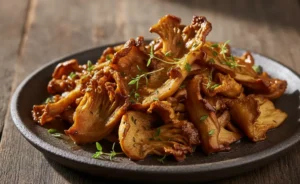
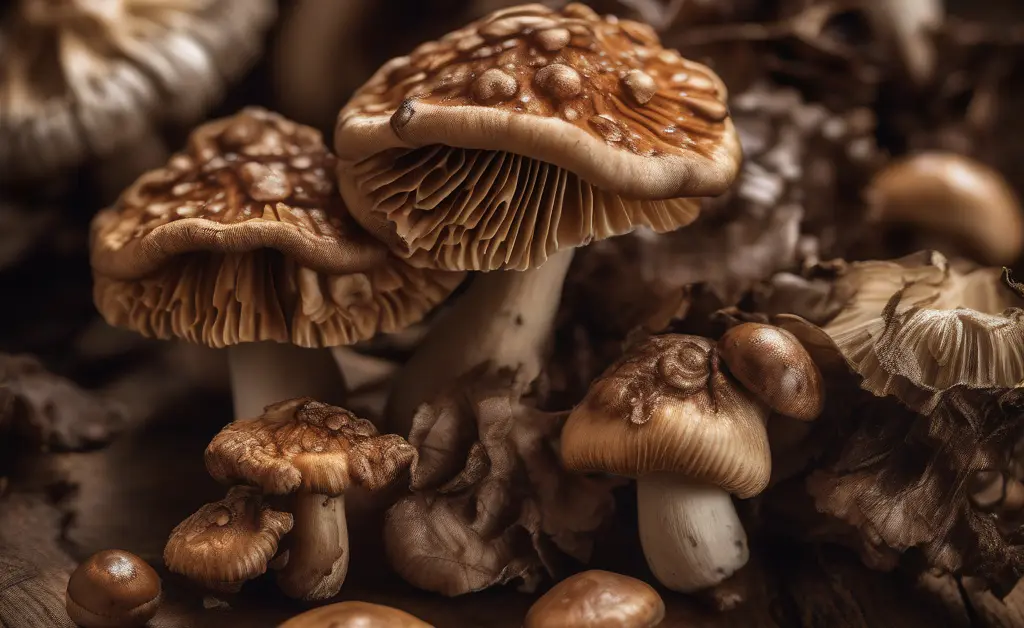
Maitake boasts a rich, earthy, and savory flavor, often described as umami-rich with a slightly peppery or spicy note, especially when fresh. Its aroma is distinctive and deep, complementing a wide array of dishes. Many connoisseurs consider maitake to have one of the most complex and satisfying flavor profiles among edible mushrooms. It holds up well in cooking, absorbing flavors from broths and seasonings while retaining its unique character. This makes it a versatile ingredient for various wild mushroom recipes, from simple sautés to elaborate stews. Understanding the differences between maitake mushroom vs shiitake can further broaden one’s culinary horizons.
Flavor Profile of Chicken of the Woods
As its name suggests, chicken of the woods often has a mild, tangy, and distinctly “chicken-like” flavor, particularly when young and fresh. Some describe it as reminiscent of lemon-chicken or crab meat. The taste is generally less earthy than maitake and tends to be somewhat sweeter. This unique flavor profile makes it a popular meat substitute in vegetarian dishes. However, its flavor can vary depending on the host tree and the mushroom’s age; older specimens might become more tart or lose some of their signature taste. The distinct flavor is a key differentiator when exploring maitake mushroom vs chicken of the woods for culinary uses.
Texture Differences
The texture of maitake is tender yet firm, with a satisfying bite. Its fronds are delicate but not mushy, maintaining a pleasant chewiness even after cooking. It has a slightly crisp edge when sautéed and a succulent interior. Chicken of the woods, especially when young, has a remarkably meaty and fibrous texture, comparable to cooked chicken breast or tenderloin. Older specimens can become tough, chalky, or woody, losing their desirable texture. For this reason, selecting young, fresh chicken of the woods is paramount for the best taste and texture experience in cooking, showcasing another significant point of distinction between these two excellent edible mushrooms.
Nutritional Value Comparison
Both maitake and chicken of the woods are celebrated not only for their culinary appeal but also for their nutritional contributions and potential health benefits, making the maitake mushroom vs chicken of the woods comparison interesting from a wellness perspective. Maitake is widely studied for its rich content of polysaccharides, particularly beta-glucans, which are associated with supporting the immune system. It also contains various vitamins, including B vitamins and vitamin D (when exposed to UV light), and minerals. Chicken of the woods, while less extensively researched for specific medicinal properties compared to maitake, is also a good source of dietary fiber, protein, and some minerals like potassium and copper. Both are low in calories and fat, making them nutritious additions to a balanced diet. Incorporating either into meals can provide a host of beneficial compounds, but it’s important to remember that they offer distinct nutritional profiles. It’s also worth exploring the distinctions between maitake mushroom vs turkey tail for different wellness goals.
Edibility and Safety Considerations
Edibility of Maitake and Chicken of the Woods
Both maitake (hen of the woods) and chicken of the woods are widely regarded as prized edible mushrooms, but responsible foraging and proper identification are paramount. Maitake is generally considered a safe and delicious choice for most individuals. However, like all wild foods, it is always recommended to consume a small portion first to test for individual sensitivities. Chicken of the woods is also a highly sought-after edible mushroom, particularly when young and fresh. It is crucial to note that some individuals may experience mild gastrointestinal upset, especially from older or improperly cooked specimens, or if collected from certain host trees (like eucalyptus or conifers, which should generally be avoided). Therefore, careful mushroom identification and cautious consumption are essential for both varieties to ensure a safe and enjoyable experience when appreciating the unique characteristics of maitake mushroom vs chicken of the woods. Further exploration into maitake mushroom vs lions mane also reveals other popular edible and medicinal fungi.
Foragers and culinary enthusiasts seeking to explore the diverse world of wild fungi often find themselves comparing maitake mushroom vs chicken of the woods. Both offer distinct flavors, textures, and growth habits, making each a unique and rewarding find. While maitake provides a deep, earthy umami experience, chicken of the woods delivers a versatile, “meaty” texture and a flavor reminiscent of poultry. Careful identification, respect for their natural habitats, and appropriate cooking methods will enhance the enjoyment of these incredible edible wild mushrooms. Whether you’re a seasoned mushroom hunter or new to the experience, understanding these distinctions enriches the entire culinary and foraging journey, affirming that each mushroom brings its own special contribution to the forest and the plate.
The content provided in this article is intended for informational learning, not clinical application. This information is not a substitute for professional medical advice, diagnosis, or treatment. Always seek the advice of a qualified healthcare provider for any questions regarding a medical condition. Do not disregard professional medical advice or delay in seeking it because of something you have read in this article. Individual experiences with mushrooms may vary, and proper identification and preparation are crucial for safety.
FAQ
— What is the main difference between maitake and chicken of the woods?
The primary distinction in maitake mushroom vs chicken of the woods lies in their appearance and growth habit. Maitake forms intricate, ruffled, fan-like clusters typically at the base of oak trees, resembling a hen’s tail feathers. In contrast, chicken of the woods grows in vibrant, shelf-like layers directly on tree trunks and stumps, often displaying bright orange and yellow hues.
— Is hen of the woods the same as maitake mushroom?
Yes, “hen of the woods” is simply another common name for the maitake mushroom (Grifola frondosa). This descriptive nickname comes from its appearance, as its layered, frilly growth often resembles the tail feathers of a sitting hen. They are indeed the same species of fungi.
— How can you tell maitake and chicken of the woods apart?
You can distinguish them by their distinct structures and coloration. Maitake mushrooms have a bushy, cauliflower-like appearance with multiple overlapping, fan-shaped caps that are typically grayish-brown and have a white pore surface underneath. Chicken of the woods, on the other hand, presents as striking bright orange to yellow shelves or brackets, often lacking a defined stem, and its underside is smooth or has very fine pores, not gills.
— What colors are chicken of the woods mushrooms?
Chicken of the woods mushrooms are renowned for their strikingly vibrant colors. They commonly display brilliant shades of orange, yellow, and salmon pink, particularly on their upper surface. The underside, which is the pore surface, is typically a bright sulfur yellow.
— Are maitake and chicken of the woods edible?
Both maitake and chicken of the woods are widely regarded as edible and sought after by foragers. However, accurate identification is absolutely crucial before consuming any wild mushroom. Maitake is known for its earthy, umami flavor, while chicken of the woods often evokes a lemony, chicken-like taste and texture when cooked.
— Which mushroom tastes better, maitake or chicken of the woods?
Taste is highly subjective, so preference between maitake and chicken of the woods varies greatly among individuals. Maitake is often praised for its rich, earthy, and savory umami notes, with a tender yet firm texture. Chicken of the woods is frequently described as having a lemony, slightly tangy flavor and a unique texture that some compare to chicken or lobster when properly prepared.