
Venturing into the woods to find your own wild food is a deeply satisfying activity, but the risk of misidentifying a mushroom can be a significant barrier. With several toxic species that resemble the prized morel, this concern is entirely valid. Accidentally harvesting a false morel instead of a true one can have serious health consequences, which is why mastering Morel Mushrooms: Identification is not just a hobbyist skill but a crucial safety measure. This guide directly addresses this challenge by breaking down the essential characteristics to look for. We’ll explore everything from the distinctive cap and hollow stem to other key identifiers, giving you the knowledge and confidence to safely distinguish delicious, edible morels from their dangerous look-alikes.
Morel Mushrooms 101: How to Safely Identify and Harvest
Beginning the journey of foraging for morel mushrooms requires a foundation of knowledge built on safety and respect for nature. Morels are prized for their unique flavor and texture, but their arrival is fleeting, typically appearing in the spring when soil temperatures are just right. Their habitat preferences often lead foragers to wooded areas, particularly around certain types of trees like ash, elm, and old apple orchards. Understanding their seasonal availability is key to a successful hunt.
Beyond finding them, ethical foraging practices are paramount. This includes harvesting in a way that allows the mushroom population to thrive, such as using a mesh bag to allow spores to disperse as you walk. It also means only taking what you need and being mindful of the ecosystem you are visiting. Never consume a mushroom unless you are absolutely certain of its identity. When in doubt, it is always best to leave it behind. For more information on species, consider exploring Morel Mushrooms: 2026 Species Guide.
How to Spot and Identify Morel Mushrooms
Spotting morels in the wild is a skill that develops with practice. Their conical, honeycomb-like caps provide excellent camouflage against the forest floor, blending in with leaf litter and dappled sunlight. Successful foragers learn to scan the ground for patterns and shapes that break the natural symmetry of the woods. The first step in identification happens at a distance, recognizing the characteristic silhouette. Once a potential morel is spotted, a closer inspection is necessary to confirm its identity and distinguish it from potentially poisonous look-alikes before harvesting. Detailed Morel mushroom identification is crucial.
Morel Mushroom Identification: What to Look For
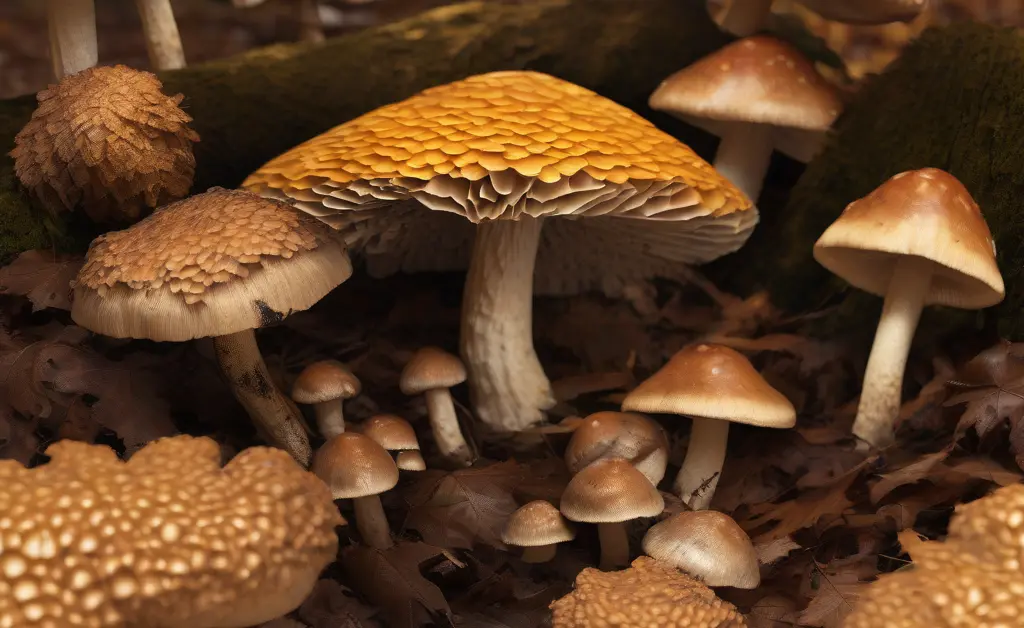
Proper morel mushroom identification relies on a close examination of several key features. Unlike many other mushrooms, true morels have a few distinct characteristics that, when assessed together, can confirm their identity. Novice foragers should familiarize themselves with these traits until they become second nature. A methodical approach, checking each feature carefully, is the safest way to ensure you are harvesting a true morel. Mastering the details of proper Morel Mushrooms: Identification is an essential skill for any forager.
Cap Shape and Structure
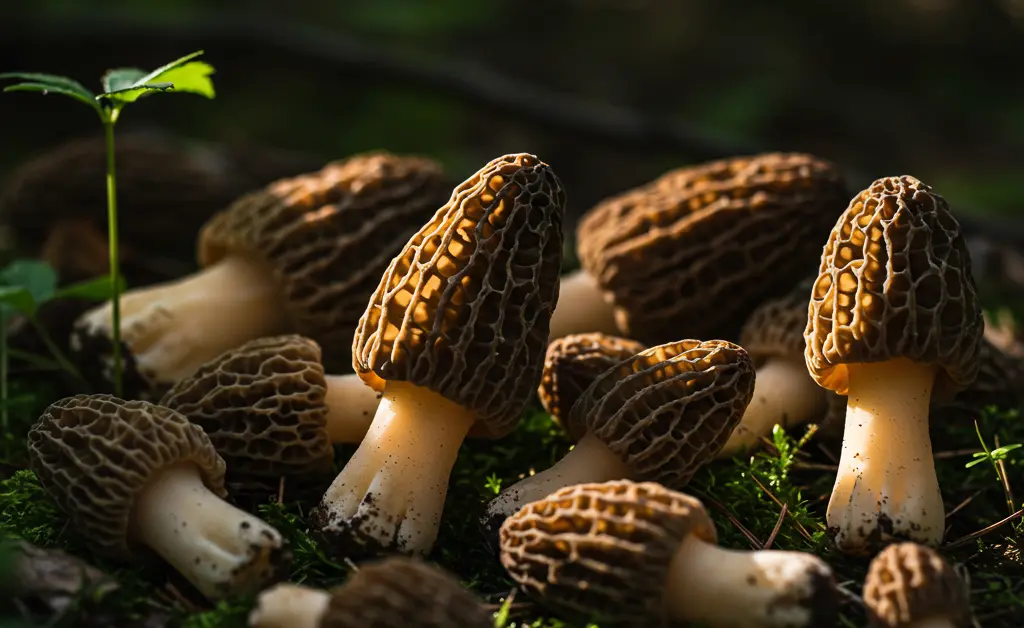
The cap of a true morel is one of its most defining features. It is deeply pitted with ridges and hollows, often described as looking like a honeycomb, sponge, or pinecone. The shape is generally conical or somewhat oblong. The cap is fully attached to the stem, with no part of it hanging freely like a skirt. This is a critical difference when compared to some false morel species, whose caps may be wrinkled or brain-like in appearance and can hang over the stem.
Hollow Interior
One of the most reliable tests for identifying a true morel is to slice it lengthwise from top to bottom. A true morel will be completely hollow inside, from the tip of the cap all the way down through the stem. There are no chambers, cotton-like fibers, or solid tissue within the mushroom. If the interior is filled with material or is not a continuous hollow chamber, it is not a true morel and should be considered dangerous. Understanding Morel mushroom colors can also aid identification.
Stem Characteristics
The stem, or stipe, of a true morel is also a key identifier. It is typically whitish to pale cream in color and, like the cap, is hollow. A crucial detail is how the stem attaches to the cap. In a true morel, the stem is fused to the bottom edge of the cap, creating a single, continuous hollow chamber. In many false morels, the stem attaches at the very top of the cap, with the rest of the cap hanging down around it.
How To Identify a Real Morel From a False Morel
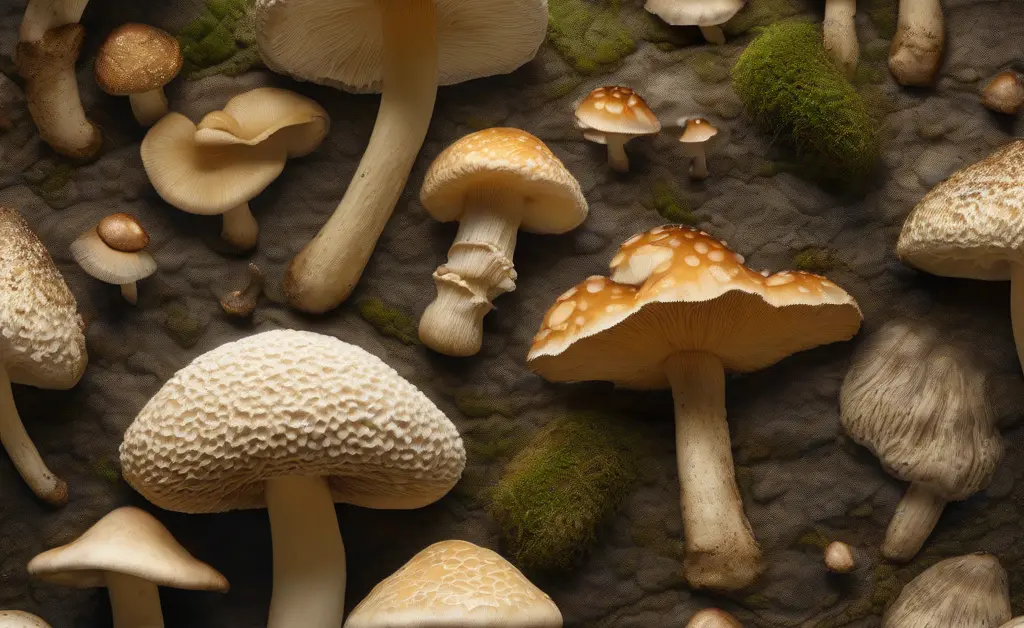
Distinguishing a true morel from a false morel is the most critical aspect of foraging for these mushrooms. False morels, which belong to genera such as Gyromitra and Verpa, contain compounds that can be toxic. What makes the task challenging is that these look-alikes often grow in the same habitats and during the same season as true morels. Relying on a single feature is risky; instead, a combination of checks—including the hollow interior, cap attachment, and overall shape—is required for a positive identification. The discipline of Morel Mushrooms: Identification is a process of elimination based on these critical differences. Detailed examination under a microscope can reveal subtle differences.
Spore Print Color
For those looking for a more scientific confirmation, a spore print can be a helpful tool. To take a spore print, you place the mushroom cap on a piece of paper (using half black and half white paper is ideal for visibility) and cover it for several hours. True morels typically produce a spore print that is light in color, ranging from creamy yellow to a pale brownish-orange. Some of the toxic look-alikes, by contrast, may produce a darker, reddish-brown spore print. This method should be used as a supplementary check, not as the sole means of identification.
Distinguishing Morels from False Morels
The term “false morel” primarily refers to mushrooms in the Gyromitra genus, which are sometimes called “beefsteaks.” These mushrooms are notoriously deceptive. What does a false morel mushroom look like? Instead of the deeply pitted, uniform honeycomb structure of a true morel, a Gyromitra species often has a wrinkled, folded, or brain-like cap that appears more lumpy and irregular. When sliced open, they are not hollow but are filled with wispy, cotton-like fibers or chambers. These mushrooms are poisonous and can cause severe illness if consumed. There are indeed poisonous mushrooms that look like morels, which is why rigorous Morel Mushrooms: Identification is not optional. Another look-alike is the Verpa bohemica, or “early morel,” which has a cap that hangs freely from the top of the stem, much like a skirt. Slicing it lengthwise will reveal that the cap is not fused to the stem. For definitive identification, consider a Morel Mushroom Under Microscope.
Key Identification Features of Morel Mushrooms
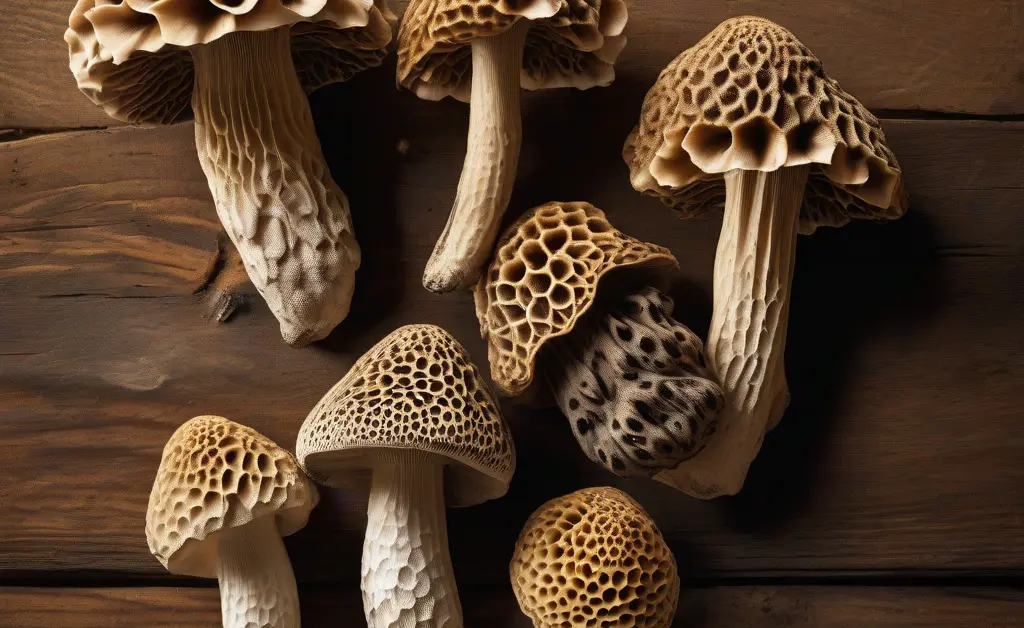
To safely forage, it is essential to internalize the key identification features that separate true morels from their look-alikes. Success in Morel Mushrooms: Identification comes from consistently applying a checklist of characteristics to every single specimen you find. Before a mushroom is even considered for harvesting, a forager must be confident in their ability to recognize these non-negotiable traits.
A true morel will always exhibit these features in combination:
- Hollow Interior: The mushroom is completely hollow from the top of the cap to the bottom of the stem.
- Attached Cap: The bottom of the conical, pitted cap is fused directly to the stem.
- Distinctive Cap: The cap has a honeycomb or sponge-like appearance with pits and ridges, not a wrinkled or brain-like surface.
Knowing where to find morel mushrooms, such as in moist, wooded areas near specific trees after a spring rain, gets you to the right location. However, it’s the meticulous inspection of each mushroom’s anatomy that ensures your safety. When harvesting and handling, use a knife to cut the mushroom at the base to keep dirt out of your collection and help preserve the mycelial network for future growth.
In summary, the journey to becoming a confident morel forager is built on caution, continuous learning, and a deep respect for the potential dangers of misidentification. The key identifiers—a completely hollow interior from cap to stem, a pitted and ridged cap that is fully attached to the stem, and a correct spore print color—are your most reliable tools. Always cross-reference multiple features, and never eat anything you are not 100% certain about. When in doubt, consulting with a local mycological society or an experienced expert is the wisest course of action. Safe and ethical practices ensure that the rewarding tradition of foraging can be enjoyed for generations to come.
This article is meant for general informational use and awareness. The information provided is not a substitute for expert knowledge, and misidentification of wild mushrooms can lead to serious health consequences. Always consult with a seasoned local expert or mycologist before consuming any wild mushroom. Do not rely solely on written descriptions or images for identification, as mushroom characteristics can vary. Scientific research on fungal identification can be found through resources like PubMed.
FAQ
How do you identify a morel mushroom?
True morel mushrooms possess a distinctive honeycomb-like cap with irregular pits and ridges, which is hollow and attached directly to the stem. Their shape is typically conical to oval, and they are often found in woodlands, especially near certain types of trees. The cap’s unique structure is a key characteristic for distinguishing them from other fungi.
What are the signs of a true morel mushroom?
The most reliable signs of a true morel mushroom include a cap that is deeply pitted and ridged, resembling a sponge or honeycomb, and a stem that is completely hollow from top to bottom. Unlike false morels, true morels do not have a cottony or woolly inner cap lining. These features are essential for accurate identification to ensure you are foraging for edible varieties.