
What is it about the brief appearance of the morel mushroom that sends foragers into the woods with such enthusiasm each spring? This prized edible, with its distinctive honeycomb cap, is a culinary delight, but its arrival is also accompanied by a critical need for caution. Several look-alike species, some of which are toxic, grow in the same habitats, making accurate identification essential for safety. Distinguishing a true morel from a false one is a skill that every forager must master before consuming their finds. This guide offers crucial Morel Mushroom Identification Tips, covering everything from the internal structure to the way the cap attaches to the stem, ensuring your foraging adventures are both rewarding and safe.
Key Identification Features of True Morels
Understanding the anatomy of a true morel is the first step toward confident foraging. These features, when assessed together, create a reliable profile that helps distinguish them from potentially harmful look-alikes. Never rely on a single characteristic alone; always cross-reference multiple features before making a positive identification.
Defining True Morels
True morels belong to the genus Morchella. They are highly sought-after edible mushrooms prized for their unique, savory flavor and meaty texture. Unlike many common mushrooms with gills, morels have a cap that resembles a sponge or honeycomb. Their elusiveness and short growing season contribute to their mystique and value in the culinary world. Proper identification is paramount, as consuming a look-alike can have serious consequences. For a comprehensive understanding, consult our morel mushroom identification guide.
Cap Characteristics: Pitted and Hollow
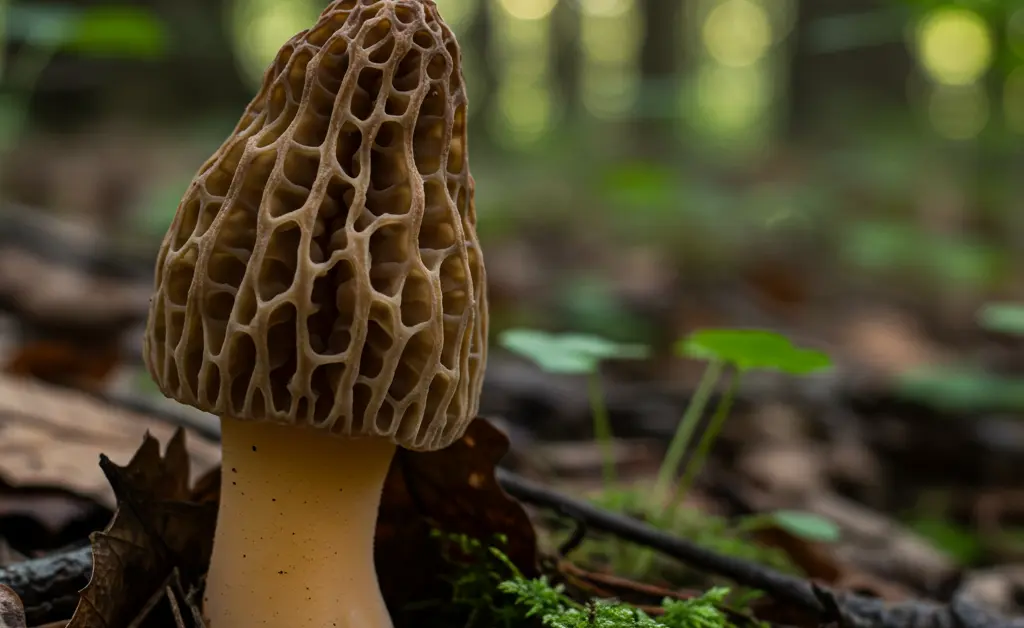
The cap, or pileus, is the most recognizable feature of a true morel. It is characterized by a network of ridges and pits, giving it a distinctive honeycomb-like appearance. The pits are deep and irregular, and the ridges are typically lighter in color. Crucially, the cap is completely hollow. When sliced open lengthwise, the cap and stem form one continuous, empty chamber.
Stem Characteristics: Hollow and Continuous
The stem, or stipe, of a true morel is also a key identifier. It is pale, often whitish or yellowish, and completely hollow from top to bottom. This hollow interior is not separate from the cap; it is a single, uninterrupted cavity that runs the entire length of the mushroom. A stem that is filled with a cottony substance or is chambered is not a true morel. These morel mushroom characteristics are vital for accurate identification.
Color Variations
True morels come in a spectrum of colors, which often causes confusion for novice foragers. They can range from pale blonde or yellow to grayish-brown and even nearly black. These color differences can be attributed to different species within the Morchella genus, as well as the mushroom’s age and environmental conditions. For example, yellow morels are often found near certain hardwood trees, while black morels may be more common in coniferous forests or burn sites. There are many morel mushrooms species guide that can help in identifying these variations.
Attachment of Cap to Stem
One of the most critical distinguishing features is how the cap attaches to the stem. In all true morels, the bottom edge of the cap is fully and directly attached to the stem. There is no gap or overhanging “skirt.” When you slice a true morel in half, you will see the cap wall merge seamlessly with the stem wall. If the cap hangs freely from the top of the stem, like a bell, it is not a true morel.
Habitat Preferences
Morels are known for their particular habitat preferences. They are often found in wooded areas, particularly near certain types of trees. Dying elm trees, ash trees, old apple orchards, and tulip poplars are classic morel habitats. They also frequently appear in disturbed ground, such as logged areas, floodplains, and burn sites from the previous year. Understanding these ecological associations can help you search in the most promising locations.
Seasonality
The appearance of morels is a hallmark of spring. They typically begin to fruit when the ground warms after the last frost and spring rains provide sufficient moisture. The exact timing varies by climate and elevation, but the season is generally brief. Learning to recognize these environmental cues is one of the most important Morel Mushroom Identification Tips for timing your foraging expeditions successfully.
Common Mistakes to Avoid When Identifying Morels
Enthusiasm for finding these culinary treasures can sometimes lead to hasty decisions. However, mistakes in mushroom identification can be dangerous. Knowing the common pitfalls and how to avoid them is just as important as knowing the features of a true morel.
Identifying False Morels and Toxic Look-alikes
The term “false morel” refers to several species of mushrooms that resemble true morels but can be toxic. The most notorious of these belong to the genus Gyromitra. These mushrooms contain compounds that can cause severe illness if not prepared in a very specific, expert manner, and are best avoided entirely by foragers. Other look-alikes may include certain Verpa species or early-stage stinkhorns. Always assume a mushroom is a look-alike until you have proven otherwise through careful examination.
Confusing with False Morels
False morels, especially those in the Gyromitra genus, have several features that distinguish them from true morels. Their caps are typically wrinkled, folded, or brain-like, rather than distinctly pitted and ridged. The cap of a false morel may also be reddish-brown or purplish. When sliced open, a false morel is not hollow; it is filled with cottony fibers or divided into multiple chambers. Furthermore, the cap often sits on top of the stem, sometimes hanging freely, rather than being fully attached.
Misidentifying Non-Edible Species
Beyond the well-known false morels, other non-edible or unpalatable species can sometimes be mistaken for true morels, particularly by beginners. For example, the Stinkhorn mushroom (*Phallus impudicus*) in its early “egg” stage does not resemble a morel, but as it emerges, its pitted cap can cause a moment of confusion from a distance. However, its distinctively unpleasant odor and different structure upon closer inspection are clear giveaways. Always inspect every mushroom individually and thoroughly.
Failing to Check for Hollow Interior
The single most important safety check is the “slice test.” Every single time you believe you have found a morel, you must slice it lengthwise from the tip of the cap to the bottom of the stem. A true morel will always be completely hollow inside, forming one continuous chamber. If the mushroom is filled with wispy material, has internal chambers, or is solid, it is not a true morel and should be discarded. This simple step is one of the most effective Morel Mushroom Identification Tips to prevent accidental poisoning.
Successfully foraging for morels is a deeply rewarding experience that connects you with the rhythms of nature. The key to a safe and enjoyable hunt lies in diligent study and cautious practice. Master the key features: the hollow interior, the pitted cap, and the fully attached stem. Be equally familiar with the characteristics of false morels. When in doubt, leave it out. By following these Morel Mushroom Identification Tips and respecting the risks involved, you can confidently and safely participate in the annual pursuit of this remarkable mushroom. Knowing which morels are morel mushroom edible is crucial.
The information in this article is intended for knowledge purposes only. It is not a substitute for in-person expert guidance or comprehensive field guides for mushroom identification. Consuming wild mushrooms carries inherent risks, and misidentification can lead to severe illness. Never consume a wild mushroom unless you are 100% certain of its identity, and it is recommended to consult with an experienced local forager before consuming any wild fungi for the first time. For further scientific research on fungi, consult resources like PubMed.
FAQ
What are the characteristics of a true morel mushroom?
True morels, also known as *Morchella* species, possess a distinctive honeycomb-like cap with deep pits and ridges. Their cap is typically attached directly to the stem, and the entire mushroom is hollow from top to bottom. These features distinguish them from other fungi.
How can you tell a morel from a false morel?
False morels, such as those in the *Gyromitra* genus, lack the characteristic honeycomb structure of true morels. Their caps are often more brain-like or wavy, and importantly, the interior of a false morel is typically filled with cottony or fibrous material, not hollow. This internal difference is a key identifier.
Are there any poisonous mushrooms that look like morels?
Yes, certain mushrooms, referred to as false morels, can be poisonous and resemble true morels superficially. These false varieties do not share the true hollow structure and pitted cap of edible morels. Consuming them can lead to adverse health effects.
What is the best way to identify morel mushrooms?
The best way to identify morel mushrooms is by closely examining their cap’s structure and the mushroom’s internal composition. Look for the deeply pitted, ridged cap that is attached directly to the stem, and confirm that the entire mushroom, from cap to base, is hollow. Morel Mushroom Identification Tips rely on these specific visual and tactile cues.
Where do morel mushrooms typically grow?
Morel mushrooms are commonly found in wooded areas, often near certain tree species like ash, elm, oak, and apple trees. They tend to prefer damp, disturbed ground, and can emerge in the spring following specific weather patterns. Their habitat preferences are quite particular.