Without proper knowledge, the prospect of identifying edible wild mushrooms can be daunting, often leading to missed opportunities for culinary discovery. This guide aims to transform that uncertainty into confident success. By understanding key identification features and sustainable practices, you can move from speculative searching to reliable harvesting. This resource details specific characteristics, preferred habitats, and crucial distinctions from look-alikes, equipping you with the practical skills needed to safely and effectively engage in maitake mushroom foraging. You will learn to approach the forest with a discerning eye, ensuring a rewarding and safe experience as you locate this prized fungus, enriching your table with a unique wild delicacy.
Key Features for Identifying Maitake Mushrooms
Successful mushroom identification begins with a thorough understanding of the unique characteristics of your target species. Maitake mushrooms, also known as Hen of the Woods, possess several distinct features that set them apart from other edible fungi and potential look-alikes. Understanding these features is crucial for successful maitake mushroom foraging. For those who are unable to forage themselves, an alternative is knowing where to buy Maitake mushroom from a reliable source.
Understanding Maitake’s Common Names
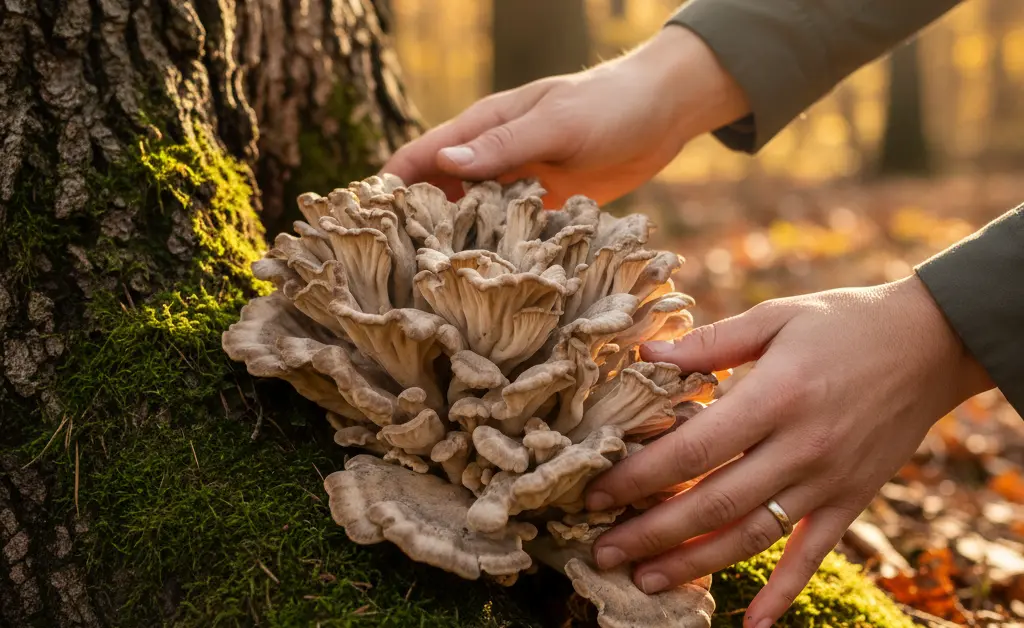
The Maitake mushroom is widely known by its evocative common name, “Hen of the Woods.” This name is primarily attributed to its appearance, which often resembles the ruffled feathers of a brooding hen sitting at the base of a tree. The clusters of wavy, fan-shaped caps overlap and intertwine, creating a layered, feathery mass. Other regional names may exist, but “Hen of the Woods” is the most recognized in English-speaking areas, making it a familiar term for mushroom hunting enthusiasts.
The Scientific Name: Grifola frondosa
Scientifically, the Maitake mushroom is classified as Grifola frondosa. This Latin name is universally recognized by mycologists and provides a precise way to refer to the species, eliminating ambiguity that can arise from common names. Understanding the scientific name is important for accessing detailed botanical information and ensuring accurate identification, especially when consulting field guides or scientific resources from institutions like the NIH.
Key Physical Characteristics
Grifola frondosa typically grows in large, overlapping clusters of multiple caps, emerging from a single, stout base rooted in the ground or at the base of trees. The individual caps are fan-shaped or spoon-shaped, often ruffled or wavy at the margins. Their color can vary from grayish-brown to tan or white, often darkening with age. The flesh is firm and white, becoming tougher as the mushroom matures. The underside of the caps is crucial for identification.
Hen of the woods gills
A critical identification point for the Hen of the Woods is its underside structure. Despite the common misnomer “gills” sometimes associated with mushrooms, Maitake (Grifola frondosa) is a polypore. This means that instead of gills, its underside is covered with a network of tiny pores. These pores are white or creamy white and are responsible for releasing spores. The absence of true radiating gills is a key feature distinguishing Maitake from many other fungi.
Hen of the woods identification pictures
When learning to identify Hen of the Woods, visual aids are incredibly helpful. Look for identification pictures that clearly show the mushroom’s clustered growth habit, the frond-like, overlapping caps, the varying shades of brown and gray, and critically, the porous underside. Pay attention to how the caps attach to the stem and the overall structure of the entire cluster. Comparing your finds to multiple reliable photos can reinforce your identification skills, helping you discern subtle differences between various edible fungi and non-edible species.
Confirming a Positive Identification
To confirm a positive identification of Grifola frondosa, several factors should align. Beyond its distinctive clustered appearance and porous underside, observe the spore print. A white spore print is characteristic of Maitake. You can obtain a spore print by placing a section of the mushroom, pore-side down, on a piece of dark paper and covering it overnight. Additionally, the Maitake typically grows at the base of hardwood trees, particularly oak trees, which is another strong indicator. Always cross-reference multiple characteristics from trusted foraging guide resources before considering any wild mushroom for culinary uses.
Maitake Mushroom Foraging: When and Where to Look
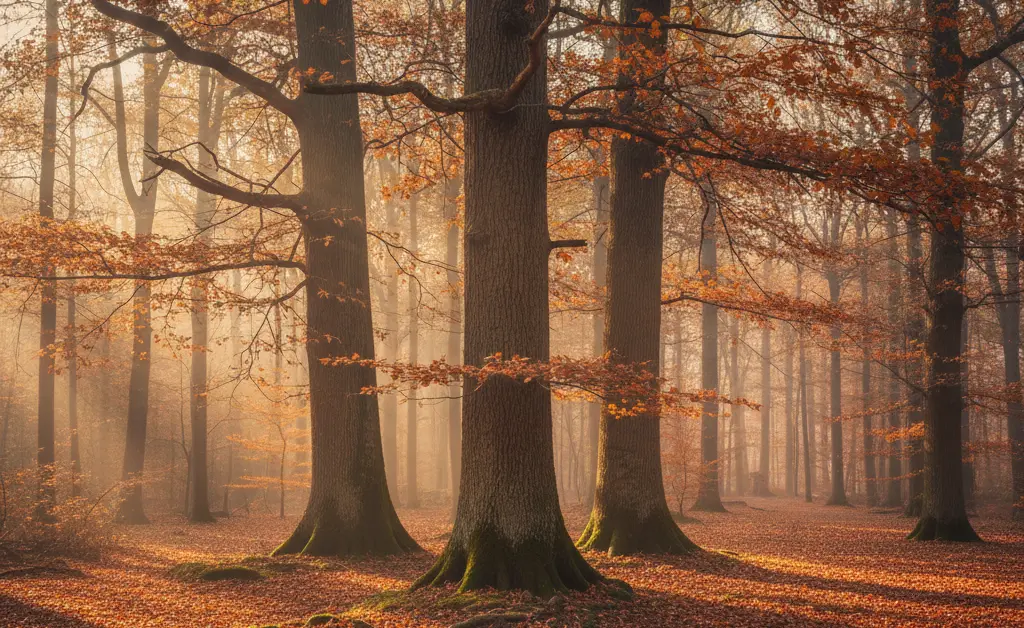
Locating the prized Maitake mushroom requires not just knowledge of its appearance, but also an understanding of its preferred growing conditions. Optimal timing and habitat are crucial for successful maitake mushroom foraging expeditions.
The Best Season for Hunting Maitake
Maitake mushrooms are primarily known as fall mushrooms. The peak season for hunting Maitake generally spans from late summer through the fall season, typically from late August to November in many temperate regions. The cooler temperatures and increased moisture levels after summer rains create ideal conditions for Grifola frondosa to fruit. While they can sometimes be found earlier or later depending on specific weather patterns, focusing your mushroom hunting efforts during this window significantly increases your chances of a successful harvest. The season for finding Maitake mushroom in Canada follows a similar timeline, though it might start slightly later in northern areas.
Preferred Host Trees and Forest Habitats
Maitake mushrooms have a strong preference for growing at the base of certain hardwood trees, making deciduous forests their primary habitat. Their most favored host tree is the oak tree, but they can also be found near maples, elms, and sometimes other hardwoods. They are often found growing directly from the ground at the base of these trees, sometimes appearing to sprout from buried roots, or occasionally on dying or dead stumps. When searching, focus on mature forests with a good population of oak trees and inspect the forest floor around their bases, as well as any older hardwood trees showing signs of butt rot, which is often associated with this parasitic fungus. These habitats are common for the Maitake mushroom in the USA, particularly throughout the eastern and midwestern states.
Avoiding Poisonous Maitake Look-alikes
While Maitake is a highly sought-after edible fungi, it’s crucial to be aware of other wild mushrooms that might resemble it. Careful identification is paramount to safe maitake mushroom foraging, as mistaking an edible for a poisonous species can have serious consequences.
Poisonous hen of the woods mushroom look alike
Fortunately, there are no truly deadly poisonous mushrooms that are exact replicas of the Hen of the Woods. However, there are a few fungi that beginners might confuse with Maitake, which are either inedible or can cause gastrointestinal upset. It’s essential to learn their distinguishing features to avoid unpleasant experiences when mushroom hunting.
Maitake look alike
Two common look-alikes that foragers might encounter are Berkeley’s Polypore (Bondarzewia berkeleyi) and the Black-staining Polypore (Meripilus sumstinei). While neither is considered deadly poisonous, Berkeley’s Polypore is generally tough, inedible, and can cause mild stomach upset for some. The Black-staining Polypore is edible when young and tender, but as its name suggests, it bruises and stains black when handled or cut, a characteristic not shared by Maitake. Always prioritize clear identification before considering any wild mushrooms for culinary uses.
Distinguishing Features of Similar Fungi
To differentiate Maitake from its look-alikes, observe these key features:
- Berkeley’s Polypore: This mushroom tends to be paler, often cream to light tan, and its individual caps are thicker, less frilly, and more shelf-like than Maitake. It also lacks the distinct, single, stout base of the Hen of the Woods, often growing as multiple, distinct rosettes. Its pores are usually larger and less uniformly distributed.
- Black-staining Polypore: While it can form large clusters similar to Maitake, its coloration is often darker brown, and most importantly, its flesh will noticeably stain black within minutes of being bruised or cut. Maitake’s flesh remains white. The texture of Black-staining Polypore is also generally tougher.
Always verify the white spore print of Maitake and ensure the mushroom doesn’t bruise or stain dark upon handling. When in doubt, it’s always best to err on the side of caution and leave the mushroom undisturbed.
Sustainable Harvesting Practices for Maitake
Responsible foraging ensures that mushroom populations can continue to thrive for future generations. Practicing responsible methods ensures the longevity of future maitake mushroom foraging opportunities and helps maintain the health of forest ecosystems. While these sustainable practices are vital for foragers, many people also opt to purchase Maitake mushroom online to enjoy its benefits without harvesting it themselves.
Tools for a Clean Harvest
When harvesting Maitake, using the right tools can significantly contribute to sustainable foraging. A sharp knife is essential for a clean harvest. Instead of pulling the entire mushroom cluster from the ground, which can damage the mycelial network that produces the fungus, carefully cut the Maitake cluster at its base, just above the soil line or where it emerges from the tree. This leaves the underground portion of the organism intact, allowing it to potentially fruit again in subsequent seasons. Additionally, carrying a mesh bag or a woven basket is highly recommended. These containers allow spores to disperse through the holes as you walk, naturally helping to propagate the mushroom species throughout the forest. Plastic bags, by contrast, can trap moisture and accelerate decay, potentially harming the mushroom and preventing spore dispersal.
Essential Gear and Tools for Foraging
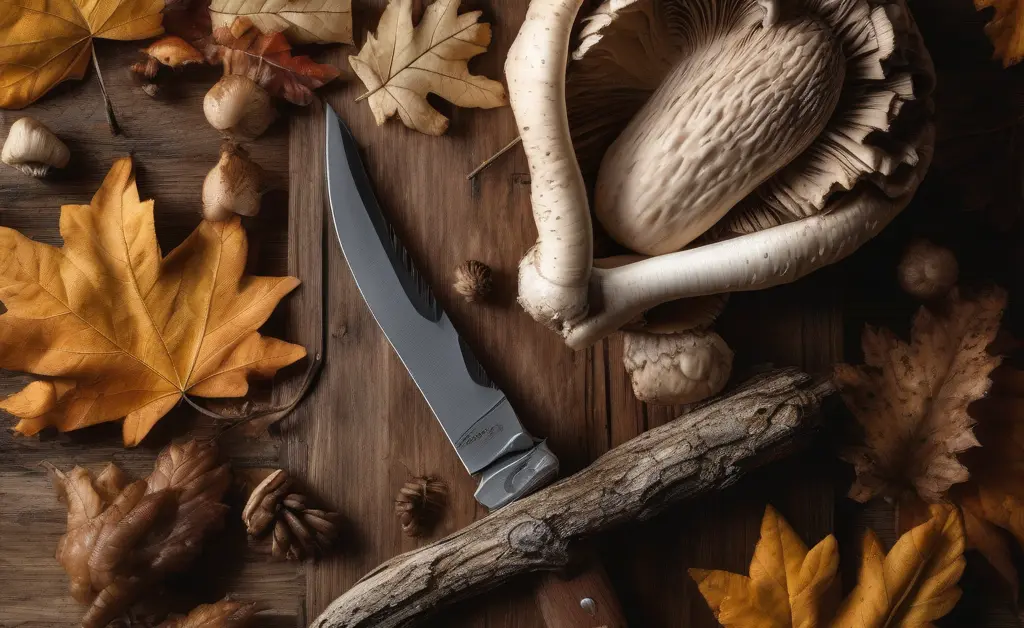
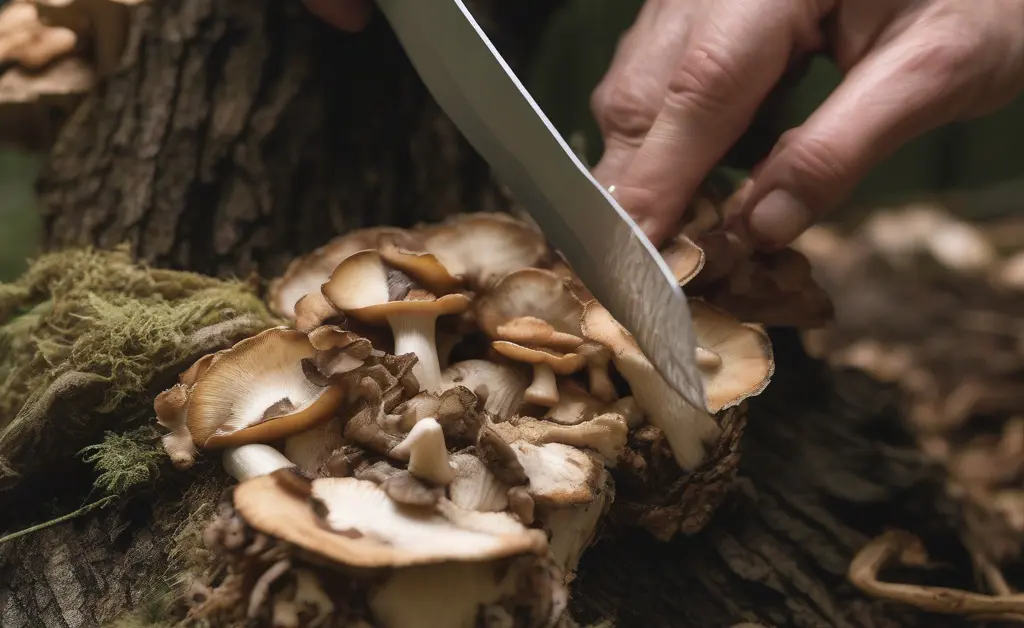
Embarking on a mushroom hunting adventure requires more than just identification skills; proper gear enhances safety, comfort, and success. Having the right equipment greatly enhances the safety and efficiency of any maitake mushroom foraging expedition.
Navigating the Woods Safely
Navigating forest environments safely is paramount. Always carry a reliable navigation system, such as a compass and a physical map of the area, or a GPS device/smartphone app with offline mapping capabilities. Familiarize yourself with how to use them before you go. Dress in layers appropriate for the weather, and wear sturdy, waterproof hiking boots. Long pants and sleeves can help protect against ticks, thorns, and poison ivy. Always bring plenty of water, especially on longer outings, and high-energy snacks. A basic first-aid kit is also a wise addition to your foraging tools, preparing you for minor scrapes or insect bites. Inform someone of your plans and expected return time, and avoid foraging alone in unfamiliar or remote areas.
Engaging in maitake mushroom foraging offers a unique opportunity to connect with nature and discover a delicious wild delicacy. By meticulously learning its identifying features, understanding its preferred habitats, and committing to sustainable harvesting practices, you can ensure a rewarding and safe experience. Always prioritize safety, practice responsible foraging, and confirm your identification with absolute certainty. This approach will not only enhance your enjoyment but also contribute to the long-term health of our forest ecosystems and the availability of this sought-after fungus for future enthusiasts.
While this article discusses health-related topics, it does not provide medical guidance. The information presented here is for educational and general informational purposes only, and should not be considered a substitute for professional medical advice, diagnosis, or treatment. Always consult with a qualified healthcare provider before making any decisions related to your health or well-being. Individual results from foraging or consuming wild fungi may vary.
FAQ
— What time of year do you find maitake mushrooms?
Maitake typically appears in the autumn months, from late August through October in many regions. Its fruiting is often triggered by cooling temperatures and rainfall, which signal the fungus to reproduce. This seasonal cycle is a key piece of knowledge for successful identification.
— What kind of trees do hen of the woods grow on?
The maitake fungus primarily forms a parasitic or saprobic relationship with hardwood trees, most famously at the base of oak trees. While oaks are its preferred host, it is sometimes found with other hardwoods like maples or elms. This specific tree association is a critical identifier.
— How can you be sure you’ve found a hen of the woods?
Positive identification involves observing several distinct features: a large, clustered formation of grayish-brown, fan-shaped caps growing from a single base. The underside has tiny pores instead of gills, a crucial detail for anyone learning about maitake mushroom foraging. Confirming its location at the base of a hardwood, usually an oak, is another key indicator.
— Are there any poisonous look-alikes for maitake?
Maitake is known for its distinctive appearance, and it does not have any common poisonous look-alikes, making it a popular target for foragers. Some non-toxic polypores like the Berkeley’s Polypore can sometimes cause confusion, although their appearance and texture differ upon close inspection. Absolute certainty in identification is always the standard practice before consumption.
— How do you properly harvest hen of the woods?
A common harvesting practice is to use a knife to slice the mushroom cluster off at its base, close to the ground or tree trunk. This method helps keep the fruiting body clean from dirt and debris. Leaving the underground portion of the fungus undisturbed is thought to support its ability to fruit in subsequent years.
— Why is maitake also called ‘hen of the woods’?
The common name ‘hen of the woods’ is a direct reference to the mushroom’s appearance. Its large, ruffled, and layered cluster of grayish-brown caps strongly resembles the fluffed tail feathers of a hen sitting on a nest. This descriptive name makes it easy to visualize.
— Can you find maitake mushrooms in the same spot year after year?
Since the fungal organism lives perennially within the host tree’s root system, it is very common to find maitake fruiting in the exact same location for many consecutive years. The appearance of the mushroom depends on environmental conditions being favorable each autumn. This reliable fruiting pattern makes known maitake spots highly valued.
— What is the general texture of a maitake mushroom when cooked?
When cooked, maitake has a distinctively semi-firm, succulent, and slightly chewy texture that holds its structure well. It doesn’t become slimy or soft like some other mushrooms, making it exceptionally versatile in culinary applications. The texture is often described as pleasantly meaty.