Many home cooks struggle to consistently find high-quality gourmet mushrooms, often facing limited availability or prohibitive prices at local markets. The desire to incorporate unique, savory textures into meals without constant grocery hunting can be a real frustration. Imagine having a continuous supply of firm, umami-rich king oyster mushrooms right at your fingertips, ready to transform any dish from mundane to magnificent. This comprehensive guide will demystify the process, providing all the essential knowledge on how to grow king oyster mushroom successfully in your own home. You’ll learn the techniques, troubleshoot common issues, and master the art of cultivating these culinary delights, ensuring freshness and flavor in every harvest.
Choosing Your Growing Method: Indoors, Kits, and Blocks
Deciding on the right approach is the first step when considering how to grow king oyster mushroom. You have several viable options, each with its own advantages, catering to different levels of experience and commitment. Indoor cultivation offers the most control over environmental factors, allowing for consistent results. Growing king oyster mushrooms indoors means you can manipulate temperature, humidity, and fresh air exchange with precision, creating an ideal environment year-round. Alternatively, using a pre-packaged mushroom growing kit can provide a simplified entry point, especially for beginners. These kits often come ready to fruit, minimizing the initial preparation steps. For those looking for a balance between ease and control, prepared growing blocks offer a good compromise. They typically arrive inoculated and partially colonized, requiring less initial setup than starting from scratch but still allowing for environmental adjustments.
Essential Supplies for Cultivation
Regardless of your chosen method, certain essential supplies are fundamental to successful mushroom cultivation. These include a clean growing area, sterile containers or grow bags, a spray bottle for maintaining humidity, and potentially a humidifier or a fan for air circulation, depending on your setup. A hygrometer and thermometer are crucial for monitoring environmental conditions, ensuring optimal growth. For more advanced setups, a dedicated fruiting chamber can provide a controlled microclimate. Cleanliness is paramount in all stages to prevent contamination, so gloves, rubbing alcohol, and a clean workspace are indispensable.
King Oyster mushroom Spawn
Mushroom spawn is the living fungal culture that you introduce to your substrate to initiate growth. For king oyster mushrooms, grain spawn is a popular and effective choice due to its ease of handling and high nutrient content, which allows the mycelium to colonize quickly and vigorously. Other forms, like sawdust spawn or plug spawn, are also available depending on the cultivation scale and substrate type. High-quality, healthy king oyster mushroom spawn is critical for robust colonization and a successful yield, as it sets the foundation for the entire growth cycle.
King Oyster mushroom substrate
The substrate serves as the food source for the growing mycelium. King oyster mushrooms, also known as King Trumpet mushrooms, thrive on lignin-rich substrates. Common choices include sawdust (hardwood is preferred), straw, or a mixture of these with supplements like bran or soy hulls to boost nutrient content. Some growers also use sterilized coir or vermiculite as part of their mix. The chosen substrate must be properly prepared and sterilized or pasteurized to eliminate competing organisms, ensuring that the king oyster mushroom mycelium has exclusive access to the available nutrients for optimal colonization.
King Oyster Mushroom Kit Instructions
For those opting for a King Oyster Mushroom Kit, the process is generally straightforward. Typically, the kit arrives as a colonized block of substrate in a sealed bag. The instructions will guide you to cut an opening in the bag (often an “X” shape) to expose the substrate to air, which signals the mycelium to begin fruiting. You then place the kit in an environment with appropriate temperature and humidity, usually misting it regularly to keep the surface moist. The King Oyster Fruiting Kit Experience is designed to be user-friendly, allowing you to observe the entire mushroom development cycle with minimal effort, from tiny pinheads to mature fruiting bodies ready for harvest.
How to Grow King Oyster Mushrooms: A Step-by-Step Guide
Successfully cultivating these gourmet mushrooms involves a series of carefully managed steps. Knowing how to grow king oyster mushroom effectively means understanding and executing each phase with precision, from preparing the growing medium to initiating the fruiting process. This comprehensive guide outlines the key stages to help you achieve a bountiful harvest.
Preparing Your Substrate
Substrate preparation is a critical first step to prevent contamination, which can quickly ruin your efforts. The goal is to create a sterile or pasteurized environment where only your king oyster mushroom mycelium can flourish. Sterilization involves heating the substrate (e.g., sawdust and bran mix) in a pressure cooker or autoclave at high temperatures and pressures for an extended period. Pasteurization, a gentler process, involves heating the substrate to a lower temperature for a longer duration, aiming to eliminate most competing microbes while leaving beneficial thermophilic bacteria intact. After heating, the substrate must be cooled to room temperature before inoculation to avoid damaging the delicate spawn.
Inoculating with Spawn
Once your substrate is prepared and cooled, it’s time for inoculation. This involves introducing your king oyster mushroom spawn into the sterile substrate. Work in as clean an environment as possible, ideally in a still air box or in front of a laminar flow hood, to minimize airborne contaminants. Break up your grain spawn gently and mix it thoroughly with the substrate. For grow bags, this usually means layering the spawn and substrate or mixing them directly in the bag. The aim is for an even distribution, ensuring that the mycelium has plenty of starting points to colonize the entire block efficiently.
Incubation Phase
Following inoculation, the substrate block enters the incubation phase. During this time, the mycelium will colonize the substrate, growing outwards from the spawn points until it fully envelops the growing medium. This period typically requires stable, warm temperatures, often around 70-75°F (21-24°C), and a dark environment. Humidity should be relatively high to prevent the substrate from drying out, though not as critical as during fruiting. You’ll observe the substrate gradually turning white as the mycelial network expands, indicating successful colonization. This phase can take several weeks, depending on the spawn rate and environmental conditions.
Initiating Fruiting (Pinning)
After complete colonization, the mycelium needs a signal to transition from vegetative growth to reproductive growth, which is known as initiating fruiting or pinning. This is typically achieved by introducing a “shock” or change in environmental conditions. Lowering the temperature, increasing humidity (often to 90-95%), and providing fresh air exchange (FAE) are key triggers. A gentle exposure to indirect light also encourages pinhead formation. These changes mimic the natural conditions that would signal the mushroom to fruit in the wild. You’ll soon observe tiny primordia, or “pinheads,” beginning to form on the surface of the colonized substrate.
Monitoring Growth and Development
Once pinheads appear, diligent monitoring of growth and development is crucial. Maintain consistent temperature, high humidity, and regular fresh air exchange to support the developing fruiting bodies. King oyster mushrooms prefer a well-ventilated environment, so a continuous gentle airflow is beneficial. Observe the size, shape, and overall health of the developing mushrooms. Adjust environmental parameters as needed; for instance, if mushrooms appear leggy or stunted, it might indicate insufficient fresh air. Consistent attention during this phase helps ensure a healthy and robust harvest.
Setting Up the Ideal Growing Environment
Creating the perfect environment is paramount for successful king oyster mushroom growing. These gourmet mushrooms are quite sensitive to their surroundings, and precise control over environmental factors will significantly impact your yield and the quality of your harvest. Optimal environmental conditions are key to understanding how to grow king oyster mushroom effectively.
King Oyster mushrooms thrive within specific temperature ranges. During the mycelial colonization phase, a stable temperature between 70-75°F (21-24°C) is generally ideal. Once you’re ready to initiate fruiting, the temperature should be lowered, typically to around 55-65°F (13-18°C), which helps trigger pinhead formation. Maintaining humidity levels is also critical. High humidity, often in the range of 85-95% during fruiting, is essential for the mushrooms to develop properly without drying out or cracking. This can be achieved using a humidifier, misting regularly with a spray bottle, or utilizing a humidity tent or fruiting chamber.
The importance of fresh air exchange (FAE) cannot be overstated. King Oyster mushrooms produce carbon dioxide as they grow, and if it accumulates, it can lead to stunted growth or elongated stems (known as “legginess”). Regular airflow, often achieved through fanning or a small fan in a fruiting chamber, helps remove CO2 and introduces fresh oxygen. While not a primary energy source, indirect light is beneficial for pinning and growth. It helps orient the mushrooms and encourages proper cap development. Too much light is not necessary and can even be detrimental, so ambient, indirect light is preferred.
Harvesting Your King Oyster Mushrooms and Encouraging Future Flushes
The moment of harvest is a rewarding culmination of your efforts in learning how to grow king oyster mushroom. Knowing when and how to pick your mushrooms is crucial for maximizing flavor and encouraging subsequent flushes.
When to Harvest King Oysters
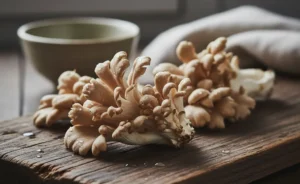
Timing your harvest correctly is key to enjoying the best texture and flavor of your king oyster mushrooms. They are typically ready for harvest when their caps have flattened out slightly and their gills are still visible but not fully inverted or sporulating heavily. The stem should be firm and thick. Avoid waiting too long, as overly mature mushrooms can become tough, develop a bitter taste, or release excessive spores, which can make a mess and potentially impact air quality. Observing the cap margins is a good indicator; they should still be slightly rolled inwards or flat, not curled upwards significantly.
Harvesting Techniques
When harvesting, handle the delicate fruiting bodies with care. The most common technique is to gently twist the mushroom at the base of the stem where it connects to the substrate block. This method helps to remove the entire mushroom without leaving behind remnants that could rot and attract contamination. For clusters, you can twist off individual mushrooms or the entire cluster if they are tightly bound. A clean, sharp knife can also be used to cut the mushrooms at the base, ensuring a clean break from the substrate. Always wash your hands or wear gloves to maintain sterility.
Encouraging Future Flushes
King oyster mushrooms are known for producing multiple “flushes” or waves of mushrooms from a single substrate block. After your initial harvest, you can often encourage future flushes by providing a brief period of rest followed by another “shock” treatment. This typically involves re-hydrating the substrate block by soaking it in cold water for several hours (e.g., 6-12 hours), which replenishes its moisture content and mimics natural rainfall. After soaking, return the block to your fruiting environment with the same optimal temperature, humidity, and fresh air exchange conditions. Subsequent flushes may yield slightly smaller mushrooms but can continue for several weeks, providing a consistent supply of these delicious gourmet mushrooms.
Troubleshooting Common Growing Issues
Even with careful planning, challenges can arise during king oyster mushroom cultivation. Addressing these common problems promptly is crucial for successful king oyster mushroom growing. One of the most frustrating issues is contamination, which often manifests as green mold (Trichoderma), black mold (Aspergillus), or bacterial blotches on the substrate or developing mushrooms. Dealing with contamination usually involves isolating the affected block immediately to prevent spores from spreading to other cultures. Prevention through meticulous sterilization and aseptic technique during inoculation is the best defense. If contamination appears, it’s often best to discard the entire contaminated block to safeguard your other efforts.
Another common concern is stalled growth or no pinning. If your colonized substrate isn’t producing pinheads, re-evaluate your environmental conditions. Are king oyster mushrooms hard to grow? They can be sensitive to environmental shifts. To master king oyster mushroom growing conditions, it’s essential to understand specific environmental needs. Often, a lack of the proper “shock” (temperature drop, increased humidity, fresh air exchange, and indirect light) is the culprit. Ensure your fruiting chamber provides sufficient fresh air exchange (FAE), as high CO2 levels can inhibit pinning. Verify that the temperature and humidity are within the optimal ranges for fruiting, typically cooler temperatures and higher humidity than incubation. What temperature do king oyster mushrooms grow best in? A drop to 55-65°F (13-18°C) often stimulates pinning. How much humidity do king oyster mushrooms need? Around 85-95% is critical. If mushrooms are present but appear malformed, spindly, or have tiny caps, it usually indicates insufficient fresh air or overly high CO2 levels. Increase ventilation to promote healthier development. Understanding King Oyster Mushroom Cultivation means learning to identify and correct these environmental imbalances swiftly.
Tips for Successful King Oyster Mushroom Growth
Achieving consistent success in king oyster mushroom cultivation involves a combination of best practices and attention to detail. Firstly, always prioritize hygiene. A sterile environment during substrate preparation and inoculation is the most critical factor in preventing contamination, which is a common cause of failure. Investing in a still air box or working in a clean, disinfected space can make a significant difference. Secondly, precise environmental control is vital. King oyster mushrooms, while robust once established, are sensitive to fluctuations in temperature and humidity, especially during the pinning and fruiting stages. Use reliable thermometers and hygrometers to monitor your growing chamber and make adjustments as needed. Consistency in these environmental conditions will lead to more uniform and higher-quality yields.
Adequate fresh air exchange (FAE) is another non-negotiable aspect. Stagnant air leads to carbon dioxide buildup, resulting in elongated stems and underdeveloped caps, commonly known as “legginess.” Ensure there’s gentle, continuous airflow or regular manual fanning. While King Oyster mushrooms don’t require direct light, providing some ambient, indirect light helps them orient and develop properly. Finally, patience and observation are key. Each batch of king oyster mushrooms may behave slightly differently, and learning to read the subtle cues of your mycelium and fruiting bodies will empower you to adjust your methods for optimal growth. Keep detailed notes on your environmental parameters and results to refine your approach over time. For broader insights into evidence-based methodologies, consult resources such as the Cochrane Library.
Mastering the art of growing king oyster mushrooms at home is a rewarding endeavor that connects you more deeply with your food source. From preparing the substrate and inoculating with spawn to meticulously managing environmental conditions and finally harvesting your bounty, each step contributes to the satisfaction of cultivating these exquisite gourmet fungi. By following the detailed guidance provided, you are well-equipped to overcome potential challenges and ensure a consistent supply of fresh, flavorful King Trumpet mushrooms for your culinary adventures. Enjoy the journey of bringing these magnificent mushrooms from spore to plate in your own home.
The content presented here is not a substitute for professional medical guidance. This information is intended for educational purposes only and should not be used to self-diagnose or treat any medical condition. Always consult with a qualified healthcare provider for any health concerns or before making any decisions related to your health or treatment. Reliance on any information provided in this article is solely at your own risk.
FAQ
— How long does it take for king oyster mushrooms to grow?
King oyster mushrooms typically require several weeks from inoculation to the first harvest. The exact timeline can vary depending on environmental conditions like temperature, humidity, and the specific strain being cultivated. Patience is key, as consistent conditions support healthy and timely development of the fruiting bodies.
— What is the best substrate for king oyster mushrooms?
A reliable substrate is crucial for successful cultivation of these mushrooms. For how to grow king oyster mushroom, hardwood sawdust, often supplemented with bran or other nutrients, is widely considered an excellent choice. This mixture provides the necessary nutrients and structure for the mycelium to colonize and eventually fruit robustly.
— When should I harvest king oyster mushrooms?
You should harvest king oyster mushrooms when their caps begin to flatten slightly and the gills underneath are clearly visible but not fully exposed. Harvesting them at this stage ensures optimal texture, flavor, and prevents spore release, which can signal the mushroom is past its prime for culinary use. It’s about catching them at their peak development for the best quality.