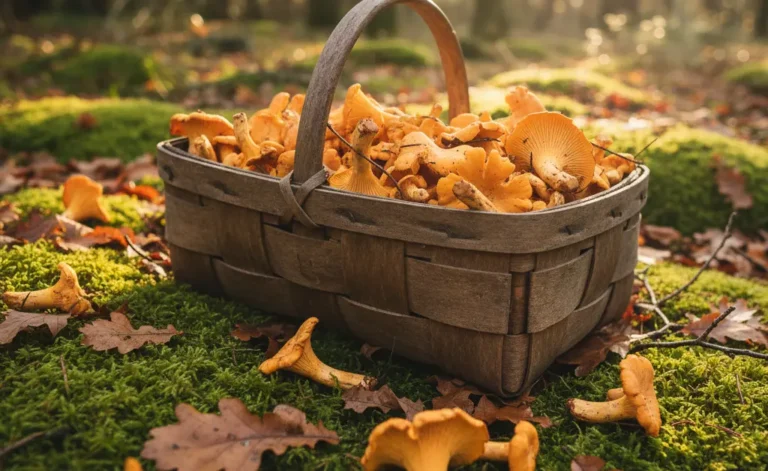
Just as individuals have common names they go by in daily life and more formal, unique full names for official identification, the natural world employs a similar system. Many species are known by various regional common names, which can sometimes lead to confusion. To ensure global clarity and precision in biology, each organism is assigned a unique binomial scientific name. This standardized system helps researchers, foragers, and mycologists worldwide to refer to the exact same species without ambiguity. Understanding the specific chanterelle mushroom scientific name is essential for accurately identifying these highly prized fungi, distinguishing them from look-alikes, and facilitating global scientific communication regarding their characteristics and habitats. This precise nomenclature is fundamental for both culinary enthusiasts and ecological studies.
What is the Scientific Name of the Chanterelle Mushroom?
The world of mycology relies on precise naming conventions to differentiate the vast and varied kingdom of fungi. For the beloved chanterelle, a globally recognized name provides the clarity that common names often lack. This ensures that when scientists discuss research, or when foragers share knowledge, they are all referring to the same organism.
Cantharellus cibarius: The Primary Scientific Name
The most widely recognized scientific name for the golden chanterelle is Cantharellus cibarius. This binomial name is a cornerstone of mycology and provides significant insight into the mushroom’s characteristics. The genus name, Cantharellus, is derived from the Greek word ‘kantharos,’ which translates to a type of drinking cup or tankard. This likely refers to the mushroom’s often funnel-shaped or cup-like cap.
The species epithet, cibarius, comes from Latin and means ‘relating to food’ or ‘fit for food.’ This directly points to the mushroom’s long history as a prized edible species, distinguishing it as a culinary delight. Therefore, the full chanterelle mushroom scientific name, Cantharellus cibarius, effectively describes a cup-shaped mushroom that is good to eat. This name serves as the primary reference point for what most people envision when they think of a chanterelle.
Chanterelle Mushroom Scientific Name Variations
While Cantharellus cibarius is the most famous, the genus Cantharellus is diverse, containing numerous species that are all considered chanterelles. Recent DNA analysis has led to the reclassification and naming of many regional species that were previously grouped under the broad C. cibarius umbrella. This has expanded our understanding of the chanterelle family and highlighted the importance of regional specificity. The variations in the chanterelle mushroom scientific name often correspond to differences in color, habitat, and geographical location.
White chanterelle mushroom scientific name
The species commonly known as the white chanterelle is scientifically identified as Cantharellus subalbidus. The species name ‘subalbidus’ is Latin for ‘whitish,’ an apt descriptor for its pale, creamy-white coloration. It is typically found in the Pacific Northwest of North America, often growing in association with conifers. While it shares the characteristic false gills and overall shape of its golden cousins, its distinct color and sometimes larger, more robust stature make it a separate and identifiable species.
Yellow chanterelle mushroom scientific name
The term “yellow chanterelle” is most often used as a common name for the classic Cantharellus cibarius due to its vibrant egg-yolk hue. However, the chanterelle family includes other distinctly yellow species. For example, Cantharellus lateritius, known as the smooth chanterelle, is also yellow but is distinguished by its nearly smooth underside, which has very shallow, rudimentary ridges instead of the more pronounced false gills of C. cibarius. This demonstrates how subtle morphological differences can lead to distinct scientific classifications, even among mushrooms of similar color.
Golden chanterelle scientific name
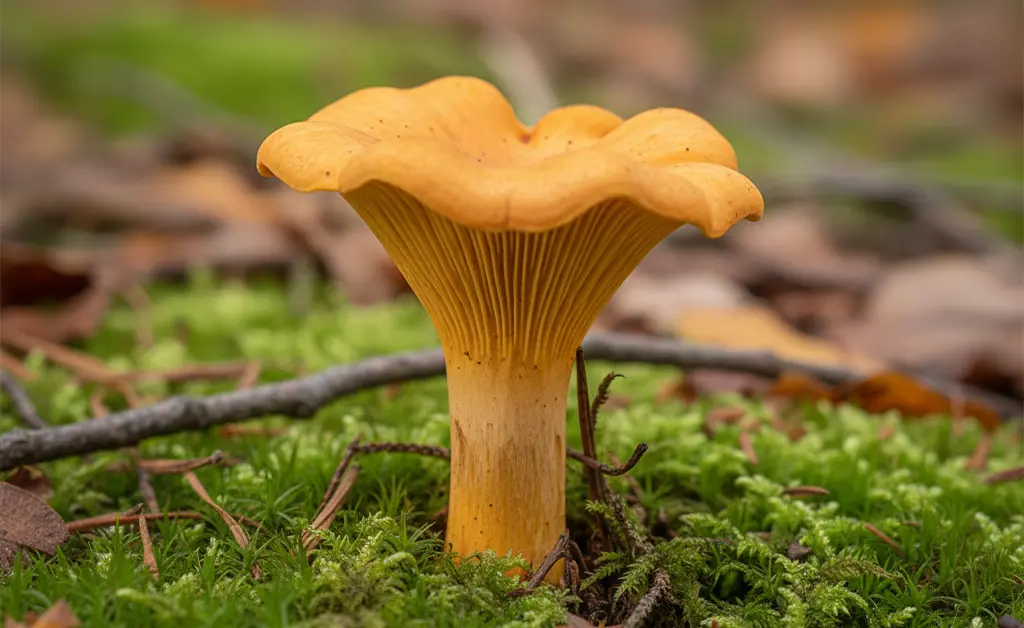
The golden chanterelle is the quintessential chanterelle and, as mentioned, is most famously known by the scientific name Cantharellus cibarius. This species is celebrated for its beautiful golden-yellow color, wavy cap margin, and a distinct, fruity aroma often compared to apricots. It is one of the most sought-after edible mushrooms in the world. You can find more fascinating chanterelle mushroom facts to deepen your knowledge. For many years, this European name was applied to similar-looking chanterelles across the globe, but modern mycology is now assigning unique names to North American and other regional species that are genetically distinct.
Cantharellus chanterelle mushroom scientific name
It is important to understand that “Cantharellus” on its own is not a complete scientific name but rather the name of the genus. A complete scientific name is binomial, consisting of both the genus name (e.g., Cantharellus) and a specific species epithet (e.g., cibarius). The genus Cantharellus encompasses all true chanterelles, from the white C. subalbidus to the red-hued C. cinnabarinus. Using only the genus name refers to the entire group of related mushrooms rather than a single, specific species.
Chanterelle Mushroom Scientific Name Identification
Using the chanterelle mushroom scientific name as a basis for identification is a critical practice for safety and accuracy. The features that define the Cantharellus genus are key to distinguishing these edible treasures from potentially harmful look-alikes. One of the most important characteristics is the presence of false gills. Unlike the true, blade-like gills of many other mushrooms, chanterelles have ridges, folds, or wrinkles on the underside of the cap that are forked and run down the stem. These ridges are part of the mushroom itself and cannot be easily separated from the cap.
Other identifying features include a solid, fleshy stem that is not hollow, and flesh that is typically white inside and tears apart like string cheese. Many species in the Cantharellus genus also emit a pleasant, fruity fragrance. Correct identification is paramount to avoid confusion with “false chanterelles,” such as the poisonous Jack-o’-lantern mushroom (Omphalotus olearius), which has true, sharp gills, grows in dense clusters on wood, and is bioluminescent. For more information on health and safety, you can consult resources from the CDC.
Chanterelle Mushroom Scientific Name Classification
Understanding the full taxonomic classification provides context for where chanterelles fit within the broader fungal kingdom. This hierarchical system organizes living things from broad categories down to the specific species. For anyone studying these fungi, knowing the formal classification is as important as knowing the chanterelle mushroom scientific name itself.
The classification for the golden chanterelle, Cantharellus cibarius, is as follows:
- Kingdom: Fungi
- Phylum: Basidiomycota
- Class: Agaricomycetes
- Order: Cantharellales
- Family: Cantharellaceae
- Genus: Cantharellus
- Species: cibarius
This framework shows that chanterelles belong to the family Cantharellaceae, which also includes related mushrooms like craterellus (trumpet mushrooms). This systematic approach is fundamental to mycology, allowing for clear communication and a deeper understanding of the evolutionary relationships between different fungal species.
In conclusion, the binomial system of nomenclature provides invaluable clarity and precision in the study and identification of fungi. The name Cantharellus cibarius perfectly encapsulates the essence of the golden chanterelle, referencing its shape and prized edibility. As mycology advances, the distinctions between the many chanterelle species become clearer, reinforcing the importance of using specific scientific names. For foragers, chefs, and scientists alike, this universal language is essential for safely appreciating, utilizing, and studying the diverse and fascinating world of chanterelle mushrooms.
This information is provided for educational purposes only. It is not intended to be a substitute for professional mycological advice. Never consume a wild mushroom unless you are absolutely certain of its identification, and it is recommended to consult with an experienced local expert before foraging. Misidentification of mushrooms can lead to severe illness or other serious health consequences.
FAQ
What does ‘cibarius’ mean in the scientific name?
The specific epithet ‘cibarius’ is derived from Latin and translates to ‘edible’. This designation highlights the culinary significance of this particular mushroom species within its scientific classification.
What is the common name for Cantharellus cibarius?
Cantharellus cibarius is widely recognized by its common name, the golden chanterelle. This name reflects the mushroom’s distinctive bright yellow to orange coloration.
Where do chanterelle mushrooms grow?
Chanterelle mushrooms typically grow in woodlands, often near or under various species of trees, including pines, oaks, and birches. They prefer moist environments and are frequently found in forests with acidic soil.
Are chanterelle mushrooms edible?
Yes, chanterelle mushrooms are generally considered edible and are highly prized in many cuisines. Their unique fruity aroma and delicate flavor make them a sought-after ingredient.
Is chanterelle a poisonous mushroom?
No, the true chanterelle is not a poisonous mushroom. However, misidentification is a concern, as some toxic mushrooms can bear a superficial resemblance to chanterelles.
Are all chanterelles edible?
While many species within the *Cantharellus* genus are edible, not all chanterelles are. It is crucial to correctly identify any mushroom before consumption, as some look-alikes may be unpalatable or toxic.