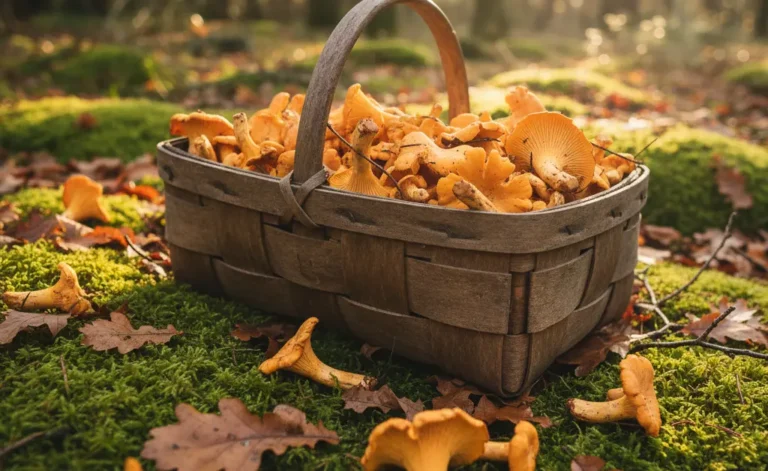
While many enthusiasts refer to the beloved chanterelle mushroom simply by its common name, assuming a unified identity, the reality of mycological classification is far more nuanced. It’s a common misconception that popular edibles like chanterelles are uniform across regions or varieties, yet this overlooks the intricate details that distinguish different species. Understanding the precise chanterelle mushroom scientific name is not merely an academic exercise; it is crucial for accurate identification, culinary distinction, and conservation efforts. This article delves into the specific nomenclature that defines these highly prized fungi, exploring the primary scientific designation and its key variations. By dissecting their formal classification, we gain a clearer appreciation for the biodiversity within the chanterelle family and the importance of precise botanical language.
What is the Scientific Name of the Chanterelle Mushroom?
The world of mycology relies on a system of binomial nomenclature to provide a universal language for identifying species. This avoids the confusion that often arises from regional common names. For the widely recognized chanterelle, the primary scientific name serves as its definitive identifier across the globe.
Cantharellus cibarius: The Primary Scientific Name
The most famous and widely accepted scientific name for the common chanterelle is Cantharellus cibarius. This name is rooted in classical languages that describe the mushroom’s key features. The genus name, Cantharellus, derives from the Greek word ‘kantharos,’ which means a type of drinking cup or goblet, aptly describing the mushroom’s characteristic funnel shape. The species name, cibarius, is Latin for ‘pertaining to food’ or ‘edible,’ highlighting its long-standing reputation as a choice culinary ingredient. Together, the name essentially translates to “the edible little cup,” a fitting descriptor for this prized fungus. For a deeper understanding, one can explore various chanterelle mushroom facts.
Cantharellus chanterelle mushroom scientific name
While Cantharellus cibarius is the specific name for the most common variety, the genus Cantharellus encompasses all mushrooms known as chanterelles. Think of Cantharellus as the family name and cibarius as the given name for one particular member. Therefore, when discussing the broader group, any chanterelle mushroom scientific name will begin with Cantharellus. This distinction is crucial, as the genus includes dozens of distinct species, each with its own unique characteristics, habitat, and even flavor profile. Understanding this hierarchy is the first step in appreciating the true diversity of these fungi.
Chanterelle Mushroom Scientific Name Variations
The term “chanterelle” does not refer to a single species but rather a complex of closely related fungi. As mycological research advances, especially with DNA analysis, what was once thought to be one species is often revealed to be several distinct ones. These variations are often distinguished by color, habitat, and geographical location.
White chanterelle mushroom scientific name
The white chanterelle is formally known as Cantharellus subalbidus. The species name subalbidus means ‘whitish,’ pointing to its most obvious feature. Unlike the golden-yellow hue of its more famous cousin, this chanterelle has a creamy white to pale tan cap. It is typically found in the Pacific Northwest and parts of California, often growing in association with conifers. While it shares the same beloved fruity aroma and firm texture, its distinct coloration and specific habitat make its scientific name essential for proper identification.
Yellow chanterelle mushroom scientific name
While many golden-hued chanterelles are simply called yellow, one species often specifically associated with this description is Cantharellus lateritius, commonly known as the smooth chanterelle. Its distinguishing feature is a nearly smooth or shallowly wrinkled underside, which differs from the more pronounced, gill-like ridges of C. cibarius. This mushroom is prevalent in eastern North America and has a slightly more slender build. Its formal name helps foragers and mycologists differentiate it from other yellow varieties that possess more defined false gills.
Golden chanterelle scientific name
The name “golden chanterelle” is most often a common name for Cantharellus cibarius. However, the world of mycology has identified regional species that also fit this description. For example, the Pacific golden chanterelle, found along the West Coast of North America, is now recognized as Cantharellus formosus. For decades, it was considered a variety of C. cibarius, but genetic evidence has confirmed it as a distinct species. The existence of multiple “golden” species underscores why a precise chanterelle mushroom scientific name is vital for clear communication and ecological understanding.
Chanterelle Mushroom Scientific Name Identification
Using the correct scientific name is directly linked to safe and accurate mushroom identification. Common names can be dangerously imprecise, but the characteristics tied to a scientific name are standardized. For the genus Cantharellus, identification hinges on a few key traits. The most critical feature is the presence of false gills. Unlike the true, blade-like gills of many mushrooms, chanterelles have blunt, vein-like ridges that are forked and run down the stem from the underside of the cap. The mushroom’s body is typically firm and solid, not hollow, and when torn, the flesh is usually white. Many species also emit a distinct, pleasant aroma often compared to apricots or peaches. Knowing these features helps distinguish true chanterelles from their look-alikes, such as the potentially toxic Jack-o’-lantern mushroom (Omphalotus olearius) or the less desirable false chanterelle (Hygrophoropsis aurantiaca). For general food safety information, consult resources like EFSA. Relying on the features associated with a particular chanterelle mushroom scientific name is a fundamental practice for any forager.
Chanterelle Mushroom Scientific Name Classification
The scientific classification of a chanterelle mushroom places it within a precise framework of the fungal kingdom, revealing its evolutionary relationships. This taxonomic hierarchy provides a deeper context beyond just its name. The classification for the common chanterelle, Cantharellus cibarius, illustrates its place in the natural world.
- Kingdom: Fungi
- Phylum: Basidiomycota
- Class: Agaricomycetes
- Order: Cantharellales
- Family: Cantharellaceae
- Genus: Cantharellus
- Species: cibarius
This structure shows that chanterelles belong to the Cantharellales order, a group that also includes other fungi with similar characteristics. The family, Cantharellaceae, narrows the focus further to mushrooms that are closely related. Understanding this classification helps explain why different species within the Cantharellus genus share traits like false gills and a mycorrhizal lifestyle, where they form symbiotic relationships with the roots of trees. Each level of this system provides crucial information, making the full chanterelle mushroom scientific name and its classification a cornerstone of mycology.
In conclusion, the name “chanterelle” opens the door to a rich and diverse world of fungi that goes far beyond a single common name. The primary scientific designation, Cantharellus cibarius, provides a universal reference point, while the names of other species like C. subalbidus and C. formosus highlight the incredible biodiversity within the genus. Understanding this nomenclature is not just for academics; it is an essential tool for anyone interested in safe foraging, culinary exploration, and appreciating the intricate web of life in our forests. The scientific name offers a language of precision that honors the unique identity of each of these remarkable mushrooms.
The content provided in this article is intended for informational learning, not clinical application. This information is purely for educational purposes and should never be used as a guide for identifying mushrooms for consumption. Misidentifying wild mushrooms can lead to severe illness or be fatal. Always consult with an experienced mycologist or a reliable, localized field guide before handling or considering any wild mushroom for consumption.
FAQ
What does ‘cibarius’ mean in the scientific name?
The specific epithet ‘cibarius’ in the chanterelle mushroom scientific name, Cantharellus cibarius, translates from Latin to mean “pertaining to food” or “edible.” This designation directly reflects its long-standing reputation as a culinary mushroom.
What is the common name for Cantharellus cibarius?
Cantharellus cibarius is widely known by its common name, the golden chanterelle. This name arises from its distinctive, bright yellow-orange coloration.
Where do chanterelle mushrooms grow?
Chanterelle mushrooms typically grow in association with tree roots in a mycorrhizal relationship. They are often found in deciduous and coniferous forests, preferring areas with mossy ground and dappled sunlight.
Are chanterelle mushrooms edible?
Chanterelle mushrooms are highly regarded as edible and are a popular choice in gourmet cooking. Their unique fruity aroma and mild peppery flavor make them a sought-after ingredient.
Is chanterelle a poisonous mushroom?
No, the true chanterelle, Cantharellus cibarius, is not considered a poisonous mushroom. It is a well-established edible species enjoyed by foragers and chefs alike.
Are all chanterelles edible?
While many chanterelle species are edible, not all members of the Cantharellus genus are. It is crucial to positively identify any wild mushroom before consumption, as some look-alikes may not be edible.