Many aspiring foragers hold onto the simplified rule that if a mushroom is conical and hollow, it must be a morel. While a helpful starting point, this belief overlooks the nuanced world of Morchella and the critical differences that separate a delicious find from a dangerous look-alike. True expertise requires a deeper understanding of cap structure, stem attachment, and the subtle variations among different species. Preparing for future seasons with an up-to-date Morel Mushrooms- 2026 species guide is not just about finding more fungi; it’s about ensuring every mushroom you harvest is identified with confidence and safety. This guide will walk you through the key features needed to distinguish between true morels, false morels, and their many varieties.
Understanding Morel Mushroom Identification
Morel mushroom identification is a skill built on careful observation. While the general shape is iconic, relying on a single feature is a common mistake for novices. A confident identification requires examining several anatomical details and understanding the key differences that separate true morels from their potentially harmful look-alikes. This comprehensive morel mushroom identification process is crucial for any forager.
Distinguishing True Morels from False Morels
The single most important test to distinguish a true morel from a false morel is the “hollow test.” When a true morel is sliced in half lengthwise, it will be completely hollow from the tip of the cap all the way down through the stem. There are no chambers, fibers, or solid parts inside. In contrast, false morels, such as those from the Gyromitra and Verpa genera, are not completely hollow. They may be filled with a cotton-like substance, contain multiple chambers, or be mostly solid inside.
Key Features for Identification (Cap, Stem, Pits, Ridges)
Beyond the hollow interior, several external features are crucial for morel mushroom identification.
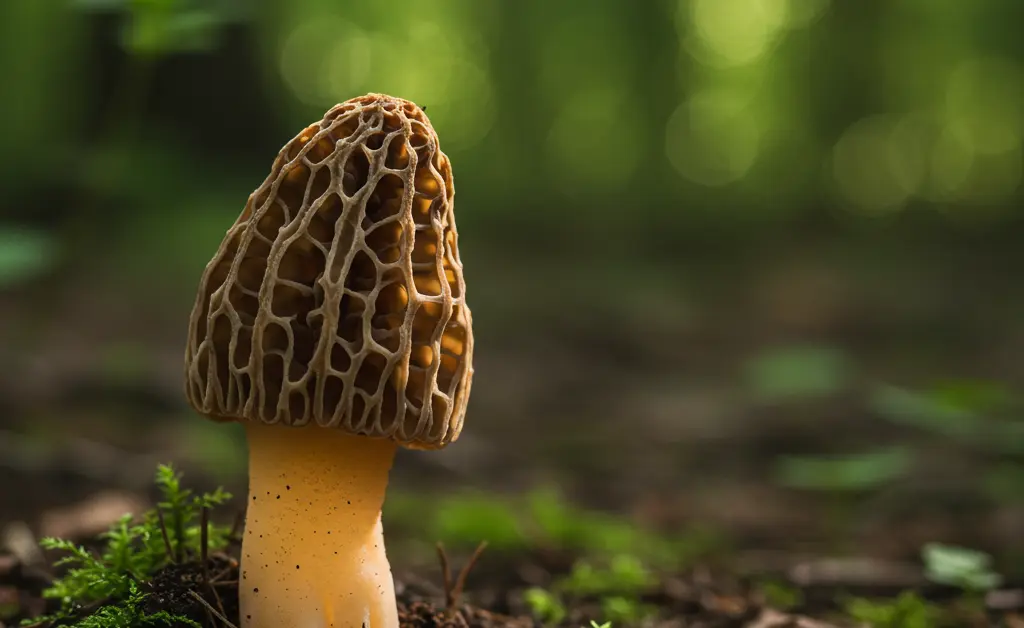
- Mushroom Cap: A true morel’s cap has a very distinct, deeply pitted and ridged appearance, often compared to a honeycomb or a natural sea sponge. The cap is integrally attached to the stem. In contrast, many false morels have a cap that is more wrinkled or brain-like, not truly pitted.
- Mushroom Stem: In a true morel, the mushroom stem and cap are one continuous, hollow unit. The base of the cap is fused directly to the stem. In some look-alikes, like the half-free morel (which is a true morel) or the Verpa, the cap hangs more like a skirt from the top of the stem.
- Mushroom Pits and Ridges: The surface of a true morel cap is defined by irregular pits separated by a network of ridges. False morels may have lobes, folds, or wrinkles, but they lack this true pitted structure.
Black Morels (Morchella elata complex)
Black morels are typically the first to appear in the spring foraging season. Their caps are more conical and elongated than those of yellow morels. The color can range from gray to dark brown or nearly black, and the ridges tend to darken as the mushroom matures. They are often found in specific habitats, such as disturbed ground, burn sites, and coniferous forests. Learning about different morel mushroom types helps in identification.
Yellow/White Morels (Morchella esculenta complex)
Yellow morels, sometimes called white morels, generally appear after the black morels have started to fruit. They are often larger and stockier, with a cap that is more rounded or egg-shaped. Their color varies from a pale, creamy yellow to a deep golden tan. These are the classic “honeycomb” morels that many foragers seek, commonly found near ash, elm, and old apple trees.
Half-Free Morels (Morchella semilibera)
The half-free morel is a true morel species, but it has a unique feature that can cause confusion. Its cap is attached to the stem at the top, but the bottom half hangs freely, resembling a skirt. Despite this appearance, a lengthwise slice reveals it is still hollow inside, confirming its status as a true morel. They are generally smaller than other morels and have a less deeply pitted cap.
Other Uncommon Morel Varieties
The world of morels is genetically complex and includes numerous less common species. Foragers might encounter “landscape morels” that can pop up in wood-chipped garden beds, or other regional varieties with subtle differences in shape and color. These still conform to the fundamental rules of identification: they are hollow and have a pitted and ridged cap attached to the stem.
Misidentification Dangers
Mistaking a false morel for a true one can have serious consequences. Species in the Gyromitra genus, known as “false morels” or “brain mushrooms,” contain compounds that can cause severe gastrointestinal distress and, in some cases, more serious health issues. They are not hollow and have a wrinkled, brain-like cap. Always remember the rule: if it’s not hollow, leave it alone. When in doubt, it is essential to consult with an experienced forager or a local mycological society. For more on this, consider these important morel mushroom identification tips.
The Importance of Season and Habitat
Finding morels is as much about knowing where and when to look as it is about knowing what to look for. These mushrooms are masters of camouflage and only appear for a short window when environmental conditions are just right. A good understanding of their preferred habitats and seasonal triggers is fundamental for any successful forager.
Ideal Morel Habitats (Forests, Ash Trees, Burn Sites)
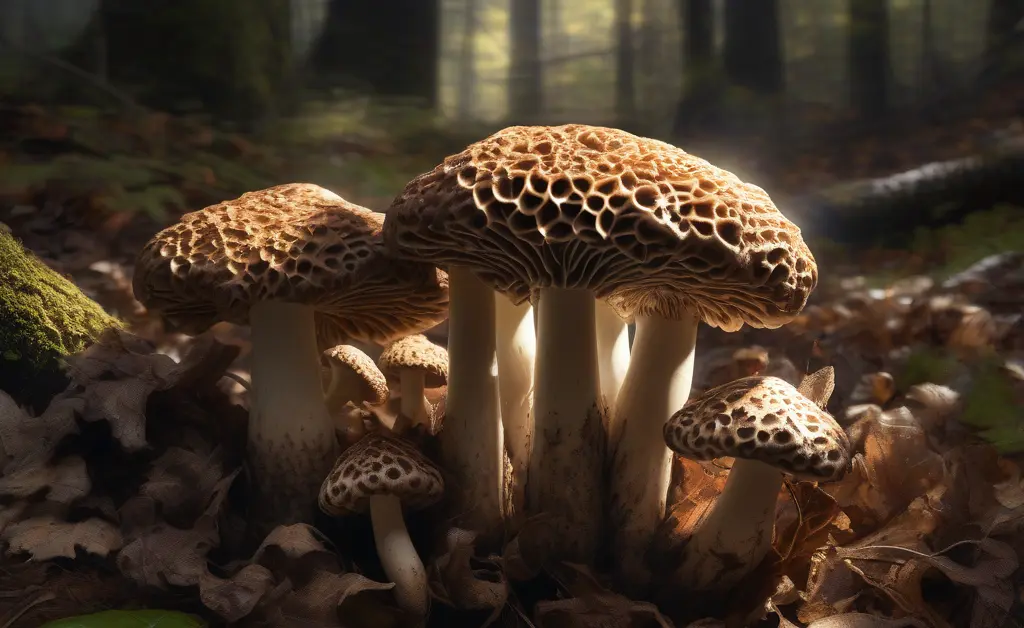
Morels are famously associated with specific types of trees and soil conditions. They form a mycorrhizal relationship with the roots of certain trees. Prime hunting grounds include deciduous forests with a high concentration of ash, elm (especially dying ones), and sycamore trees. Old, overgrown apple orchards are also classic morel spots. One of the most well-known habitats is a “burn site.” The year following a forest fire, the soil conditions can become ideal for a massive fruiting of morels, drawing hunters from all over. An effective search using a detailed resource like a Morel Mushrooms- 2026 species guide can help narrow down these promising locations.
Seasonal Timing for Morel Foraging (Spring)
Morel season is firmly in the spring, but the exact timing varies by latitude and elevation. The season can begin as early as late February in southern regions and extend into June in more northern climates. The primary trigger for their growth is soil temperature. Foragers watch for the ground to consistently warm to a certain point. The season in any single location can be fleeting, sometimes lasting only a few weeks, so timing is critical.
Geographical Distribution of Morels
Morels are found throughout the Northern Hemisphere, with various species native to North America, Europe, and Asia. In the United States, they are particularly abundant in the Midwest, Appalachia, and parts of the Pacific Northwest. Different species dominate different areas; for example, black morels are very common in the western states and burn sites, while large yellow morels are the prize of many Midwestern hunters.
Proper Harvesting and Handling
Once you’ve successfully located morels, handling them correctly is crucial for both preserving their quality and ensuring the future health of the patch. From the moment you pick them to the time they reach the dinner table, proper technique matters.
Proper Harvesting Techniques
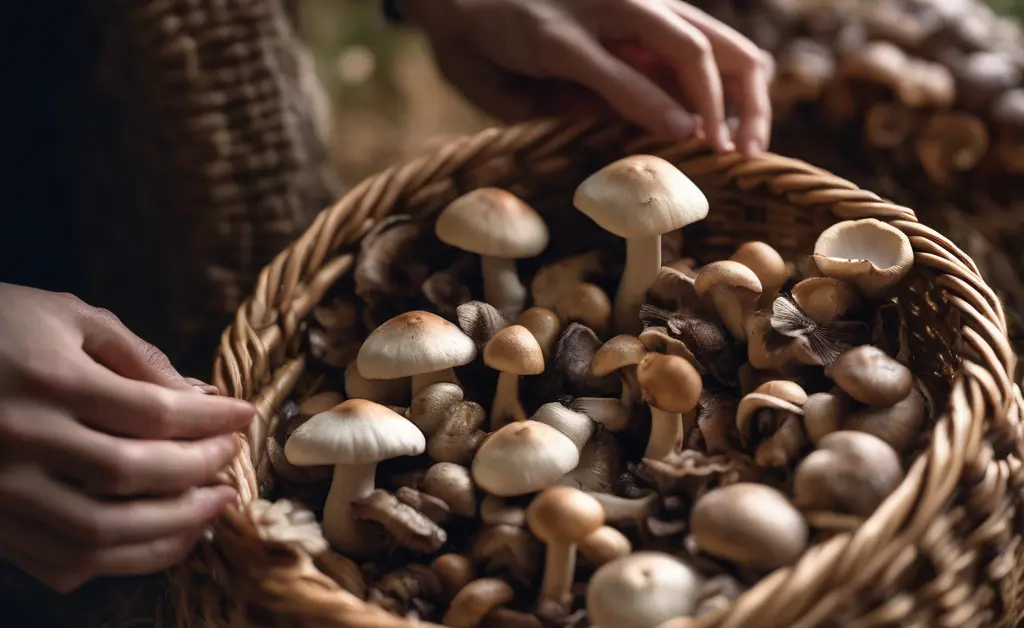
When harvesting a morel, it’s best to use a knife to slice the stem just above the ground. This method keeps the mushroom cleaner by leaving soil and debris behind. It also leaves the underground mycelial network—the organism’s “root” system—undisturbed, which may help promote future fruitings. An alternative is to gently pinch the base of the stem. It’s also highly recommended to carry your harvest in a mesh bag. This allows spores from the mushrooms to fall to the forest floor as you walk, potentially seeding new morel patches for future seasons.
Safe Preparation and Cooking
This is a non-negotiable rule of safety: morel mushrooms must always be cooked thoroughly before eating. Consuming raw or undercooked morels is associated with causing significant gastrointestinal upset, even in individuals who regularly eat them cooked. A simple sauté in butter or oil until they are well-browned is a classic and safe preparation. Before cooking, slice them in half to confirm they are hollow and to check for any insects or debris that might be hiding inside.
Storage and Preservation Methods
Fresh morels are delicate and have a short shelf life. They should be stored in the refrigerator in a paper bag or a container with airflow; a sealed plastic bag will cause them to become slimy. For long-term preservation, dehydration is the most popular method. Drying concentrates their rich, earthy flavor and allows them to be stored for years. Once rehydrated in water or broth, they can be used in any recipe. Freezing is another option, though many chefs prefer to sauté them first before freezing to preserve their texture. A comprehensive Morel Mushrooms- 2026 species guide will often include tips on these essential post-harvest steps.
Common Mistakes and Sustainable Practices
The pursuit of morels is a rewarding hobby, but it comes with responsibilities. Avoiding common pitfalls ensures a safe and successful hunt, while practicing sustainability helps protect this natural resource for generations to come.
Common Morel Hunting Mistakes to Avoid
Beginners often make a few key mistakes. The most serious is misidentification, so triple-checking features against a reliable guide is paramount. Another error is poor timing—searching too early before the ground has warmed or too late after the season has passed. Many also look in the wrong types of forests, ignoring the key tree associations. Finally, always be aware of your location and respect private property lines to avoid trespassing.
Overharvesting and Sustainability
A sustainable mindset is crucial for the long-term health of morel patches. A core principle is to never take every mushroom you find. Leave some smaller, immature ones to grow and some older ones to release their spores. Taking only what you will use prevents waste. This thoughtful approach, combined with using a mesh bag for collection, contributes directly to the sustainability of the hobby. Following a Morel Mushrooms- 2026 species guide should be about more than just personal success; it’s about being a steward of the forest.
Frequently Asked Questions About Morel Mushrooms

For both new and experienced foragers, a few questions come up time and again. Having clear, reliable answers is part of becoming a confident and knowledgeable morel hunter.
When is the best time to find morel mushrooms?
The best time to find morels is in the spring. The exact timing depends entirely on your local climate and weather patterns. The season begins when soil temperatures warm consistently and daytime temperatures are mild. Many hunters also look for other natural indicators, such as the blooming of certain wildflowers or the budding of specific trees, to signal that the season has started.
Where are morel mushrooms typically found?
Morels are typically found in wooded areas, particularly in association with certain tree species. Look for forests containing ash trees, dying elms, sycamores, and old apple orchards. They also thrive in disturbed ground, so check areas along old logging roads, stream beds, and especially in forests that have experienced a fire in the previous year. Understanding the scientific name, Morchella, is part of knowing morel mushroom scientific name details.
Are all morels edible?
All species of true morels (from the genus Morchella) are considered choice edibles, but only when they are thoroughly cooked. It is imperative to never eat them raw. The primary danger comes from “false morels,” which are different types of mushrooms that can resemble true morels but may be toxic. A correct and confident identification, as detailed in a resource like a Morel Mushrooms- 2026 species guide, is essential for safety.
Morel hunting is an activity that rewards patience, knowledge, and a deep respect for the natural world. Mastering identification is the first and most critical step, ensuring that every mushroom you collect is a true, safe, and delicious find. By understanding their life cycle, preferred habitats, and the importance of sustainable harvesting, you can enjoy this seasonal pursuit for many years. The thrill of spotting that first camouflaged cap emerging from the leaf litter is a unique experience that connects us to the rhythm of the forest.
The purpose of this content is to educate, not to diagnose or treat. The information provided about wild mushrooms is for general knowledge and identification purposes only. Foraging for and consuming wild fungi carries inherent risks. Never consume a mushroom unless you are 100% certain of its identification. It is highly recommended to consult with a local mycological expert or an experienced forager before consuming any wild plant or fungus. This guide is not a substitute for professional, in-person guidance. For more information on food safety and health guidelines, consult resources like the WHO.
FAQ
How do you identify a morel mushroom?
Morel mushrooms are characterized by their distinctive honeycomb-like cap, which is pitted and ridged, and their hollow stem and cap. The cap typically hangs loosely from the stem and lacks the gills or teeth found on many other mushrooms. Observing these unique structural features is key to distinguishing them from potentially toxic look-alikes.
What are the different types of morel mushrooms?
The Morel Mushrooms- 2026 species guide details a diverse array of morel types, each with subtle differences in appearance and habitat. Common varieties include the yellow morel (Morchella esculenta), the black morel (Morchella elata), and the half-free morel (Morchella semilibera). These distinctions often relate to cap shape, color variations, and the degree to which the cap attaches to the stem.