While the global interest in medicinal mushrooms often appears as a recent trend, particularly in Western wellness circles, this perspective can sometimes overlook a rich history of integration in other cultures. It’s often assumed that these natural compounds are only now moving from traditional folklore into scientific scrutiny. However, in Japan, the journey of certain fungi, notably the turkey tail mushroom, transcends this recent surge, boasting centuries of traditional application alongside a pioneering path in modern medicine. This deep-rooted legacy, including the significant development of Krestin, highlights a sophisticated and long-standing understanding of turkey tail mushroom use in Japan, predating much of its contemporary international recognition.
Historical Context of Turkey Tail Mushroom Use in Japan
Early adoption and traditional practices
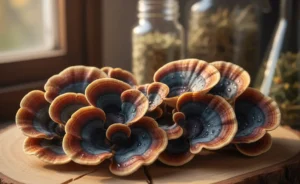
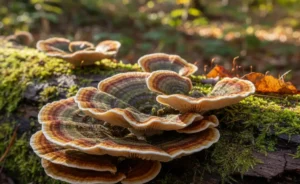
The turkey tail mushroom, known in Japan as “Kawaratake,” has a long and esteemed history within traditional Japanese medicine, particularly within practices resembling Kampo. For centuries, this resilient fungus, scientifically identified as Trametes versicolor or Coriolus versicolor, was traditionally gathered from forests and prepared in various forms, most commonly as a tea or decoction. Its use was often rooted in supporting overall well-being and vitality. This early adoption laid the groundwork for the enduring respect and significant turkey tail mushroom use in Japan, viewed not just as a food source but as a valuable component in maintaining health long before modern scientific inquiry.
Transition to modern medical research
The mid-20th century marked a significant turning point for the turkey tail mushroom in Japan. As the nation embraced modern medical advancements, there was also a growing interest in scientifically validating traditional remedies. This period saw a transition from purely anecdotal evidence to structured scientific investigation. For further understanding of global health research, resources like the NIH provide extensive information on various scientific studies. This shift paved the way for a deeper understanding of its properties, moving beyond folk practices into the realm of rigorous biological and medical research that would ultimately lead to groundbreaking discoveries.
Krestin (PSK): The Prominent Japanese Preparation
Krestin turkey tail
One of the most profound developments stemming from Japanese research into the turkey tail mushroom is the creation of Krestin, also widely known as Polysaccharide-K (PSK). Krestin is a standardized mushroom extract derived specifically from Trametes versicolor mycelium. Its development as a pharmaceutical preparation in Japan began in the 1960s, culminating in its approval for specific medical applications. This purified extract is recognized as a biologic response modifier, primarily studied for its potential to support immune system function. Its significance underscores a major milestone in turkey tail mushroom use in Japan, transforming a traditional botanical into a widely recognized agent used alongside conventional therapies, backed by decades of research and numerous clinical trials.
Current Status and Recognition of Turkey Tail in Japan
Regulatory acceptance and medical guidelines
In Japan, the turkey tail mushroom, particularly in its standardized PSK form, holds a unique and recognized status within the healthcare system. Unlike many other natural supplements, Krestin (PSK) has been subjected to rigorous regulatory processes. It is formally accepted and has been used for specific applications, often as an adjunct to conventional approaches. Medical guidelines exist that inform practitioners on its integration, reflecting a careful and evidence-based approach to its incorporation into patient care. This level of regulatory acceptance highlights the deep and sustained confidence in turkey tail mushroom use in Japan, distinguishing its role from that of a mere health supplement.
Specific conditions and potential applications
Given its extensive research history and regulatory acceptance, the turkey tail mushroom, particularly its PSK extract, has been studied for its potential in various contexts within Japan’s healthcare landscape. Research has focused on its immunomodulatory properties and its role as a biologic response modifier, which may help support the body’s natural defenses. Studies have explored its impact on immune cell activity and its potential to influence cytokine production. Understanding the full scope of turkey tail mushroom benefits in Japan involves reviewing decades of scientific investigation. While not a standalone treatment, its long-standing presence and continued investigation point to a recognized potential to complement other interventions, emphasizing its supportive role in promoting overall health and immune system balance.
The journey of the turkey tail mushroom in Japan is a compelling narrative of ancient wisdom meeting modern science. From its humble origins as Kawaratake in traditional Kampo practices to its transformation into the scientifically validated pharmaceutical Krestin (PSK), its trajectory reflects a nation’s commitment to exploring and integrating natural compounds within its sophisticated healthcare system. This enduring legacy solidifies the profound impact and established role of turkey tail mushroom use in Japan, showcasing a harmonious blend of tradition, innovation, and ongoing research.
The information presented in this article is educational and not meant as professional medical counsel. It is intended for general knowledge and informational purposes only, and does not constitute medical advice, diagnosis, or treatment recommendations. Always seek the advice of a qualified healthcare professional for any medical concerns or before making any decisions related to your health or medical care. Individual experiences with supplements and natural compounds may vary.
FAQ
— What is Krestin and how is it used in Japan?
Krestin, also known as PS-K or Krestin (PSP), is a protein-bound polysaccharide extract derived from the *Trametes versicolor* mushroom. In Japan, it has been recognized and studied for its role in supporting the immune system. It is often employed as a supportive agent in conjunction with conventional therapies to help maintain overall well-being.
— Is PSK approved for medical use in Japan?
Yes, Polysaccharide K (PSK), a specific protein-bound polysaccharide fraction from the *Trametes versicolor* mushroom, is approved as a pharmaceutical in Japan. It has been investigated for its immunomodulatory properties. PSK is often used as an adjunct to conventional treatments, aiming to support the body’s natural defenses.
— What is the history of turkey tail mushroom in Japanese medicine?
The history of turkey tail mushroom use in Japan spans traditional practices, where it was valued for its health-supporting properties. This long-standing traditional knowledge later spurred significant scientific research in the mid-20th century. These investigations led to the isolation and development of specific compounds like PSK and Krestin, which subsequently gained pharmaceutical approval.