While global interest in medicinal mushrooms often appears as a recent health trend, this contemporary focus sometimes overshadows the deep historical roots and scientific validation many species have in specific cultures. It’s easy to assume modern medicine dismisses traditional practices entirely, but the reality in some nations, particularly Japan, presents a compelling counter-narrative. Here, the systematic study and incorporation of certain fungi have progressed for decades, moving beyond mere folklore into clinical application. A prime example is the extensive and rigorously documented turkey tail mushroom use in Japan, a nation where its benefits have been explored with both traditional reverence and cutting-edge research, leading to its unique acceptance within the healthcare system.
Historical Context of Turkey Tail Mushroom Use in Japan
Early adoption and traditional practices
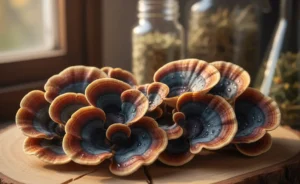
The history of turkey tail mushroom, known scientifically as Trametes versicolor or Coriolus versicolor, in Japan stretches back centuries, long before its modern scientific recognition. Traditionally, this mushroom, often referred to as “Kawaratake” in Japanese, was highly regarded in various traditional Japanese medicine practices, including Kampo. Practitioners observed its potential properties through generations of empirical observation, leading to its use as a tea or herbal supplement to support overall well-being. This early adoption laid the groundwork for future inquiry, demonstrating a deep-seated cultural appreciation for natural remedies. The initial, informal understanding of this mushroom’s potential was a crucial first step in the evolving turkey tail mushroom use in Japan.
Transition to modern medical research
The mid-20th century marked a significant turning point, as Japan began to apply rigorous scientific methods to traditional remedies. Researchers started investigating the chemical composition of Kawaratake, aiming to isolate the compounds responsible for its observed effects. This transition involved extensive studies and clinical trials, moving the mushroom from the realm of traditional folklore into the domain of evidence-based medicine. This systematic approach led to the identification and extraction of specific polysaccharide compounds, particularly Polysaccharide-K (PSK), which would revolutionize the understanding and application of turkey tail mushrooms within the Japanese healthcare system. These scientific endeavors transformed the perception and use of Trametes versicolor.
Krestin (PSK): The Prominent Japanese Preparation
Krestin turkey tail
Krestin, also widely known as PSK, stands as the most recognized and extensively studied preparation derived from the turkey tail mushroom. Developed in Japan, PSK is a protein-bound polysaccharide extracted from the mycelium of Trametes versicolor. Its development represented a major breakthrough, moving a traditional herbal remedy into the pharmaceutical arena. As a biologic response modifier, Krestin has been researched for its potential to impact the immune system by affecting various immune cells and the production of cytokines. The rigorous development and extraction processes, coupled with standardization efforts, have ensured a consistent and reliable product. This specific, pharmaceutical-grade extract is central to the modern turkey tail mushroom use in Japan, setting a global standard for medicinal mushroom research and application.
Current Status and Recognition of Turkey Tail in Japan
Regulatory acceptance and medical guidelines
The journey from traditional folk medicine to a recognized pharmaceutical agent in Japan culminated in Krestin (PSK) receiving regulatory acceptance. It is currently approved for use in conjunction with conventional treatments. This acceptance is not merely a formality but reflects decades of extensive research, including numerous clinical trials exploring its impact on immune cell activity. Medical guidelines in Japan now outline its specific conditions and potential applications, often recommending it as an adjunctive therapy alongside chemotherapy and other standard cancer treatments. This unique integration within the established healthcare system underscores the profound and distinct nature of turkey tail mushroom use in Japan, distinguishing it from its status in many other parts of the world where it is primarily available as a dietary supplement. For information on health services in the UK, one might consult the NHS. Patient and practitioner perspectives in Japan often highlight its role in supporting the body’s natural defenses during challenging health circumstances, contributing to its ongoing recognition. Exploring the full spectrum of turkey tail mushroom benefits Japan continues to be an area of active discussion and research.
The narrative of turkey tail mushroom in Japan is a testament to the powerful synergy between ancient wisdom and modern scientific inquiry. From its humble beginnings as Kawaratake in traditional Japanese medicine to its evolution into the pharmaceutical-grade Krestin (PSK), this mushroom has carved a unique and significant place within the nation’s healthcare landscape. The rigorous research, regulatory acceptance, and integration into medical guidelines illustrate a progressive approach to health that values both historical reverence and evidence-based practice. The ongoing exploration of its immunomodulatory mechanisms continues to reinforce its importance, cementing Japan’s role as a pioneer in understanding and utilizing the profound potential of medicinal fungi.
This information should be viewed as educational rather than medical advice. It is not intended to diagnose, treat, cure, or prevent any disease. Always consult with a qualified healthcare professional before making any decisions about your health or starting any new regimen, especially if you have existing health conditions or are taking other medications. Individual results may vary.
FAQ
— What is Krestin and how is it used in Japan?
Krestin, chemically known as PSK, is a protein-bound polysaccharide extracted from the *Trametes versicolor*, or turkey tail, mushroom. In Japan, it has been recognized and incorporated into supportive care protocols for its potential to modulate immune responses. Its role is often as an adjunct to conventional approaches, aiming to bolster the body’s natural defenses.
— Is PSK approved for medical use in Japan?
Yes, PSK (polysaccharide-K) holds approval as a prescription medication in Japan. It is utilized within a medical context, typically as an adjunctive treatment alongside conventional therapies. This approval stems from extensive research into its capacity to influence the immune system.
— What is the history of turkey tail mushroom in Japanese medicine?
The history of turkey tail mushroom use in Japan traces back centuries in traditional herbal practices, where it was valued for its general health benefits. In the mid-20th century, scientific interest intensified, leading to the isolation and study of its components, particularly PSK. This research paved the way for its modern integration into supportive care within the country’s medical system, marking a significant evolution from its folk medicine roots.