Navigating options for comprehensive well-being can often present a complex landscape, particularly when focusing on specific health areas. Historically, discussions around support have been confined to well-established treatments. However, with an evolving understanding of natural compounds, many are now exploring how complementary approaches might fit into a broader health strategy. This shift reflects a growing desire for informed choices and proactive engagement in personal health management. Emerging research is increasingly shedding light on potential benefits from sources previously considered outside the mainstream, prompting a re-evaluation of traditional perspectives. This article delves into the current scientific understanding of turkey tail mushroom for breast health, examining its traditional uses, modern studies, and proposed mechanisms of action to provide clarity on its potential role.
Turkey Tail Mushroom for Breast Health: An Overview
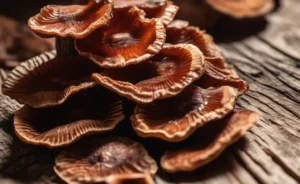
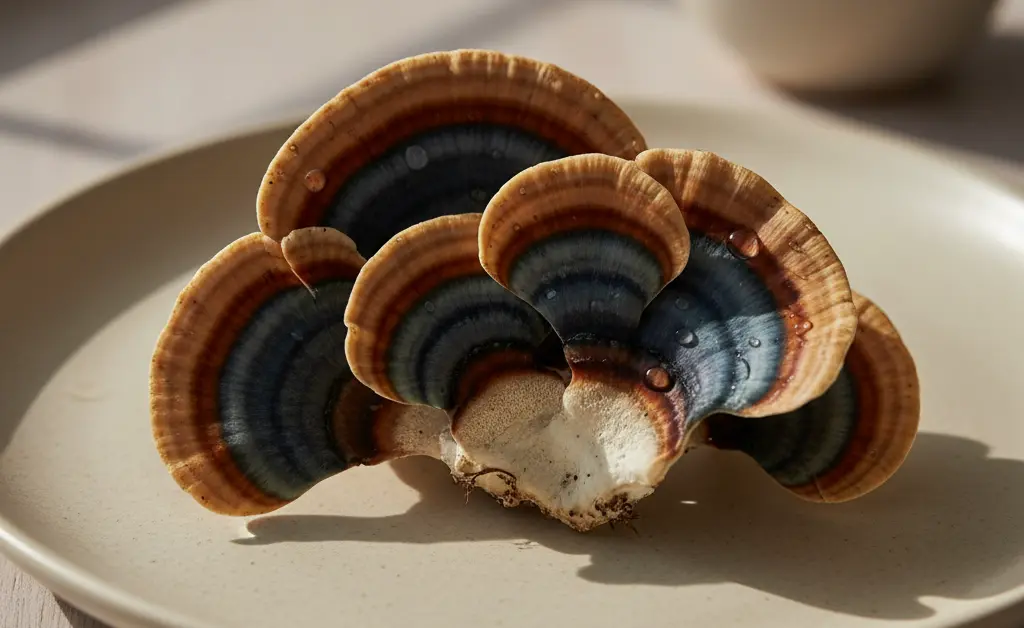
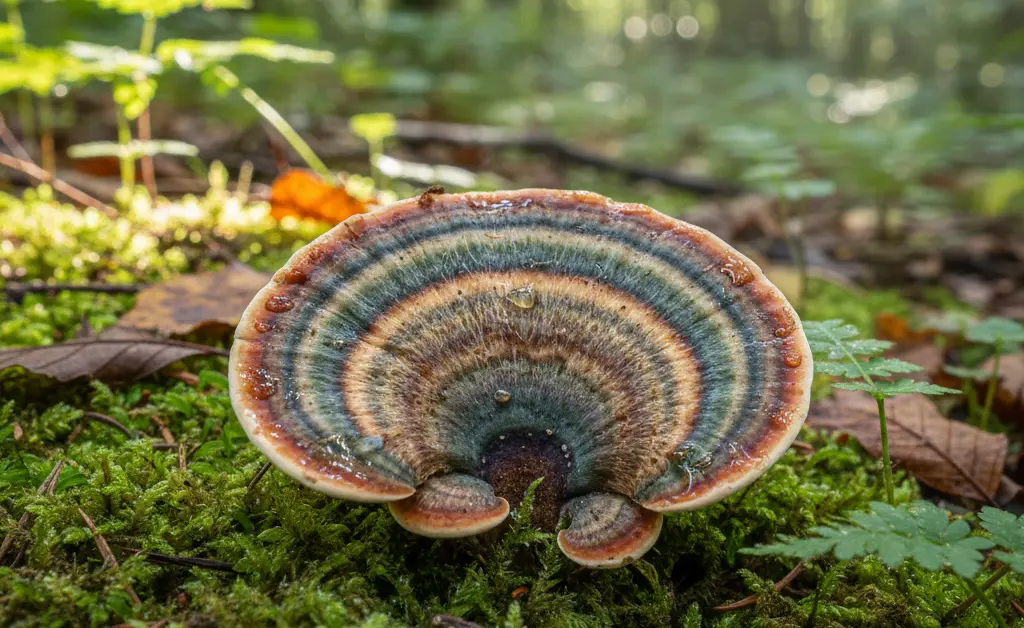
The turkey tail mushroom, scientifically known as Trametes versicolor, has a long history of use in various traditional healing practices, particularly in Asian herbal medicine. Revered for its potential health-supporting properties, this distinctive fungus has garnered increasing attention in modern scientific communities. The FDA continually monitors and evaluates scientific claims related to health products. Its colorful, fan-like appearance gives it its common name, but it is the complex array of bioactive compounds within that has sparked significant interest. Contemporary exploration into the potential applications of the turkey tail mushroom for breast health reflects a growing trend towards examining natural substances as adjunctive support within integrative oncology strategies. Pioneering work by researchers like Paul Stamets has further amplified public and scientific curiosity, drawing focus to its historical relevance and the evolving body of evidence.
Traditional Use vs. Modern Research in Breast Health
Historically, various cultures have incorporated the turkey tail mushroom into their wellness routines for centuries, often utilizing it to support general vitality and immune function. These traditional applications were largely based on anecdotal observations and centuries of herbal medicine practice. In recent decades, however, modern research has begun to systematically investigate these traditional claims, translating ancient wisdom into scientifically verifiable insights. This includes a particular focus on its potential role in breast health. Key active compounds, such as the polysaccharide-bound protein Krestin (PSK) and Polysaccharopeptide (PSP), have become central to numerous clinical studies. This scientific scrutiny aims to understand the mushroom’s efficacy and safety profile when considered as part of a comprehensive health approach, bridging the gap between historical use and evidence-based medicine.
Exploring the Research: Turkey Tail and Breast Health
Current research efforts are dedicated to understanding the specific ways in which turkey tail mushroom for breast health might offer support. An overview of current clinical research indicates an ongoing investigation into its role as an adjunctive therapy, rather than a standalone treatment. These studies aim to clarify how this natural compound might integrate with conventional breast health treatments, potentially enhancing patient outcomes or improving quality of life. The focus extends beyond general well-being to targeted examinations of its effects in specific scenarios and among diverse patient populations, continually building upon our understanding of its potential contributions.
Reviewing Research on Turkey Tail for Breast Health
Numerous clinical studies have explored the potential impact of turkey tail mushroom on individuals facing various breast health challenges. For individuals seeking more information, comprehensive turkey tail mushroom cancer reviews can offer valuable insights. Research often investigates its role alongside established treatments like chemotherapy and radiation, rather than as an independent intervention. These investigations frequently assess various patient outcomes, including immune response modulation, quality of life improvements, and the overall tolerability of its inclusion. The objective is to establish a clearer understanding of its efficacy and to determine a robust safety profile for different breast health types, guiding informed decisions regarding its use as an integrative oncology component.
Targeting Specific Breast Health Concerns
The scientific community has shown particular interest in how turkey tail mushroom may offer adjunctive support for specific breast health concerns. Research is designed to distinguish potential benefits based on the characteristics of the breast health type being studied. Further research may also explore the potential role of turkey tail mushroom for lymphoma support. This targeted approach allows researchers to identify the most promising areas for further investigation and to understand where turkey tail mushroom might be most effectively integrated into a broader health management strategy. Studies aim to uncover its potential to support the body’s natural defenses in different contexts.
Research on HER2-Negative, ER-Positive Breast Health
Specific clinical trials have delved into the potential role of turkey tail mushroom in supporting individuals with HER2-negative and ER-positive breast health. These studies evaluate how the mushroom’s compounds might interact with the body’s systems in these particular contexts. The research in this area seeks to understand if incorporating turkey tail mushroom could contribute to improved patient outcomes or provide additional support during and after conventional treatments, always emphasizing its role as a complementary agent within an integrative approach.
Role of Turkey Tail Post-Surgery in Post-Menopausal Women
Another area of focus in turkey tail mushroom research involves its potential utility for post-menopausal women following surgery for breast health concerns. Studies in this demographic often explore aspects such as immune function recovery, inflammation modulation, and overall quality of life. The goal is to determine if turkey tail mushroom can play a supportive role in enhancing the well-being and recovery process during this critical period, potentially contributing to a more comprehensive post-operative care plan.
Studies on Post-Menopausal Breast Health Support
Beyond post-surgery contexts, research also extends to the broader area of post-menopausal breast health support, examining the long-term potential of turkey tail mushroom. These studies investigate its effects when utilized alongside conventional therapies, such as chemotherapy and radiation, within an integrative oncology framework. The aim is to understand how the mushroom might influence the body’s response to these treatments, potentially offering additional benefits for immune response and overall patient outcomes in managing and maintaining breast health.
Mechanisms of Action: How Turkey Tail May Support Breast Health
Understanding the mechanisms of action is crucial for comprehending how turkey tail mushroom for breast health may exert its effects. Research indicates that its primary benefits stem from its rich content of polysaccharides, particularly PSP and PSK, which are known for their immunomodulatory properties. These compounds are believed to interact with various components of the immune system, potentially enhancing the body’s natural defenses and contributing to cellular support. Beyond immune modulation, turkey tail mushroom also contains potent antioxidant and anti-inflammatory compounds, which may further contribute to its overall health-supporting profile. This multi-faceted approach to biological activity underscores its potential in integrative health strategies.
Do Mushroom Supplements Support Immunity for Breast Health?
Mushroom supplements, and turkey tail in particular, are extensively studied for their impact on the immune system, which is a key area of interest for breast health support. The `immunomodulatory` effects of `polysaccharides` like `Beta-glucans`, `PSK`, and `PSP` are thought to be central to this role. These compounds can help balance and strengthen the `immune response`, enabling the body to better manage cellular health. Additionally, turkey tail mushroom exhibits `antioxidant` and `anti-inflammatory` properties, which can help protect `breast cells` from oxidative stress and chronic inflammation. Some studies have also explored its potential to support processes like `Apoptosis`, a natural cellular mechanism. The exploration of turkey tail mushroom and immunotherapy is an active area of research. While `Metastasis` and other aspects of `Oncology` are complex, the focus of `Turkey Tail Mushroom` research often centers on bolstering the body’s natural defenses as `adjunctive therapy` in an `integrative oncology` context.
The purpose of this content is to educate, not to diagnose or treat. This information is intended for general knowledge and informational purposes only, and does not constitute medical advice. Always seek the advice of a qualified healthcare professional for any medical concerns or before making any decisions related to your health or treatment. The information provided should not be used as a substitute for professional medical advice, diagnosis, or treatment.
FAQ
What does research indicate about turkey tail mushroom and breast health?
Research explores turkey tail mushroom’s potential role in supporting cellular health and immune responses relevant to breast tissue. Studies often focus on its rich polysaccharide content, particularly PSP and PSK, and their interactions with the immune system. This makes turkey tail mushroom for breast health a topic of ongoing scientific interest.
For which breast health concerns is turkey tail mushroom being researched?
Scientific investigations into turkey tail mushroom often explore its effects on cellular processes and immune modulation within the context of breast tissue. Studies delve into its potential to support healthy cell cycles and maintain immune surveillance, which are important aspects of overall breast well-being. Researchers are particularly interested in its mechanisms related to various cellular stressors.
Can turkey tail mushroom be considered as an adjunctive support with breast health treatments?
Research has investigated turkey tail mushroom’s role as an adjunctive support due to its recognized immune-modulating compounds. The aim is often to see how these compounds might complement the body’s natural defenses or other cellular support strategies. Studies explore its potential to enhance overall well-being when integrated into comprehensive health plans.
Are there clinical trials investigating turkey tail for post-menopausal breast health support?
Yes, some clinical trials have investigated turkey tail mushroom, particularly its extracts like PSK (Krestin) and PSP, in populations seeking various health supports, including those related to breast health. These trials often examine immune function and quality of life indicators in specific groups, including post-menopausal individuals. Such research aims to understand its effects on general well-being and cellular resilience.
How might turkey tail mushroom interact with breast cells in studies?
Studies suggest that compounds in turkey tail mushroom, such as polysaccharides, may interact with breast cells by influencing cellular signaling pathways. These interactions are relevant to processes like cell growth, differentiation, and programmed cell death. Researchers are exploring how these mechanisms could contribute to maintaining healthy cellular balance within breast tissue.
What are the potential side effects of turkey tail mushroom for individuals interested in breast health?
In studies, turkey tail mushroom is generally observed to be well-tolerated by most individuals. While generally mild, potential side effects noted can include digestive discomfort such as bloating or changes in stool consistency. These reactions are typically transient and vary from person to person.