Just as many garden plants are easily recognized by their distinct leaf shapes or flower colors, the fungal kingdom also boasts species with highly identifiable traits. One such example is often encountered in woodlands worldwide. Understanding its specific visual cues and its role within the ecosystem is crucial for mycologists and enthusiasts alike. This article delves into the precise identification markers and the ecological niche of trametes versicolor, a fascinating fungus known for its widespread presence and unique appearance. We will explore its cap characteristics, pore surface, growth patterns, and its significant function as a lignicolous decomposer, highlighting how these aspects collectively contribute to its recognition and ecological importance.
Introduction to Trametes versicolor (Turkey Tail Mushroom)
Understanding the Turkey Tail (Trametes versicolor)
Known colloquially as Turkey Tail due to its distinctive appearance, Trametes versicolor is a widespread and easily recognizable polypore mushroom. Exploring other names for Turkey Tail mushroom can provide additional context on its regional recognition. It belongs to the group of bracket fungi, which are characterized by their shelf-like growth on wood. This species is celebrated not only for its striking visual appeal, featuring concentric bands of various colors, but also for its significant ecological contributions. Often found growing in abundance in forests across the globe, it plays a vital role in the decomposition cycle, breaking down dead wood and returning nutrients to the soil. Its prevalence and unique identification markers make it a common subject of study in mycology.
Identifying Features of Trametes versicolor (Turkey Tail Mushroom)
Cap Characteristics and Zonation
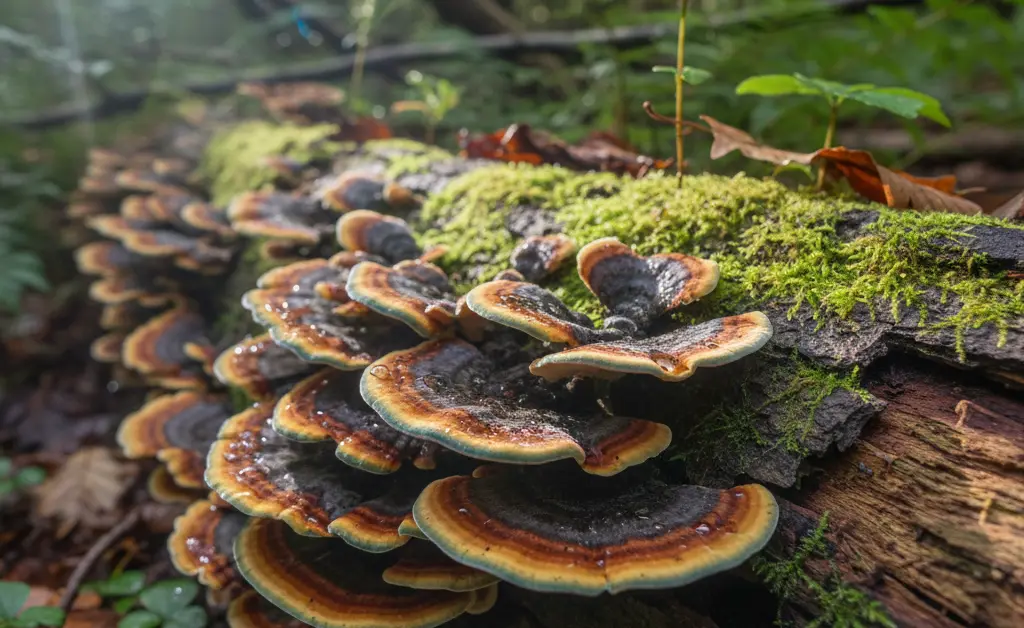
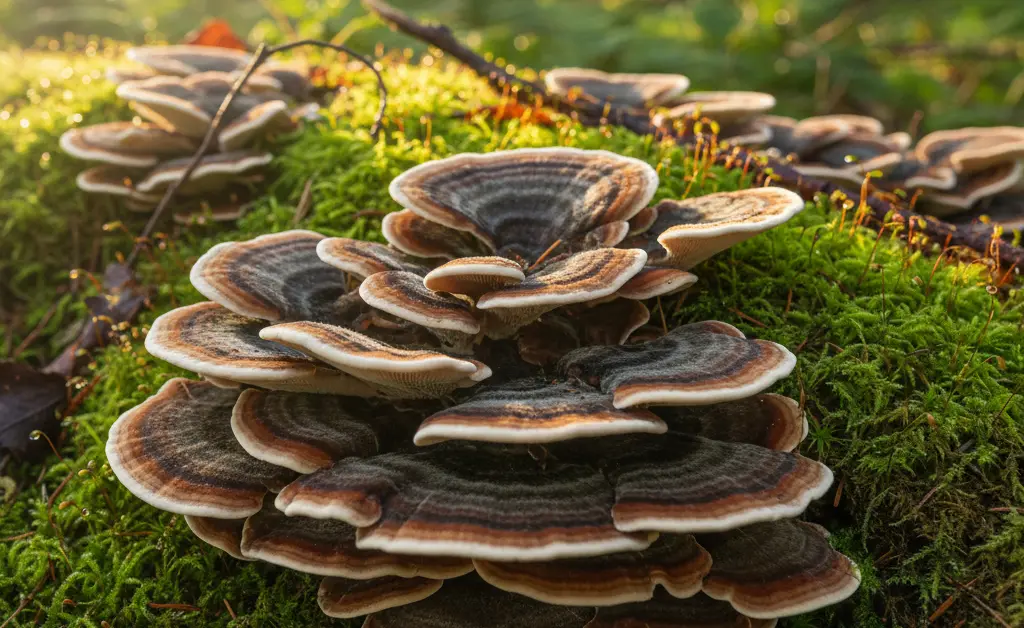
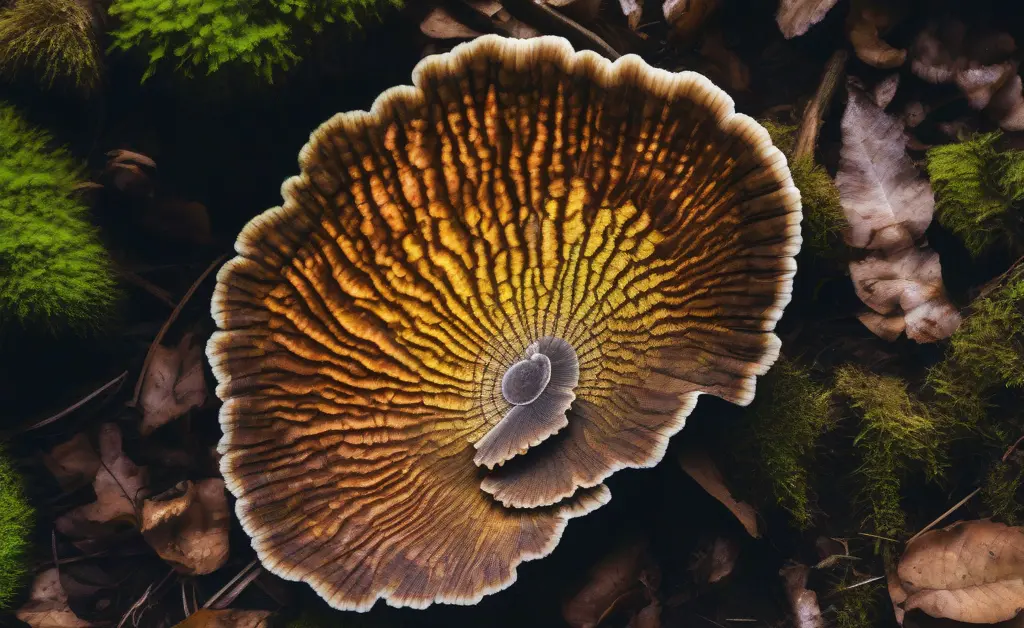
The cap of Trametes versicolor is its most distinguishing feature. It is typically thin, leathery, and fan-shaped, growing in overlapping clusters or rosette formations. The surface is velvety or finely hairy, especially towards the margin. What truly sets it apart are the vibrant, concentric zones of color that resemble the fanned tail of a turkey. These zones can display a wide array of hues, including shades of brown, gray, tan, blue, green, and reddish-brown, often with a paler, sometimes whitish, outer edge. The color intensity can vary greatly depending on environmental conditions, age, and geographical location, but the zonate pattern remains a consistent identifier.
Pore Surface and Underside
Unlike gilled mushrooms, Trametes versicolor possesses a pore surface on its underside, classifying it as a polypore. The pores are extremely small and round, barely visible to the naked eye without magnification, giving the underside a smooth, almost velvety white to cream-colored appearance. This fine pore structure is a crucial characteristic for distinguishing true Turkey Tail from similar-looking bracket fungi that might have labyrinthine pores or a smoother, untextured underside. When bruised or handled, the pore surface typically does not change color significantly, helping in accurate identification.
Growth Patterns and Texture
This bracket fungus typically grows in a shelf-like manner, forming semi-circular or fan-shaped fruiting bodies that often overlap densely on decaying wood. The texture of the cap, as mentioned, is velvety or finely pubescent, providing a soft feel when touched. The overall structure is tough and leathery, not easily broken, which is characteristic of many polypores designed for durability in their role as wood decomposers. Individual fruiting bodies can range from a few centimeters to over ten centimeters in width, contributing to the impressive display often observed in nature.
Habitat and Ecological Role of Trametes versicolor
Trametes versicolor as a Lignicolous Fungus
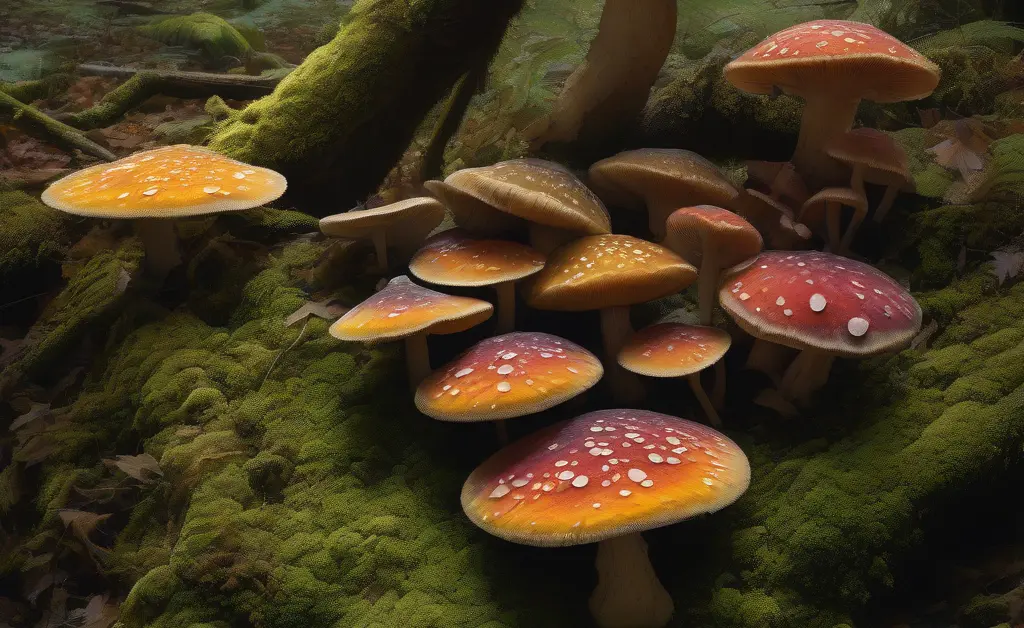
Trametes versicolor is a prominent lignicolous fungus, meaning it grows on and derives nutrients from wood. More specifically, it is a saprobic fungus, thriving on dead or dying trees and logs. Its primary ecological function is that of a white-rot decomposer. White-rot fungi are highly efficient at breaking down lignin, a complex polymer that gives wood its rigidity. By degrading lignin, these fungi play a critical role in the carbon cycle, recycling nutrients back into the forest ecosystem and clearing fallen timber, which in turn facilitates new growth.
Preferred Substrates (Wood Types)
The Turkey Tail mushroom shows a strong preference for hardwood trees, particularly deciduous species. Common substrates include dead or decaying logs, stumps, and branches of oak, maple, beech, birch, and cherry trees. While it is predominantly found on hardwoods, it can occasionally be observed on conifers, though this is less common. Its ability to colonize various types of dead wood makes it a ubiquitous presence in many temperate and tropical forests. The availability of suitable woody substrates directly influences its widespread distribution and abundance.
Geographical Distribution and Abundance
Trametes versicolor boasts an impressive global distribution, being one of the most common and widely recognized fungi found across North America, Europe, and Asia. Organizations like the WHO monitor various natural resources globally, considering their prevalence and potential applications. It thrives in temperate and subtropical forest ecosystems where there is an ample supply of dead hardwood. Its adaptability to various environmental conditions, coupled with its efficient spore dispersal mechanisms, contributes to its abundance. Enthusiasts and mycologists can readily find this bracket fungus in woodlands throughout the year, though its most vibrant colors and prolific growth are often observed during periods of higher humidity and rainfall.
Common Name, Scientific Classification, and Taxonomy of Trametes versicolor
Common Names and Taxonomy
The most widely recognized common name for Trametes versicolor is the Turkey Tail mushroom, a descriptor stemming from its striking resemblance to the fanned tail feathers of a wild turkey. Other regional common names may exist, but Turkey Tail remains universal. Scientifically, it belongs to the Kingdom Fungi, Phylum Basidiomycota, Class Agaricomycetes, Order Polyporales, Family Polyporaceae, and Genus Trametes. The species epithet “versicolor” directly translates to “of various colors,” aptly describing its polychromatic cap. Historically, it was also known by the scientific name Coriolus versicolor, but current mycological classification places it firmly within the Trametes genus. Understanding this taxonomy helps in appreciating the fungal kingdom’s vast diversity and the precise placement of this common yet vital organism.
The Turkey Tail mushroom, Trametes versicolor, stands out as a remarkable species within the fungal kingdom, easily identifiable by its distinct colorful zonation, velvety texture, and small pore surface. Its ecological significance as a lignicolous white-rot decomposer is paramount, facilitating the breakdown of dead hardwood and the recycling of essential nutrients within forest ecosystems worldwide. From its preferred substrates to its global abundance, understanding the unique characteristics and role of this fascinating fungus provides valuable insight into the intricate workings of natural environments.
This article is written for general understanding and not for medical decision-making. Information presented herein is for informational purposes only and should not be used as a substitute for professional medical advice, diagnosis, or treatment. Always consult with a qualified healthcare professional before making any health-related decisions or for advice about a specific medical condition. Neither the author nor the publisher assumes any responsibility for adverse effects or consequences resulting from the use of any information presented in this article.
FAQ
— What is Trametes versicolor commonly known as?
Trametes versicolor is widely recognized by its common name, Turkey Tail mushroom. This name refers to its distinct fan-like appearance, which often displays concentric rings of various colors, resembling the fanned tail of a wild turkey.
— Where does Trametes versicolor grow?
Turkey Tail mushrooms are saprophytic, meaning they thrive on dead or decaying hardwood logs, stumps, and branches. You can find these adaptable fungi in forests across most continents, playing a vital role in breaking down organic matter.
— How do you identify Turkey Tail mushrooms?
Identifying Turkey Tail mushrooms involves looking for their distinctive semi-circular or fan-shaped caps, which feature vibrant, velvety bands of color like browns, grays, blues, and whites. The underside is typically white or cream-colored, characterized by tiny pores rather than gills, giving it a smooth appearance, and it possesses a leathery texture.
— Is Trametes versicolor a common mushroom?
Yes, Turkey Tail is indeed one of the most common and widely distributed polypore fungi found globally. Its ability to grow on various types of dead wood in diverse climates contributes significantly to its prevalence in forests and woodlands worldwide.