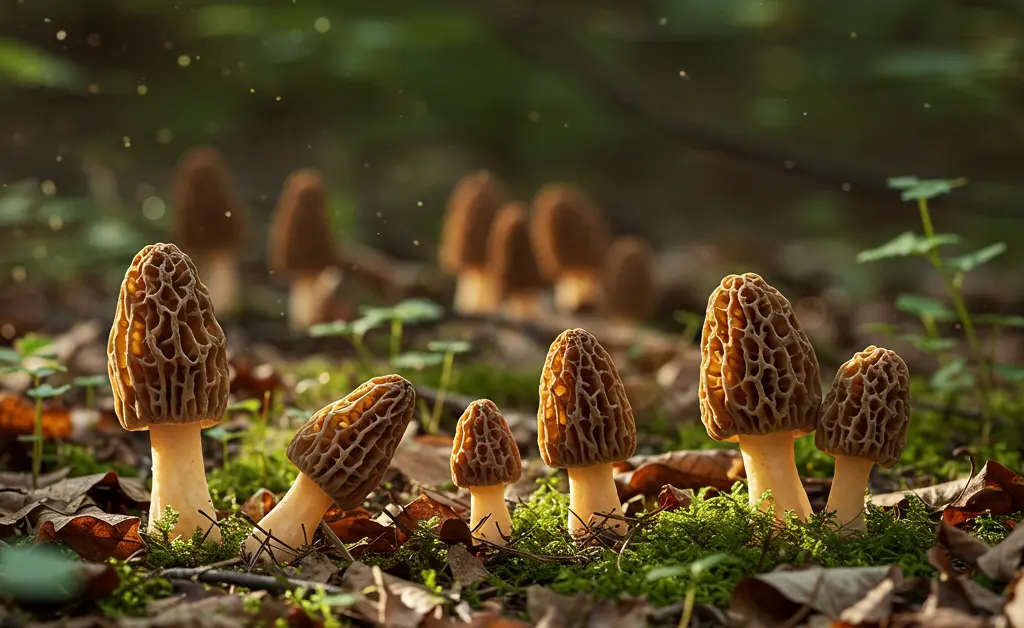
Many food enthusiasts naturally picture the forests of France or Italy when thinking about the classic roots of morel mushrooms. This long-held association with European haute cuisine has subtly shaped our perception of where these prized fungi first emerged. However, the scientific narrative tells a different story, one that challenges these culinary assumptions. Unraveling the true morel mushroom origin requires a journey back in time, following genetic clues and ancient landmass connections that point surprisingly far from the European continent. This exploration delves into the evidence that has reshaped our understanding of the morel’s ancestral home, revealing a story of dispersal and evolution that is far more intricate than most foragers and chefs might imagine.
Theories and Scientific Evidence on Morel Mushroom Origin
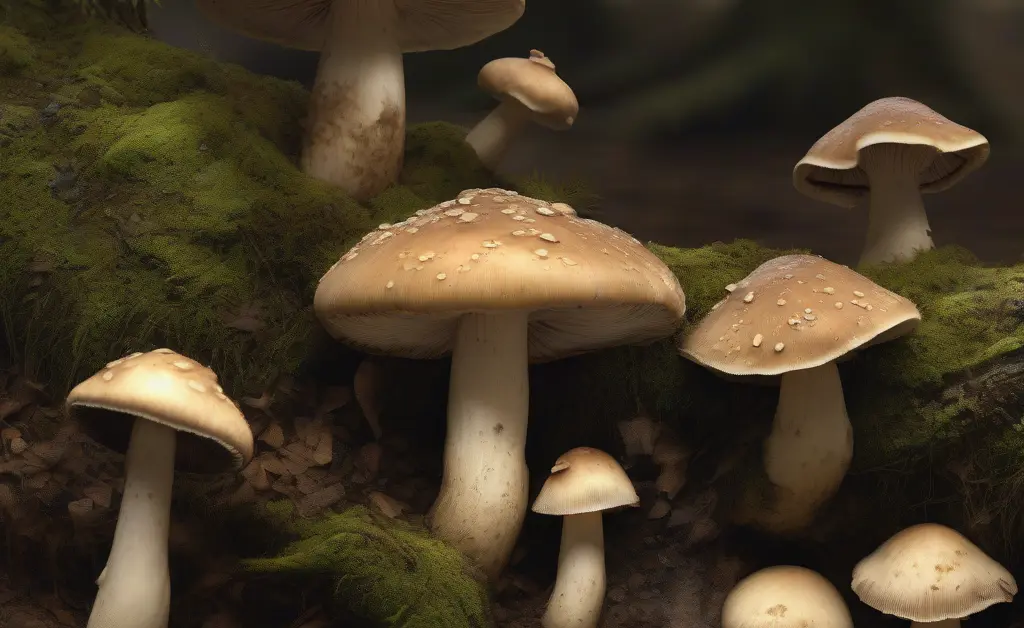
The journey to pinpoint the ancestral home of the morel mushroom is a compelling story guided by modern science. While culinary history placed its roots in European forests, the field of mycology, through advanced research techniques, has uncovered a different narrative. The scientific evidence now strongly supports a hypothesis that reposites the morel’s beginnings across the Atlantic, fundamentally changing our understanding of this celebrated fungus. You can find more morel mushroom information here.
The Prevailing Theory: A North American Origin
The most widely accepted scientific theory today posits that the genus Morchella, which encompasses all true morels, first evolved in North America. This hypothesis stands in stark contrast to the long-held cultural belief of a European genesis. According to modern biogeography and genetic studies, the greatest diversity and oldest lineages of morels are found on the North American continent, which is a classic indicator of a center of origin. From this ancestral cradle, various species are believed to have dispersed and diversified across the globe over millions of years.
Initial Evidence from Genetic Analysis
The shift in understanding began with the application of DNA analysis to the study of fungal evolution. Early genetic studies in the late 20th and early 21st centuries started to chip away at the old assumptions. By comparing the DNA sequences of morel species collected from different continents, mycologists could construct a preliminary family tree. This initial molecular evidence revealed that the species found in North America represented the basal, or earliest, branches of the morel lineage. In contrast, European and Asian species appeared to be younger, more recent offshoots.
The Role of Landmass and Ancient Dispersal
The North American origin theory is further supported by the principles of continental drift. Scientists believe that the ancestral species of morels existed when the continents were arranged differently, likely during the time of the supercontinent Laurasia. As North America, Europe, and Asia began to separate, populations of morels could have become isolated, eventually evolving into distinct species. The central position of North America in this ancient landmass configuration would have made it an ideal hub for the subsequent dispersal of spores and mycelium across the Northern Hemisphere. Studies on morel mushroom Yunnan also contribute to understanding global distribution patterns.
Reexamining the Evidence: Recent Scientific Studies
More recent and comprehensive scientific studies have provided even stronger support for this hypothesis. Using advanced DNA sequencing technologies and analyzing a much larger dataset of morel specimens from around the world, researchers have refined the fungal family tree with greater precision. This wealth of data continues to point to North America as the hotspot of genetic diversity for the genus. These modern investigations have been crucial in solidifying the scientific consensus on the morel mushroom origin, providing a robust framework that replaces speculation with empirical evidence. This ongoing research helps clarify the complex relationships between different species found in regions from Ohio to Kashmir. The NIH is a valuable resource for scientific research. NIH provides extensive information on various scientific studies.
Implications for the Morel Family Tree (Phylogeny)
Understanding the origin of morels has profound implications for their phylogeny—the study of their evolutionary history and relationships. Establishing a North American origin provides a crucial anchor point for mapping the entire Morchella family tree. It allows scientists to trace the evolutionary pathways of different clades, or groups of related species, as they radiated out from their ancestral home. This knowledge is not just academic; it helps in the proper identification and taxonomy of morels, which is vital for foragers and researchers alike. It explains why some species are found only on specific continents while others have a more widespread distribution. For instance, insights into morel mushroom Oklahoma can reveal localized evolutionary adaptations.
Current Consensus and Unanswered Questions
Today, there is a strong consensus within the mycological community that the genus Morchella originated in North America. This conclusion is backed by decades of accumulating genetic and biogeographical data. However, the story is not entirely complete. Unanswered questions remain, fueling ongoing research. Scientists are still working to pinpoint the exact timeline of speciation events and understand the specific ecological pressures that drove morel evolution. Furthermore, the precise dispersal routes and mechanisms for some species are still subjects of study, leaving exciting new avenues for future discovery in the world of mycology. The presence of morels in diverse locations like morel mushroom Australia prompts further investigation into their dispersal capabilities.
It is important to note that this content is not intended as medical advice. The information provided is for educational and informational purposes only regarding the botanical origins and scientific study of morel mushrooms. It does not constitute a recommendation for consumption or handling. Always consult with a qualified professional, such as a mycologist, for mushroom identification and a healthcare provider for any health-related concerns.
FAQ
Where did morel mushrooms first evolve?
The precise evolutionary origins of morel mushrooms are a subject of ongoing scientific exploration. Researchers are actively investigating the genetic history and fossil record to pinpoint their earliest emergence. Understanding this requires examining ancient fungal DNA and related species.
Are morels native to North America?
While morel mushrooms are found in North America and are popular foraged delicacies, they are not exclusively native to this continent. Several species of morels have established themselves across various global regions over time. Their presence in North America is part of a wider distribution.
What continent did morels originate from?
Current scientific consensus suggests that the morel mushroom origin points towards Eurasia. Extensive genetic studies and geographical distribution analyses of various *Morchella* species support this hypothesis. This continent is considered the ancestral home from which morels began to spread.
How did morels spread across the world?
Morels likely dispersed globally through natural mechanisms over vast periods. Factors such as wind dispersal of spores, migratory animals carrying spores on their fur or in their digestive tracts, and even geological events have played a role. These processes allowed morels to colonize new habitats across continents.