
Foraging for wild mushrooms can be a deeply rewarding experience, offering unique flavors and a connection to nature. However, the excitement often comes with a significant concern: the very real danger of misidentifying an edible species for a toxic look-alike. This apprehension can deter enthusiasts from enjoying delicious varieties like chanterelles, which are highly prized but have several dangerous doppelgangers. Without clear, reliable information, the thrill of discovery can quickly turn into anxiety. To empower foragers and culinary adventurers, this comprehensive chanterelle mushroom identification guide provides essential knowledge, ensuring you can confidently distinguish these golden delicacies from their harmful mimics, making your foraging endeavors safe and successful.
Chanterelle Mushroom Identification Guide
Embarking on the journey of foraging for true chanterelles requires more than just a keen eye; it demands a solid understanding of their specific characteristics. These prized mushrooms are a delight for chefs and foragers alike, but their popularity also highlights the critical importance of accurate identification. This guide is designed to walk you through the essential features of true chanterelles, contrast them with their dangerous look-alikes, and provide a systematic checklist for verification. Mastering these details is the key to transforming a potentially risky activity into a safe and enjoyable pursuit. By learning what to look for—from the unique gill structure to the subtle aroma—you can build the confidence needed to correctly identify these woodland treasures.
Key Identifying Features of True Chanterelles
True chanterelles possess a unique combination of features that, when assessed together, allow for confident identification. No single characteristic should be used in isolation; instead, a holistic evaluation is necessary. Examining the gills, color, shape, flesh, and scent provides a complete picture, which is the foundation of any reliable chanterelle mushroom identification guide. When these traits align, you can be more certain that you have found a genuine chanterelle.
Examining the Gills: Ridges vs. True Gills
The most crucial distinguishing feature of a true chanterelle lies in its underside. Unlike many common mushrooms, chanterelles do not have true gills. Instead, they feature false gills, which are more accurately described as ridges or folds. These ridges are not separate, blade-like structures; they are blunt, shallow, and appear melted or molded onto the underside of the cap and stem. A key indicator is that these ridges are decurrent, meaning they run down the stem without a clear stopping point. Often, they will fork and cross-link, creating a complex, vein-like pattern. In contrast, toxic look-alikes possess true gills that are thin, deep, and can be individually separated or broken, like pages in a book.
Color: From Pale Yellow to Golden Orange
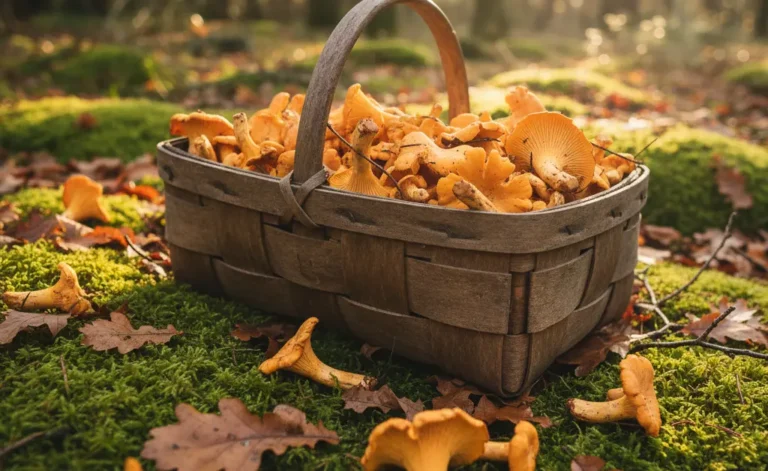
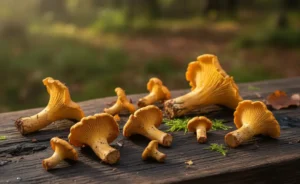
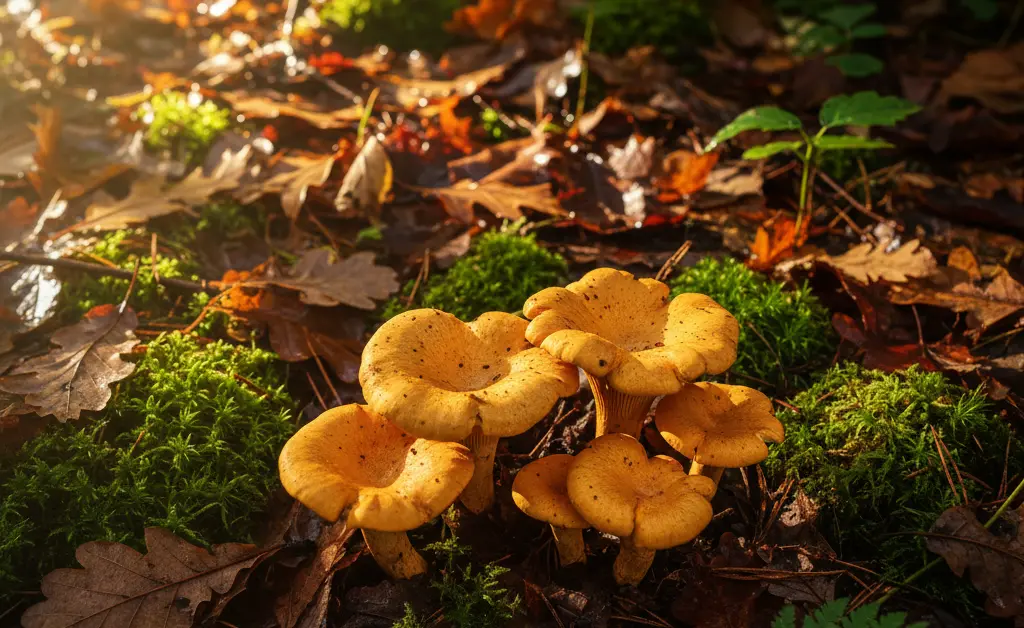
Chanterelles are famous for their beautiful coloration, which typically ranges from a pale, buttery yellow to a rich, golden-orange reminiscent of an egg yolk. The color should be relatively uniform across the entire mushroom, though it may be slightly paler near the base of the stem. The exact shade can be influenced by factors like tree association, rainfall, and the mushroom’s age. A fresh, healthy chanterelle will have a vibrant, solid color. Be cautious of mushrooms with significant color variations, such as a distinctly darker central cap, which can be a sign of a false chanterelle. Different chanterelle mushroom varieties can also present slight differences in color and form.
Shape and Size Characteristics
The overall shape of a chanterelle is often described as funnel-like or trumpet-shaped. When young, the cap may be relatively flat or slightly convex, but as it matures, the edges typically become wavy, irregular, and upturned, forming a depression in the center. The cap and stem often appear as one continuous piece rather than two distinct parts. Chanterelles are terrestrial, growing from the soil, and frequently appear in scattered groups, small clusters, or graceful arcs. Their size can vary, but they are generally small to medium-sized mushrooms.
Interior Flesh and Stem: Solid and White
Another vital checkpoint is the mushroom’s interior. When a true chanterelle is split or torn lengthwise, the flesh inside should be solid and uniformly white. Some describe the texture as being similar to string cheese, as it tends to peel apart in fibrous strands. This solid, white interior is a hallmark of the species. If you cut a mushroom and find that its flesh is orange, yellow, or hollow, it is not a true chanterelle and should be discarded immediately.
Distinctive Fruity Aroma
A fresh, well-hydrated chanterelle often exudes a distinctive and pleasant aroma. Many foragers describe the scent as being fruity, closely resembling apricots or peaches. This fragrance can be subtle and may not be present in every specimen, especially if the mushroom is dry or old. However, its presence is a very strong positive indicator. The primary look-alikes, such as the Jack-O’-Lantern and False Chanterelle, do not share this characteristic fruity smell and typically have a generic “mushroomy” or unpleasant odor.
Dangerous Chanterelle Look-Alikes to Avoid
While foraging for chanterelles is rewarding, the presence of toxic mimics demands extreme caution. Mistaking a poisonous mushroom for an edible one can have severe consequences, making this part of the chanterelle mushroom identification guide absolutely essential. Two primary look-alikes pose the biggest threat to inexperienced foragers: the Jack-O’-Lantern mushroom and the False Chanterelle. Understanding their distinct differences is non-negotiable for safe foraging. For concerns about potential poisoning, resources like the NHS provide valuable health information.
Differentiating from the Jack-O’-Lantern Mushroom
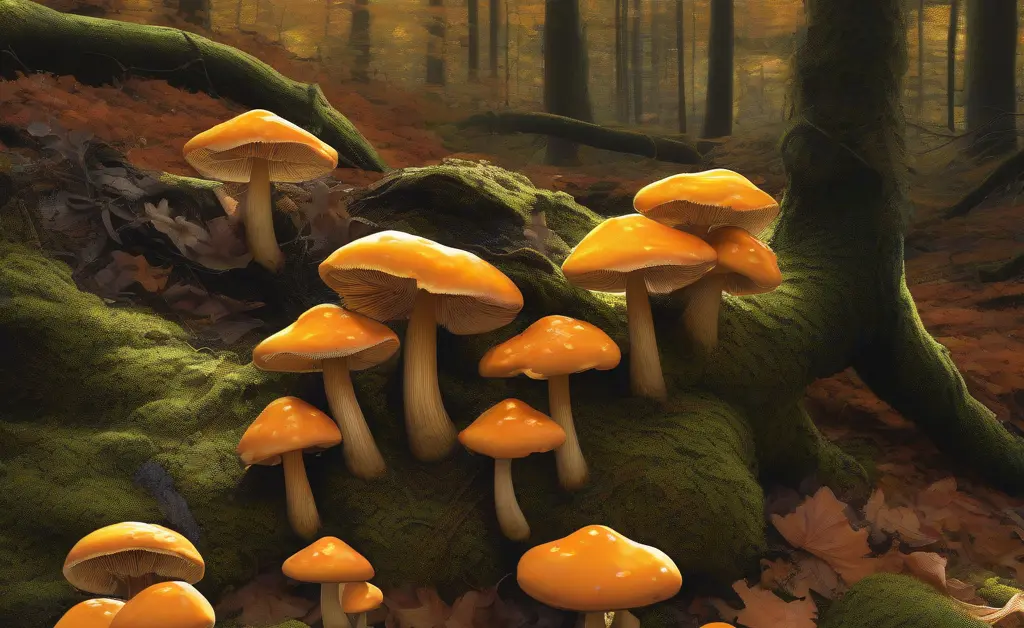
The Jack-O’-Lantern mushroom is a toxic species that can cause significant gastrointestinal distress. The most important difference lies in the gills and growth habit. Jack-O’-Lanterns have true, sharp, non-forking gills that are clearly distinct from the cap and stem. In contrast, chanterelles have blunt, forked ridges that run down the stem. Furthermore, Jack-O’-Lanterns are saprobic, meaning they grow on wood. You will find them in large, dense clusters directly on decaying stumps, buried roots, or at the base of trees. Chanterelles, on the other hand, are mycorrhizal and grow from the soil, though often near trees. If you split a Jack-O’-Lantern stem, the flesh inside is orange, not white like a chanterelle’s.
Identifying the False Chanterelle
The False Chanterelle is another common look-alike. While not as toxic as the Jack-O’-Lantern, it can cause digestive upset and is best avoided. The False Chanterelle has true gills that are thin, crowded, and forked, but they still appear more blade-like and less “melted” than the ridges of a true chanterelle. Their color is often more intensely orange, especially toward the center of the cap, and less uniform than a true chanterelle’s golden yellow. When split, their flesh is softer, less dense, and may be orangish or pale yellow rather than solid white. They also lack the signature apricot-like aroma of true chanterelles.
A Simple Checklist for Safe Identification
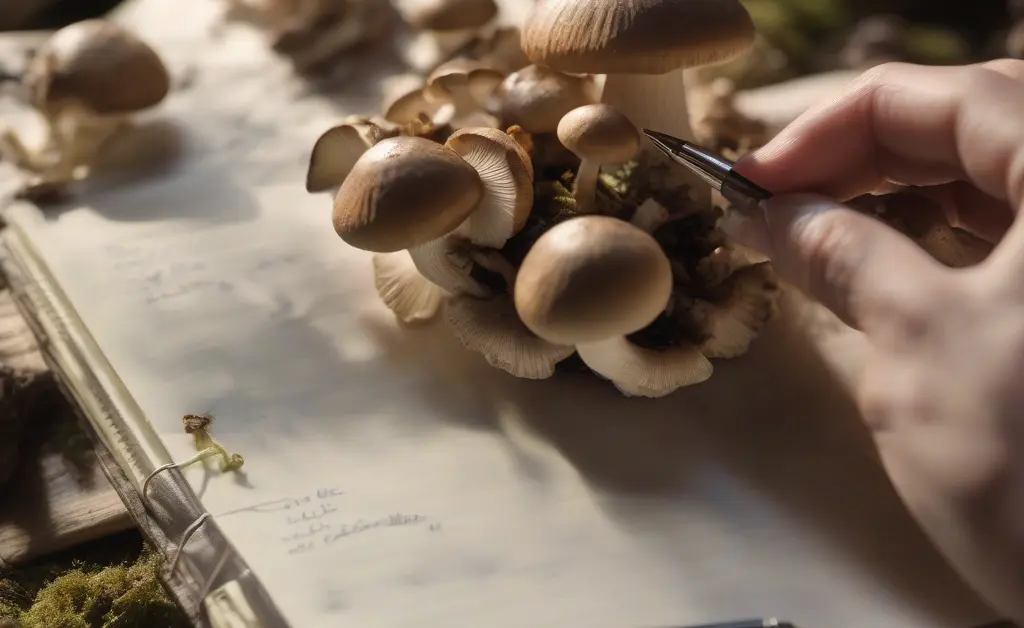
To ensure safety and build confidence, foragers should use a methodical approach every time they encounter a potential chanterelle. A simple, step-by-step checklist helps prevent oversight and reinforces good habits. Following this process is a practical application of the information in this chanterelle mushroom identification guide, turning theoretical knowledge into a reliable field practice.
Step 1: Check the Gill Structure
The first and most critical step is to examine the underside of the cap. Look for blunt, wavy ridges that appear to be a melted part of the mushroom itself. Confirm that these ridges are forked and run down the stem (decurrent). If you see sharp, blade-like structures that can be easily separated from the cap, it is not a chanterelle.
Step 2: Verify the Color
Observe the mushroom’s color. A true chanterelle should have a fairly uniform yellow-to-golden-orange hue. Be wary of specimens that are bright orange with a darker center or have any other coloration. The vibrancy of the color can depend on moisture, but the general tone should be consistent.
Step 3: Split the Stem
Gently tear the mushroom in half from the cap down through the stem. The interior flesh should be solid, dense, and white. It may have a pale yellow tint but should never be orange, brown, or hollow. The texture should feel fibrous, not brittle or soft.
Step 4: Confirm the Habitat
Pay close attention to where the mushroom is growing. True chanterelles are terrestrial and grow from the soil, never directly on logs or dead wood. They form a symbiotic relationship with certain trees, so they are commonly found in forests with oak, beech, or conifer species. Observing a mushroom growing in a large cluster on a stump is a major red flag that it is likely a look-alike.
Proper mushroom identification is a skill that develops with practice and careful study. This chanterelle mushroom identification guide provides the foundational knowledge needed to distinguish these delicious fungi from their harmful mimics. However, remember the golden rule of foraging: when in doubt, throw it out. The risk of consuming a toxic mushroom far outweighs any potential reward. By being patient, methodical, and cautious, you can safely enjoy the experience of finding and savoring wild chanterelles.
This content is for informational use and should not be considered medical instruction. Identifying and consuming wild mushrooms carries inherent risks, and misidentification can lead to serious illness or death. This guide is not a substitute for in-person expert verification. Always consult with a local, experienced mycologist or forager to confirm the identity of any mushroom before consumption. Never eat a wild mushroom unless you are 100% certain of its identity and edibility.
FAQ
What are the key identifiers for chanterelle mushrooms?
Chanterelle mushrooms are characterized by their wavy, irregular caps, often with a trumpet-like shape. They possess blunt, ridge-like folds underneath the cap, which are decurrent, meaning they run down the stem. Their flesh is typically white and firm, and they emit a distinct, fruity aroma, often described as apricot-like.
What is the difference between a chanterelle and a false chanterelle?
True chanterelles have gill-like folds that are blunt, wavy, and often forked, running down the stem. False chanterelles, such as the Jack O’Lantern mushroom, have true, sharp, and thin gills that are usually crowded and do not run down the stem. Additionally, false chanterelles often have a hollow stem and a more orange color.
Do chanterelles have gills or ridges?
Chanterelles do not have true gills in the way many other mushrooms do. Instead, they have blade-like or ridge-like folds that are blunt, rounded, and often forked. These folds are decurrent, meaning they extend down the length of the stem, which is a key characteristic distinguishing them from mushrooms with sharp gills.
How do you tell a chanterelle from a Jack O’Lantern?
A key difference lies in the underside of the cap; chanterelles have blunt, ridge-like folds that run down the stem, while Jack O’Lantern mushrooms possess sharp, thin gills that are usually crowded and do not descend the stem. Jack O’Lanterns also tend to grow in dense clusters on wood and have a more vivid orange coloration.
What color are chanterelle mushrooms inside?
The flesh of chanterelle mushrooms is typically white or cream-colored. This solid, firm texture extends throughout the cap and stem, providing another reliable characteristic for proper chanterelle mushroom identification guide.