
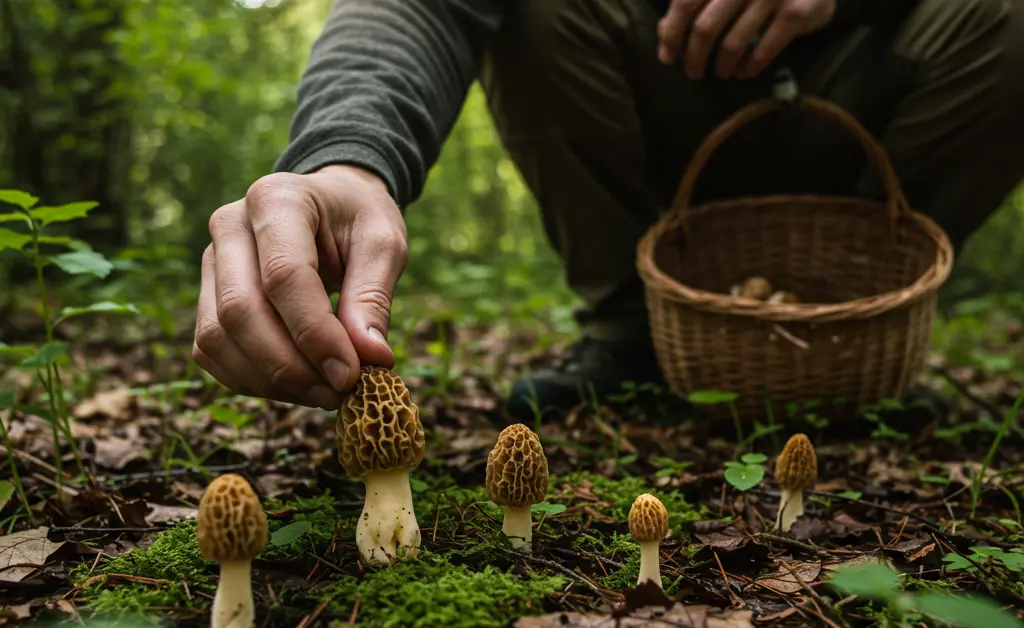
Greatly improving your chances of a successful hunt is the primary benefit of learning to read environmental cues. Instead of relying on luck, foragers can use specific data points to predict when and where these prized fungi will appear. Key indicators such as air and soil temperature, recent rainfall, and humidity levels are not just random occurrences; they form a predictable pattern. Understanding the ideal morel mushroom weather helps you pinpoint the perfect window for foraging, maximizing your efforts and increasing your haul. This guide will break down these crucial weather patterns, providing the knowledge needed to transition from a hopeful searcher to a strategic hunter.
Morel Mushroom Weather
Ideal Air Temperature Ranges
Morel mushroom growth is highly sensitive to ambient air temperature. These fungi thrive when daytime temperatures become consistently mild and nighttime temperatures remain cool but above freezing. A pattern of warm days followed by cool nights signals the underground mycelial network that conditions are right for fruiting. Extreme heat can quickly end the season by drying out the forest floor, while a late-season frost can damage or halt new growth. The ideal conditions are often described as “spring-like,” where the air feels pleasantly warm during the day without being hot.
The Importance of Soil Temperature
While air temperature is a useful guide, the temperature of the soil is a more direct and critical factor for morel emergence. The mycelium, the underground root-like structure of the fungus, lives within the top layers of soil. It is the soil temperature that directly influences the mycelium’s metabolic activity and triggers the formation of the mushroom, which is the fruiting body. Experienced foragers often place more emphasis on tracking ground temperatures than on the air temperature alone, as it provides a more accurate indicator of what is happening at the fungi’s level.
Soil Temperatures as Predictors for Mushroom Emergence
Monitoring soil temperatures is a strategic way to predict when morels will begin to appear. The mushroom emergence process begins only after the ground has warmed sufficiently following the winter thaw. A steady, gradual increase in soil temperature is a key predictor. When the soil reaches and maintains a certain warmth for several consecutive days, it sends a powerful signal for the mycelium to start producing mushrooms. Foragers often use soil thermometers to take readings in promising areas, allowing them to anticipate the start of the season with greater accuracy. A soil temperature of 50 degrees Fahrenheit is a common benchmark, indicating it is time to look for morels. Here are tips on when to pick morels.
Waiting for morels? Keep an eye on air temperature AND …
Focusing solely on air temperature is a common mistake for novice hunters. While warming air is part of the equation, it is just one piece of a larger puzzle. To truly forecast a morel bloom, you must also monitor soil temperature, ground moisture, and recent rainfall. The perfect combination of these elements creates the ideal window for morel growth. A week of warm air temperatures means little if the ground is still too cold or bone dry. The strategic forager watches how all these environmental factors interact to pinpoint the optimal time to head into the woods. Learn more about morel mushroom hunting.
Understanding Morel Mushroom Weather Patterns
Humidity and Moisture Levels
Morels are composed mostly of water and require a humid environment to develop properly. High humidity levels in the air prevent the delicate, emerging mushrooms from drying out and cracking before they can mature. Days with high humidity, morning dew, or fog create a moist microclimate on the forest floor that is perfect for morel growth. Conversely, dry, windy conditions can quickly desiccate young mushrooms, stopping their growth and ending a local fruiting event prematurely. Consistent moisture in both the soil and the air is essential for a successful season.
The Role of Recent Rainfall
Rainfall is arguably one of the most important triggers for morel mushroom growth. A significant, soaking rain provides the deep ground moisture the mycelium needs to initiate the fruiting process. Light sprinkles may not be enough to penetrate the forest duff and reach the underground network. The ideal scenario involves a substantial rain event that thoroughly saturates the soil. This influx of water, combined with the right temperatures, is a primary catalyst for a flush of morels. The right kind of rain is a cornerstone of ideal morel mushroom weather.
How many days after rain to look for morels?
One of the most common questions foragers ask is how long to wait after a good rain. There is no single answer, as the timing depends on other conditions, primarily temperature. Generally, after a significant rainfall, it may take several days of subsequent mild, warm weather for the mushrooms to emerge. If temperatures are optimal, you might see the first signs of growth within a couple of days. If it turns cold after the rain, the process can be delayed. A good strategy is to begin checking your spots a few days after a soaking rain, paying close attention to how quickly the soil is warming up.
Sunlight Exposure and Its Impact
Sunlight plays a dual role in morel mushroom growth conditions. On one hand, it is essential for warming the soil, especially early in the season. South- and west-facing slopes receive more direct sun and tend to warm up faster, often producing the first morels of the year. On the other hand, too much direct, intense sunlight can be detrimental. It can dry out the ground surface and the mushrooms themselves, stunting their growth. The best locations often have dappled sunlight, where trees with budding leaves provide a mix of warmth and protection from harsh rays.
Key Weather Factors for Morel Mushroom Growth
Regional Weather Differences
The specific weather patterns that trigger morel growth vary significantly by region and elevation. The morel season famously follows spring as it moves north. Foragers in southern states may see morels appear much earlier in the year, while those in northern climates or at higher altitudes will have to wait longer. Local topography also creates microclimates; a cool, north-facing slope might produce morels weeks after a warm, south-facing hillside in the same general area has finished. Understanding your local seasonal variations is key to adapting your search strategy and interpreting the specific morel mushroom weather patterns for your area. Consider hunting for morel mushrooms at Mount Hood for a different regional experience.
When to Hunt Morels Based on Weather Conditions
Identifying the prime hunting window involves synthesizing all key weather indicators. The perfect time to hunt is typically after a confluence of several specific events. Look for a period where soil temperatures have been steadily rising, followed by a significant rainfall that soaks the ground. The ideal post-rain period includes several days of mild to warm daytime air temperatures and cool nights that stay above freezing. This “perfect storm” of moisture and warmth activates the mycelium and promotes rapid fruiting. When you observe this combination of ideal morel mushroom weather, it’s time to act, as the window for peak fruiting can be brief. This information is crucial for deciding when to pick morels.
Predicting Morel Mushroom Season
Forecasting the start of the local morel season is a skill that blends weather observation with ecological awareness. Long-term weather forecasts can provide clues about whether spring will arrive early or late. However, many seasoned hunters rely on phenology—the study of seasonal natural phenomena—as a complementary tool. For example, the timing of morel emergence is often linked to the budding or flowering of specific trees, such as elms, ashes, or apple trees. By combining these botanical cues with a close analysis of the prevailing morel mushroom weather, you can create a highly accurate forecast for when the season will begin in your woods, allowing you to be in the right place at the right time. For further scientific understanding of fungal growth, consult resources like PubMed.
Ultimately, becoming a proficient morel hunter is a journey of environmental observation. By moving beyond luck and learning to interpret the signals of the natural world—from the temperature of the soil to the timing of the last spring rain—you transform your approach. This knowledge empowers you to strategically target your efforts, focusing on the moments when conditions are perfect for a fungal bloom. With patience and attention to these weather patterns, you can reliably increase your chances of a bountiful harvest year after year.
not applicable
FAQ
What is the ideal temperature for morel mushrooms?
Morel mushrooms typically thrive in moderate temperatures, with optimal growth often occurring when daytime temperatures range from the 50s to the 70s Fahrenheit. This range supports the biological processes necessary for their fruiting bodies to develop. Consistent, mild weather is a key factor in their emergence.
How does rain affect morel mushroom growth?
Rain plays a crucial role in stimulating morel mushroom growth by increasing soil moisture. Adequate moisture is essential for the mycelium, the underground network of the fungus, to produce mushrooms. Following a good rain, especially after a dry spell, is often when morels are found.
What soil temperature is needed for morels?
Soil temperature is a significant indicator for morel mushroom activity, with a common threshold being around 45-55 degrees Fahrenheit. This warming soil signals to the mycelium that conditions are becoming favorable for fruiting. Monitoring soil temperature can help predict when morels might appear.
Will morels grow in 50 degree weather?
Yes, morels can certainly grow in 50-degree Fahrenheit weather, especially when accompanied by sufficient moisture and warming soil. This temperature range falls within the favorable conditions for their emergence and development. It is often considered a prime time for hunting.
What temperature is too cold for morels?
Temperatures consistently below the 40s Fahrenheit are generally too cold for active morel mushroom growth and fruiting. While the mycelium can survive colder periods, significant frost or prolonged freezing temperatures will halt the emergence of mushrooms. Warmer conditions are required to initiate the fruiting process.