
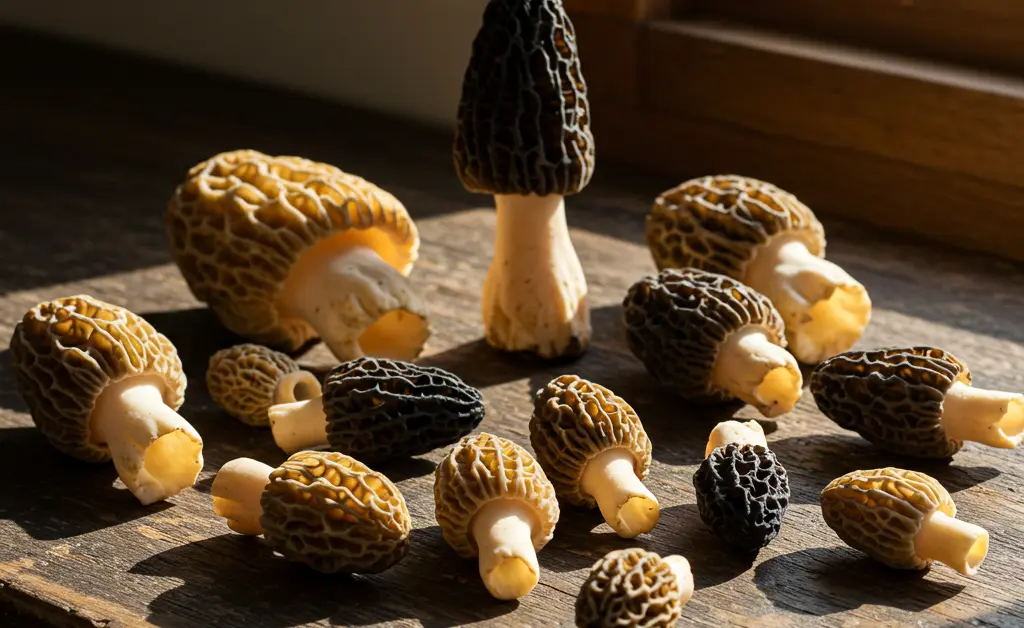
You’ve just returned from a successful spring foray, your mesh bag heavy with the unmistakable honeycomb texture of morels. As you lay them out on the kitchen counter to clean, you notice distinct differences in your haul. Some are conical and nearly black, while others are rounded and pale yellow, and a few look different altogether. This variation is common, and learning to distinguish between the different kinds is a key step for any enthusiast. Understanding the various morel mushroom types helps you appreciate their unique characteristics, from subtle flavor differences to their preferred habitats in the wild. This knowledge not only enhances your foraging skills but also deepens your connection to these prized culinary treasures.
Understanding Morel Mushroom Types
The world of morels is wonderfully diverse, with mycologists continuously refining species and relationships through DNA analysis. While there are dozens of genetically distinct species in North America alone, most foragers group them into a few broad, visually identifiable categories. These groupings are practical for field identification and culinary purposes. The three most commonly recognized groups are the Yellow Morels, Black Morels, and Half-Free Morels, each with its own set of characteristics, preferred timing, and habitat.
Yellow Morel (Morchella esculenta)
Often referred to as the common morel, the Yellow Morel is what many people picture when they think of this prized fungus. It is characterized by its rounded, sponge-like cap that ranges in color from pale tan to a deep golden yellow. The pits and ridges on the cap are somewhat irregularly spaced. A critical identifying feature is that the bottom edge of the cap is fully attached to the stem. When sliced open lengthwise, the entire mushroom, from the tip of the cap through the stem, is completely hollow. Yellow Morels are often found in association with deciduous trees such as elm, ash, and old apple orchards, and typically appear later in the spring season than black morels.
Black Morel (Morchella angusticeps)
As their name suggests, Black Morels are distinguished by their darker coloration, which can range from a dark gray to brownish-black. Their caps are generally more conical or pointed than those of yellow morels, with ridges that are often darker than the pits. Similar to the yellow morel, the cap of a black morel is fully attached to the stem, and the entire mushroom is hollow inside. Black morels are often the first to appear in the spring, sometimes emerging shortly after the snow melts. They have a strong association with specific trees, commonly found in forests with ash, tulip poplar, and aspen, as well as in disturbed areas and burn sites from the previous year. For more details on identifying morels, you can refer to this morel mushroom identification guide.
Half-free morel (Morchella semilibera)
The Half-Free Morel is a unique and easily identifiable variety once you know what to look for. Its name comes from the way its cap is attached to the stem—only the top portion of the conical or bell-shaped cap is fused to the stalk, while the lower half hangs freely, like a skirt. This feature is easily seen when the mushroom is sliced in half. The cap is generally smaller and smoother than that of yellow or black morels, with more subtle ridges. These morels are also completely hollow. They tend to appear early in the season, often alongside black morels, and favor moist woodlands and river bottoms.
Common Morel Mushroom Varieties
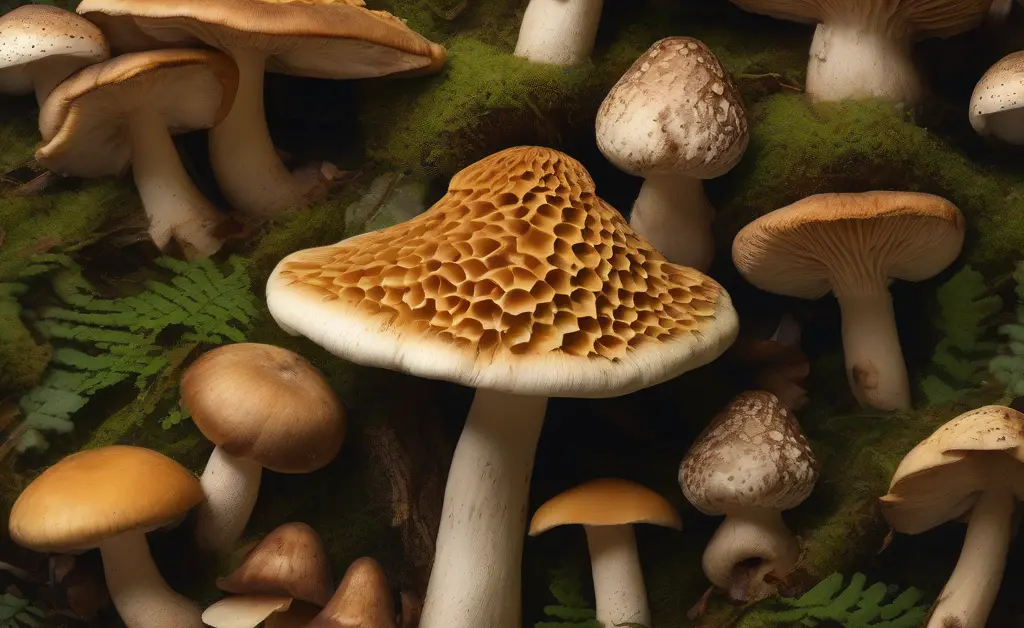
Beyond the three main categories, the family of morels is vast and complex. Foragers may encounter other variations that blur the lines between the primary groups. For instance, “Gray Morels” are often found, which may be immature yellow morels that have not yet developed their characteristic color, or they could be a distinct variety altogether. Similarly, foragers in different regions may find morels with unique local names and characteristics, such as “burn-site morels” that flourish in the year or two following a forest fire.
The classification of morels is an evolving science. What were once considered single species are now known to be complexes of many different species that look very similar. For example, the scientific name Morchella esculenta is now understood to represent a group of closely related yellow morels. For the average forager, these fine distinctions are less important than being able to confidently identify the main visual groups and, most critically, distinguish them from non-edible look-alikes. Learning the common morel mushroom types in your specific geographic area is the most practical approach for a successful and safe harvest. Understanding morel mushrooms identification is key for foragers.
| Variety | Cap Shape | Cap Color | Cap Attachment | Common Habitat |
|---|---|---|---|---|
| Yellow Morel | Rounded, blunt, or bulbous | Pale tan to golden yellow | Fully attached to the stem | Near deciduous trees like ash, elm, and apple |
| Black Morel | Conical or pointed | Gray to brownish-black | Fully attached to the stem | Near ash, aspen, tulip poplar; also in burn sites |
| Half-Free Morel | Conical or bell-shaped | Tan to brownish-yellow | Attached at the top, with the lower half free | Moist woodlands and river bottoms |
Key Characteristics for Identification
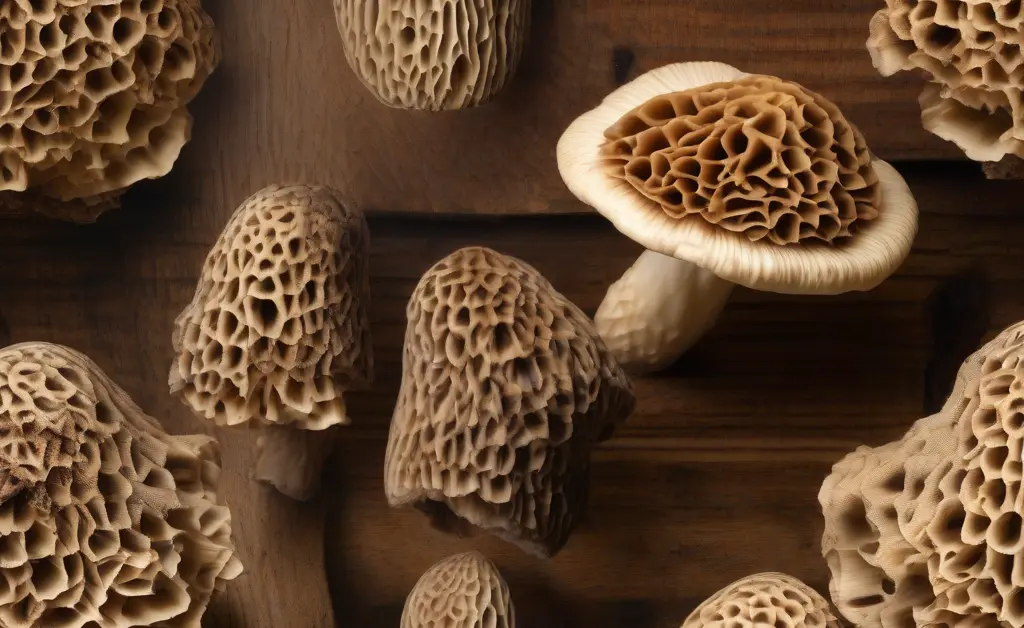
Proper morel mushroom identification is crucial for safe foraging. True morels (genus Morchella) have a few unmistakable characteristics that set them apart from potentially harmful look-alikes. The single most important feature is that true morels are completely hollow inside. When you slice a morel lengthwise from the top of the cap all the way through the stem, it should be a single, continuous hollow chamber.
The cap’s appearance is another key identifier. It features a distinctive network of pits and ridges, resembling a honeycomb or a natural sponge. The cap is not smooth, wrinkled, or brain-like. Finally, pay close attention to how the cap is attached to the stem. In yellow and black morels, the base of the cap is fused directly to the stem. In half-free morels, the cap hangs like a skirt, attached only at the very top. Understanding these features is fundamental for anyone interested in the different morel mushroom types. You can learn more about the nuances of morel mushrooms identification by exploring detailed resources.
Geographic Distribution of Morel Types
Morel mushrooms are found across the globe, but their distribution varies by species. In North America, morels are widespread, with different varieties favoring different regions and ecosystems. Black morels are common across the continent, from the coniferous forests of the West to the hardwood forests of the East. They are particularly well-known for appearing in abundance in forested areas recovering from wildfires, especially in western states.
Yellow morels also have a broad range and are frequently found in the Midwest and Eastern United States, particularly in river valleys and near specific host trees like dying elms. The exact species you find can depend heavily on your location. For example, some morel mushroom types are unique to the Pacific Northwest, while others are primarily found in the Appalachian Mountains. Learning the specific species and their habitats in your local area through regional guides and foraging groups is the best way to improve your chances of a successful hunt. Examining morel mushrooms under a microscope can reveal subtle differences for experts.
Distinguishing True Morels from False Morels
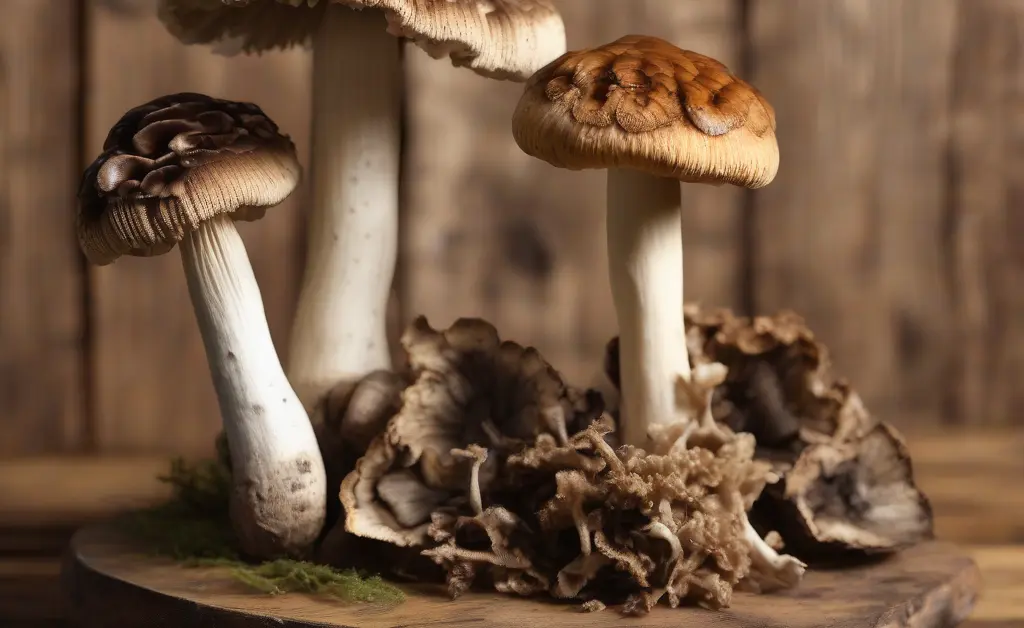
One of the most critical skills for a morel hunter is telling the difference between true morels and their toxic look-alikes, the most common of which are “false morels” from the genus Gyromitra. While superficially similar, the differences are clear upon close inspection. As mentioned, a true morel is completely hollow inside. In contrast, a false morel is not; its interior is filled with cottony fibers or chunky, brain-like tissue.
The cap structure is another giveaway. True morels have a deeply pitted and ridged cap that is integrated with the stem. False morels have a cap that is often reddish-brown and appears wrinkled, lobed, or brain-like, rather than pitted. In many false morel species, the cap seems to sit loosely on top of the stem rather than being fully integrated. Because some false morels contain compounds that can be harmful, it is essential to be 100% certain of your identification. When in doubt, always throw it out.
Harvesting and Using Morel Mushrooms
When you find morels, proper harvesting technique helps ensure future growth. It is best practice to cut the mushroom at the base of the stem with a knife, leaving the underground root-like structure (mycelium) undisturbed. Carrying your harvest in a mesh bag is also recommended, as this allows the spores to be dispersed throughout the forest as you walk, potentially seeding new morel patches for years to come.
In the kitchen, all morel mushroom types are prized for their rich, earthy, and nutty flavor. Before cooking, they should be cleaned thoroughly to remove any dirt or insects from their pits. It is imperative that morels are always cooked thoroughly and never eaten raw. Cooking neutralizes compounds in the mushroom that can cause stomach upset. They are incredibly versatile and shine in simple preparations that allow their flavor to stand out, such as being sautéed in butter or used to create a decadent cream sauce for pasta or steak. This guide on morel mushrooms 2026 species guide offers a comprehensive look.
Morels are a celebrated sign of spring, offering a rewarding experience that connects foraging, identification, and culinary arts. By learning to recognize the different varieties, understanding their habitats, and distinguishing them from look-alikes, you can safely enjoy one of the wild’s greatest culinary gifts. The subtle differences between yellow, black, and other morels only add to the excitement of the hunt and the pleasure of the meal.
It is important to note that this content is not intended as medical advice. The information provided in this article is for educational and informational purposes only. The consumption of wild mushrooms carries inherent risks, and misidentification can lead to serious health issues. Always consult with a local mycological expert for positive identification before consuming any wild fungus.
FAQ
What are the different types of morel mushrooms?
There are several distinct varieties of morel mushrooms, each with unique characteristics and growing preferences. Common types include the yellow morel (Morchella esculentoides), the black morel (Morchella elata), and the half-free morel (Morchella semilibera). Each species has specific habitat needs and a particular fruiting season.
What is the difference between yellow and black morels?
The primary distinctions between yellow and black morels lie in their color, size, and preferred growing conditions. Yellow morels typically have a lighter, more yellowish-brown cap and tend to grow in deciduous woods, often near ash and elm trees. Black morels, on the other hand, are darker, often with a more conical cap shape, and are frequently found in disturbed areas or coniferous forests after fires.