
Bringing home a basket of freshly foraged morels is one of spring’s most satisfying rewards, offering an unmatched culinary experience. These elusive fungi are prized for their rich, earthy flavor, but finding them requires more than just luck. Success depends on understanding the specific timing, habitat, and environmental signals that trigger their growth across the state’s diverse landscapes. For foragers eager to find their own harvest, knowing when and where to look is the key to turning a walk in the woods into a successful hunt. This guide provides the essential knowledge needed to safely and sustainably locate the prized morel mushroom virginia, from identifying host trees and reading the forest floor to distinguishing true morels from their toxic look-alikes.
Morel mushroom virginia season
Typical Timeline: When to Start Searching
The morel mushroom season in Virginia is a fleeting window, typically spanning from late March through May. However, this is not a fixed calendar. The hunt begins in the southern and eastern parts of the state at lower elevations and progressively moves northward and into the higher elevations of the Appalachian and Blue Ridge Mountains. Experienced hunters don’t rely on dates but rather on environmental conditions. The arrival of the spring season can vary significantly from year to year, so paying attention to the weather is more important than circling a date on the calendar.
Key Environmental Cues for Morel Growth
Morels are triggered to fruit by specific environmental signals. The most critical factor is soil temperature. The underground mycelium network begins to produce mushrooms when the ground temperature consistently reaches and stays within a particular range. A good indicator for a morel hunter is when nighttime temperatures stay above freezing and daytime temperatures are mild. Consistent spring rains followed by warm, humid days create the perfect conditions for a flush of morels. Many foragers also use plant indicators, noting that morels often appear when mayapples are unfurling, redbuds are blooming, or the first leaves on the trees are the size of a squirrel’s ear.
Prime Morel Hunting Regions in Virginia
Regional Variations Across the State
Virginia’s diverse geography creates distinct timelines and habitats for morel hunting. The season often kicks off in the Piedmont region before moving into the mountains. The Shenandoah Valley and the vast forested slopes of the Blue Ridge Mountains are famously productive areas, offering extensive public lands for foraging. As spring progresses, hunters can follow the season by moving to higher elevations within the Appalachian Mountains, extending their foraging opportunities well into May in some years.
Ideal Forest Types and Host Trees
Understanding forest composition is fundamental to locating the elusive mushroom. Morels form a symbiotic relationship with the root systems of specific trees. In Virginia, one of the most important host trees is the tulip poplar. Forests with a healthy population of mature tulip poplars are prime hunting grounds. Other key trees to look for include dying elm trees, ash trees (particularly those affected by the emerald ash borer), and old apple orchards. Searching along the rich, loamy soil of a creek bed lined with sycamore trees can also be highly productive. Finding the right mix of these trees is a significant step toward finding a successful spot for the morel mushroom virginia. For a comprehensive understanding of these fascinating fungi, explore this morel mushroom information guide.
Navigating Public Lands and Foraging Regulations
While Virginia offers abundant public land, it’s crucial to understand the foraging regulations for each specific location. Foraging for personal consumption is generally permitted in George Washington and Jefferson National Forests and many state forests. However, rules can differ, and some state and local parks may prohibit foraging altogether. Always check the official website or contact the ranger station for the specific national forest or park you plan to visit. Commercial harvesting requires a permit and is governed by stricter rules. Respecting posted signs and property boundaries is essential for ethical and legal foraging.
Reported Hotspots and Sighting Maps
While every morel hunter dreams of finding a secret honey hole, seasoned foragers rarely share the exact locations of their hunting spots. However, online resources can still be valuable. Social media groups and mycology forums often feature sighting threads where members post their finds. These reports can provide valuable clues about the season’s timing at different elevations and regions. A morel mushroom map, whether user-generated or from a local club, should be used as a guide to general areas and timing rather than a treasure map to a specific patch.
Identifying True Morels vs. Look-Alikes
Characteristics of True Morel Mushrooms
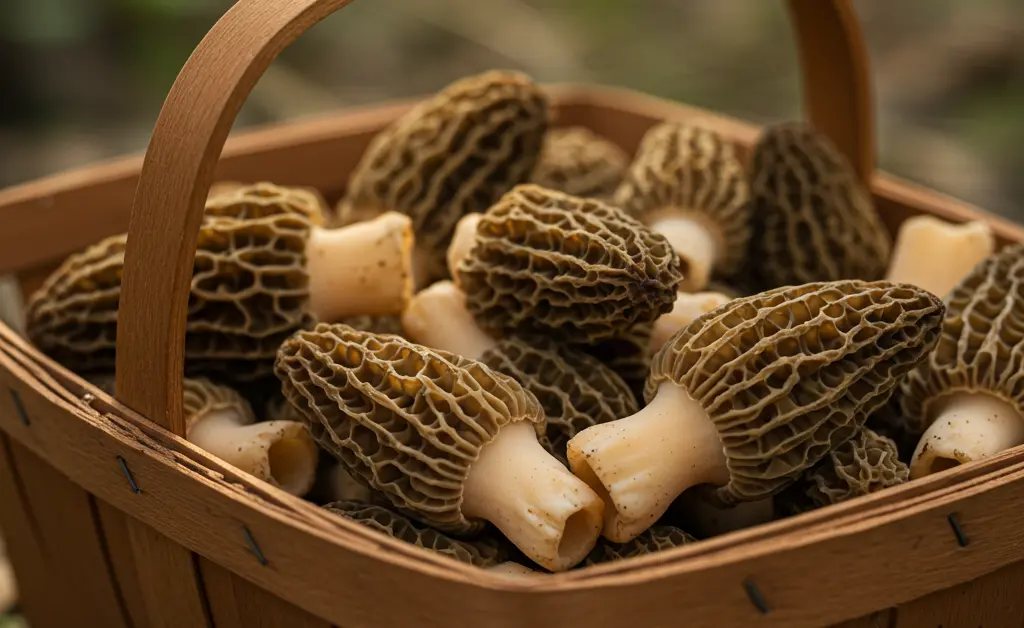
True morels, belonging to the genus Morchella, have a set of distinct characteristics. Their most recognizable feature is the cap, which has a unique honeycomb texture with deep pits and ridges. The cap is conical or oblong in shape and is fully attached to the stem from the top to the bottom edge. When you see a morel in the wild, the cap and stem should appear as a single, integrated unit. Colors can range from gray and tan for black morels to a creamy yellow for the classic yellow morel, but the structure remains consistent.
Common False Morels Found in Virginia
Several poisonous mushrooms can be mistaken for true morels, making proper identification a matter of safety. The most common and dangerous look-alikes are false morels (species in the Gyromitra genus). Their caps are not honeycombed but are wrinkled and brain-like in appearance. Another group of look-alikes, the half-free morels (Morchella semilibera) and Verpas, have caps that hang freely from the top of the stem, like a skirt, rather than being fully attached. These impostors are toxic and must be avoided.
The Hollow Stem Test for Positive Identification
The single most reliable method for confirming a true morel is the hollow stem test. After carefully harvesting a mushroom, slice it lengthwise from the top of the cap all the way through the stem. A true morel will be completely hollow from the tip of its cap to the base of its stem, forming one continuous, empty chamber. If the mushroom is filled with a cotton-like substance, fibrous tissue, or has internal chambers, it is not a true morel and should be discarded immediately. This test is a non-negotiable step for any forager, from novice to expert.
Essential Gear and Techniques for Foraging
What to Bring on Your Hunt
A successful foraging trip requires more than just a keen eye. Essential gear includes a good pair of hiking boots, layered clothing appropriate for changing spring weather, and a reliable navigation tool like a GPS device or a map and compass. A pocket knife is useful for cleanly cutting mushrooms. For collecting your finds, a mesh bag is the single most important piece of equipment. Unlike a plastic bag or solid bucket, a mesh bag allows spores from the mushrooms to fall to the forest floor as you walk, helping to ensure future generations of the prized morel mushroom virginia.
Sustainable Harvesting Practices
Ethical foraging ensures that morel populations remain healthy for years to come. A sustainable harvest starts with proper collection. Instead of pulling the mushroom from the ground, which can damage the underground mycelium network, use a knife to gently cut the stem at its base. This leaves the “roots” of the fungus intact and able to produce more mushrooms. Also, resist the temptation to take every single mushroom in a patch. Leaving some, especially the smaller ones, allows them to mature and release their spores, contributing to the next season’s growth. These fungi are renowned for their unique morel mushroom taste.
Tips for Spotting Camouflaged Morels
Finding morels can be challenging, as their unique texture and color provide excellent camouflage against the forest floor’s leaf litter. The key is to slow down and train your eyes. Instead of scanning for a specific color, look for the distinct shape and pattern. Walk slowly through a promising area, pausing frequently to scan the ground around you from different angles. Look near the base of host trees and in disturbed areas with exposed soil. Many experienced hunters find that once they spot their first morel of the day, their eyes “tune in” and they begin to see them more easily.
Connecting with the Virginia Morel Hunting Community
Engaging with the broader foraging community can greatly enhance your mushroom hunting experience. Popular online groups and forums, particularly on social media platforms, are hubs of activity during the spring season. Members share photos of their finds, ask identification questions, and discuss the season’s progress across the state. These communities are an invaluable resource for learning and sharing enthusiasm. It is also in these groups that people often share their favorite morel mushroom virginia recipe ideas, turning a successful hunt into a delicious meal. For hands-on learning, look for local foraging events and guided hunts. Mycological societies in Virginia and surrounding areas sometimes host walks led by experts who can teach identification and sustainable harvesting practices in the field. These events are an excellent way for beginners to gain confidence and connect with fellow foragers. Understanding the potential morel mushroom benefits can add another layer to your appreciation of this sought-after fungus.
The quest for morels is a journey of patience, observation, and respect for the natural world. While the thrill of the hunt is a major draw, the real reward lies in the deeper connection to the forests of Virginia. By practicing safe identification, harvesting sustainably, and adhering to local foraging regulations, you can ensure that this cherished springtime tradition continues for generations to come. Remember to tread lightly, leave no trace, and savor every moment of your time in the woods. Some rare varieties, like the morel mushroom Yunnan, showcase the global diversity of these amazing mushrooms.
This information should be viewed as educational rather than medical advice. Identifying and consuming wild mushrooms carries inherent risks, as many edible species have toxic look-alikes. Never consume a wild mushroom unless you are absolutely certain of its identification. It is highly recommended to consult with an experienced mycologist or a local expert before consuming any foraged fungus. This article is not a substitute for expert-led, in-person identification training.
FAQ
When is the best time to find morel mushrooms in Virginia?
Morel mushroom hunting in Virginia typically begins in early spring, with peak season often occurring from late March through April. The exact timing can depend on specific weather conditions, such as soil temperature and moisture levels. Warmer temperatures after a period of rain are ideal for their growth.
Where can I legally hunt for morels in Virginia?
Foraging for morels on private land is generally permitted with landowner permission. Public lands like national forests and state parks may have specific regulations regarding mushroom harvesting, so it is important to check with the respective land management agency. Always respect property boundaries and any posted rules.
What trees are morels commonly found near in Virginia?
Morels in Virginia are frequently discovered in proximity to deciduous trees, particularly those that are dead or dying. Common companions include ash, elm, and apple trees. They also show an affinity for disturbed ground, such as areas impacted by logging or forest fires.
How can I be sure I’ve found a true morel mushroom?
True morels are characterized by their distinctive honeycomb-like cap surface, which is deeply pitted and ridged. Crucially, the cap of a true morel is attached directly to the stem, with no gap between them. The stem is hollow throughout when sliced lengthwise.
Are there any poisonous mushrooms that look like morels in Virginia?
Yes, there are indeed look-alike mushrooms that can be mistaken for true morels, some of which are poisonous. The most common imposters are false morels, which lack the true honeycomb appearance and often have a brain-like or wrinkled cap. Unlike true morels, the false morel’s cap is typically not firmly attached to the stem.