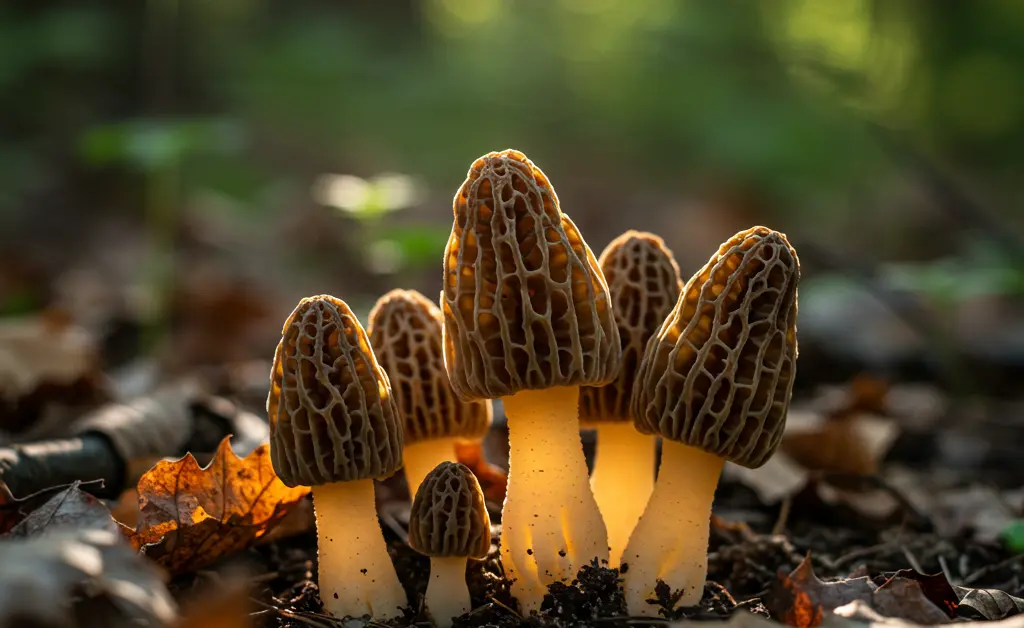
Many foragers and chefs consider the elusive morel to be one of the most prized wild fungi. Its unique honeycomb appearance and rich, nutty flavour make it a culinary delicacy that commands high prices. However, finding this treasure in British woodlands requires a keen eye, specific knowledge, and a bit of luck. The search for the morel mushroom uk foragers dream of involves understanding its preferred habitats, recognizing its distinct features, and, most importantly, distinguishing it from potentially toxic lookalikes. This guide provides the essential information needed to safely embark on this rewarding springtime pursuit, covering everything from identification to the best times and places to look. For more information on morels, see this morel mushroom information guide.
Introduction to Morel Mushrooms in the UK
The morel holds a special status among the fungi of the British Isles. Esteemed for its unique flavour profile, it is a target for gourmet chefs and dedicated foragers alike. Understanding its place in the UK’s ecology is the first step for any aspiring morel hunter. These fungi are not just a culinary delight but also a fascinating biological organism with a complex and often unpredictable lifecycle.
Common Morel Varieties in the UK (Morchella esculenta)
The most commonly sought-after morel in the United Kingdom is the yellow morel, known scientifically as Morchella esculenta. This species is recognised by its classic conical shape and pale yellow-brown to grey-brown cap. It is this variety that people typically envision when they think of morels. While other species and variations exist globally, Morchella esculenta is the primary target for British foragers. Its appearance is a celebrated sign of spring in the woodlands where it chooses to grow, marking it as a truly seasonal delicacy.
Why Morels are Uncommon in Britain
Morels are notoriously elusive in the UK, and their rarity adds to their mystique and value. This scarcity is due to their very specific and sensitive ecological requirements. They thrive in particular soil types, often alkaline or limestone-rich soils, which are not uniformly distributed across the country. Morels also form complex relationships with certain trees, and their fruiting can be triggered by specific environmental events like soil disturbance or changes in tree health. Their lifecycle is not fully understood, making their appearance unpredictable year after year, even in known locations. This contrasts with many other types of fungi that appear more reliably, making the successful hunt for a British morel mushroom uk foragers treasure all the more special. The morel is the king of all mushrooms, highly sought after; it’s all about ground temperature, and morels begin to grow each spring.
How to Identify True Morels and Avoid Poisonous Lookalikes
Correct identification is the most critical skill for any forager. When it comes to morels, distinguishing them from potentially harmful lookalikes is a matter of safety. True morels have a set of unmistakable characteristics that, when checked together, can provide a confident identification. Never consume a wild mushroom unless you are absolutely certain of its identity. For morels found in the Quad Cities area, specific identification guides are available, and morel mushrooms Quad Cities information can be helpful.
Key Visual Features: The Honeycomb Cap
The cap is the most distinctive feature of a true morel. It does not have gills like a common mushroom but instead features a complex network of deep pits and ridges, resembling a honeycomb or a natural sponge. The shape is typically conical or somewhat egg-like. A key detail is that the cap is fully attached to the stem along its lower edge; you cannot lift it like a skirt. The colour can range from a pale, creamy yellow to a dark grey-brown, depending on the specific species and age.
The Hollow Stem: A Crucial Indicator
Perhaps the most definitive test for a true morel is its internal structure. When a true morel is sliced in half from top to bottom, it is completely hollow inside. This continuous, empty chamber extends from the very tip of the cap all the way down to the base of the stem. There are no fibres, solid tissue, or chambered sections within. If the mushroom is solid or filled with a cotton-like substance, it is not a true morel and should be discarded immediately.
Distinguishing from Poisonous Lookalikes (False Morels)
Several species are referred to as “false morels,” with the genus Gyromitra being the most notorious. These mushrooms can be toxic, especially when raw, and must be avoided. False morels differ from true morels in several key ways. Their caps are not honeycombed with pits and ridges but are instead wrinkled, lobed, or brain-like in appearance. Crucially, the cap of a false morel often hangs free from the stem at the edges, and when sliced open, the stem and cap are not one continuous hollow chamber. Instead, they are typically filled with cottony fibres or a series of convoluted chambers. Getting this identification step right is paramount for anyone seeking the morel mushroom uk woodlands might yield.
The Morel Mushroom UK Foraging Season and Lifecycle
Timing is everything in the world of foraging. Morels are a fleeting pleasure, appearing for only a short window each year. Understanding their lifecycle and the environmental cues that trigger their growth is essential for a successful hunt. The unique lifecycle of the morel is a key reason for its unpredictable nature.
The Spring Foraging Window: When to Start Looking
The morel foraging season in the UK is firmly in the spring. The hunt typically begins in late March and can extend into late May, with April often being the peak month. However, this is highly dependent on the weather and local conditions. Morels begin to fruit when soil temperatures reach a certain level and after there has been adequate rainfall. Foragers often look for other natural indicators, such as the blooming of specific wildflowers or the budding of associated trees, to know when the season for the elusive morel mushroom uk foragers seek has truly begun.
Where to Find Morel Mushrooms in the UK
Finding morels is often described as a treasure hunt, as they don’t grow in the same predictable patterns as many other mushrooms. They favour specific conditions and environments, and knowing what to look for can significantly increase your chances of success. From specific woodland types to more unusual urban locations, morels can surprise you.
Typical Woodland Habitats and Associated Trees
In the UK, morels are most frequently found in woodlands with alkaline, chalky, or limestone-based soils. They have a known association with certain types of trees. Ash trees are a classic partner for morels, so woodlands with a high population of ash are excellent places to search. They are also found with sycamore, hawthorn, and in old apple orchards. Morels often appear on the edges of woods, in clearings, or along paths where the ground has been lightly disturbed. Searching the ground around dying or stressed elm trees can also be fruitful, as they seem to have a particular relationship with this species. Other prized fungi, like the porcini mushroom in English woodlands, also have specific habitat preferences. See porcini mushroom in english for more details.
Uncommon Locations: Gardens and Disturbed Ground
One of the most fascinating things about morels is their tendency to appear in unexpected places. They are known to fruit on disturbed ground, which is why they are sometimes found on construction sites or in areas that have been recently landscaped. Wood chip mulch, particularly in gardens or parks, can be a surprising hotspot for morels, as the fungus can thrive on the decomposing wood. They have also been famously reported to grow in abundance on ground that was burned by a fire in the previous year. This opportunistic nature means foragers should keep an eye out not just in pristine woodlands, but in any area where the ground has been recently altered. The quest for the morel mushroom uk wide can lead to some very surprising locations.
The pursuit of morel mushrooms is a rewarding experience that combines a love for the outdoors with the thrill of a culinary treasure hunt. The key to a safe and successful foray lies in diligent research and cautious practice. The absolute certainty of identification, particularly the hollow stem and honeycombed cap, cannot be overstated. Respect for the environment through sustainable harvesting ensures these fascinating fungi can be appreciated by others. By learning their habitats, recognising their features, and understanding their lookalikes, you can responsibly join the search for one of Britain’s most prized wild foods. Research into fungal foraging and identification is ongoing; for scientific perspectives, consult resources like PubMed.
This content is for informational use and should not be considered medical instruction. Identifying and consuming wild mushrooms carries inherent risks, and misidentification can lead to serious illness. Never eat a wild mushroom unless you are 100% certain of its identity, preferably confirmed by an expert. The rule “when in doubt, throw it out” should always be followed.
FAQ
Can you find morel mushrooms in the UK?
Yes, morel mushrooms are found in the UK, though they are not as widespread or abundant as in some other regions. Their presence is often tied to specific environmental conditions and habitats.
What month do morels grow in the UK?
Morel mushrooms typically appear in the UK during the spring months, with April and May being the prime time for finding them. This growth period aligns with warmer temperatures and sufficient moisture.
Where is the best place to find morel mushrooms in the UK?
Morel mushrooms in the UK are often associated with deciduous woodlands, particularly areas with ash and elm trees. They can also be found in orchards, churchyards, and sometimes even disturbed ground like roadside verges or recently cleared areas.
Are there any poisonous mushrooms that look like morels in the UK?
There are no commonly encountered poisonous mushrooms in the UK that closely resemble true morels. However, it’s always crucial to be 100% certain of identification before consuming any wild mushroom, as misidentification can have serious consequences.
Is it legal to forage for morels in the UK?
Foraging for morels in the UK is generally legal under the Countryside Rights of Way Act 2000, provided you are not trespassing on private land without permission. The act allows for the picking of wild plants, fungi, and fruit for personal consumption.