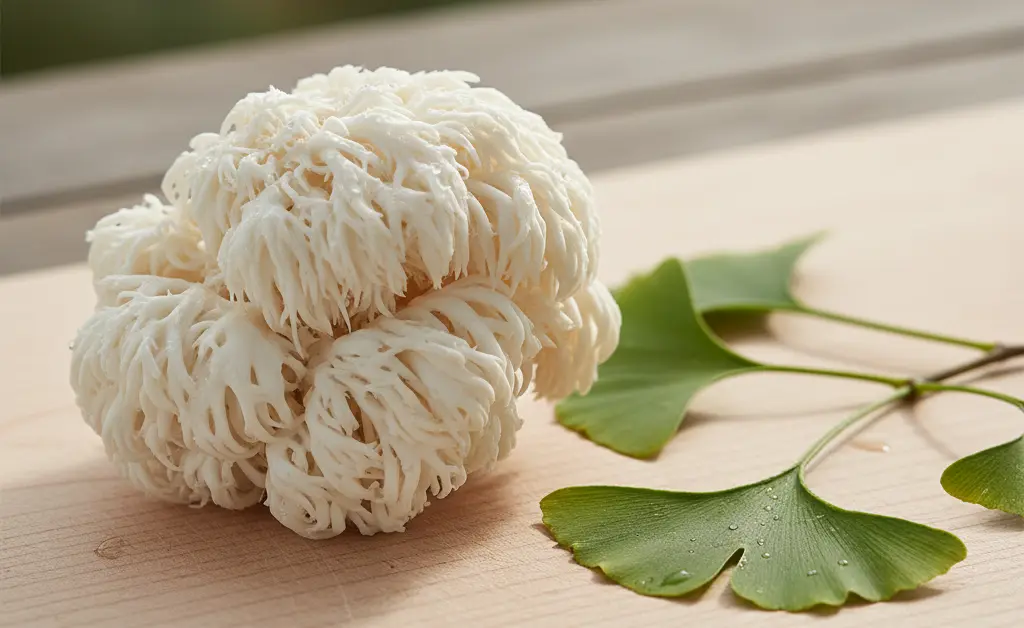
How do lion’s mane mushroom and ginkgo biloba truly compare in their ability to support cognitive function and overall brain health? Both have garnered significant attention for their potential neurotrophic and cognitive-enhancing properties, leading many to seek natural alternatives for mental clarity and focus. While Ginkgo biloba has a long history in traditional medicine, particularly for memory and circulation, Lion’s Mane has emerged more recently as a powerhouse for nerve growth factor support. This article aims to provide a comprehensive analysis of lion’s mane mushroom vs ginkgo biloba, dissecting their unique mechanisms, evidence-based benefits, and potential considerations to help individuals make an informed decision about which supplement might best suit their needs.
Lion’s Mane Mushroom vs Ginkgo Biloba: A Direct Comparison
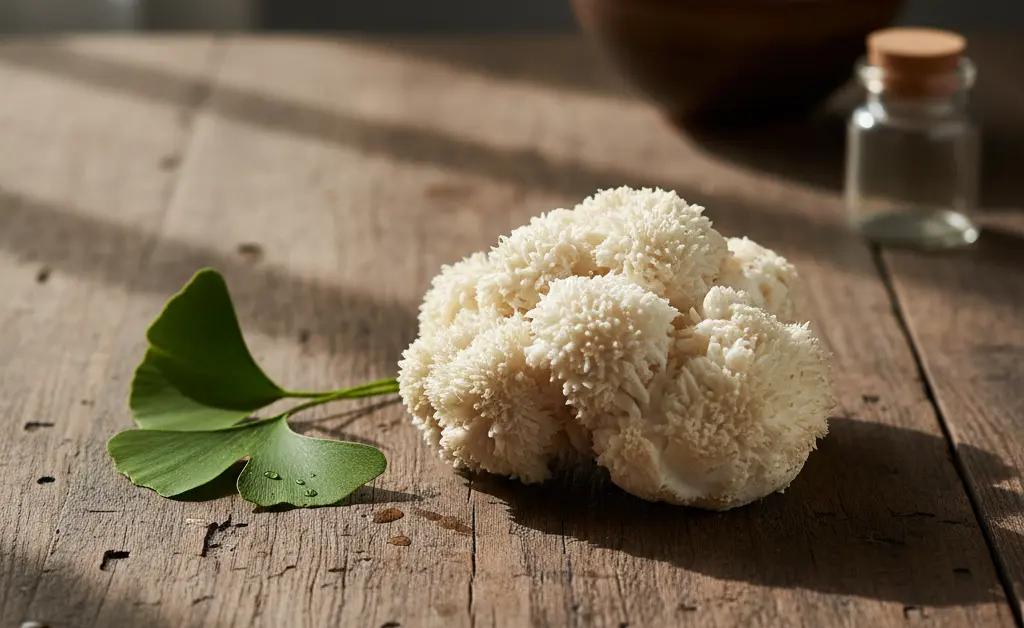
When evaluating natural supplements for cognitive enhancement, understanding the distinct characteristics of lion’s mane mushroom vs ginkgo biloba is crucial. Both are celebrated for their potential to support brain health, yet they operate through different pathways, offering varied benefits. This direct comparison will explore their efficacy in key cognitive areas, their unique mechanisms of action, and their respective impacts on mood and safety. For a broader perspective on adaptogenic fungi, you might also compare lion’s mane mushroom vs turkey tail.
Efficacy for Memory and Concentration
Lion’s mane mushroom, known scientifically as Hericium erinaceus, is studied for its potential to support neurogenesis, the growth of new brain cells. This may translate to improved memory recall, particularly episodic memory, and enhanced overall mental clarity. Its unique compounds, such as hericenones and erinacines, are thought to stimulate nerve growth factor (NGF) production, which is vital for the maintenance and repair of neurons. Individuals seeking support for `brain fog` or an overall boost in cognitive function might find this particularly appealing. Further research and scientific literature on these topics are widely available on PubMed.
Ginkgo biloba, on the other hand, has a long-standing reputation for supporting memory and concentration. Its primary mechanism is often attributed to its ability to promote cerebral blood flow, ensuring that the brain receives adequate oxygen and nutrients. This increased circulation may lead to improvements in attention span, focus, and general cognitive performance. Ginkgo is often considered by those looking to support `memory recall` and `focus` in daily tasks, leveraging its `vasodilation` effects.
Differences in Mechanisms of Action
The fundamental differences in how these two natural supplements exert their effects are key to understanding their unique profiles. Lion’s mane mushroom is primarily recognized for its neurotrophic properties. Its active compounds, erinacines and hericenones, are believed to cross the blood-brain barrier and stimulate the production of nerve growth factor (NGF). This support for NGF is crucial for neuronal health, differentiation, and survival, potentially leading to enhanced `neurogenesis` and synaptic plasticity. This direct influence on nerve regeneration represents a significant aspect of its potential for `brain health` and `cognitive enhancement`.
Ginkgo biloba, derived from the leaves of the Ginkgo tree, operates through distinct mechanisms. Its efficacy is largely attributed to its rich content of `flavonoids` and `terpenoids`, including `ginkgolides` and `bilobalides`. These compounds are powerful `antioxidants` that help protect brain cells from oxidative stress and free radical damage. More notably, Ginkgo biloba is well-regarded for its `neuroprotective` properties and its ability to enhance `cerebral blood flow` by promoting `vasodilation` in the microvasculature. This improved circulation can optimize oxygen and nutrient delivery to brain tissues, thereby supporting `neurotransmitter support` and overall cognitive function.
Comparative Effects on Mood and Anxiety
Beyond their cognitive benefits, both lion’s mane mushroom and ginkgo biloba have been explored for their potential to support mood and alleviate feelings of anxiety. Lion’s mane, through its influence on `neurogenesis` and overall `brain health`, may indirectly contribute to a balanced mood. Some research suggests its properties could relate to `stress reduction` and an `anxiolytic` effect by supporting neuronal pathways involved in emotional regulation. Its impact on the nervous system is thought to foster a more resilient state of mind, potentially easing mild psychological discomfort. Another interesting comparison in the realm of adaptogens is lion’s mane mushroom vs ashwagandha for stress and cognitive support.
Ginkgo biloba’s effects on mood and anxiety are often linked to its ability to improve `cerebral blood flow` and its `antioxidant` actions. Enhanced circulation to the brain can optimize the function of neurotransmitter systems, which are vital for mood regulation. By reducing oxidative stress and `inflammation` in the brain, Ginkgo may help mitigate factors that can contribute to mood imbalances. Historically, it has been used in `traditional medicine` to address aspects of mental well-being, aligning with its modern investigation for `stress reduction` and supporting a calmer mental state.
Comparative Side Effects and Safety Profiles
Understanding the `side effects` and `safety profiles` of any `natural supplements` is paramount. Lion’s mane mushroom is generally considered well-tolerated by most individuals. Reported side effects are typically mild and infrequent, sometimes including digestive upset or skin irritation in sensitive individuals. As a mushroom, allergic reactions are possible, though rare. Its long-term use is often viewed favorably due to its natural food-like origin and traditional consumption as a culinary and medicinal mushroom. Delving deeper into mycology, one might also consider the differences between lion’s mane mushroom vs oyster mushroom.
Ginkgo biloba also has a generally favorable safety profile, but it does carry some specific considerations. The most commonly reported side effects include headaches, dizziness, heart palpitations, and gastrointestinal upset. Due to its potential to affect blood clotting, individuals on anticoagulant medications or those with bleeding disorders are often advised to exercise caution or avoid its use. It is also important to consider its potential interactions with certain medications. Both supplements underscore the importance of individual sensitivity and consulting a healthcare professional before starting any new regimen.
Choosing Your Supplement: Lion’s Mane or Ginkgo Biloba?

The decision between lion’s mane mushroom vs ginkgo biloba often depends on individual health goals, existing conditions, and personal preferences. While both offer promising benefits for `brain health` and `cognitive enhancement`, their distinct mechanisms mean one may be more aligned with specific needs than the other. Navigating this choice requires a careful assessment of various factors to ensure the chosen supplement best supports desired outcomes.
Factors to Consider When Making Your Choice
When deciding between these two prominent `nootropics`, several factors should guide your choice. Firstly, consider your primary cognitive goals. If your focus is on supporting `neurogenesis`, nerve repair, and long-term neuronal health, lion’s mane mushroom may be a more direct fit due to its unique `NGF` stimulating properties. For those primarily seeking to enhance `cerebral blood flow`, `attention`, and `memory recall` through improved circulation and `antioxidant` protection, Ginkgo biloba could be the preferred option.
Secondly, evaluate your current health status and any existing medications. As discussed, Ginkgo biloba has a known effect on blood clotting, which is a critical consideration for individuals on certain pharmaceuticals. Lion’s mane, while generally very safe, should still be approached with caution by individuals with mushroom allergies. Your overall lifestyle, including diet, sleep, and stress levels, also plays a significant role in `brain health`, and supplements are best viewed as part of a comprehensive wellness strategy. Understanding the historical context, such as Ginkgo’s extensive use in `traditional medicine`, can also provide valuable insight into its long-term `efficacy` and application.
Who Might Benefit Most from Each Supplement?
Individuals experiencing general `brain fog` or a desire to proactively support brain aging might find lion’s mane mushroom particularly beneficial. Its potential to foster new neural connections and support overall neuronal maintenance makes it an attractive option for long-term `cognitive enhancement` and `mental clarity`. Those looking for support in learning and memory, especially with age-related cognitive changes, often lean towards lion’s mane due to its direct impact on brain cell health.
Ginkgo biloba may be more suitable for those primarily concerned with circulatory support to the brain. Students or professionals looking to improve `focus` and `attention` during demanding tasks, or older adults experiencing mild memory issues related to blood flow, often turn to Ginkgo. Its ability to act as an `antioxidant` also appeals to those looking for general `neuroprotective` benefits against oxidative stress. Ultimately, the choice depends on aligning the supplement’s primary benefits with your specific cognitive and health aspirations, considering the distinct properties of lion’s mane mushroom vs ginkgo biloba.
The comparison between lion’s mane mushroom vs ginkgo biloba reveals two distinct yet powerful natural supplements for brain health. Lion’s Mane stands out for its unique ability to support nerve growth factor and neurogenesis, offering a pathway to cellular repair and regeneration. Ginkgo Biloba, with its long history in traditional medicine, excels in enhancing cerebral blood flow and providing antioxidant protection. Both contribute to cognitive enhancement, memory, and concentration, but through different mechanisms. The optimal choice depends on individual goals, whether prioritizing neuronal growth and plasticity or improved circulation and neuroprotection. Ultimately, both offer valuable support for maintaining and enhancing cognitive function.
The purpose of this content is to educate, not to diagnose or treat. The information provided is for general knowledge and informational purposes only, and does not constitute medical advice. It is essential to consult with a qualified healthcare professional before making any decisions about your health, diet, or starting any new supplement regimen, especially if you have pre-existing health conditions or are taking medications. Individual results may vary, and the efficacy of natural supplements has not been evaluated by all regulatory bodies.
FAQ
— Which is more effective for memory, Lion’s Mane or Ginkgo Biloba?
These two natural ingredients approach memory support through distinct pathways, making direct comparison complex. Lion’s Mane is studied for its potential to support nerve growth factor production, which is relevant for neuronal health and plasticity. Ginkgo Biloba, on the other hand, is known for its role in promoting healthy cerebral blood circulation, delivering oxygen and nutrients crucial for cognitive function.
— What are the main differences in how Lion’s Mane and Ginkgo Biloba work?
The fundamental distinction in lion’s mane mushroom vs ginkgo biloba lies in their mechanisms of action within the brain. Lion’s Mane contains compounds called hericenones and erinacines, which are linked to stimulating nerve growth factor (NGF) production and supporting neuronal health. Ginkgo Biloba, with its active flavonoids and terpenoids, primarily works by promoting healthy blood flow to the brain and acting as an antioxidant, protecting brain cells from oxidative stress.
— Is Lion’s Mane better for concentration than Ginkgo Biloba?
Both Lion’s Mane and Ginkgo Biloba are associated with cognitive support, but they may influence concentration differently. Lion’s Mane plays a role in fostering neuronal connections and health, which can underpin sustained focus and clarity. Ginkgo Biloba is linked to enhanced cerebral blood flow, ensuring the brain receives adequate oxygen and glucose, which is vital for maintaining concentration and alertness.
— Do Lion’s Mane and Ginkgo Biloba have similar side effects?
Lion’s Mane and Ginkgo Biloba generally have different profiles regarding potential side effects due to their distinct biological activities. Lion’s Mane is widely regarded as well-tolerated, with digestive upset being a rare reported concern. Ginkgo Biloba is known to have a blood-thinning effect, which means it can interact with certain medications and may cause headaches or digestive issues in some individuals.
— Can Lion’s Mane help with anxiety more than Ginkgo Biloba?
Lion’s Mane has been studied for its potential to support mood balance and a healthy stress response, possibly by influencing neurogenesis and the nervous system. While Ginkgo Biloba’s primary role is in supporting circulation and antioxidant defense, these factors can indirectly contribute to overall brain well-being and a sense of calm. Their contributions to managing anxiety are explored through different functional pathways.
— Which supplement is better for overall brain health?
Both Lion’s Mane and Ginkgo Biloba contribute to overall brain health through complementary yet distinct mechanisms. Lion’s Mane is relevant for supporting nerve growth, neuronal maintenance, and cognitive function at a cellular level. Ginkgo Biloba is known for enhancing cerebral blood flow, delivering essential nutrients, and providing antioxidant protection to brain cells. The choice depends on specific individual needs and health goals for brain support.