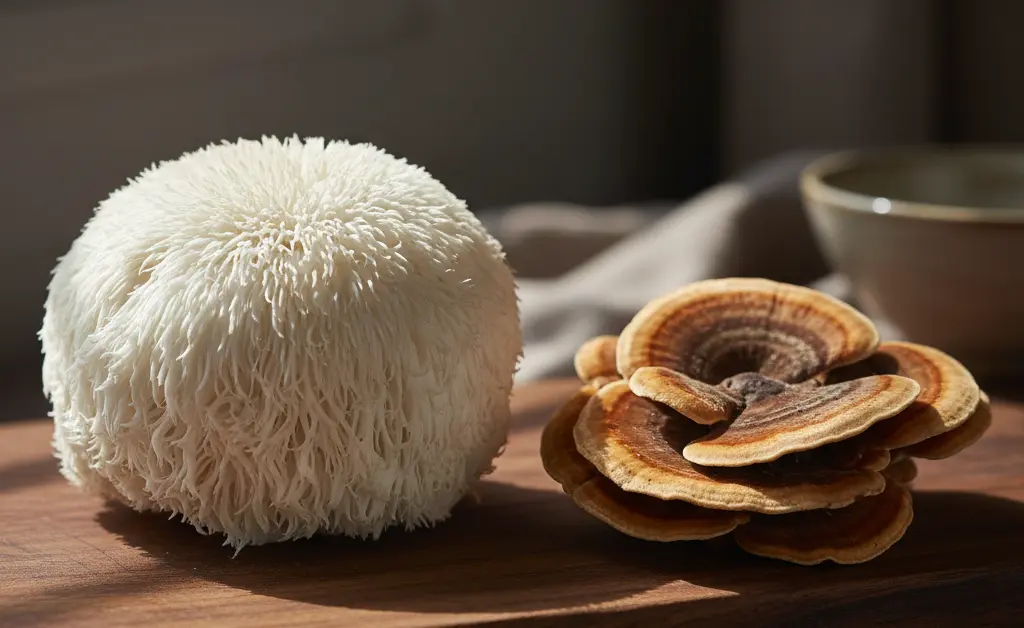
It’s a common belief that all functional mushrooms offer a similar spectrum of benefits, leading many to think their choice is largely interchangeable. However, this perspective overlooks the profound and distinct properties inherent in different species. While both have garnered significant attention in wellness circles, the truth is that each mushroom possesses unique bioactive compounds and health applications. Understanding these differences is crucial for anyone looking to leverage their specific advantages. This article will delve into the nuances of lion’s mane mushroom vs turkey tail, providing a clear comparison of their individual strengths and how they contribute uniquely to well-being, moving beyond generalized assumptions to reveal their specific roles in supporting health.
Lion’s Mane Mushroom vs. Turkey Tail: A Comprehensive Comparison

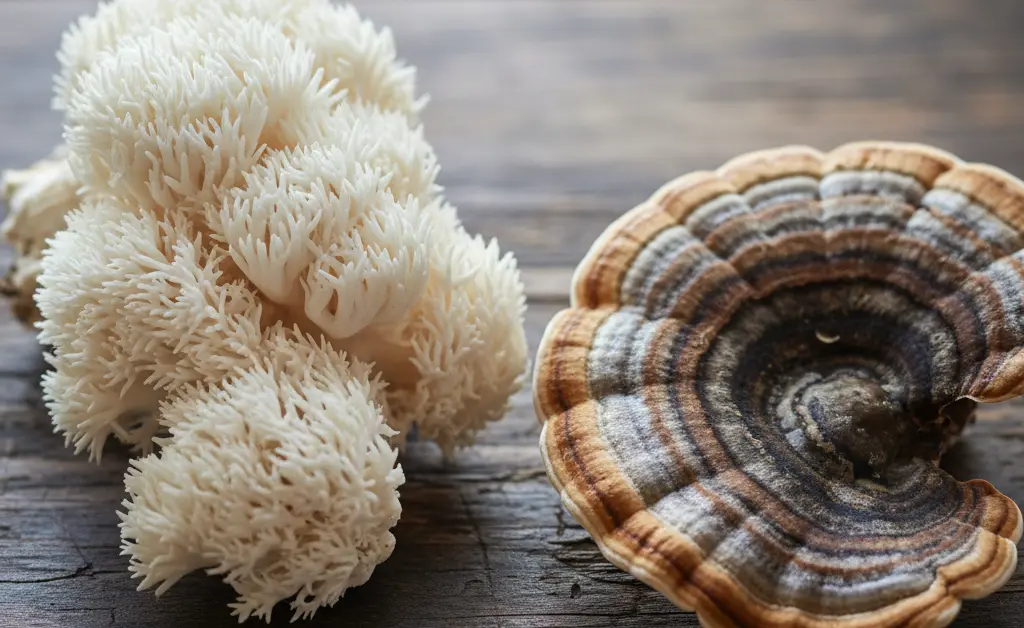
When evaluating lion’s mane mushroom vs turkey tail, it becomes clear that while both are revered medicinal mushrooms, their primary health benefits diverge significantly. Lion’s Mane (Hericium erinaceus) is particularly recognized for its potential impact on cognitive function and neurological well-being. Turkey Tail (Trametes versicolor), on the other hand, is widely celebrated for its robust immune-supporting properties. This fundamental distinction is crucial for individuals seeking to target specific areas of their health through natural supplements.
Cognitive vs. Immune Focus
Lion’s Mane mushroom is often highlighted for its unique compounds that may support brain health. Key Health Benefits of Lion’s Mane are centered around its capacity to potentially stimulate nerve growth factor (NGF), a protein vital for the growth, maintenance, and survival of neurons. This has led to its study for enhancing cognitive function, including memory and focus. In contrast, Key Health Benefits of Turkey Tail primarily revolve around its profound effects on the immune system. This mushroom is rich in polysaccharides, particularly beta-glucans, and compounds like Polysaccharide K (PSK) and Polysaccharide Peptide (PSP), which are extensively studied for their immune-modulating properties and their role in traditional medicine.
Many also consider a comparison of lion’s mane mushroom vs ginkgo biloba for cognitive support.
Brain Fog vs. Mental Clarity
For those experiencing “brain fog,” Lion’s Mane is frequently sought after. Its potential to support neurogenesis and nerve growth factor may contribute to clearer thinking and improved mental clarity and focus. People often report a sense of enhanced alertness and reduced mental fatigue with consistent use. While Turkey Tail does not directly target “brain fog” in the same way, its comprehensive support for the immune system and overall vitality can indirectly contribute to general well-being, which in turn may positively influence mental states. By supporting systemic health, Turkey Tail may help the body function optimally, potentially leading to improved energy levels that can indirectly benefit cognitive processes.
Nervous System vs. Holistic Wellness Approach
Lion’s Mane is predominantly associated with Nervous System Support. Its compounds are thought to cross the blood-brain barrier, offering direct support to neurons and potentially aiding in neurological resilience. This makes it a popular choice for individuals interested in maintaining or enhancing brain health. Another interesting discussion involves lion’s mane mushroom vs ashwagandha for adaptogenic benefits. Turkey Tail, conversely, embodies a more holistic wellness approach. Beyond its immune system enhancement, it is also studied for its role in digestive health and supporting a balanced gut microbiome. A healthy gut is increasingly recognized as integral to overall wellness, influencing everything from immunity to mood. Therefore, Turkey Tail’s benefits are broadly systemic, supporting the body’s interconnected systems for general health maintenance.
Shared Health Properties of Lion’s Mane and Turkey Tail
Despite their distinct primary benefits, both Lion’s Mane mushroom vs turkey tail share some valuable health properties, underscoring their status as beneficial medicinal mushrooms. Understanding these commonalities can help contextualize their individual strengths and provide a more complete picture in any medicinal mushrooms comparison. A broader lion’s mane mushroom vs oyster mushroom analysis can reveal more about unique benefits across functional fungi.
Both mushrooms are recognized for their significant antioxidant content. Antioxidants are crucial for combating oxidative stress, which can contribute to cellular damage throughout the body. By neutralizing free radicals, these mushrooms may help protect cells and support overall health. Additionally, both Lion’s Mane and Turkey Tail have been studied for their potential anti-inflammatory effects. Chronic inflammation is a factor in many health concerns, and compounds within these mushrooms may help the body manage inflammatory responses. For comprehensive health information and guidance, resources like the NHS can provide valuable insights. This shared capacity to support the body’s defense mechanisms and promote cellular well-being highlights their value in a comprehensive wellness regimen, even as their specialized contributions remain distinct.
In summary, while Lion’s Mane mushroom vs turkey tail each offer unique and powerful health benefits, understanding their core differences is key to making an informed choice. Lion’s Mane excels in its potential to support cognitive function and nervous system health, targeting areas like memory, focus, and mental clarity. Turkey Tail, on the other hand, stands out for its profound immune system enhancement and its role in promoting gut health and overall systemic wellness. Both mushrooms contribute significantly to health through their antioxidant and potential anti-inflammatory properties, making them valuable additions to a wellness-focused lifestyle. Ultimately, the choice between them or even the decision to use both, will depend on individual health goals and desired outcomes.
The information in this article is intended for knowledge purposes only. It is not a substitute for professional medical advice, diagnosis, or treatment. Always seek the advice of a qualified healthcare provider for any questions regarding a medical condition or before making any decisions about your health. The content provided is for general information and should not be used to self-diagnose or treat any health problem or disease.
FAQ
— Which mushroom is better for brain health, lion’s mane or turkey tail?
Lion’s mane is extensively studied for its unique compounds, hericenones and erinacines, which are known to support nerve growth factor synthesis in the brain. This mechanism is relevant to its role in maintaining neuronal health and cognitive function. While turkey tail offers general wellness benefits, lion’s mane’s specific neurotrophic properties make it particularly relevant for brain health.
— Does lion’s mane or turkey tail have more antioxidants?
Both functional mushrooms contain valuable antioxidant compounds; however, turkey tail is often highlighted for its abundant polysaccharide-bound peptides (PSK and PSP) and various phenolic compounds. These constituents contribute significantly to its robust antioxidant capacity, which supports cellular protection. Lion’s mane also possesses antioxidants, but turkey tail’s profile is generally considered more extensive in this regard.
— What are the main health differences between lion’s mane and turkey tail?
Regarding the main health differences, the core distinction in lion’s mane mushroom vs turkey tail lies in their primary traditional applications and studied benefits. Lion’s mane is well-regarded for its influence on cognitive function and nerve support, while turkey tail is primarily recognized for its potent immune-modulating properties. Each mushroom offers a distinct set of bioactive compounds that confer these specific benefits.
— Is turkey tail more effective for immunity than lion’s mane?
Turkey tail is widely recognized for its powerful immune-modulating properties, largely attributed to its unique polysaccharide compounds like PSK and PSP. These compounds are known to interact with various immune cells, supporting a balanced and robust immune response. While lion’s mane also offers general wellness support, turkey tail’s extensive research and traditional use specifically highlight its profound impact on immune health.
— Which mushroom is better for reducing brain fog?
Lion’s mane is highly relevant for supporting cognitive clarity and addressing feelings of brain fog due to its capacity to encourage nerve growth factor production. This action supports the health and function of neurons, which are essential for clear thinking and memory. By fostering a healthy neural environment, lion’s mane plays a role in maintaining sharp cognitive performance.
— What are the benefits of lion’s mane compared to turkey tail?
Lion’s mane is particularly recognized for its specific benefits related to neurological health and cognitive function. It contains compounds that have been studied for their ability to support nerve regeneration and brain plasticity, contributing to improved memory, focus, and overall mental sharpness. In contrast, turkey tail’s primary benefits are centered around its comprehensive immune system support.