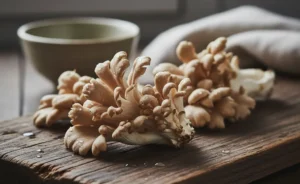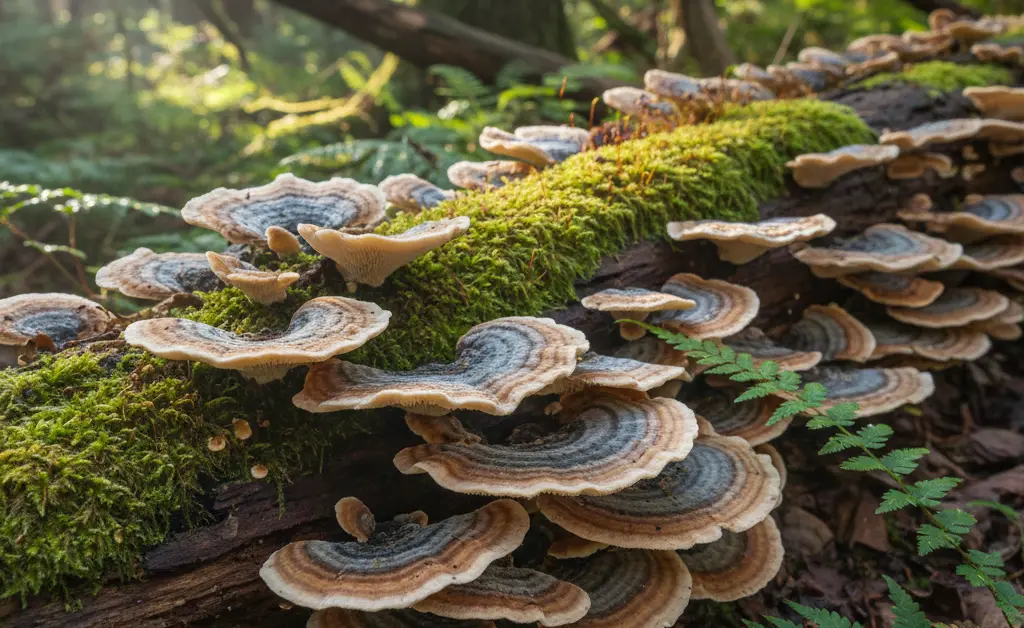
Turkey tail mushrooms (Trametes versicolor) are a widespread and visually striking species, easily identified by their fan-like shape and concentric bands of varying colors, reminiscent of a wild turkey’s tail. Found across diverse landscapes, this ubiquitous polypore plays a vital role in forest ecosystems as a saprobic fungus, contributing to the decomposition of deadwood. Its prevalence often leads to curiosity among foragers and naturalists regarding its environmental preferences. Understanding the specific conditions and geographic distribution of this remarkable organism is key to appreciating its ecological significance and how it thrives. This exploration delves into the crucial question of exactly where does turkey tail mushroom grow, examining the specific habitats, climatic factors, and host substrates that define its natural range and successful proliferation across the globe.
Where Does Turkey Tail Mushroom Grow?
The question of where does turkey tail mushroom grow is central to understanding its ecological niche. This versatile fungus thrives in a variety of environments, primarily acting as a decomposer of wood. Its ability to adapt to different conditions contributes to its widespread presence across various continents and climates.
Common Habitats and Environments
Turkey tail mushrooms are most commonly found in woodlands and forested areas. They prefer environments with ample decaying organic matter, particularly dead trees, stumps, and fallen branches. These saprophytic fungi play a crucial role in breaking down lignin and cellulose, returning nutrients to the forest floor ecosystem. Observing the forest floor and tree bark in mature forests is often where one will discover the fruiting body of this resilient polypore.
Global Presence Across Continents
One of the remarkable aspects of the turkey tail mushroom is its near-global distribution. It is a cosmopolitan species, meaning it can be found on almost every continent except Antarctica. Its adaptability to diverse climates, from tropical to temperate, allows it to flourish in a vast array of ecological settings, making it one of the most recognizable fungi worldwide. This widespread presence underscores its ecological importance, a topic relevant to broader discussions on biodiversity and environmental health monitored by organizations like the WHO.
Regional Occurrence and Common Areas
Specifically, turkey tail mushroom is abundant in temperate regions of North America, Europe, and Asia. In these areas, it is a familiar sight in deciduous and mixed forests. Its prevalence in suburban parks and even urban green spaces, provided there is sufficient decaying host wood, further illustrates its adaptability. Foragers often spot it on dead hardwood logs and branches in these common areas. In the Pacific Northwest, one might also look for turkey tail mushroom Oregon.
Importance of Moisture and Humidity
Moisture and humidity are critical factors influencing the growth and proliferation of turkey tail mushrooms. These fungi require a consistently damp environment to thrive, as water is essential for their metabolic processes and the development of their mycelial networks. Humid climates and mossy areas within forests provide ideal conditions, allowing the sporocarps to develop robustly, especially after periods of rain. The climate in places like turkey tail mushroom Kentucky often provides ideal moisture levels for optimal growth.
Temperature Preferences for Mycelial Development
While turkey tail mushrooms are highly adaptable, they generally prefer moderate, temperate temperatures for optimal mycelial development and fruiting. Extreme cold or heat can inhibit their growth, though they can tolerate a wide range. The mild, consistent temperatures found in temperate forests during spring, summer, and fall are particularly conducive to their life cycle, allowing the fungus to effectively colonize decaying wood.
Light Exposure and Canopy Cover
Turkey tail mushrooms typically prefer shaded conditions with indirect light, common under dense forest canopy cover. While direct sunlight isn’t necessarily detrimental, the associated lower humidity and drier conditions can be less ideal for their growth. The dappled light filtering through the trees, combined with consistent moisture, creates a microclimate that perfectly supports the fungus’s lifecycle.
Ideal Habitats and Host Trees for Turkey Tail
Identifying the ideal habitats and host trees is essential for understanding where does turkey tail mushroom grow most effectively. These fungi are saprophytic, meaning they derive nutrients from dead or decaying organic matter, making specific types of wood their preferred substrate.
Deciduous vs. Coniferous Hosts
Turkey tail mushrooms show a strong preference for deciduous trees over conifers. While they can occasionally be found on coniferous hosts, their primary habitat is hardwood forests. Deciduous species offer a more suitable nutrient profile and wood structure for the fungus’s enzymatic breakdown processes, facilitating robust mycelial growth and fruiting body development.
Preferred Tree Species and Decaying Wood
Among deciduous trees, turkey tail mushrooms are commonly found on oak, maple, birch, beech, and cherry. They thrive specifically on decaying logs, stumps, and fallen branches of these hardwood species. The quality and stage of decomposition of the host wood are crucial, as the fungus requires wood that is soft enough for its mycelial networks to penetrate and process effectively. This preference for rotting wood makes them vital decomposers in the forest ecosystem. Specifically, areas such as Michigan are known for their abundant turkey tail mushroom Michigan populations.
Growing on Deadwood vs. Live Trees
As a saprophytic fungus, turkey tail primarily grows on deadwood. Its ecological role is to break down dead trees and other woody debris, not to parasitize living trees. While it might occasionally appear on a weakened or dying live tree, this is typically because the tree’s immune system is compromised, allowing the fungus to act more as a secondary decomposer rather than a primary pathogen. The abundance of dead trees and stumps in a forest is a key indicator of a suitable environment for turkey tail mushroom growth.
The turkey tail mushroom is a remarkably adaptable and widespread fungus, playing a critical role as a decomposer in forest ecosystems globally. Its prevalence in temperate woodlands across continents, particularly on decaying hardwood, is a testament to its resilience and ecological importance. Understanding its specific preferences for moisture, moderate temperatures, and shaded environments on deadwood helps appreciate its natural habitat and contribution to the natural recycling process of forests.
This article is meant for general informational use and awareness. It is not intended to provide medical advice, diagnosis, or treatment for any health condition or disease. Always consult with a qualified healthcare professional before making any decisions related to your health or incorporating any new supplements or practices into your routine. Individual results may vary, and the information presented should not be used as a substitute for professional medical guidance.
FAQ
— Where can you typically find turkey tail mushrooms in the wild?
In the wild, where does turkey tail mushroom grow? You can typically find this distinctive fungus in woodlands and forests across temperate regions worldwide. It thrives on dead or decaying hardwood trees, playing a vital role in the decomposition process within these ecosystems.
— What types of trees do turkey tail mushrooms prefer to grow on?
Turkey tail mushrooms show a strong preference for deciduous hardwood trees. They are commonly observed on logs, stumps, and fallen branches of species like oak, maple, beech, and birch. Their presence indicates a healthy forest environment where organic matter is being recycled.
— Are turkey tail mushrooms found globally?
Indeed, turkey tail mushrooms are known for their cosmopolitan distribution, meaning they can be found across many continents. They are particularly prevalent in temperate forests throughout North America, Europe, and Asia. This wide range highlights their adaptability to various woodland environments.
— What are the ideal conditions for turkey tail mushroom growth?
Ideal conditions for turkey tail mushroom growth involve a combination of moisture, humidity, and abundant decaying hardwood. They flourish in damp forest environments where there’s a consistent supply of dead wood to break down. Moderate temperatures also contribute to their robust development throughout the growing season.
— Can you find turkey tail mushrooms in suburban parks?
Absolutely, you can often find turkey tail mushrooms in suburban parks, especially those with mature trees and undisturbed wooded areas. If there are fallen logs or dead branches from deciduous trees, these fungi can readily establish themselves. Their presence contributes to the park’s natural ecological balance.
— Do turkey tail mushrooms grow on living trees or only dead ones?
Turkey tail mushrooms primarily grow on dead or decaying wood, functioning as saprophytes that break down lignin and cellulose. While they are usually found on fallen logs and stumps, they can occasionally appear on living trees that are already weakened or dying. However, they are not typically aggressive parasites of healthy, robust living trees.