It’s a common misconception that all beneficial fungi offer identical health advantages, leading some to believe that any functional mushroom will suffice for their wellness goals. While many share general properties, assuming broad interchangeability can overlook the profound and specific benefits each species provides. This holds particularly true when considering the distinct qualities of two highly regarded varieties. Understanding the nuanced differences is crucial for leveraging their full potential, rather than viewing them as interchangeable. This article aims to clarify the specific attributes and applications when comparing turkey tail mushroom vs lion’s mane, helping you make an informed choice aligned with your individual needs.
Turkey Tail Mushroom vs Lion’s Mane: A Comprehensive Comparison
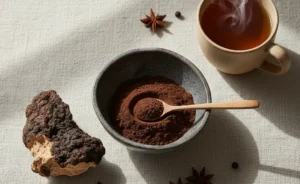
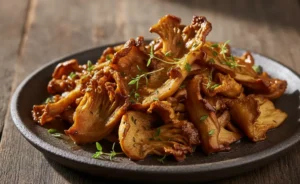
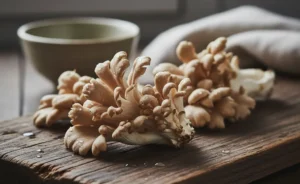
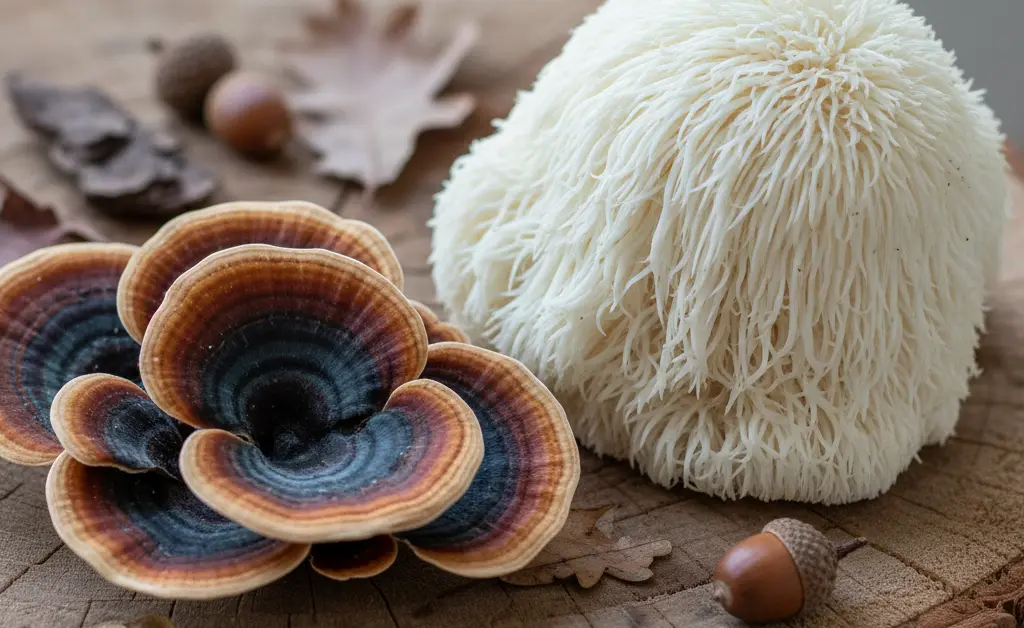
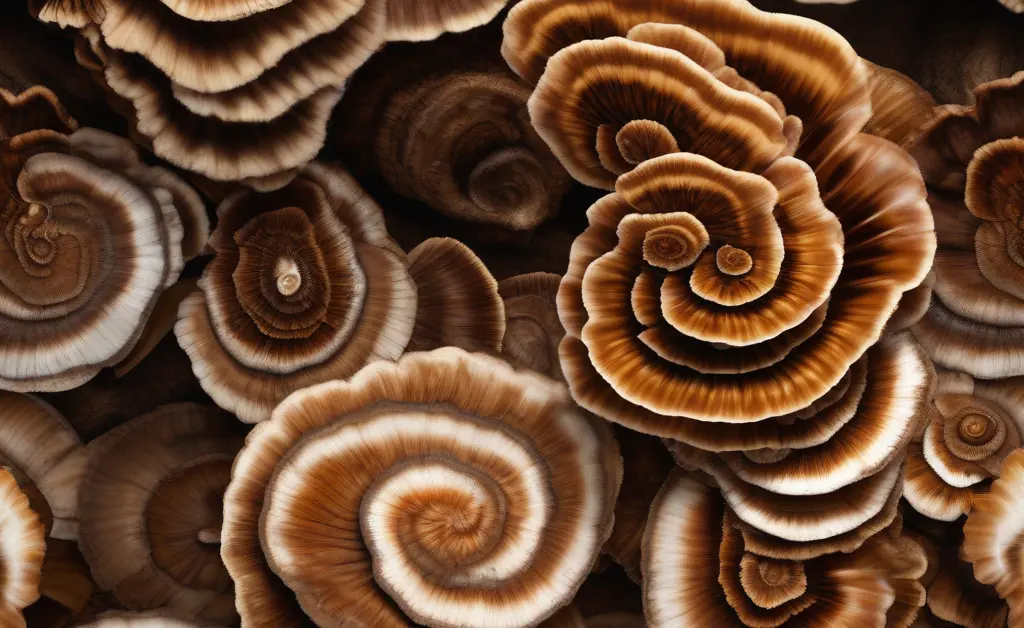
When considering medicinal mushrooms for their health benefits, the comparison between turkey tail mushroom vs lion’s mane frequently arises. Both are highly valued in traditional medicine and modern wellness circles, yet they offer distinct profiles and primary areas of benefit. Turkey Tail (Trametes versicolor) is renowned for its vibrant, fan-like appearance resembling a turkey’s tail, and its extensive history in supporting immune health. Lion’s Mane (Hericium erinaceus), on the other hand, is recognized for its unique cascading, shaggy appearance, often likened to a lion’s mane, and its traditional use for supporting cognitive function and brain health.
Key Differences and Similarities
While both fungi are considered adaptogens and contribute to overall wellness, their primary strengths lie in different physiological systems. Turkey Tail is celebrated for its powerful immune support and antioxidant properties, making it a cornerstone for those seeking to bolster their body’s defenses. It contains a wealth of polysaccharides that are believed to contribute to its beneficial effects. Lion’s Mane, in contrast, is particularly noted for its potential to support the nervous system, cognitive function, and mental clarity, often studied for its impact on memory and focus.
A key similarity is their classification as fungi within the broader category of medicinal mushrooms, both having a long history of traditional use across various cultures. Both are also rich in antioxidants, which help combat oxidative stress in the body. However, their unique bioactive compounds lead them down different beneficial pathways, targeting distinct aspects of human health.
Active Compounds and Nutritional Profiles
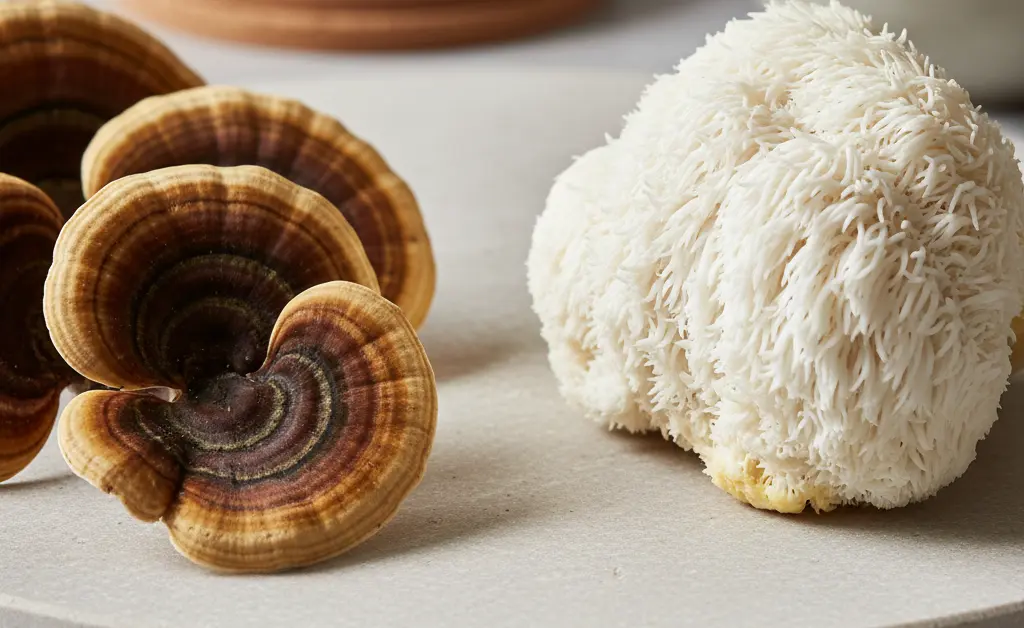
The profound effects of these fungi stem from their complex and varied biochemical compositions. When examining the active compounds of turkey tail mushroom vs lion’s mane, distinct differences emerge, dictating their primary health applications. Understanding these unique nutritional profiles is key to appreciating their specific contributions to wellness.
Distinctive Bioactive Compounds (e.g., polysaccharides, triterpenes)
Turkey Tail mushroom is particularly rich in unique polysaccharides, including polysaccharide-K (PSK) and polysaccharopeptide (PSP). These beta-glucans are well-researched for their roles in immune support and modulation, with much of this information available through the NIH. They are believed to interact with immune cells, potentially enhancing the body’s natural defense mechanisms. Beyond these well-known compounds, Turkey Tail also contains various triterpenes and other antioxidant compounds, which collectively contribute to its robust properties and support gut health as a prebiotic.
Lion’s Mane, conversely, contains distinct compounds that primarily benefit the nervous system and cognitive function. Key among these are hericenones and erinacines, which are unique to Lion’s Mane. These compounds are studied for their potential to support the production of Nerve Growth Factor (NGF), a protein crucial for the growth, maintenance, and survival of neurons. Lion’s Mane also provides its own spectrum of polysaccharides, though its specific cognitive and nervous system benefits set it apart from other medicinal mushrooms. Its rich nutrient profile also includes various vitamins and minerals, contributing to its overall health benefits and anti-inflammatory properties.
In-Depth Look at Their Health Benefits
Understanding the in-depth health benefits of turkey tail mushroom vs lion’s mane reveals why each has earned its place as a valued natural remedy. While both contribute to overall wellness, their primary focuses are distinctly different, aligning with specific health goals.
Ideal for Cognitive Enhancement
Lion’s Mane is predominantly recognized for its profound impact on cognitive function and brain health. Its unique bioactive compounds, such as hericenones and erinacines, are studied for their potential to support nerve health and neurogenesis. This may translate into benefits such as enhanced memory, improved focus, and greater mental clarity. Individuals experiencing “brain fog” or looking to maintain sharp cognitive abilities as they age often consider Lion’s Mane an ideal choice. Its support for the nervous system extends beyond just cognition, potentially influencing mood and overall neurological health.
Ideal for Robust Immune Support
Turkey Tail mushroom stands out for its powerful properties related to the immune system. The polysaccharides PSK and PSP are at the forefront of its immune-modulating capabilities. These compounds are believed to support the body’s immune response, making Turkey Tail a popular choice for those seeking to strengthen their natural defenses. It’s often used by individuals looking for year-round immune support or during periods when their immune system may be under stress. Furthermore, Turkey Tail’s prebiotic effects can contribute to a healthy gut microbiome, which is intrinsically linked to a robust immune system. Its antioxidant properties also play a role in protecting cells from damage, further contributing to overall health benefits.
Choosing the Right Mushroom for Your Health Goals
Deciding between turkey tail mushroom vs lion’s mane depends largely on your specific health goals and the areas of your wellness you wish to prioritize. If your primary focus is on bolstering your immune system, supporting gut health, and leveraging potent antioxidant properties, then Turkey Tail mushroom may be the more suitable choice. Its traditional uses and scientific studies predominantly highlight its role in immune modulation and overall systemic support.
Conversely, if cognitive enhancement, support for brain health, and nervous system wellness are your main objectives, Lion’s Mane mushroom is often recommended. Its unique compounds are particularly studied for their potential to improve memory, focus, and mental clarity, making it a favorite among those seeking to combat brain fog or support neurological function. Many people find that aligning the specific strengths of these medicinal mushrooms with their individual needs leads to the most effective outcomes for their overall wellness journey.
Can You Take Turkey Tail and Lion’s Mane Together?
Given their distinct yet complementary benefits, a common question arises regarding the combined use of Turkey Tail and Lion’s Mane. Many individuals consider incorporating both into their daily routine to leverage a broader spectrum of health support. There is no widely recognized contraindication against taking these two medicinal mushrooms together; in fact, their unique profiles suggest potential synergistic advantages for comprehensive wellness.
Benefits of Combined Supplementation
Combining Turkey Tail and Lion’s Mane may offer a holistic approach to health, addressing both immune system integrity and cognitive function simultaneously. While Turkey Tail focuses on robust immune support and gut health, Lion’s Mane targets brain health, mental clarity, and nervous system function. By taking them together, individuals may benefit from the combined adaptogenic effects, potentially supporting the body’s ability to cope with various stressors while nurturing different physiological systems. This approach allows for a broader range of bioactive compounds to work in concert, potentially leading to more comprehensive health benefits than either mushroom might provide alone.
Potential Synergies and Enhanced Effects
The potential synergies between Turkey Tail and Lion’s Mane arise from their differing mechanisms of action and unique compounds. For instance, Turkey Tail’s prebiotics can foster a healthy gut, which in turn influences brain health through the gut-brain axis, potentially complementing Lion’s Mane’s direct effects on the nervous system. The combined antioxidant power from both fungi could offer enhanced cellular protection throughout the body. Furthermore, the adaptogenic qualities of each mushroom may contribute to an overall sense of balance and resilience, supporting general wellness. Many users report that this combination offers a well-rounded strategy for maintaining peak health across multiple fronts.
In conclusion, both Turkey Tail and Lion’s Mane are powerful medicinal mushrooms, each with a unique set of benefits. Turkey Tail excels in supporting the immune system and gut health, while Lion’s Mane is a standout for cognitive enhancement and nervous system support. Understanding their distinct properties allows for an informed decision tailored to individual health goals. Whether chosen individually or combined for a synergistic approach, these fungi offer valuable contributions to a natural wellness regimen, embodying the rich potential found in the world of mycology.
This article is written for general understanding and not for medical decision-making. The information provided is for informational purposes only and does not constitute medical advice, diagnosis, or treatment. Always consult with a qualified healthcare professional before making any decisions about your health, diet, or lifestyle, especially if you have a medical condition or are taking medication. Individual results may vary, and the statements made have not been evaluated by regulatory bodies.
FAQ
— Is turkey tail more potent than lion’s mane?
These mushrooms are known for distinct primary benefits rather than a direct comparison of “potency” in a general sense. Turkey tail is widely recognized for its immune-modulating compounds, while lion’s mane is primarily studied for its neurotrophic properties and cognitive support. Their efficacy lies in their specific areas of biological activity.
— Which mushroom is better for memory and focus?
Lion’s mane is particularly relevant for memory and focus due to its unique compounds, hericenones and erinacines, which are linked to supporting nerve growth factor. These compounds play a role in the maintenance and growth of neurons, which is foundational for cognitive functions. Therefore, lion’s mane is more specifically associated with these brain-related benefits.
— Can I take turkey tail and lion’s mane at the same time?
Yes, it is common for people to incorporate both turkey tail and lion’s mane into their wellness routines. Their different functional profiles mean they often complement each other, with turkey tail focusing on immune health and lion’s mane on cognitive support. As adaptogens, they work in unique ways to support diverse systems in the body.
— What are the side effects of turkey tail vs lion’s mane?
Both turkey tail and lion’s mane are generally considered well-tolerated by most individuals. As with any natural substance, however, individual responses can vary. It is always prudent to listen to your body and consult with a healthcare professional before making changes to your dietary regimen.
— Do both turkey tail and lion’s mane boost the immune system?
Turkey tail is renowned for its well-documented immune-modulating properties, largely due to its polysaccharides like PSK and PSP. While lion’s mane is primarily known for cognitive benefits, its potential to support gut health could indirectly contribute to immune function, as a significant part of the immune system resides in the gut. However, turkey tail has a more direct and established role in immune support.
— Which mushroom has more antioxidants?
Both turkey tail and lion’s mane possess antioxidant compounds that contribute to cellular protection and overall wellness. While specific antioxidant profiles and quantities can vary, each mushroom is recognized for its unique array of beneficial substances. When considering turkey tail mushroom vs lion’s mane, it’s more about their distinct primary functions rather than a definitive “more” or “less” antioxidant comparison.