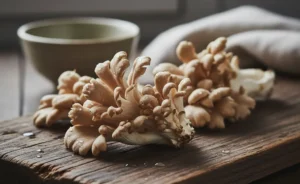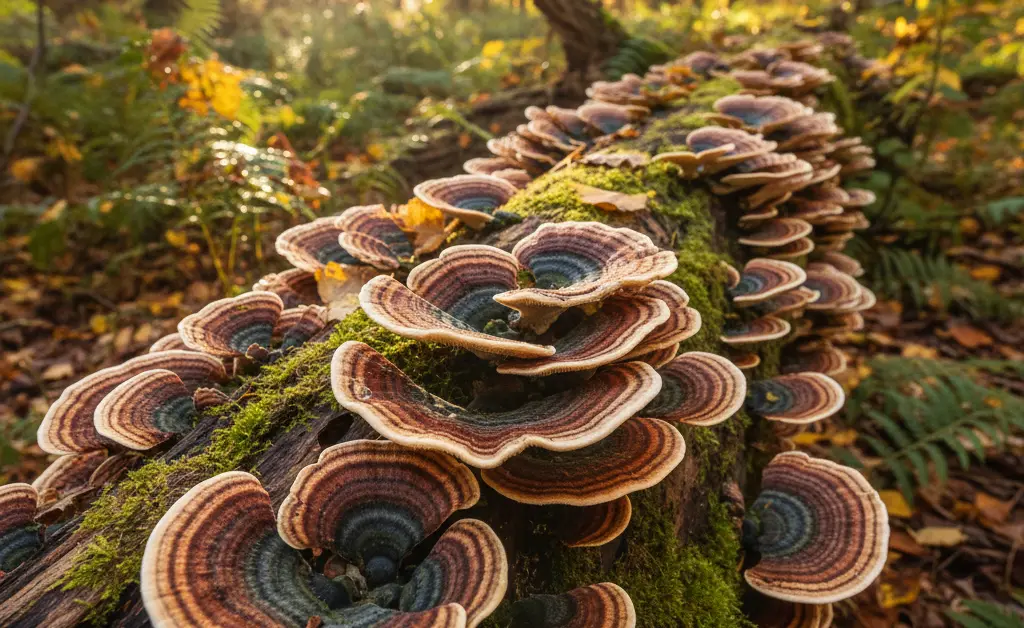
Picture a crisp autumn morning, the air carrying the scent of damp earth and fallen leaves, as you wander through a quiet patch of woodland. Suddenly, your eye catches a series of beautifully fanned, multicolored shelves adorning a decaying log. There’s a particular satisfaction in recognizing these intricate fungi, knowing they could be the highly sought-after turkey tail mushroom. This moment of discovery isn’t just about finding a fascinating specimen; it’s about connecting with nature and appreciating its subtle offerings. For enthusiasts and health-conscious individuals alike, understanding and safely identifying the authentic turkey tail mushroom in Ontario is key. This guide aims to equip you with the knowledge needed to confidently forage for this remarkable organism, distinguishing it from its common look-alikes and appreciating its unique presence in the province’s diverse ecosystems.
Understanding Turkey Tail Mushrooms in Ontario: An Overview
The turkey tail mushroom, scientifically known as Trametes versicolor, is a common and distinctive wood-decaying fungus found across many global regions, including the diverse ecosystems of Ontario. This fascinating organism plays a vital role as a decomposer in forests, breaking down dead wood and returning nutrients to the soil. Its name comes from its resemblance to a turkey’s fanned tail, displaying concentric zones of various colors that create a striking visual pattern. For those interested in foraging, recognizing the true turkey tail mushroom in Ontario involves understanding its general characteristics and ecological niche. While this guide focuses on Ontario, information regarding turkey tail mushroom in Kentucky also highlights its widespread distribution. Its prevalence in Canadian woodlands makes it a notable find for mycology enthusiasts.
Identifying True Turkey Tail Mushrooms in Ontario
Accurate identification is crucial when seeking the turkey tail mushroom in Ontario. Several key characteristics help distinguish the authentic species from its common look-alikes. The cap typically features velvety, concentric zones of various colors, including shades of brown, gray, blue, and sometimes red or purple, often with a white or lighter margin. These bands of color, known as zonation, are usually quite distinct. Perhaps the most critical identification feature lies on the underside: true turkey tail is a polypore, meaning it has tiny, visible pores on its fertile surface, not gills. These pores are typically white to off-white and very fine, almost imperceptible without close inspection or a magnifying glass. The texture of the cap is generally velvety or finely hairy to the touch, and the mushroom itself is flexible and leathery when fresh, becoming more rigid and brittle as it dries. A field identification checklist should always prioritize these distinct features. Always ensure proper identification to avoid any potential health concerns, as highlighted by health organizations like the WHO.
Distinguishing True Turkey Tail from Look-Alikes in Ontario
While the turkey tail mushroom in Ontario is widespread, it has several imposters that can easily confuse an inexperienced forager. The most common and frequently mistaken look-alike is the “false turkey tail,” typically species from the genus Stereum (e.g., Stereum hirsutum). The primary distinguishing factor between true turkey tail and false turkey tail is the underside. While true turkey tail has a porous underside, species of Stereum have a smooth, gill-less underside without pores, which can range from creamy white to yellowish or even brownish. When identifying fungi, always flip the specimen over to examine this critical feature. Other subtle differences include the texture of the cap and the overall growth pattern, but the underside remains the most reliable indicator for differentiating these two.
Other Imposters in Ontario’s Forests
Beyond the false turkey tail, Ontario’s forests are home to various other wood-decaying fungi that might superficially resemble Trametes versicolor. Some other bracket fungi may share similar growth patterns or colorations but will typically lack the fine, velvety texture and, most importantly, the distinctive pore surface of true turkey tail. While usually found in forests, it’s worth noting that turkey tail mushroom in yard settings can sometimes occur where suitable decaying wood is present. Careful examination of the entire conk, including its texture, flexibility, and especially its underside, is essential. Always exercise caution and confirm multiple identification features before assuming you have found the correct species. If any doubt remains, it is best to leave the mushroom undisturbed.
Where, When, and How to Forage for Turkey Tail Mushrooms in Ontario
Foraging for the turkey tail mushroom in Ontario can be a rewarding experience, provided you know where and when to look, and how to practice ethical collection. Knowing where to find turkey tail mushroom is the first step towards a successful harvest. This wood-decaying fungus is saprophytic, meaning it grows on dead or dying wood. Therefore, the best places to search are deciduous or mixed hardwood forests and woodlands with an abundance of fallen logs, stumps, and dead branches. Turkey tail mushrooms are perennial, meaning they can be found year-round, but they are most vibrant and abundant from late spring through late autumn, especially after periods of rain, which encourages new growth. When foraging, it is vital to respect the ecosystem: only take what you need, avoid disturbing the surrounding environment, and ensure you have permission if foraging on private land. Always ensure proper identification to avoid collecting any poisonous look-alikes.
Preferred Habitats and Substrates in Ontario
In Ontario, turkey tail mushrooms show a strong preference for growing on deciduous trees. Common substrates include oak, maple, birch, and beech logs or stumps, particularly those that are well-decayed but still firm. Understanding where turkey tail mushroom grows is crucial for successful identification. They are rarely found on coniferous wood. Look for them in moist, shaded areas of the forest, often clustered in overlapping layers or shelves on the sides of logs. Their mycelium spreads through the wood, and the fruiting bodies emerge from the surface. While they can be found on standing dead trees, they are most often observed on fallen timber, where they continue their crucial work as decomposers.
The journey of discovering and identifying the turkey tail mushroom in Ontario is a wonderful way to deepen your connection with nature and appreciate the intricate world of fungi. By understanding its key characteristics, distinguishing it from look-alikes, and adopting responsible foraging practices, you can confidently explore the province’s woodlands and uncover this remarkable organism. Remember that careful observation and respect for the environment are paramount in all foraging endeavors.
It is important to note that this content is not intended as medical advice. The information provided is for educational purposes only and should not be used to diagnose, treat, or prevent any health condition. Always consult with a qualified healthcare professional before making any decisions related to your health or incorporating new supplements into your regimen. Individual responses to fungi may vary, and safety should always be prioritized.
FAQ
— How do I identify turkey tail mushrooms in Ontario?
Identifying the genuine turkey tail mushroom in Ontario involves observing its distinct features. Look for its fan-like or semi-circular shape, typically exhibiting concentric zones of varying colors like browns, grays, blues, and even reds, giving it a vibrant, striped appearance. The top surface usually has a velvety texture, while the underside is crucial, displaying tiny, almost invisible pores rather than gills or a smooth surface.
— What are the key differences between true and false turkey tail in Ontario?
The primary differentiator between true *Trametes versicolor* and its look-alikes is the underside of the mushroom cap. True turkey tail has a white to off-white pore surface with tiny, visible pores, whereas false turkey tails, such as *Stereum ostrea* (hairy curtain crust), will have a smooth underside. Additionally, true turkey tail is typically more flexible when fresh, while many false varieties are rigid and thinner.
— Where can I find turkey tail mushrooms growing in Ontario?
These resilient fungi are commonly found throughout Ontario’s forests, primarily growing on dead hardwood logs, stumps, and fallen branches. They thrive in damp, shaded environments, often appearing in clusters or overlapping layers on decaying wood. Seek them out in areas with ample deciduous trees.
— When is the best time to forage for turkey tail in Ontario?
Turkey tail mushrooms are unique in that they can be found year-round, even persisting through winter months. However, the ideal time to forage is typically after periods of rain, from late summer through fall, when they are fresh and robust. This moisture encourages new growth and maintains their vitality.
— Are there any poisonous look-alikes for turkey tail mushrooms in Ontario?
While there are no deadly poisonous look-alikes commonly confused with turkey tail, it is crucial to ensure positive identification before consuming any wild mushroom. Some imposters are simply not edible or lack the beneficial compounds of true turkey tail, so accurate identification is paramount for safety and efficacy.