Have you ever dreamed of cultivating a patch of coveted morel mushrooms in your own backyard? It’s a tantalizing idea for any gourmet or gardening enthusiast. The journey often begins with a search for a starting material, frequently leading people to look for morel mushroom seeds. However, this common search term can be a source of confusion, as mushrooms don’t reproduce with seeds in the same way plants do. Understanding the difference between spores, spawn, and the concept of a “seed” is the first critical step toward successfully growing these elusive fungi. This guide will clarify what you’re actually buying and how to use it to potentially establish your own morel patch.
Understanding Morel Mushroom Seeds
The term “morel mushroom seeds” is widely used by aspiring growers, but it’s important to understand what this actually refers to in the world of mycology. Unlike plants, fungi like morels do not produce seeds. Their reproductive cycle is fundamentally different. When people search for this term, they are looking for a way to start a morel colony, and what they will find are two primary products: morel spores and morel spawn. Recognizing this distinction is the cornerstone of successful mushroom cultivation, as each requires a different approach and level of expertise.
Morel Mushroom Spores vs. Seeds
The primary difference between a mushroom spore and a plant seed lies in their biological structure and function. A seed is a complex, multicellular embryo of a plant, complete with a food supply (the endosperm) and a protective outer coat. It is essentially a tiny, self-contained plant waiting for the right conditions to germinate.
A morel spore, on the other hand, is a microscopic, single-celled reproductive unit. It contains the genetic material necessary to grow a new fungus, but it lacks a stored food supply. For a spore to develop, it must land in a suitable environment where it can germinate and fuse with a compatible spore to form mycelium, the vegetative network of the fungus.
Why “Seeds” Is a Misnomer for Mushrooms
Calling a spore a “seed” is a misnomer because it incorrectly applies a botanical term to a subject from an entirely different biological kingdom. Plants and fungi have divergent evolutionary paths and life cycles. The plant life cycle involves seeds, flowers, and fruits. The fungal life cycle revolves around spores, mycelium, and the fruiting body (the mushroom itself). Using the term “seed” creates a misleading expectation that growing morels will be as straightforward as planting a vegetable garden, which is rarely the case.
What is Mycelial Spawn?
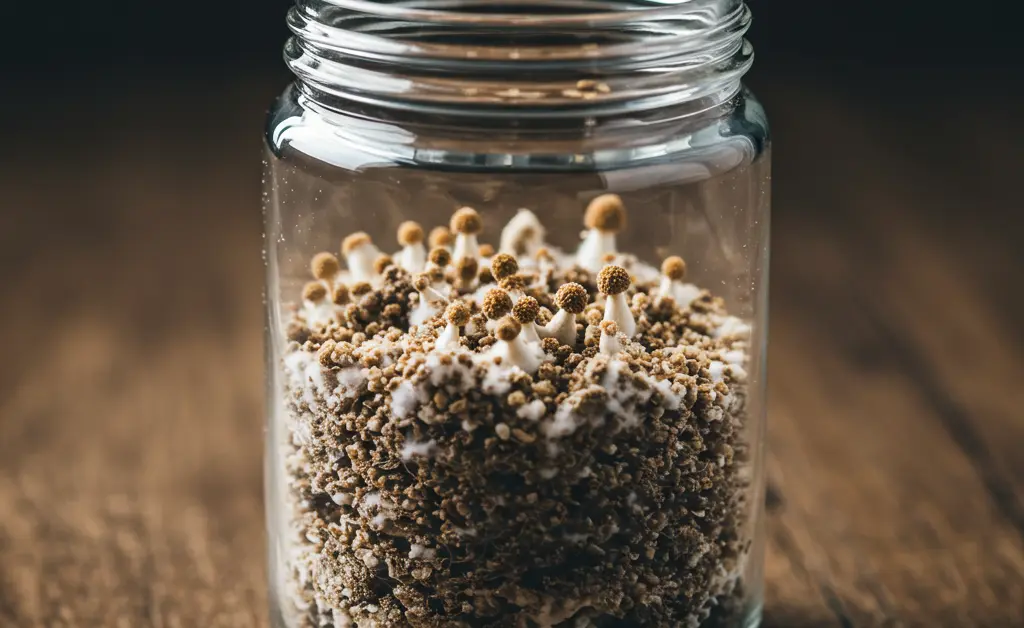
Mycelial spawn is the most common and effective material for hobbyist morel cultivation. Spawn consists of a substrate, such as grain, sawdust, or a specialized soil blend, that has been completely colonized by living morel mycelium. This mycelium is the thread-like, vegetative part of the fungus that grows underground. Think of spawn as a robust and established starter culture. Instead of starting from microscopic spores, you are beginning with a vigorous network of mycelial growth that is already active and ready to expand into a new, prepared environment.
For those interested in the detailed processes involved in growing these mushrooms, understanding morel mushroom cultivation is essential.
Spores vs. Spawn: Key Differences
For a home cultivator, choosing between spores and spawn is a critical decision. Spores offer a greater genetic diversity but are significantly more challenging to work with, requiring sterile conditions to avoid contamination. Spawn provides a more direct path to establishing a morel patch because the mycelium is already mature and actively growing. While searching for morel mushroom seeds might lead you to both options, spawn is generally recommended for beginners due to its higher success rate and simpler handling.
| Feature | Spores | Spawn |
|---|---|---|
| Starting Material | Microscopic, single-celled reproductive units. | A substrate (e.g., grain, soil) colonized with live mycelium. |
| Biological Stage | Dormant genetic material, must germinate and form mycelium. | Established, vegetative mycelial network. |
| Difficulty for Beginners | High. Requires sterile techniques and is prone to contamination. | Low to Moderate. Easier to handle and more forgiving. |
| Time to Establishment | Longer. Spores need time to germinate and develop. | Shorter. The mycelium is already growing and can colonize new substrate faster. |
Where to Buy Morel Mushroom Seeds
When you set out to find a starting material for your morel patch, your search for “morel mushroom seeds” will guide you to specialized suppliers who sell spores and mycelial spawn. Reputable vendors are typically transparent about what they are offering, clearly distinguishing between spore syringes (spores suspended in sterile water) and various types of spawn (such as grain spawn or soil-based spawn). It is crucial to purchase from established sellers with positive reviews who provide detailed information about their products and instructions for use. These vendors often sell complete morel mushroom growing kits, which bundle the spawn with a suitable substrate and directions, simplifying the process for beginners.
Choosing the right conditions for your morels is crucial. Consider the ideal morel mushroom growing zone for the best chance of success.
How to Plant Morel Mushroom Seeds
Since morels don’t grow from seeds, this process is correctly referred to as “inoculation” or “planting spawn.” The method varies depending on the product, but it generally involves introducing the morel spawn to a carefully prepared outdoor location. A good environment often mimics a morel’s natural habitat, such as the edge of a wooded area with well-drained soil. The process typically involves preparing a small bed by mixing materials like sand, wood ash, gypsum, and organic matter into the native soil. The morel spawn is then crumbled and mixed into the top layer of this prepared bed. After inoculation, the area should be covered with a layer of mulch, like hardwood chips or leaves, and kept moist, but not waterlogged, to encourage the mycelium to establish itself and spread.
For growers in India, specific guidance on morel mushroom kaise ugaye might be relevant.
Success in morel cultivation is not guaranteed, as these fungi are notoriously difficult to domesticate. The key is to understand that you are not planting a seed but rather introducing a living organism—mycelium—into an ecosystem. Patience is paramount. It can take a year or more for the mycelium to become fully established and potentially produce the prized morel mushrooms, and fruiting often depends on specific environmental triggers like temperature fluctuations and rainfall.
Understanding the morel mushroom growth rate can help manage expectations regarding how long it takes for mushrooms to appear.
This article aims to inform, not to replace professional healthcare advice. The information provided is for educational purposes regarding mushroom cultivation only. Always consult with mycological experts for proper mushroom identification, as consuming misidentified fungi can be dangerous. This content should not be interpreted as a recommendation for consuming wild or home-grown fungi, and the cultivation of fungi should be undertaken with care and further research. For general health information, resources from the NIH can be consulted.
FAQ
Do morel mushrooms have seeds?
No, morel mushrooms do not have seeds in the way that flowering plants do. Instead, they reproduce through microscopic spores. These spores are analogous to seeds in that they are the reproductive units, but their biological structure and function are quite different.
What is used to grow morel mushrooms instead of seeds?
Morel mushrooms are cultivated using mycelium, which is the vegetative part of the fungus consisting of a network of fine white filaments. Mycelium acts as the starter culture for growing morels, much like seedlings are used to start a crop of plants. This intricate network absorbs nutrients and develops into the fruiting body we recognize as the mushroom. This is often referred to as morel mushroom seeds in cultivation contexts, though technically it is mycelial culture.