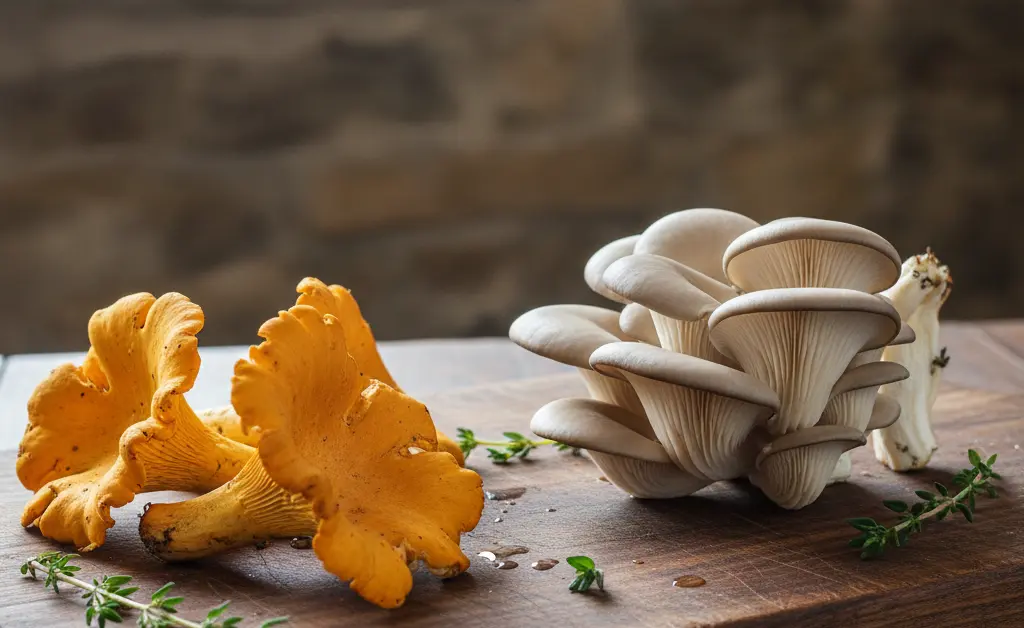
Transitioning from a foraging novice to someone who can confidently distinguish between a prized chanterelle and a common oyster mushroom enhances both safety and culinary enjoyment. Imagine going from uncertainty at the market or in the woods to a clear understanding of which unique flavors and textures you’re gathering. This guide aims to provide that clarity, moving you beyond basic identification to appreciating the subtle yet significant differences that define these two popular edible fungi. Understanding these distinctions, from their physical characteristics to their distinct aromas and tastes, ensures you make informed choices whether you’re cooking at home or exploring nature’s bounty.
Wild Chanterelle Vs Oyster Mushroom: Key Differences
Chanterelles vs. Oyster Mushrooms: An Overview
At a glance, chanterelle and oyster mushrooms are both celebrated edibles, but they belong to different fungal families and exhibit distinct characteristics. The most fundamental difference lies in their growth habits and structure. Chanterelles are terrestrial, forming a mycorrhizal relationship with tree roots and growing from the ground. Oysters, in contrast, are saprotrophic, breaking down dead or dying hardwood trees and growing directly from the wood in shelf-like clusters. This difference in substrate is a primary clue for identification. Furthermore, their undersides reveal one of the most reliable distinguishing features: chanterelles have false gills, while oysters possess true gills. For more detailed scientific information on fungal identification and characteristics, resources like NCBI can be invaluable.
Identifying the Forked Ridges of a Chanterelle
The underside of a chanterelle cap is one of its most defining features. Instead of true, blade-like gills, it has what are known as false gills or ridges. These are not separate structures attached to the cap but are rather folds or wrinkles of the mushroom’s flesh that run down from the cap’s margin onto the stem. These ridges are characteristically forked or cross-veined, appearing somewhat interwoven. When you run a finger across them, they feel blunt and integrated into the mushroom, unlike the delicate, separate gills of many other fungi.
Examining the True, Decurrent Gills of an Oyster
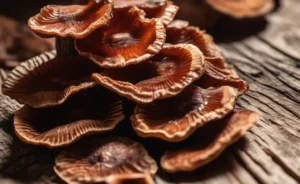
Oyster mushrooms feature true gills that are clearly distinct from the flesh of the cap. These gills are thin, blade-like structures that are well-defined and can be easily separated or broken. A key feature of oyster mushroom gills is that they are decurrent, meaning they extend down the stem. In some cases, where the stem is very short or absent, the gills run nearly to the point of attachment on the wood. Unlike the forked ridges of a chanterelle, the gills of an oyster mushroom are generally straight and do not have the same interconnected, veiny appearance.
Visual Comparison: Cap and Stem
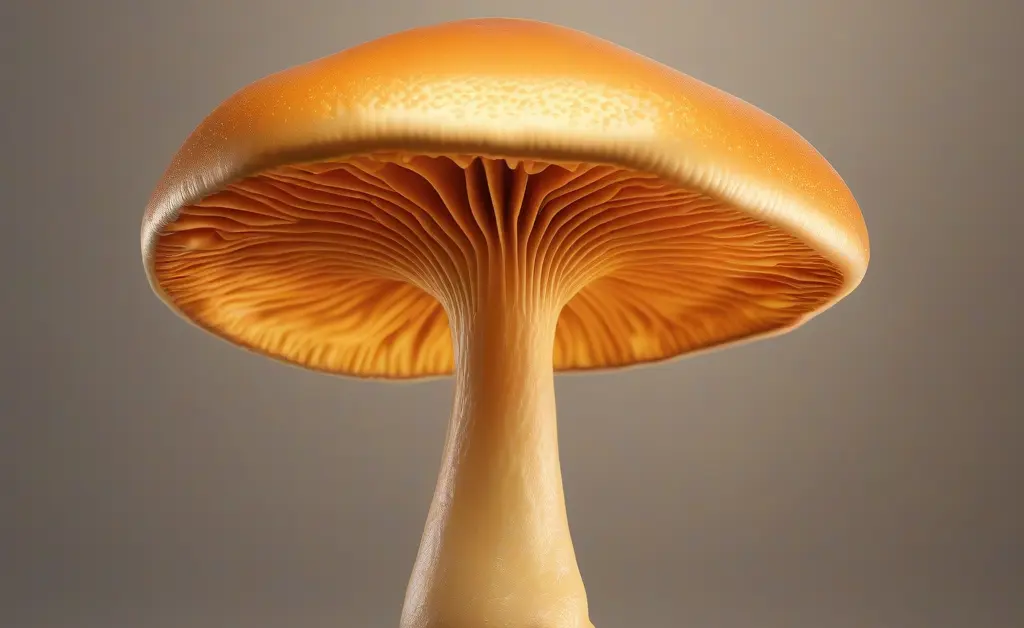
The overall shape and structure of the cap and stem provide further clues in the chanterelle mushroom vs oyster debate. Chanterelles typically have a distinct, vase-like or funnel shape. The cap is often wavy and irregular at the edges, and it transitions smoothly into a solid, fleshy stem without a clear line of separation. It appears as one continuous, integrated structure. The color is usually a uniform egg-yolk yellow or golden orange.
Oyster mushrooms, on the other hand, grow in a shelf-like or fan-shaped formation, often in overlapping clusters on wood. The cap can range in color from white and cream to gray, tan, or even pink. Their name comes from this distinctive shell-like shape. A key identifier for oysters is their stem, which is often very short and off-center (lateral) or completely absent, with the cap appearing to grow directly from the log or tree.
Gills vs. False Gills: The Telltale Sign
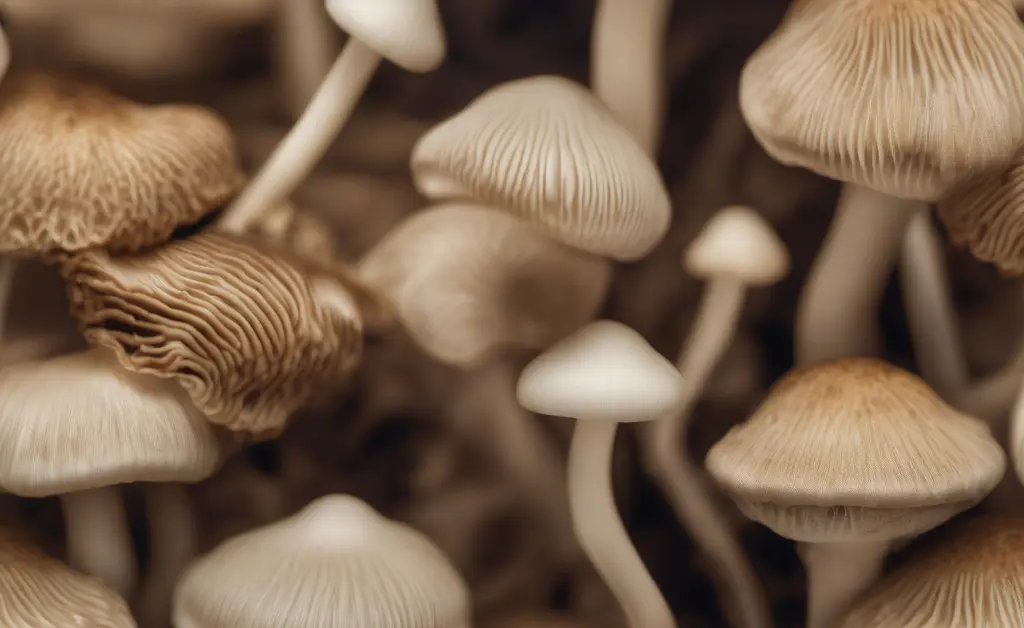
For any forager, understanding the difference between true gills and false gills is a critical skill for safe mushroom identification. This feature is the most dependable way to distinguish a chanterelle from many other mushrooms, including its look-alikes. It’s crucial to understand the differences in appearance, especially in a chanterelle mushroom vs jack o lantern comparison, to avoid dangerous misidentification. The false gills of a chanterelle are blunt, rounded ridges that appear “melted” onto the underside and stem. They are forked and interconnected, forming a web-like pattern that is part of the mushroom itself.
Conversely, oyster mushrooms possess true gills. These are the classic, paper-thin plates found on many common mushrooms, like those you might find in a grocery store. They are distinct, blade-like structures attached to the bottom of the cap. While they run down the stem (decurrent), they are clearly separate parts, not just folds in the mushroom’s surface. This single structural difference is often the definitive sign that separates these two delicious fungi.
Distinctive Aromas for Identification
The Fruity Scent of Chanterelle Mushrooms
One of the most delightful characteristics of a fresh chanterelle mushroom is its unique and pleasant aroma. Many foragers and chefs describe the scent as distinctly fruity, most often comparing it to apricots or peaches. This sweet, fragrant perfume is a strong indicator when trying to confirm an identification. When you gather a basket of fresh chanterelles, their collective scent is unmistakable and is one of the joys of foraging for them. This aroma also translates into their flavor profile when cooked.
The Mild, Anise-like Smell of Oyster Mushrooms
Oyster mushrooms have a much more subtle and earthy aroma compared to chanterelles. When fresh, they often possess a faint, clean smell that is commonly described as having notes of anise or licorice. This scent is not as powerful or fruity as the chanterelle’s but is still a useful characteristic for identification. The aroma is delicate and can sometimes be so mild that it is barely perceptible, but it is distinctly different from the strong apricot scent of a chanterelle.
Chanterelle mushroom vs oyster taste
The differences in taste and texture between these two mushrooms are just as pronounced as their physical characteristics. Chanterelles are prized for their complex flavor, which carries hints of their fruity aroma along with a slightly peppery finish. The texture is another key attribute; they are firm and have a pleasant, slightly chewy quality that holds up well during cooking, making them excellent for sautéing or incorporating into rich sauces.
Oyster mushrooms offer a milder, more delicate flavor that is savory and sometimes described as having subtle seafood-like undertones. Their texture is exceptionally tender and velvety when cooked, and they tend to absorb the flavors of the dishes they are in. This makes them incredibly versatile, suitable for everything from stir-fries and soups to being battered and fried as a meat substitute. The choice between chanterelle mushroom vs oyster often comes down to whether a dish calls for a bold, stand-alone flavor or a tender, complementary element.
Chanterelle mushroom vs oyster edible
Both chanterelle and oyster mushrooms are considered choice edibles, celebrated in cuisines around the world. There is no question of edibility when comparing the two; rather, the difference lies in their culinary applications and how their distinct qualities are best utilized. Chanterelles are often treated as a centerpiece ingredient. Their firm texture and rich, peppery-fruity flavor shine in simple preparations like being sautéed in butter with herbs, folded into omelets, or used to create luxurious cream sauces for pasta or chicken. When chanterelles are unavailable, you might need to find a suitable chanterelle mushroom substitute.
Oyster mushrooms, with their gentle flavor and soft texture, are workhorses in the kitchen. They readily take on spices and sauces, making them a fantastic addition to Asian-inspired dishes, hearty stews, and plant-based recipes. Their ability to develop a meaty texture makes them a popular choice for vegetarian and vegan cooking. The discussion of chanterelle mushroom vs oyster in a culinary context is about matching the right mushroom to the right dish to maximize its unique properties.
Summary Table: Chanterelle vs. Oyster at a Glance
For a quick and easy reference, the key characteristics distinguishing these two mushrooms are outlined below. Using this table can help reinforce the main identification points when you are deciding between a chanterelle mushroom vs oyster. Remember to always use multiple features for a confident identification.
| Feature | Chanterelle Mushroom | Oyster Mushroom |
|---|---|---|
| Gills/Underside | Blunt, forked false gills (ridges) that run down the stem. | Sharp, well-defined true gills that run down the stem (decurrent). |
| Cap Shape | Funnel or vase-shaped, often with a wavy, irregular margin. | Fan or shell-shaped, often growing in overlapping clusters. |
| Stem | Solid, fleshy, and appears to be a seamless part of the cap. | Short, stubby, and off-center (lateral), or completely absent. |
| Growth Location | On the ground, near trees (mycorrhizal relationship). | Directly on dead or dying hardwood trees (saprotrophic). |
| Aroma | Distinctly fruity, often compared to apricots or peaches. | Mild and clean, sometimes with subtle notes of anise. |
| Texture When Cooked | Firm, slightly chewy, and holds its shape well. | Soft, velvety, and tender. |
Understanding the fundamental differences between chanterelle and oyster mushrooms is essential for any aspiring forager or culinary enthusiast. The most reliable identifiers are the underside—blunt, forked ridges on the chanterelle versus the true, blade-like gills of the oyster—and their growth location, with chanterelles on the ground and oysters on wood. These visual cues, combined with their distinct aromas and culinary properties, paint a complete picture of two very different but equally wonderful fungi. By learning to recognize these key traits, you can confidently and safely appreciate the unique contributions each mushroom brings to the table.
This article aims to inform, not to replace professional healthcare advice. Identifying wild mushrooms requires a high level of expertise, as many edible species have dangerous look-alikes. Misidentification can lead to serious illness or other adverse health effects. Never consume a wild mushroom unless you are 100% certain of its identity. It is highly recommended to consult multiple field guides and seek guidance from an experienced local forager before eating any wild fungi.
FAQ
Do chanterelle and oyster mushrooms grow in the same place?
Chanterelle mushrooms are typically found growing on the ground in forests, often near specific types of trees, and are mycorrhizal, meaning they form symbiotic relationships with tree roots. Oyster mushrooms, on the other hand, are saprophytic, preferring to grow on dead or dying hardwood trees, logs, and stumps. This difference in their ecological niche means they generally do not inhabit the exact same microhabitats.
What is the easiest way to tell a chanterelle from an oyster mushroom?
The most straightforward distinction lies in their fruiting bodies and where they emerge from their substrate. Chanterelles have a distinctive vase or trumpet shape and grow from the soil, while oyster mushrooms grow in shelf-like clusters directly from wood and have a more fan-shaped cap. Observing the texture and attachment of the gills also provides clear identification cues.
What is the difference in the gills between a chanterelle and an oyster?
Chanterelle mushrooms possess blunt, ridge-like folds that run down the stem, known as false gills or decurrent ridges, which are generally not separable from the cap. Oyster mushrooms feature true gills that are typically thin, sharp, and can be easily separated from the cap, often extending down the stem. This anatomical characteristic is a key differentiator when examining these two types of fungi.