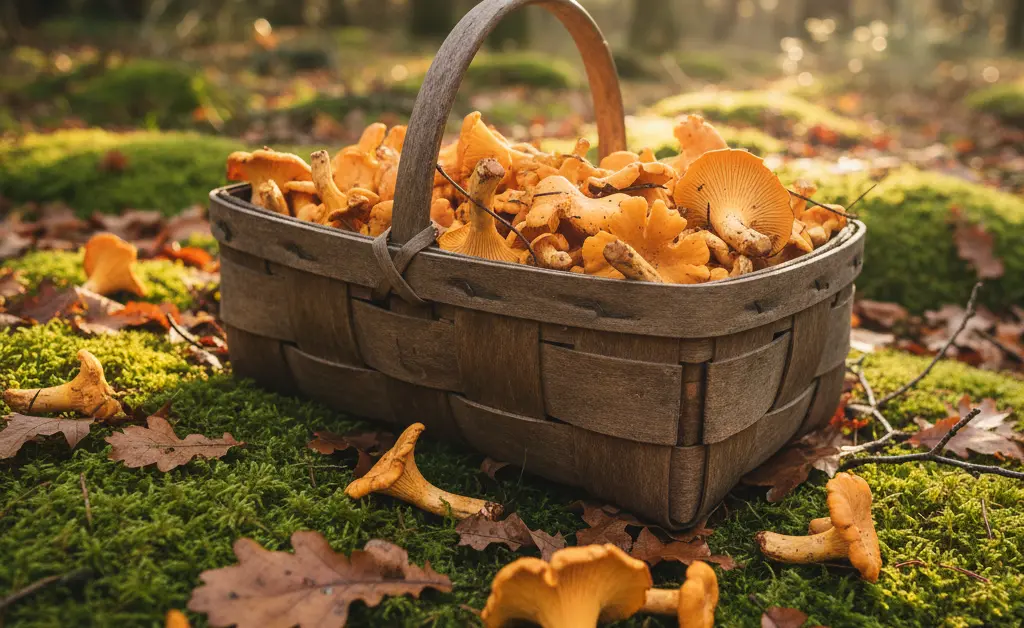
As a seasoned forager with years of experience navigating the UK’s diverse woodlands, I’ve developed a deep appreciation for the elusive chanterelle. Their distinct trumpet shape, vibrant golden hue, and delicate peachy aroma make them a prized find for any enthusiast. This guide is born from that firsthand knowledge, offering insights into successfully locating and identifying these sought-after fungi across the British Isles. We’ll delve into the nuances of their habitat, the vital distinctions from their lookalikes, and the best times to venture out. Whether you’re a beginner or looking to refine your skills, this is your essential companion for a rewarding foraging adventure.
Chanterelle Season UK
The UK chanterelle season is a much-anticipated period for foragers, typically beginning in the warmth of summer and extending through the damp, cool months of autumn. The exact timing can vary depending on local weather conditions, with rainfall and temperature playing crucial roles in their appearance. Generally, you can expect the main flush to occur from July to October. Early rains after a dry spell can trigger their growth, making the days following a summer shower an excellent time to explore known habitats. As the season progresses into autumn, their growth may slow, but they can often still be found in sheltered, damp locations until the first hard frosts arrive.
Chanterelle Mushrooms UK Edible
The true chanterelle, scientifically known as Cantharellus cibarius, is one of the most highly regarded edible wild mushrooms in the UK. Renowned for its exceptional flavour and texture, it holds a special place in gastronomy. Its taste is subtle and complex, often described as peppery with fruity notes reminiscent of apricots or peaches, which is also reflected in its distinctive scent. When cooked, chanterelles maintain a firm, slightly chewy texture that resists turning mushy. They are versatile in the kitchen, excellent when simply sautéed in butter with garlic and herbs, or used as a gourmet ingredient in sauces, risottos, and pasta dishes.
Chanterelle Mushrooms UK Poisonous
While the true chanterelle mushroom itself is a safe and delicious edible, the danger in foraging lies with misidentification. There are no poisonous varieties of chanterelle, but there are lookalike species that can cause illness if consumed. Novice foragers must be extremely cautious, as some of these mimics can lead to significant gastrointestinal distress. The primary risk comes from fungi that share a similar colour and general shape but differ in critical features like their gill structure. This is why absolute certainty in identification is non-negotiable before any wild mushroom is considered for consumption.
Chanterelle Mushrooms UK Identification
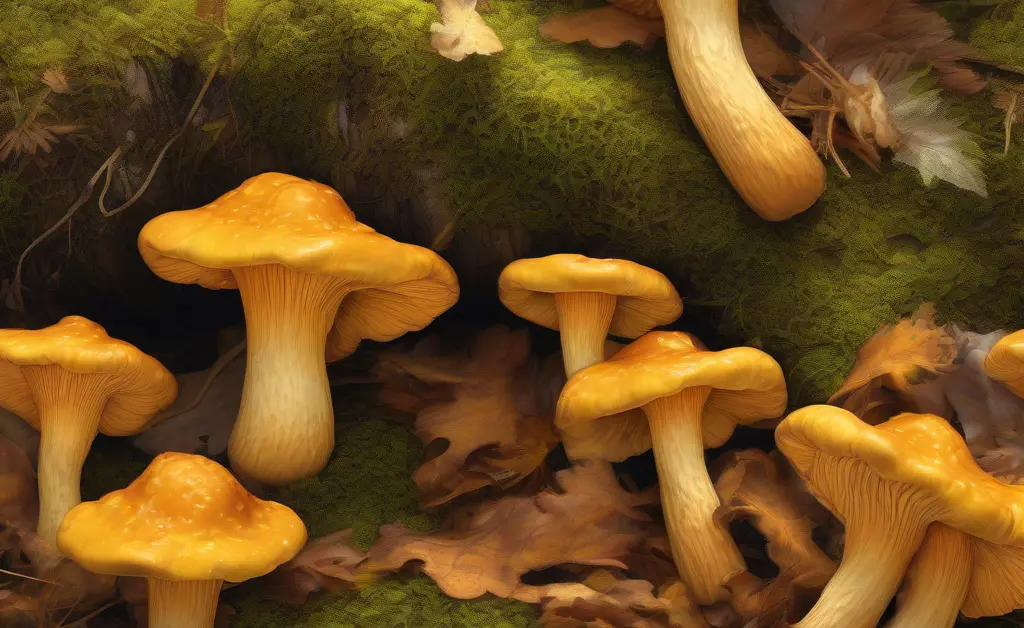
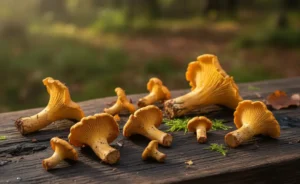
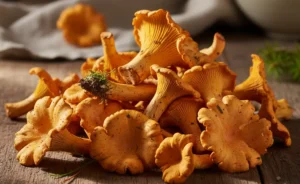
Correctly identifying chanterelles is a skill built on observing several key features. Unlike many other fungi, their characteristics are quite distinct once you know what to look for. The cap is often wavy and irregular, resembling a trumpet or vase, and is typically a vibrant golden or egg-yolk yellow. One of the most critical identification features is found on the underside of the cap. Chanterelles do not have true, blade-like gills. Instead, they feature ‘false gills’, which are forked, blunt ridges or veins that run down the stem (a feature known as being decurrent). The stem is solid, smooth, and often paler than the cap, tapering towards the base. When you handle or slice a true chanterelle, it should have a firm, dense flesh that is pale white inside. Finally, the mushroom should exude a pleasant, fruity aroma, often likened to apricots. This combination of features makes true chanterelle mushrooms uk a relatively safe find for the diligent observer.
How to Tell a Chanterelle from a False Chanterelle?
Distinguishing a true chanterelle from a false chanterelle (Hygrophoropsis aurantiaca) is paramount for any forager. While the false chanterelle is not considered deadly poisonous, it can cause unpleasant digestive issues. The most definitive difference is the gill structure. The false chanterelle has true, knife-like gills that are thin, crowded, and forked. They are clearly separate from the stem, whereas a true chanterelle has blunt, vein-like ridges that flow seamlessly down it. The colour is another clue; false chanterelles are typically a more intense orange, especially towards the centre of the cap, and lack the uniform egg-yolk yellow of their edible counterpart. Furthermore, false chanterelles often grow on decaying wood or wood chip mulch, while true chanterelles grow from the soil, in association with living trees.
Finding Chanterelles in the UK: Habitat and Season
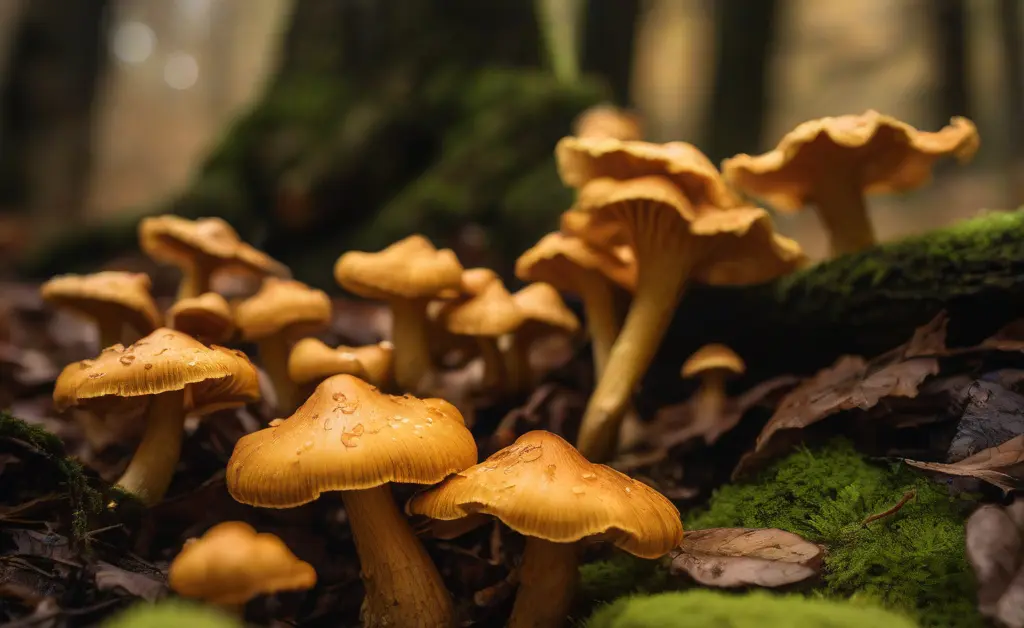
Locating chanterelles requires an understanding of their preferred environment and timing. Across the UK, the prime season runs from summer through autumn, with local conditions dictating the precise start and end. These mushrooms are mycorrhizal, meaning they form a symbiotic relationship with the roots of specific trees. In the UK, they are most commonly found in mixed woodlands, particularly those containing beech and birch trees. They favour damp, mossy ground, often appearing on shaded banks, along old footpaths, and in areas with well-drained, acidic soil. They do not grow on dead wood but directly from the earth, sometimes appearing in small, scattered groups or in beautiful ‘fairy rings’. Searching these typical woodland environments after a period of rain is the most effective strategy for finding chanterelle mushrooms uk.
Chanterelle Lookalikes UK
Beyond the false chanterelle, foragers must be aware of other potential lookalikes. The most dangerous of these is the Jack-o’-Lantern mushroom (Omphalotus olearius). While less common in some parts of the UK, it is a toxic species that can cause severe gastrointestinal distress. The key differentiators are its growth habit and its gills. Jack-o’-Lanterns grow in dense, clustered troops directly on wood, such as stumps or buried roots, whereas chanterelles grow from soil. Crucially, Jack-o’-Lanterns have true, non-forking, sharp-edged gills, not the blunt ridges of a chanterelle. As their name suggests, these mushrooms are also bioluminescent, faintly glowing in the dark, a feature true chanterelles do not possess. Absolute certainty is required, and the rule for any forager is simple: if in any doubt, leave it out.
Where to Buy Chanterelle Mushrooms UK
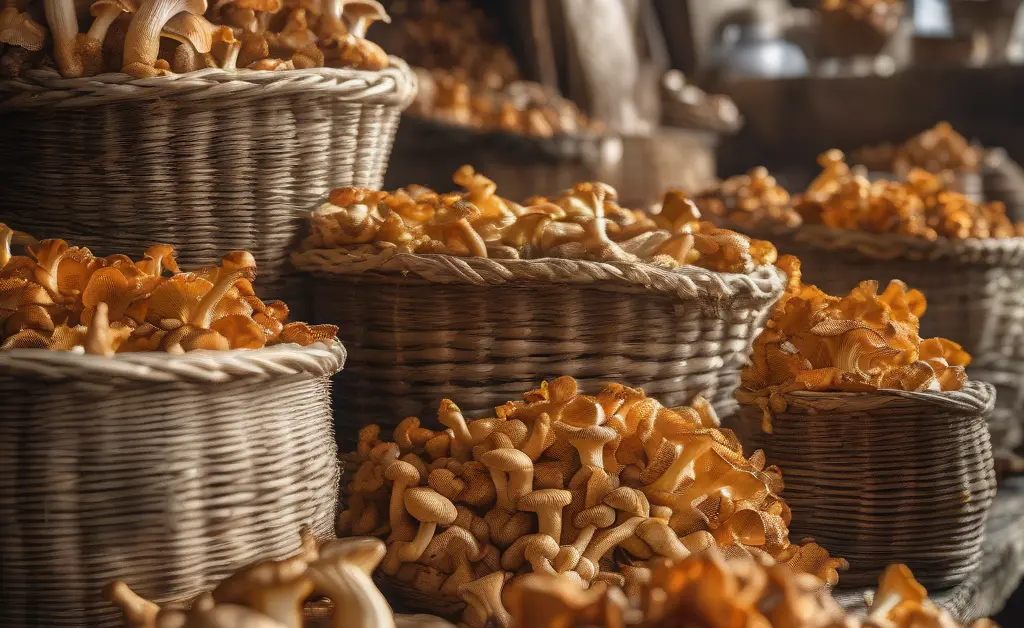
For those who wish to enjoy the unique flavour of chanterelles without the uncertainty of foraging, there are several purchasing options available. During their peak season, fresh chanterelle mushrooms uk can often be found at farmers’ markets and in high-end delicatessens or specialty food shops. These suppliers frequently work with professional foragers who can guarantee the authenticity and quality of the mushrooms. Some greengrocers and even larger supermarkets with well-stocked produce sections may carry them when they are abundant. Additionally, several online retailers specialise in wild foods and offer fresh chanterelles for delivery directly to your door. Dried chanterelles are also widely available year-round from online suppliers and in many specialty stores, offering a convenient way to add their distinctive flavour to dishes outside of the main foraging season. To explore options for purchasing, see buy chanterelle mushrooms.
Embarking on a quest for chanterelles connects you to the woodlands in a unique and rewarding way. The thrill of spotting that first flash of gold amongst the moss is an experience every forager cherishes. However, this pursuit must always be balanced with caution and respect for nature. Mastering the key identification features—particularly the false gills and fruity scent—is essential for a safe harvest. By understanding their habitat, avoiding lookalikes, and practising sustainable foraging, you can enjoy this culinary treasure responsibly. Whether you forage them yourself or choose to purchase from a trusted source, the delightful taste of chanterelle mushrooms uk is a true seasonal highlight. For information on chanterelles in other regions, you might find details on chanterelle mushrooms japan or chanterelle mushrooms in spanish helpful.
The content provided in this article is intended for informational learning, not clinical application. Foraging for wild mushrooms carries inherent risks, and misidentification can lead to serious illness. This guide should not be used as a sole resource for identifying fungi for consumption. Always consult with experienced local foragers, use multiple reputable field guides, and never consume a wild mushroom unless you are 100% certain of its identity. The responsibility for any decision to consume a wild plant or fungus rests entirely with the individual. Further research on mushroom cultivation and mycology can be found on PubMed.
FAQ
Where is the best place to find chanterelle mushrooms in the UK?
Chanterelle mushrooms in the UK are often discovered in woodlands with mature deciduous trees, particularly oak and beech, where the soil is slightly acidic. They tend to favour mossy areas and the edges of forests rather than dense undergrowth.
When is the season for chanterelles in the UK?
The chanterelle season in the UK typically runs from late spring through to early autumn, generally starting in May and continuing until October. The exact timing can vary year by year depending on rainfall and temperature.
What do UK chanterelle mushrooms look like?
UK chanterelle mushrooms are known for their distinctive trumpet or funnel shape, with wavy, irregular caps that are typically a vibrant golden-yellow to orange colour. Instead of true gills, they possess blunt, wavy ridges or folds that run down the stem.
Are there any poisonous lookalikes to chanterelles in the UK?
Yes, there are some potential lookalikes to chanterelles in the UK, and it is crucial to be able to differentiate them. The Jack-o’-lantern mushroom, for instance, can be mistaken for a chanterelle, but it has true, sharp gills and often grows in dense clusters on decaying wood.
What trees do chanterelles grow under in the UK?
Chanterelles in the UK have a symbiotic relationship with certain trees, most commonly growing under mature oak and beech trees. They can also be found associated with birch and pine trees in suitable habitats.
How can you tell a real chanterelle from a fake one?
Distinguishing a real chanterelle from a lookalike involves observing several key features. The true chanterelle has blunt, gill-like ridges that run down the stem, a fruity apricot aroma, and typically grows singly or in small groups, unlike some species that have sharp, true gills and grow in dense clusters.
Can you find chanterelles in the UK?
Yes, chanterelles are found in the UK, although they are not as abundant as in some other European countries. Their presence is dependent on specific woodland conditions and a healthy forest ecosystem.