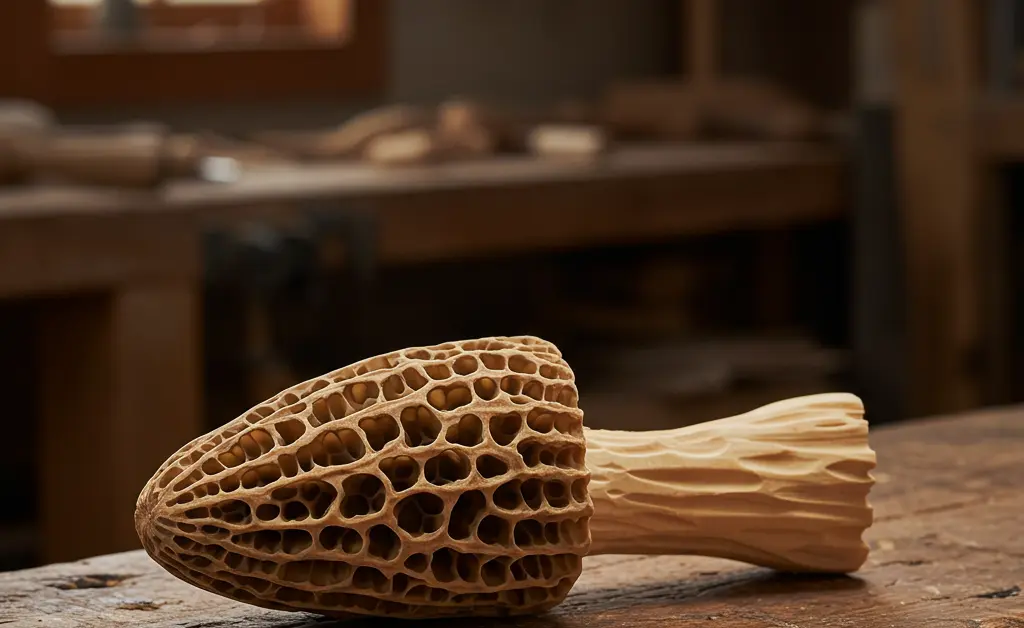
Capturing the distinctive, honeycomb-like structure of a morel mushroom in a block of wood is a true measure of a carver’s artistry. The form is deceptively complex, with its irregular pits and hollow cap challenging both novice and experienced hands. This unique subject matter bridges the gap between the rustic world of foraging and the refined skill of woodworking, resulting in a piece that feels both organic and intentionally crafted. For enthusiasts of nature-inspired art, a well-executed morel mushroom wood carving embodies a deep appreciation for one of the forest’s most elusive treasures. This guide delves into the materials, techniques, and creative possibilities that bring these fascinating wooden fungi to life, offering inspiration for carvers and collectors.
What are Morel Mushroom Wood Carvings?
Morel mushroom wood carvings are sculptural representations of the highly sought-after morel fungus, crafted from wood by artists and hobbyists. These pieces are not simply wooden models; they are artistic interpretations that capture the unique and intricate anatomy of the morel. The creation of a morel mushroom wood carving is a detailed process that requires a deep understanding of both the mushroom’s form and the properties of the wood being used. Artists aim to replicate the iconic pitted and ridged cap, the hollow structure, and the subtle taper of the stem, transforming a static block of wood into a dynamic, lifelike object.
Artistic Appeal of Morel Carvings
The artistic appeal of morel carvings lies in their complex, organic geometry. The honeycomb-like surface, with its network of irregular pits and ridges, presents a fascinating visual texture that is both chaotic and ordered. For a woodcarver, successfully recreating this pattern is a significant technical achievement. For an art lover, the finished piece is a celebration of nature’s subtle complexity. These carvings evoke the quiet thrill of foraging in the woods, making them a powerful symbol of the natural world brought into the home.
Hand Carved Wood Morel Mushroom
A hand-carved wood morel mushroom is distinct from mass-produced replicas due to the unique touch of the artist. Every cut, every smoothed edge, and every defined pit is the result of a direct interaction between the carver’s hands, their tools, and the wood. This process ensures that no two hand-carved morels are exactly alike. Small imperfections, subtle variations in the grain, and the artist’s personal style are all embedded in the final piece, giving it a character and soul that machine-made items lack.
Made-by-Hand Morels
The term “made-by-hand” encompasses the entire artistic journey, from initial concept to final polish. It begins with the thoughtful selection of a piece of wood, considering its grain, color, and texture. The carver then meticulously shapes the form, slowly revealing the mushroom within. This deliberate and often time-consuming process fosters a deep connection between the creator and their creation. Owning a made-by-hand morel means appreciating not just the object itself, but also the skill, patience, and passion invested in its creation.
Types of Morel Mushroom Wood Carvings
Wooden morel carvings are created in various formats, ranging from single, detailed sculptures to functional objects that incorporate the mushroom’s distinctive shape. The type of carving often depends on the artist’s intention and the desired use for the final piece, whether for pure decoration or practical application.
Single Morel Carvings
Single morel carvings are standalone sculptures designed to be displayed on a shelf, desk, or mantelpiece. These pieces focus intensely on the form of one mushroom, allowing the carver to dedicate their full attention to achieving realism and intricate detail. They can range in size from small, palm-sized pieces to larger, more substantial works of art. A single carved morel often serves as a focal point, drawing the eye with its complex texture and lifelike appearance.
Sets of Morel Carvings
Many artists offer morel carvings in sets of two, three, or more. These collections are designed to mimic a natural “flush” of morels as they would be found growing together in the forest. Grouping them allows for interplay between different sizes, shapes, and orientations, creating a more dynamic and naturalistic scene. Collectors often arrange these sets in small vignettes, sometimes on a piece of driftwood or in a display case, to create a miniature woodland environment.
Decorative Morel Carvings
Beyond standalone sculptures, the morel motif is often incorporated into larger decorative items. This can include wall plaques featuring a cluster of carved morels, intricate scenes where morels are part of a larger forest carving, or as an embellishment on handcrafted boxes. In these contexts, the morel serves as a key element that adds texture, interest, and a touch of rustic charm to the overall piece.
Functional Morel Carvings
Some carvers ingeniously integrate the morel’s shape into functional objects. The unique, grippable form of a morel cap makes it an excellent design for the top of a walking stick, a bottle stopper, or a decorative finial for a lamp. Drawer pulls, cabinet knobs, and even tool handles can be carved into the shape of a morel, blending artistry with everyday utility. These functional carvings allow enthusiasts to incorporate their love for the forest into their daily lives in a practical way.
Materials Used in Morel Mushroom Wood Carvings
The choice of wood is a critical decision in the creation of a morel carving, as it directly influences the carving process, the level of detail achievable, and the final appearance of the piece. Artists select wood based on its workability, grain pattern, and color.
Wood Types for Carving Morels
Basswood is arguably the most popular choice among woodcarvers, especially for detailed subjects like morels. Its soft, even texture and minimal grain make it exceptionally easy to carve, allowing for the creation of fine details and deep, clean pits without chipping. Butternut, another favorite, offers a similar workability but with a slightly coarser grain and a richer, darker color. For a more decorative look, carvers might use woods like cherry or walnut, whose natural colors and prominent grain patterns add another layer of beauty to the finished sculpture, though their hardness presents a greater challenge.
Carving Morel Mushrooms from Small Scraps of Wood
The relatively small size of most morel carvings makes them an ideal project for using up offcuts and small scraps of wood from larger woodworking projects. This practice is both economical and sustainable, ensuring that valuable wood is not wasted. A small block that might otherwise be discarded can be transformed into a beautiful, detailed mushroom. This allows carvers to experiment with different wood species without committing to a large, expensive piece of lumber.
Morel Mushroom Wood Carving Ideas
The morel mushroom offers a wealth of creative inspiration for woodcarvers. From hyper-realistic replicas to stylized interpretations, the possibilities are vast and can be adapted to various objects and artistic styles.
Carved Morel Mushrooms
Beyond creating simple replicas, artists often explore different stylistic approaches. A realistic style focuses on precisely replicating every pit and ridge, often using painting or wood-burning techniques to enhance the color and texture. A more stylized approach might exaggerate the morel’s features, elongate its form, or simplify the honeycomb pattern into a more abstract design. These artistic choices allow the carver to express their unique vision while still honoring the mushroom’s iconic shape.
Morel Mushroom Wood Carving on Hiking Stick
A classic folk art application is to carve a morel mushroom into the top of a hiking stick or walking cane. The morel’s shape serves as a comfortable and natural grip, making the stick both a work of art and a functional tool for trekking through the woods. A morel mushroom embroidery on a hiking stick becomes a personal statement and a tribute to the forest, carried by the hiker on their adventures. The carver can either carve the morel directly from the wood of the staff or carve it separately and attach it as a topper.
How to Carve a Realistic Morel Mushroom
Achieving a realistic carved morel is a process of patience and precision. It begins with selecting an appropriate block of wood and studying reference photos to understand the mushroom’s structure. The carver first roughs out the basic shape, establishing the general proportions of the cap and stem. This initial shaping is crucial for creating a convincing silhouette.
The most demanding phase is detailing the cap. The artist carefully draws a grid of irregular, organic-looking pits onto the surface. Using fine-tipped tools, each pit is meticulously hollowed out, and the surrounding ridges are defined and rounded. This requires a steady hand and a keen eye for detail to avoid a mechanical, uniform appearance. The final steps involve sanding the stem to a smooth finish, undercutting the cap where it meets the stem for a shadow effect, and applying a protective finish like oil or wax to enhance the wood’s natural beauty.
Caring for Your Morel Mushroom Wood Carvings
Proper care is essential to preserve the beauty and integrity of your wooden art. The intricate pits of a morel carving can collect dust over time. Gentle cleaning and dusting with a soft, clean paintbrush is the most effective way to reach into these small crevices without causing damage. Avoid using water or liquid cleaners, which can cause the wood to swell, crack, or lose its finish.
To ensure its longevity, a morel mushroom wood carving should be displayed away from direct sunlight, as prolonged exposure can cause the wood to fade and become brittle. It is also important to avoid locations with extreme fluctuations in temperature or humidity, such as near heating vents or in damp basements. A stable indoor environment is ideal for protection and preservation. Periodically, a light application of a quality paste wax can help nourish the wood and restore its luster.
Where to Buy Morel Mushroom Wood Carvings
For those looking to acquire a unique piece of nature-inspired art, there are several excellent places to find a morel mushroom wood carving. These avenues connect buyers with the talented artisans who create these beautiful objects. Knowing where to look can help you find a high-quality, authentic piece that speaks to you.
Online marketplaces are a popular and convenient option. Websites like Etsy host a large number of independent woodcarvers from around the world, offering a wide variety of styles, sizes, and wood types. These platforms allow you to browse many different artists’ work in one place and often read reviews from previous customers. Another excellent source is local artisan shops and craft fairs, which provide an opportunity to see the carvings in person and speak directly with the creators. Finally, many carvers maintain their own websites or social media profiles where they sell their work directly to collectors, offering a chance to commission a custom piece.
For those interested in different forms of mushroom art, consider exploring morel mushroom lawn ornament designs.
The unique shape of the morel also lends itself to other artistic applications, such as the intricate detail found in morel mushroom watch designs.
Understanding the natural world, including fungal foraging, is often a topic of interest to those who appreciate nature. For more information on global health and fungal matters, consult resources like the WHO.
not applicable
FAQ
What kind of wood is used for carving morels?
Carvers often select woods that are relatively soft and easy to work with, such as basswood or butternut. These woods allow for detailed sculpting and a smooth finish, making them ideal for replicating the intricate textures of the fungi. The natural grain patterns can also lend themselves to creating a realistic appearance.