
Imagine a crisp autumn morning, the air thick with the scent of damp earth and decaying leaves. As I walked through the familiar trails of an Ontario forest, my eyes scanning the base of a fallen oak, a vibrant fan-like growth caught my attention. Its concentric rings of earthy browns, grays, and subtle blues were unmistakable, a tell-tale sign of one of nature’s most sought-after fungi. This moment of discovery, feeling the slightly velvety texture and knowing its potential, often brings a sense of profound connection to the natural world and its hidden treasures. Foraging for these beneficial organisms is a rewarding experience, but successful identification is paramount. This guide aims to equip you with the knowledge needed to confidently identify and sustainably forage for the authentic turkey tail mushroom ontario, ensuring you can distinguish it from common look-alikes and understand its preferred habitats within the province.
Understanding Turkey Tail Mushrooms in Ontario: An Overview
The turkey tail mushroom, scientifically known as Trametes versicolor, is a common and distinctive wood-decaying fungus found throughout the world, including the diverse forests of Ontario. Its identification and foraging practices are similar to finding turkey tail mushroom Oregon or in other regions. As a polypore, it’s characterized by its lack of gills and instead features a porous underside. This fascinating fungi plays a vital role in forest ecosystems as a decomposer, breaking down dead wood, particularly hardwood species, and returning essential nutrients to the soil. Its prevalence makes the turkey tail mushroom Ontario a rewarding find for foragers and nature enthusiasts alike. Its widespread recognition is due to its unique appearance and traditional uses. For more information on the potential health benefits of fungi, you can consult resources like the NIH.
Identifying True Turkey Tail Mushrooms in Ontario
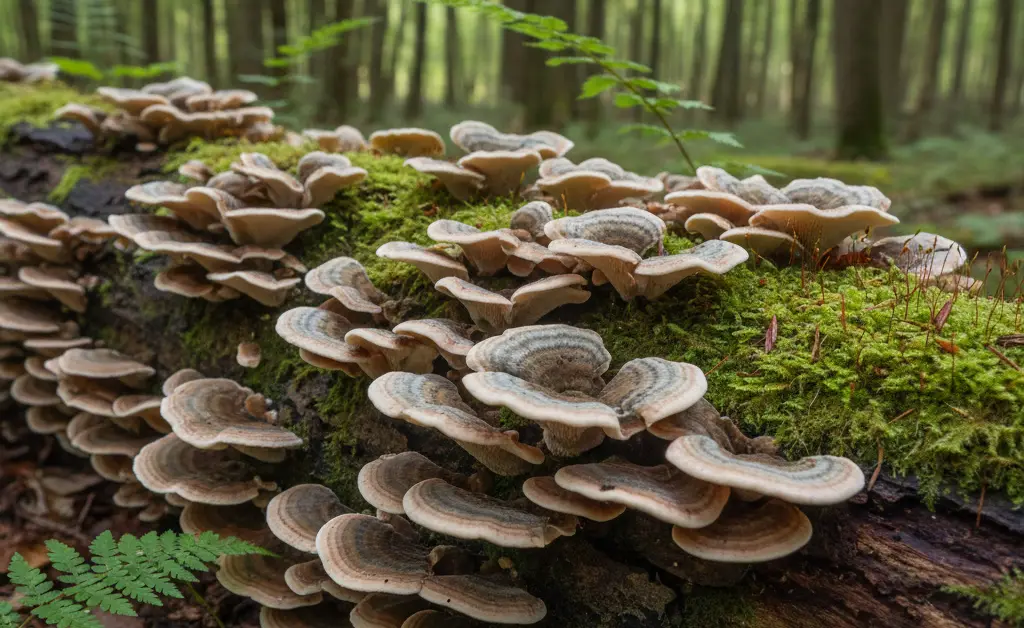
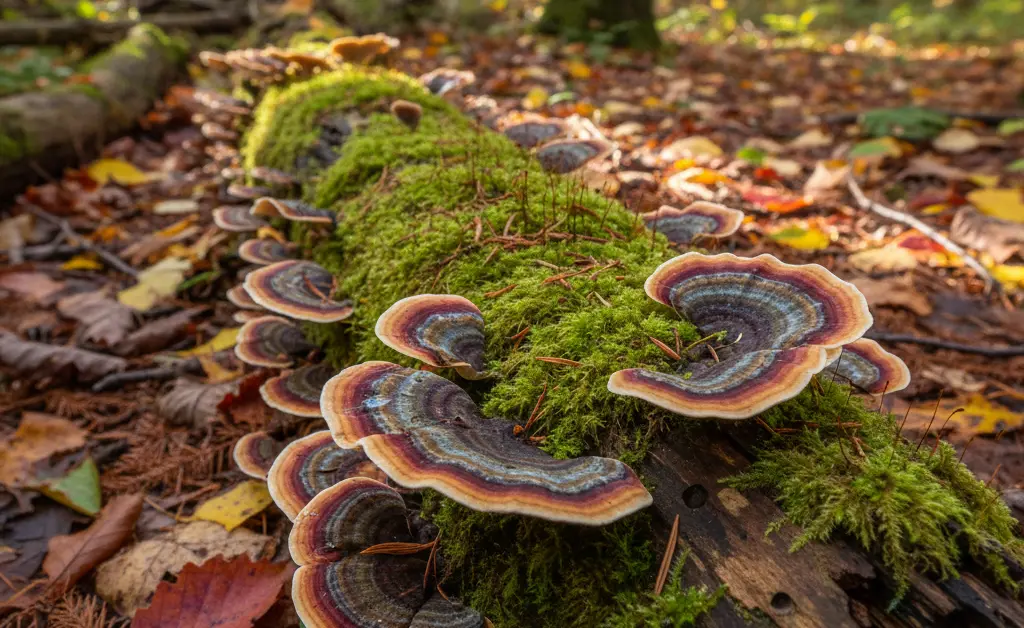
Accurate identification is crucial when foraging, especially for the turkey tail mushroom Ontario, to ensure you are harvesting the genuine article. True Turkey Tail mushrooms possess several distinct characteristics. The cap is typically thin and leathery, fan-shaped or shelf-like, and often grows in overlapping clusters. Its most striking feature is the concentric zonation of various colors, resembling a turkey’s tail feathers. These bands can range from earthy browns, grays, and whites to shades of blue, green, and even reddish-brown, often with a velvety texture on the upper surface. The margin of the cap is usually wavy or lobed and thinner than the rest of the body. Crucially, the underside of a true Turkey Tail mushroom must be white to off-white and covered with tiny, barely visible pores, which are often angular. These pores distinguish it from many look-alikes, which might have a smooth or gill-like underside. A field identification checklist should always include examining both the top surface and the underside carefully.
Distinguishing True Turkey Tail from Look-Alikes in Ontario
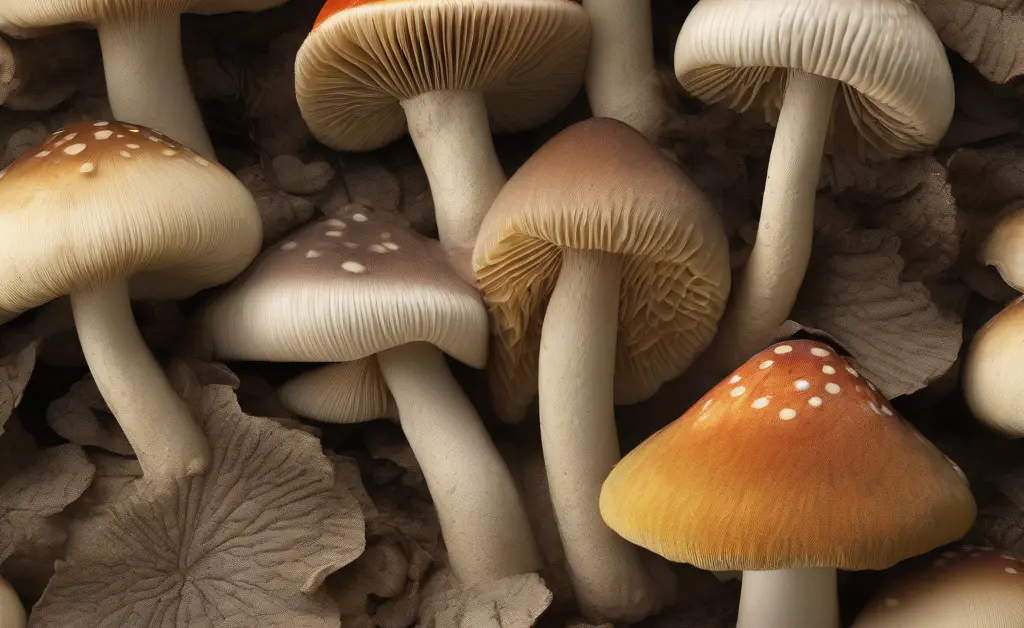
Ontario’s forests are teeming with a variety of fungi, and some can bear a superficial resemblance to the authentic turkey tail mushroom Ontario. Learning to differentiate Trametes versicolor from its common imposters is perhaps the most important skill for any aspiring forager. The principles apply whether you are identifying turkey tail mushroom Kentucky or in other states. The primary distinction lies in the underside of the mushroom. True Turkey Tail, as a polypore, always has a porous underside. These pores are very small, numbering about 3-8 per millimeter, and may require a magnifying glass to see clearly. If the underside is completely smooth, gill-like, or has tooth-like projections, it is not a true Turkey Tail. Another characteristic to note is the cap’s texture; true Turkey Tail often has a soft, velvety feel on its zoned surface, while many look-alikes may be smooth or leathery to the touch without the distinct velvety nap.
Other Imposters in Ontario’s Forests
One of the most common look-alikes is the False Turkey Tail, often belonging to the genus Stereum, such as Stereum hirsutum. While it shares similar coloration and a fan-like shape, the False Turkey Tail has a completely smooth, often yellowish to orange, underside without any visible pores. Other imposters might include species from the genus Trichaptum, which have a purplish tint and a toothed or labyrinthine pore surface rather than the distinct small, round pores of Trametes versicolor. Several other bracket fungi or wood-decaying fungi found in Ontario’s forests can also be mistaken. Always remember that positive identification involves checking multiple features—cap color and zonation, cap texture, and most importantly, the structure of the underside. If there is any doubt about identification, it is best to err on the side of caution and leave the specimen untouched.
Where, When, and How to Forage for Turkey Tail Mushrooms in Ontario
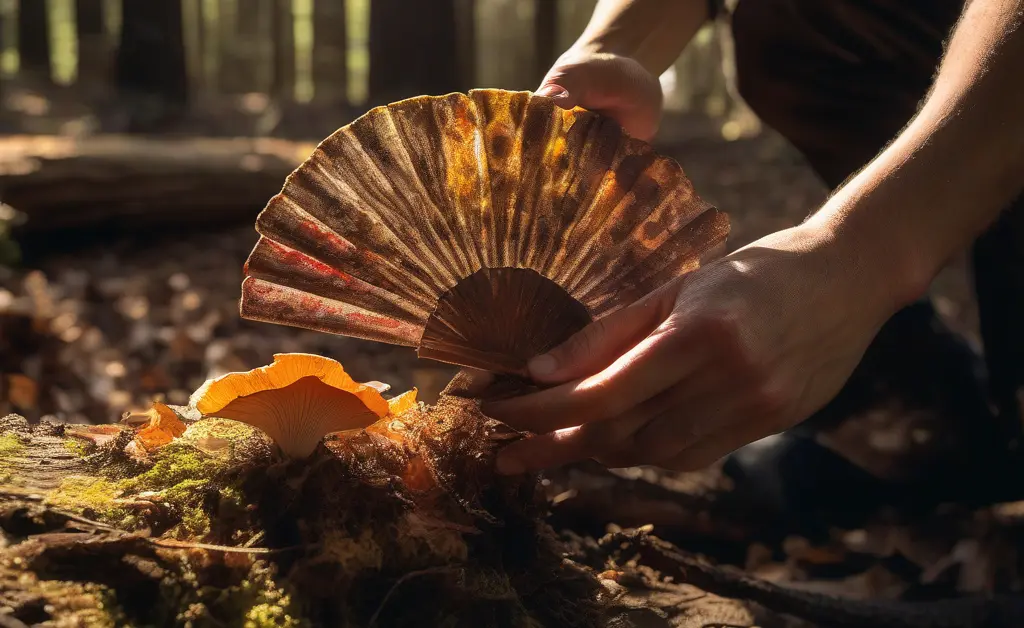
Foraging for the turkey tail mushroom Ontario can be a year-round activity, though it is often most fruitful in the damp conditions of late spring, summer, and autumn, especially after a good rainfall. These fungi thrive in temperate climates and are commonly found across all of Ontario’s forested regions. When foraging, it’s essential to practice ethical mushroom harvesting. This means taking only what you need, leaving smaller specimens to grow, and avoiding over-harvesting from any single location. Always ensure you have permission if foraging on private land, and be mindful of local regulations in parks or protected areas. A sharp knife or scissors can be used to cleanly cut the mushroom from its substrate, minimizing damage to the mycelium, which ensures future growth.
Preferred Habitats and Substrates in Ontario
Turkey Tail mushrooms are saprobic, meaning they grow on dead and decaying wood. Their preferred substrate includes the dead logs, stumps, and fallen branches of deciduous trees, particularly hardwoods such as oak, maple, birch, and beech, which are abundant in Ontario’s woodlands and forests. They rarely grow on conifers. However, it’s sometimes possible to discover a turkey tail mushroom in your yard if conditions are right, such as decaying wood present. Look for them in mature forests with plenty of downed wood, in damp areas, or along forest edges. They often grow in shelf-like formations, sometimes covering large sections of a log in beautiful, overlapping clusters. Understanding their preferred habitats increases your chances of a successful and sustainable foraging experience in Ontario. This knowledge is essential to learn where to find turkey tail mushroom.
Foraging for turkey tail mushrooms in Ontario offers a unique opportunity to connect with nature and discover the subtle beauty of the province’s fungal diversity. By understanding its key identifying features, distinguishing it from look-alikes, and adhering to ethical foraging practices, you can confidently and responsibly enjoy the bounty of our local forests. Always prioritize positive identification, and when in doubt, consult with experienced mycologists or reliable field guides to ensure safety and enjoyment.
This information is provided for educational purposes only. It is not intended to be a substitute for professional advice, diagnosis, or treatment. Always seek the advice of a qualified professional for any questions regarding your health or medical conditions. Reliance on any information provided in this article is solely at your own risk, and before considering any changes to your diet, health, or wellness routine, please consult with a healthcare provider.
FAQ
How do I identify turkey tail mushrooms in Ontario?
These distinct fungi are recognizable by their fan-like shape and striking concentric zones of color, often displaying hues of brown, tan, gray, and even blue or purple. The velvety texture of their upper surface and a pale underside with tiny, visible pores are key identifying features.
What are the key differences between true and false turkey tail in Ontario?
The most reliable distinction between true turkey tail (Trametes versicolor) and its look-alikes, such as false turkey tail (Stereum ostrea), lies in their undersides. True turkey tail has a porous underside, revealing tiny, intricate pores, whereas false turkey tail possesses a smooth, pore-less surface.
Where can I find turkey tail mushrooms growing in Ontario?
Turkey tail mushroom ontario can be commonly found growing on dead hardwood logs, stumps, and fallen branches throughout forests. These decomposers play a vital ecological role, breaking down wood fiber, and often appear in clusters or shelves.
When is the best time to forage for turkey tail in Ontario?
These remarkable fungi are perennial, meaning they can be observed growing year-round in Ontario’s woodlands. While visible throughout the seasons, they tend to be most vibrant and abundant during the warmer, wetter months of late spring through fall.
Are there any poisonous look-alikes for turkey tail mushrooms in Ontario?
Fortunately, there are no truly poisonous look-alikes for turkey tail mushrooms in Ontario that would cause severe harm if ingested. However, distinguishing true turkey tail from other similar-looking crust fungi or false turkey tail is important to ensure you are getting the specific compounds associated with its functional properties.