Many aspiring foragers might initially scan vast woodlands without a clear strategy for identifying valuable fungi, often leading to overlooked specimens and a general sense of inefficiency. This haphazard approach can be transformed into a highly effective methodology by gaining specific knowledge about the ecological niches and preferred growth conditions of different mushroom species. Understanding these details shifts the experience from broad, unguided searching to targeted, efficient identification. This shift is particularly valuable when seeking out the unique properties of the turkey tail mushroom. Knowing precisely where does turkey tail mushroom grow—from its favored decaying wood to specific moisture levels—empowers enthusiasts to move beyond generic woodland observations toward a precise and rewarding discovery process, significantly improving success rates and overall foraging satisfaction.
Where Does Turkey Tail Mushroom Grow?
The turkey tail mushroom, known scientifically as Trametes versicolor, is a remarkably widespread fungus found across various ecosystems globally. Understanding its preferred conditions is key to locating this fascinating polypore in the wild. If you are wondering where does turkey tail mushroom grow, its adaptability allows it to thrive in diverse environments, primarily as a saprophytic decomposer.
Common Habitats and Environments
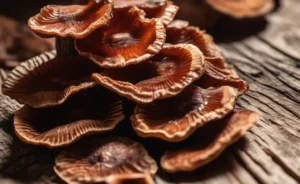
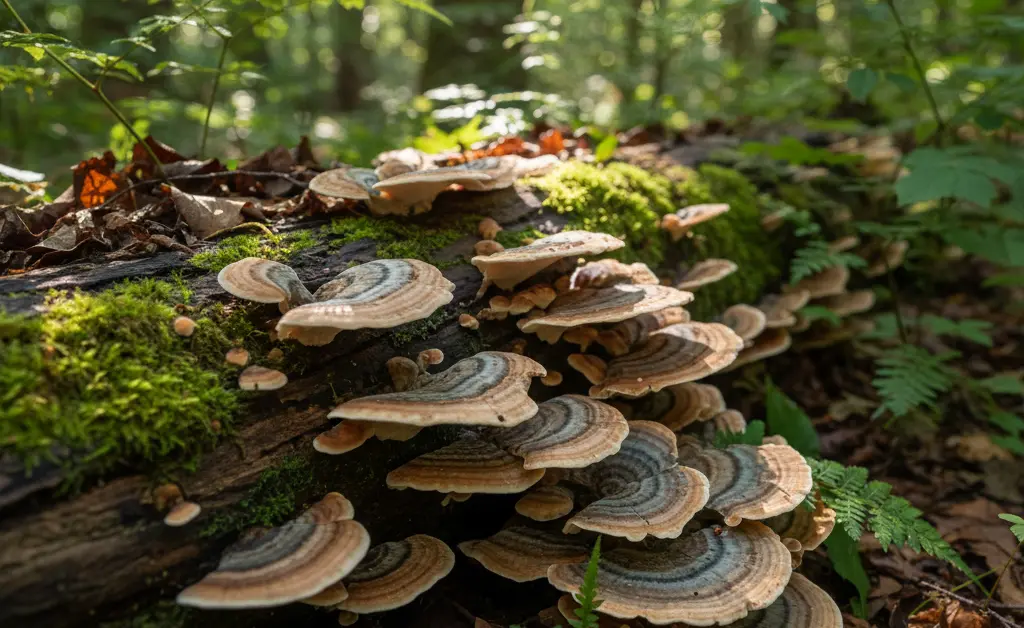
Turkey tail mushrooms commonly inhabit woodlands and forests, playing a crucial role in the ecosystem by breaking down dead organic matter. They are frequently observed growing on decaying logs, fallen trees, stumps, and branches, which provide the necessary cellulose and lignin for their sustenance. These fungi contribute to nutrient cycling, returning essential elements to the forest floor. You can often spot their distinctive fan-like fruiting bodies in areas rich with wood debris, signaling the active work of their mycelial networks beneath the surface.
Global Presence Across Continents
This resilient fungus enjoys a global distribution, flourishing across temperate regions on virtually every continent, including North America, Europe, and Asia. Its ability to adapt to a range of forest types contributes to its widespread occurrence. This broad geographical reach means that many people around the world have access to this fascinating organism in their local forests.
Regional Occurrence and Common Areas
Within its global range, turkey tail mushroom can be found in various regional settings. It is particularly common in deciduous and mixed forests, often appearing in areas that experience regular rainfall and moderate temperatures. Beyond untouched wilderness, it can also establish itself in less remote environments, such as suburban parks, old orchards, and even landscaped areas, provided there is a sufficient supply of decaying wood. For those specifically searching, understanding the local conditions for turkey tail mushroom Kentucky can further enhance foraging success.
Importance of Moisture and Humidity
Moisture and high humidity are critical factors for the successful growth and development of the turkey tail mushroom. These conditions support the robust expansion of its mycelial networks and the formation of its fruiting bodies. Humid climates, especially after periods of rain, create an ideal environment, often leading to a surge in visible turkey tail specimens. Mossy areas within forests frequently indicate sufficient moisture levels where this fungus might thrive. Similarly, specific regional guides for turkey tail mushroom Oregon can provide tailored insights for local foragers.
Temperature Preferences for Mycelial Development
Turkey tail mushrooms generally prefer moderate temperatures, typical of temperate regions, for optimal mycelial development and fruiting. Extreme cold or heat can inhibit its growth, though it is quite resilient and can often survive dormant periods. Spring, summer, and fall are typically the peak growing seasons when temperatures are most favorable, allowing the mycelium to actively decompose wood and produce new fruiting bodies. For those in areas like Michigan, knowing the optimal temperatures helps in identifying the best seasons to find turkey tail mushroom Michigan.
Light Exposure and Canopy Cover
While turkey tail mushrooms do not require light for photosynthesis, the environmental conditions created by light exposure and canopy cover are significant. They are often found in shaded areas, under the dense canopy of trees, where direct sunlight is filtered. This type of environment typically maintains higher humidity and more consistent moisture levels, protecting the fungi from desiccation and providing the stable conditions it prefers.
Ideal Habitats and Host Trees for Turkey Tail
Identifying the ideal conditions and specific host trees can significantly increase your success when searching for this particular polypore. Knowing where does turkey tail mushroom grow in terms of its preferred wood types and forest settings helps narrow down potential locations, making foraging more efficient and rewarding.
Deciduous vs. Coniferous Hosts
Turkey tail mushrooms show a strong preference for deciduous hardwood trees. Species like oak, maple, birch, beech, and cherry are frequently observed hosts. While primarily associated with hardwoods, they can occasionally be found on coniferous trees, though this is less common. The type of wood influences the mushroom’s growth patterns and overall vitality.
Preferred Tree Species and Decaying Wood
The fungus thrives on a variety of broadleaf tree species. It specifically targets dead or dying wood, whether in the form of fallen logs, stumps, or branches still attached to a weakened tree. This decaying wood provides the necessary nutrients for the turkey tail mushroom to flourish. The decomposition process initiated by the mycelium helps break down tough lignin and cellulose, contributing to the overall health of the forest ecosystem. Further scientific information regarding the benefits of this mushroom can be found through resources like the Cochrane Library.
Growing on Deadwood vs. Live Trees
Turkey tail is almost exclusively a saprophytic fungus, meaning it grows on dead or dying wood. Its primary ecological role is that of a decomposer, breaking down the complex structures of wood. It very rarely grows on healthy, live trees; if found on a living tree, it usually indicates that the tree is already stressed, diseased, or dying. This characteristic helps distinguish it from parasitic fungi that infect and harm living plant hosts.
Understanding the specific ecological niche and preferred growing conditions of the turkey tail mushroom greatly enhances the ability to locate it in its natural habitat. From the type of decaying wood it favors to its need for moisture and moderate temperatures, these details transform a general woodland search into a targeted and informed foraging experience. By focusing on hardwood forests with ample deadwood and humid conditions, enthusiasts can significantly improve their chances of discovering this distinctive and widespread fungus.
This information is provided for educational purposes only. It is not intended to provide medical advice, diagnosis, or treatment. Always consult with a qualified healthcare professional before making any decisions about your health or engaging in foraging for consumption. The content should not be used as a substitute for professional medical advice or treatment.
FAQ
Where can you typically find turkey tail mushrooms in the wild?
Turkey tail mushrooms, known scientifically as *Trametes versicolor*, are widely distributed across various continents. You can often find them in temperate forests, woodlands, and even some urban green spaces, growing on decaying wood. This widespread distribution explains where does turkey tail mushroom grow in many parts of the world.
What types of trees do turkey tail mushrooms prefer to grow on?
Turkey tail mushrooms exhibit a preference for growing on deciduous hardwoods. They are frequently observed colonizing oak, maple, beech, and birch logs or stumps. Their role as a decomposer is crucial for breaking down lignocellulose in these woody substrates.
Are turkey tail mushrooms found globally?
Yes, turkey tail mushrooms have a remarkably global distribution, thriving in diverse climates across every continent except Antarctica. Their adaptability to various environmental conditions and their widespread host availability contribute to their pervasive presence worldwide. This extensive range makes them one of the most common bracket fungi.
What are the ideal conditions for turkey tail mushroom growth?
Ideal conditions for turkey tail mushroom growth typically involve moderate to high humidity and temperatures, commonly found in temperate forests. They flourish in areas with ample decaying woody material, which provides both nutrients and a stable substrate for their mycelial network to expand. These factors support their efficient decomposition process.
Can you find turkey tail mushrooms in suburban parks?
Indeed, turkey tail mushrooms are quite adaptable and can frequently be found in suburban parks and urban green spaces. As long as there are fallen logs, dead branches, or stumps of deciduous trees available, these fungi can establish themselves. Their ability to thrive outside pristine wilderness areas speaks to their robustness.
Do turkey tail mushrooms grow on living trees or only dead ones?
Turkey tail mushrooms are primarily saprophytic, meaning they obtain nutrients from dead organic matter. While they occasionally appear on weakened or dying trees, their preferred substrate is already dead wood, such as fallen logs, stumps, and dead branches. They play a vital ecological role in breaking down woody debris.