Recognizing edible and non-edible fungi often hinges on precise visual identification, and the wood ear mushroom offers a unique set of characteristics that aid in this process. For foragers and culinary enthusiasts, understanding its distinct features can unlock a flavorful ingredient while ensuring safety. This guide focuses on the visual cues that define this commonly found fungus, making its identification straightforward and reliable. By familiarizing yourself with the specific wood ear mushroom appearance, you can confidently distinguish it from look-alikes, paving the way for its use in various dishes.
General Appearance of Wood Ear Mushrooms
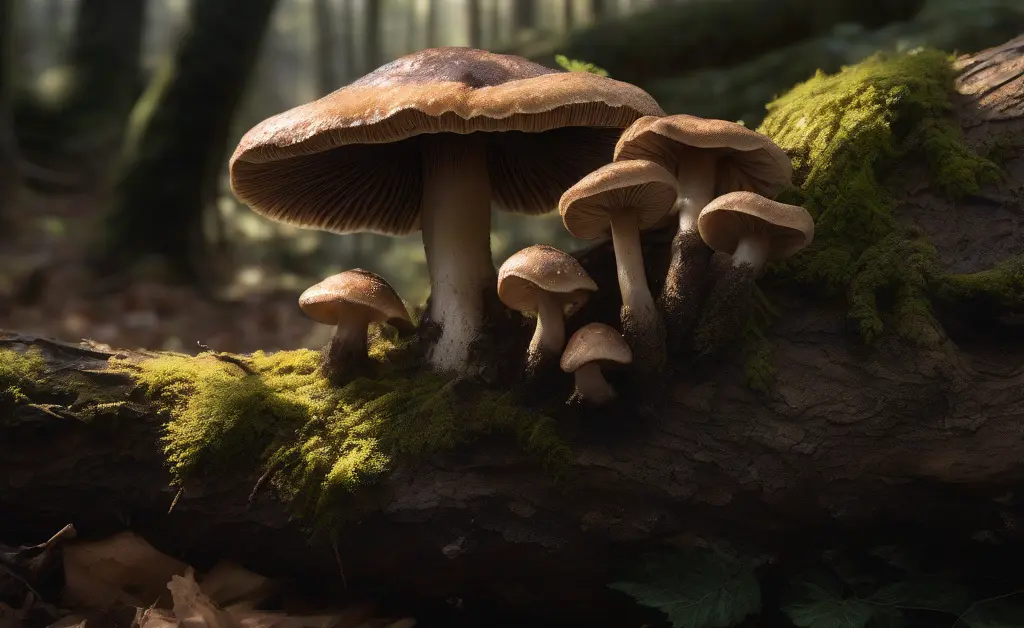
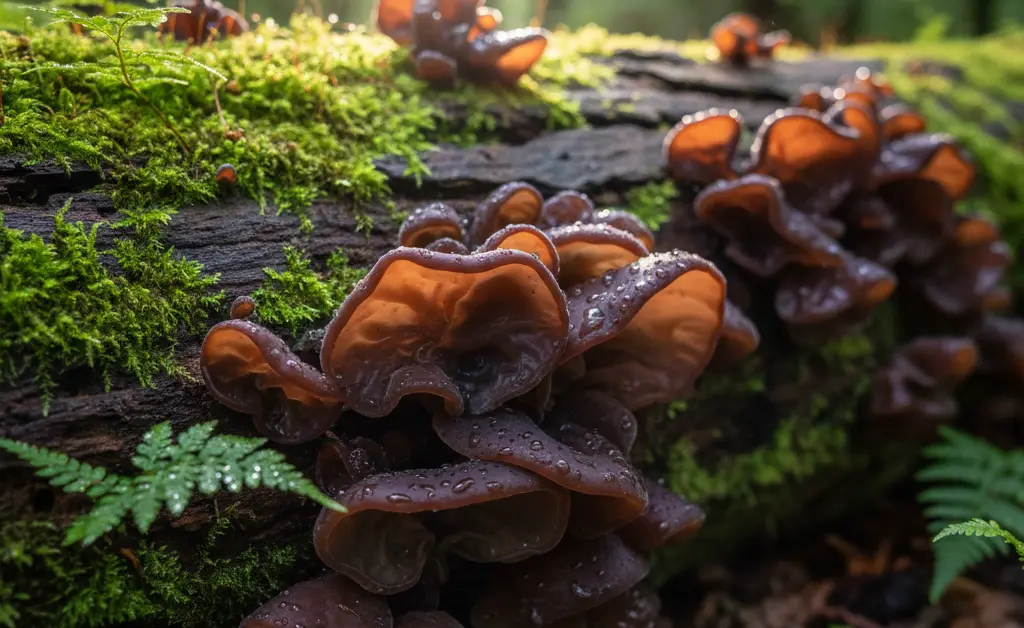
The general appearance of a wood ear mushroom is highly distinctive, making it one of the more recognizable fungi found growing on dead and decaying wood. Its common name is a direct reference to its shape, which often resembles a contorted, cup-like, or lobed human ear. These mushrooms typically grow in clusters, with individual fruiting bodies sometimes fusing together to create larger, more complex structures. The overall visual impression is that of a gelatinous, rubbery growth attached directly to the wood substrate without a discernible stem. The unique wood ear mushroom appearance is a key factor in its identification, setting it apart from many other fungi. It is also known by wood ear mushroom other names, reflecting its diverse recognition.
wood ear mushroom appearance pictures
Visual aids are invaluable for fungus identification. When examining photographs of wood ear mushrooms, look for images that show the fungus in its natural habitat, attached to hardwood logs or branches. Ideal pictures will display the mushroom from multiple angles, highlighting both the smoother inner surface and the often finely-haired outer surface. It is also helpful to see images of the mushroom in both a fresh, hydrated state and a dried, shriveled state, as its appearance changes dramatically. Photos that show a cross-section can reveal its translucent, gelatinous flesh. Consulting reliable health resources, such as the NHS, is recommended for any health concerns related to mushroom consumption.
Overall Shape and Form
The most defining characteristic of the wood ear mushroom is its shape. It is typically auriform, meaning ear-shaped, though it can also be more cup-like or irregularly lobed and folded. The fungus grows laterally from wood surfaces, often forming wavy, convoluted clusters. Unlike many common mushrooms, it lacks a distinct cap and stem structure. Instead, the entire fruiting body constitutes the form, which can be thin and flexible.
Typical Coloration
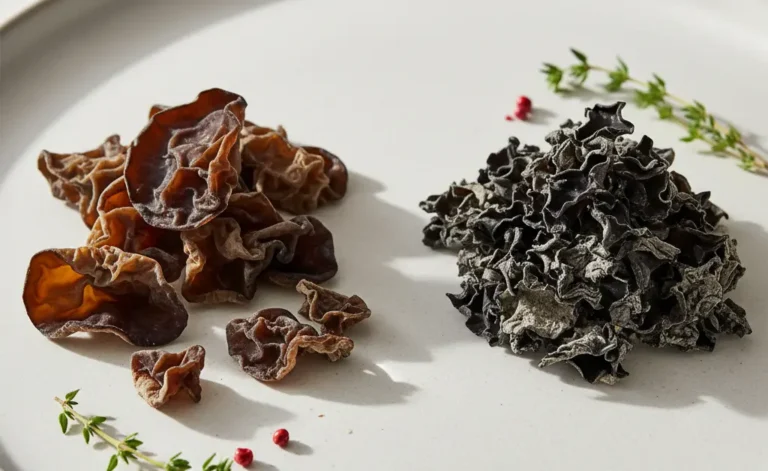
Wood ear mushrooms exhibit a fairly consistent color palette, though with some variation. Most commonly, they are a shade of brown, ranging from a light reddish-brown or tan to a deep, dark brown that can appear almost black. The color is often more intense and translucent when the mushroom is wet and fresh. As it dries, it tends to darken and become opaque. The inner, concave surface is usually smoother and slightly darker than the outer, convex surface.
Defining Texture
The texture of a wood ear mushroom is one of its most notable features. When fresh and hydrated, it is distinctively gelatinous, rubbery, and flexible to the touch, with a firm but pliable feel. If you were to bend it, it would feel resilient, almost like cartilage. When it dries out, the mushroom undergoes a dramatic transformation, becoming hard, brittle, and horny. However, it has the remarkable ability to rehydrate and return to its original gelatinous texture when soaked in water.
Size and Dimensions
Individual wood ear mushrooms can vary significantly in size. A single fruiting body might be as small as a button or grow to span several inches across. When they grow in dense, overlapping clusters, the entire mass can cover a large area of a log. The thickness of the mushroom is generally quite slim, often just a few millimeters, contributing to its delicate and flexible nature when fresh.
Surface Characteristics
The surfaces of a wood ear mushroom are different from each other. The inner, cup-like surface is typically smooth, sometimes with gentle wrinkles or veins. This surface is often where spores are produced. The outer surface, which faces away from the wood, can be matte and is frequently covered in very fine, downy, greyish hairs. This velvety texture is more pronounced in some species and younger specimens and can be a useful identification marker.
Edge and Margin Description
The margin, or edge, of the wood ear mushroom is rarely uniform or perfectly round. It is characteristically wavy, undulating, and lobed. The edges can be thinly curled or ruffled, adding to the fungus’s convoluted and ear-like appearance. The margin feels just as gelatinous and flexible as the rest of the fruiting body.
Irregularities in Shape and Structure
Wood ear mushrooms are rarely symmetrical. Their growth is opportunistic, and their shape is often dictated by the surface of the wood they inhabit and the presence of neighboring mushrooms. It is common for them to grow in fused, overlapping masses that create highly irregular and complex forms. This clustering can make it difficult to distinguish where one individual mushroom ends and another begins.
Appearance of Auricularia Species
The common name “wood ear” is used for several closely related species within the *Auricularia* genus. While species like *Auricularia auricula-judae* are common, other related species share a similar appearance. Most *Auricularia* species have the characteristic ear shape, gelatinous texture, and grow on wood. Subtle differences may exist in coloration, the degree of hairiness on the outer surface, and the thickness of the flesh. For most culinary purposes, these species are used interchangeably, but for precise mycological identification, these minor variations are important. Further insight can be gained by knowing the wood ear mushroom scientific name.
Detailed Physical Attributes
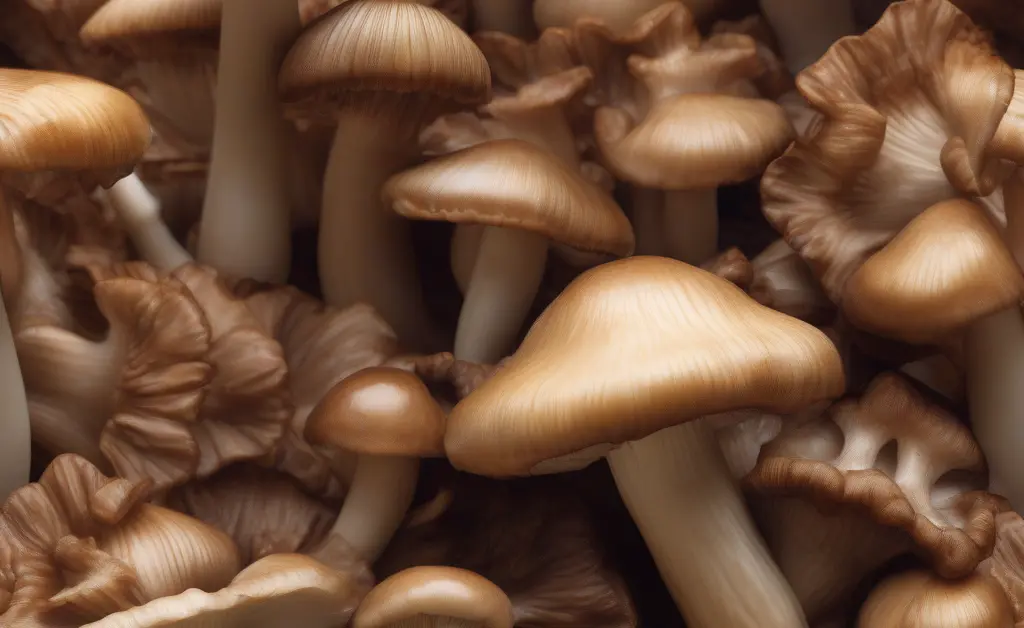
A closer examination of the physical attributes of wood ear mushrooms reveals subtle details crucial for accurate identification. Beyond the general ear-like shape, the interplay between color and hydration is a key diagnostic feature. A fresh, moist specimen is often translucent with rich brown tones, while a dried-out one becomes opaque, dark, and shrunken. The texture is equally important; the firm, rubbery feel when fresh is unmistakable and provides a strong tactile clue that differentiates it from many potential look-alikes. When rehydrated, it quickly regains this unique gelatinous quality. Understanding these detailed physical traits is fundamental to appreciating the complete wood ear mushroom appearance and ensuring correct identification before any culinary use. Beyond appearance, understanding what wood ear mushroom tastes like is key for culinary application.
In summary, the key to identifying wood ear mushrooms lies in observing a combination of features. The unmistakable ear-like shape, the gelatinous and rubbery texture when fresh, and its growth habit on dead or decaying hardwood are the primary visual cues. By carefully examining its brownish coloration, the difference between its smooth inner and finely-haired outer surfaces, and its wavy margins, foragers can build confidence. Familiarity with these characteristics is the most reliable way to distinguish wood ear from other fungi and safely enjoy its culinary potential.
It is important to note that this content is not intended as medical advice. The information provided in this article is for educational and identification purposes only. Never consume a wild mushroom unless you are absolutely certain of its identity, and it is highly recommended to have any foraged fungus verified by a local mycological expert. Misidentification of mushrooms can lead to serious health consequences.
FAQ
What color are wood ear mushrooms usually?
Wood ear mushrooms typically present in shades of brown, ranging from deep reddish-brown to a more muted, dark tan. This coloration helps them blend in with their natural surroundings on decaying wood.
What is the texture of a wood ear mushroom?
When rehydrated, wood ear mushrooms develop a distinctly gelatinous and somewhat rubbery texture. In their dried state, they are brittle and fragile, becoming pliable only after soaking.
Do wood ear mushrooms always have an ear-like shape?
While they are named for their ear-like appearance, wood ear mushrooms can vary significantly in their morphology. They may grow in ruffled, shell-like, or even convoluted wavy forms, not always resembling a distinct ear.
How large do wood ear mushrooms grow?
The size of wood ear mushrooms can vary, but they often measure a few inches across. Their delicate structure means they don’t typically grow to be very large or bulky.
What are the key visual features to identify wood ear mushrooms?
Key identifying features include their unique, often ear-shaped or wavy cap, their gelatinous texture when moist, and their typical brown coloration. The underside of the cap may show subtle gill-like folds or veins, though these are not always prominent.
Can wood ear mushrooms appear differently based on species?
Yes, different species within the wood ear mushroom group can exhibit variations in color, size, and the degree of their ear-like convolution. While sharing a common ancestry and general characteristics, specific visual nuances exist between species.
What does the surface of a wood ear mushroom look like?
The surface of a wood ear mushroom is generally smooth and somewhat glossy, especially when hydrated. It can appear slightly wrinkled or wavy, contributing to its characteristic appearance. The wood ear mushroom appearance is quite distinct once you know what to look for.