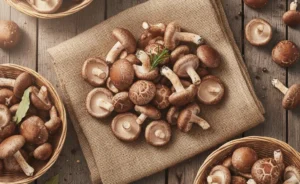
Imagine a culinary enthusiast or a health-conscious family in a bustling Indian city, seeking fresh, exotic ingredients for their weekly meals. They often reach for shiitake mushrooms, appreciating their unique umami flavor and nutritional benefits, which are increasingly sought after in both home kitchens and high-end restaurants. This growing consumer demand highlights a significant opportunity for local agriculture. For aspiring entrepreneurs or existing farmers looking to diversify, the prospect of cultivating high-value crops can be compelling. This guide explores the intricate details of shiitake mushroom farming in India, providing a comprehensive overview for those aiming to enter this potentially lucrative market. We will delve into cultivation techniques, economic viability, and the support systems available to ensure successful production, contributing to both local economies and culinary trends.
Shiitake Mushroom Cultivation in India
The cultivation of shiitake mushrooms represents a growing segment within Indian horticulture, offering significant potential for farmers seeking to diversify their crop portfolio. While not as widespread as oyster mushroom or milky mushroom cultivation, the unique market demand for shiitake, driven by its distinct flavor profile and perceived health benefits, makes it an attractive venture. Understanding the nuances of mycology and fungiculture specific to shiitake is paramount for success.
Current Status and Scope of Shiitake Farming
Currently, shiitake mushroom farming in India is in a nascent but rapidly expanding phase. Historically, gucchi mushrooms were the prized wild variety, but controlled cultivation of exotic species like shiitake is gaining traction. The demand for gourmet and medicinal mushrooms is steadily increasing in urban centers, high-end hotels, and health food stores. This growing market, coupled with advancements in cultivation techniques suitable for local conditions, indicates a promising scope for both small-scale and commercial production.
Why Consider Shiitake Cultivation in India?
Several factors make shiitake cultivation an appealing option for Indian farmers. Firstly, the market potential and demand for shiitake are robust, fueled by increasing health consciousness and culinary exploration. Shiitake mushrooms are recognized for their rich taste and are also studied for their medicinal properties. Further research on the health benefits of mushrooms is often conducted by institutions like the NIH. Secondly, compared to traditional agriculture, mushroom farming can offer higher returns per unit area, especially for high-value varieties. Thirdly, it provides an opportunity for rural employment and entrepreneurship, utilizing agricultural waste as a substrate.
Overview of Cultivation Methods
Shiitake mushrooms are saprophytic fungi, meaning they grow on dead organic matter. Their cultivation primarily involves inoculating a suitable substrate with shiitake spawn, allowing the mycelium to colonize, and then inducing fruiting. The process requires careful control of environmental factors such as temperature, humidity, and ventilation. Success hinges on meticulous hygiene and precise management through each growth cycle stage, from inoculation to harvest.
Cultivation on Logs vs. Substrates
Traditionally, shiitake was cultivated on hardwood logs, mimicking its natural growth environment. This method, while yielding high-quality mushrooms with excellent texture and flavor, is labor-intensive and has a longer production cycle. Modern shiitake mushroom farming in India often utilizes artificial substrates, primarily sawdust blocks or grow bags enriched with nutrients like rice bran and gypsum. Substrate cultivation allows for faster turnaround times, more predictable yields, and easier scale-up, making it a more commercially viable option for many growers.
Shiitake Mushroom Growth Cycle
The shiitake mushroom growth cycle typically involves several distinct phases:
- Substrate Preparation: Mixing and sterilizing the substrate.
- Inoculation: Introducing shiitake spawn to the sterilized substrate.
- Incubation: The mycelium colonizes the substrate, forming a dense white mat. This phase requires stable temperature and humidity.
- Fruiting Initiation (Shocking): Exposing the fully colonized substrate to specific environmental changes (e.g., temperature drop, increased ventilation) to induce pinning.
- Fruiting: Small mushroom pins develop and mature into harvestable mushrooms. This stage demands precise humidity, temperature, and ventilation.
- Harvest: Mushrooms are picked when mature. Blocks can often produce multiple flushes over time.
Each stage requires careful management to ensure optimal yield and quality.
Economic Aspects of Shiitake Mushroom Farming in India
Understanding the financial landscape of shiitake mushroom farming in India is crucial for any potential investor or farmer. While the initial investment might seem substantial compared to some traditional crops, the high market value and potential profitability of shiitake can offer attractive returns if managed efficiently. Factors like market access and distribution, as well as the shiitake mushroom price per kg in India, significantly influence the economic viability.
Cost of Shiitake Mushroom Production
The cost of shiitake mushroom production varies based on the cultivation method (logs vs. substrate), scale of operation, and regional factors. Key cost components include:
- Spawn: The initial mushroom culture.
- Substrate Materials: Sawdust, wood chips, rice bran, wheat bran, gypsum, etc.
- Infrastructure: Growing sheds, climate control systems (humidity, temperature, ventilation), shelving.
- Labor: For substrate preparation, inoculation, harvesting, and packaging.
- Utilities: Electricity for sterilization, climate control, and lighting.
- Packaging and Marketing: Materials, transportation, and market access costs.
Careful budgeting and resource management are essential to keep production costs in check.
Investment Required for Shiitake Cultivation
The investment required for shiitake cultivation can range from modest for small-scale, low-tech setups to significant for large, technologically advanced farms. A basic setup for substrate cultivation might involve constructing a controlled environment room, purchasing sterilization equipment (autoclave or steam generator), and acquiring shelving. More advanced systems may include automated climate control, specialized hydration systems, and larger-scale pasteurization units. Similar specialized supplies, like a turkey tail mushroom kit Australia, are available for different species and regions. Government subsidies for mushroom farming can help offset some of these initial costs, making it more accessible for new entrants.
Factors Influencing Mushroom Farm Profitability
The profitability of a shiitake mushroom farm is influenced by several factors:
- Yield per unit area: Efficient cultivation practices maximize output.
- Market Price: The prevailing shiitake mushroom price per kg in India significantly impacts revenue.
- Production Costs: Minimizing expenses without compromising quality.
- Market Access and Distribution: Establishing reliable channels to sell produce, whether to local markets, restaurants, or processors.
- Quality of Mushrooms: Premium quality often fetches better prices, especially for medicinal shiitake.
- Scale of Operation: Larger scales can benefit from economies of scale but require higher investment.
Strategic planning in these areas is vital for sustained profitability.
Key Regions and Climatic Conditions for Shiitake Cultivation in India
Identifying suitable regions and understanding the specific climatic conditions are paramount for successful shiitake mushroom farming in India. While shiitake traditionally thrives in temperate climates, controlled environment agriculture allows for its cultivation in various regions across the country, adapting to local climate control challenges.
Himachal Pradesh: A Leading Example (Solan District)
Himachal Pradesh, particularly the Solan district, has emerged as a significant hub for mushroom cultivation in India. Often referred to as the “Mushroom City of India,” Solan provides a naturally cooler climate, which is more conducive for temperate mushroom varieties like shiitake. The established infrastructure, research facilities (like the Directorate of Mushroom Research), and experienced growers in this region offer a valuable ecosystem for shiitake cultivation. Farmers in Himachal Pradesh can leverage existing expertise and a relatively favorable climate to reduce reliance on extensive climate control systems.
Other Potential States and Climatic Zones
While Himachal Pradesh leads, other states with cooler climates or the potential for controlled environment agriculture can also be suitable. These include parts of Uttarakhand, the northeastern states, and even higher altitudes in southern India. Even in warmer plains, advanced climate control technologies, including evaporative cooling or air conditioning, can create the necessary temperature and humidity profiles for successful shiitake mushroom farming. The key is to manage environmental parameters precisely, irrespective of the ambient external conditions.
Climatic Adaptation and Environmental Control
Shiitake mushrooms require specific environmental conditions to grow optimally:
- Temperature: Mycelial growth requires warmer temperatures (around 20-25°C), while fruiting typically prefers cooler temperatures (10-20°C).
- Humidity: High humidity (85-95%) is critical during the fruiting phase to prevent desiccation of developing mushrooms.
- Ventilation: Adequate fresh air exchange is necessary to prevent CO2 buildup, which can inhibit cap formation and stem elongation.
- Light: While not essential for mycelial growth, diffuse light is needed during fruiting for proper cap development and pigmentation.
Growers must implement effective climate control systems, including humidifiers, heaters/coolers, and ventilation fans, to maintain these precise conditions within the growing chambers. Monitoring systems for temperature, humidity, and CO2 levels are indispensable.
Steps to Start Shiitake Mushroom Farming in India
Embarking on shiitake mushroom farming in India requires a systematic approach, from setting up the initial infrastructure to mastering the nuanced techniques of mushroom cultivation. Each step is critical for ensuring a healthy yield and quality produce.
Infrastructure and Resource Availability
Before beginning cultivation, it is essential to establish the necessary infrastructure. This includes dedicated growing rooms that can be insulated and sealed for environmental control. Essential resources typically comprise a reliable water source, electricity, and access to raw materials for substrate preparation (e.g., hardwood sawdust, agricultural waste, and supplements). Different regions may require sourcing specific items, such as a turkey tail mushroom grow kit UK for specialized cultivators abroad. Proximity to spawn suppliers and a potential market for your produce are also crucial considerations.
Substrate Preparation and Sterilization
The foundation of successful shiitake cultivation lies in preparing an ideal substrate. Common recipes involve hardwood sawdust mixed with nutrients like wheat bran or rice bran, and a small amount of gypsum. These ingredients are moistened, mixed thoroughly, and then packed into heat-resistant grow bags. Sterilization is a critical step to eliminate competing microorganisms, which would otherwise contaminate the substrate. This is typically achieved using autoclaves or large steam chambers, where the substrate is heated to high temperatures for several hours.
Inoculation and Incubation Process
Once the sterilized substrate has cooled, it is inoculated with shiitake spawn under sterile conditions. Spawn, which consists of mycelium growing on grain or sawdust, is carefully mixed into the substrate bags. Beginners often find success using a pre-prepared shiitake mushroom growing kit for initial learning. After inoculation, the bags are moved to an incubation room, where specific temperature and humidity levels are maintained (typically 20-25°C and 80-90% humidity). During this phase, the shiitake mycelium colonizes the entire substrate, transforming it into a solid, white block. This process can take several weeks to months, depending on the strain and conditions.
Fruiting Conditions and Harvesting Techniques
After full colonization, the mycelial blocks are exposed to “shock” conditions to induce fruiting, often involving a drop in temperature, increased light, and a temporary reduction in humidity, followed by a rise. Once pinning begins, the blocks are placed in a fruiting chamber where precise environmental control is maintained (e.g., 10-20°C, 85-95% humidity, and regular ventilation). Mushrooms are typically ready for harvest when their caps have flattened but their edges are still slightly curled inward. They should be carefully picked by hand, twisting them off at the base to avoid damaging the block or nearby pins. Timely harvest is key for optimal quality and to encourage subsequent flushes.
Challenges and Opportunities in Indian Shiitake Farming
While shiitake mushroom farming in India presents considerable opportunities, it is not without its challenges. Understanding these hurdles and concurrently recognizing the potential avenues for growth is vital for sustainable development in this sector.
One of the primary challenges is the need for precise environmental control. Shiitake mushrooms require specific temperature, humidity, and ventilation conditions that often necessitate significant investment in climate control infrastructure, which can be costly in a country with diverse and often extreme climates. Technical expertise for managing these systems and understanding mushroom mycology is also a bottleneck. Furthermore, access to high-quality shiitake mushroom spawn and consistent supply of appropriate substrate materials can sometimes be an issue for new farmers. Market access and distribution, especially in regions far from urban centers, can also pose logistical challenges, affecting the shiitake mushroom price per kg in India.
However, opportunities abound. The increasing market demand for gourmet and medicinal mushrooms, coupled with rising health consciousness, ensures a ready market. The health benefits of shiitake mushrooms are widely recognized, driving consumer interest. Cultivating various medicinal fungi, such as growing turkey tail mushroom, also offers diverse opportunities in mycoculture. Innovations in low-cost climate control technologies and local substrate development can help mitigate production costs. Additionally, the potential for value addition through drying, powdering, or processing shiitake for medicinal uses or quality standards for medicinal shiitake opens up new revenue streams. The rising interest in organic farming also presents an opportunity for certified organic shiitake production, commanding premium prices. Collaborative efforts between farmers, researchers, and government agencies can further unlock the full potential of this promising agricultural venture.
Government Support and Resources for Mushroom Farmers in India
The Indian government, recognizing the potential of mushroom cultivation to boost agricultural income and food security, provides various forms of support and resources for farmers, including those engaged in shiitake mushroom farming in India. These initiatives aim to promote scientific cultivation practices, provide technical guidance, and facilitate market linkages.
Role of Mushroom Development Centers
Mushroom Development Centers (MDCs), often established at state agricultural universities or within horticulture departments, play a crucial role. These centers are responsible for conducting research, developing improved strains of mushrooms, and providing practical training to farmers. They often act as nodal points for distributing quality spawn and offering consultancy services on various aspects of cultivation, including substrate preparation, disease management, and marketing strategies for mushrooms like shiitake.
Role of National Mushroom Research Institutes
The Directorate of Mushroom Research (DMR), located in Solan, Himachal Pradesh, is a prime example of a national-level institute dedicated to mushroom research and development. It focuses on developing new technologies for mushroom cultivation, conducting extensive research on various species (including shiitake), and providing national leadership in mycology. Such institutes are instrumental in disseminating cutting-edge knowledge, developing high-yielding varieties, and addressing specific challenges faced by mushroom growers across different climatic zones of India.
Available Schemes and Training Programs
Various government schemes, often under the purview of the Ministry of Agriculture & Farmers Welfare or the Ministry of Horticulture, offer financial assistance, subsidies, and technical training for mushroom farming. These schemes may include support for setting up mushroom units, purchasing equipment, and undertaking cultivation. Many agricultural universities, Krishi Vigyan Kendras (KVKs), and non-governmental organizations also conduct regular training programs and workshops. These programs cover a wide array of topics, from basic cultivation techniques for different mushroom varieties to advanced farm management, helping farmers gain the necessary skills and knowledge for successful shiitake mushroom farming.
The journey of shiitake mushroom farming in India, while presenting its unique set of challenges, is undeniably a path filled with significant promise. The increasing appreciation for its culinary versatility and noted health benefits positions shiitake as a high-value crop with a robust market. With strategic planning, access to technical knowledge, and leveraging available government support, aspiring and established farmers can cultivate this exotic mushroom, contributing to their economic well-being and diversifying India’s agricultural landscape. The meticulous control over environmental factors, from substrate preparation to careful harvesting, forms the backbone of a successful venture in this specialized field, promising substantial returns for dedicated cultivators.
This article is meant for general informational use and awareness. It is not intended to provide specific medical advice, diagnosis, or treatment. Readers should consult with qualified health professionals for any health concerns or before making any decisions related to their health or well-being. The information provided here should not be used as a substitute for professional medical guidance.
FAQ
— Is shiitake mushroom cultivation profitable in India?
The profitability of shiitake mushroom cultivation in India significantly depends on factors such as market demand, prevailing sales prices, and the efficiency of production processes. Successful growers often focus on optimizing their yield and establishing reliable distribution channels to achieve a healthy return on investment.
— Which states in India are best for growing shiitake mushrooms?
States characterized by cooler climates and higher humidity, especially in northern and northeastern regions of India, are generally more conducive for shiitake cultivation. Areas like Himachal Pradesh, Uttarakhand, and parts of the Northeast naturally offer environmental conditions that support the growth cycle of these mushrooms.
— What are the ideal climate conditions for shiitake farming in India?
Shiitake mushrooms thrive in specific climate conditions, requiring moderate temperatures and high humidity for both mycelial growth and successful fruiting. Ideal temperatures for developing fruiting bodies typically range between 15-20°C, with humidity levels often needing to be maintained above 80% to encourage optimal growth.
— How much does it cost to start shiitake mushroom farming in India?
The initial investment required for establishing a shiitake mushroom farm in India varies considerably based on the chosen scale of operation and cultivation methods. Costs typically encompass expenses for substrate materials, quality spawn, setting up controlled environment infrastructure, and acquiring necessary equipment for processing and storage.
— Are there government subsidies for mushroom farming in India?
Various governmental agricultural departments and agencies in India provide support programs and schemes to promote mushroom cultivation, which often include training and potential financial assistance. These initiatives aim to foster agricultural diversification and entrepreneurship, though the availability and specifics of subsidies can differ by state and program guidelines.
— Where can I get shiitake mushroom spawn in India?
Sourcing reliable, high-quality shiitake mushroom spawn is a critical step for successful cultivation. Reputable agricultural universities, regional research institutes, and specialized private suppliers across India are key sources for acquiring viable spawn for shiitake mushroom farming in India. Ensuring the spawn’s genetic integrity and health is paramount for productive yields.