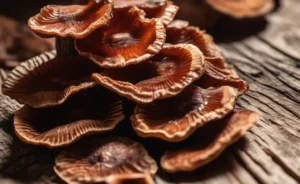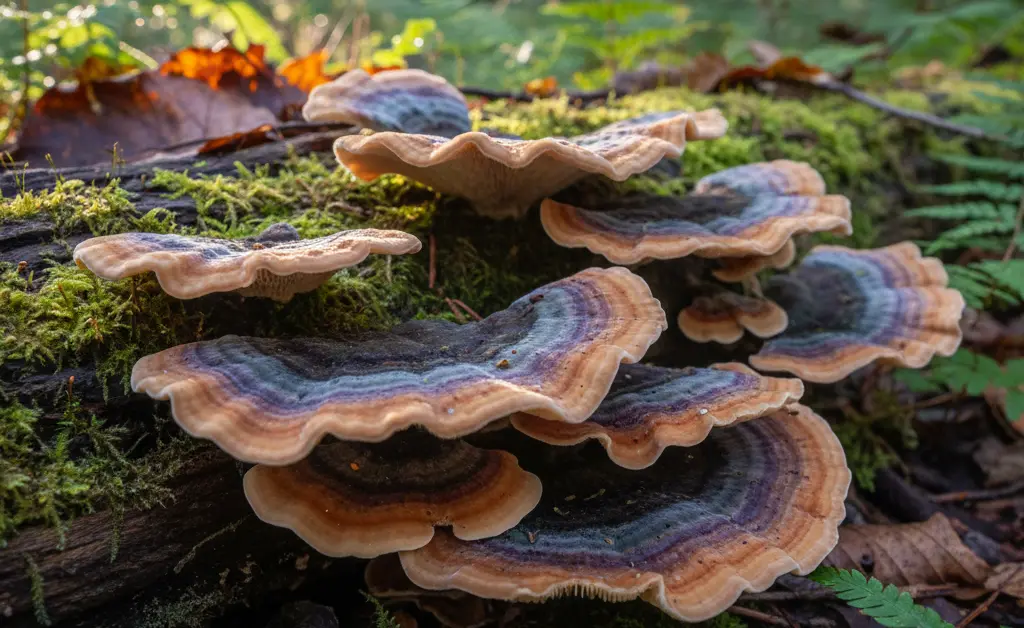
Turkey Tail mushrooms are a common sight in forests worldwide. Known for their distinctive fan-like shape and vibrant concentric rings, these fascinating fungi play a crucial role in ecosystems as decomposers. Understanding their specific environmental requirements is key to appreciating their prevalence and ecological function. This exploration delves into the diverse habitats and conditions that support the growth of Trametes versicolor, commonly known as Turkey Tail. We will examine the types of wood they prefer, the climatic zones they thrive in, and ultimately answer the question of where does turkey tail mushroom grow, providing a comprehensive overview of its global distribution and ecological niche.
Where Does Turkey Tail Mushroom Grow?
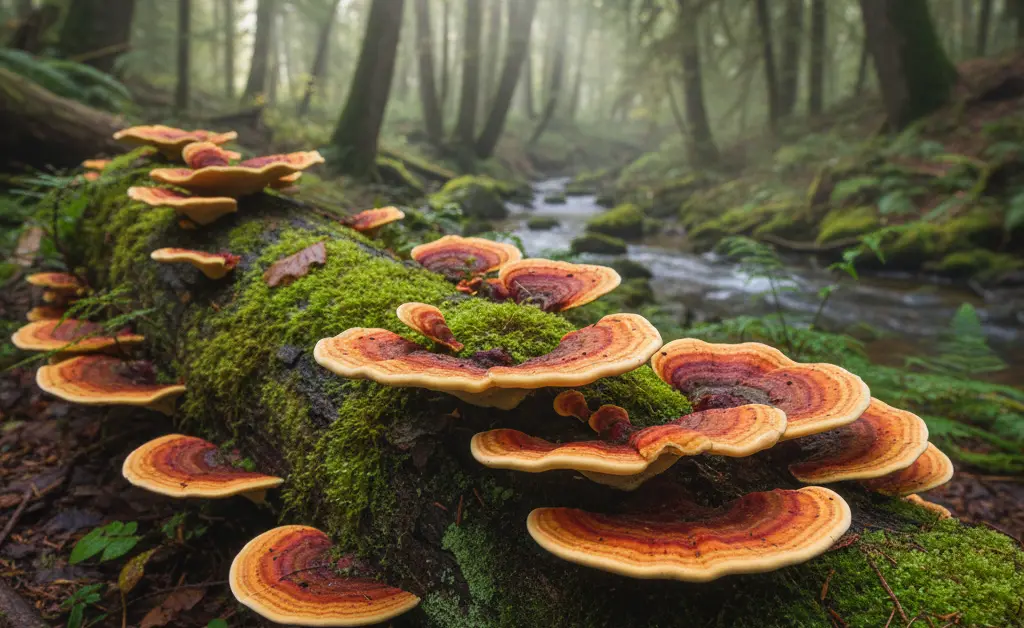
Understanding where does turkey tail mushroom grow reveals its adaptability across diverse environments. This versatile fungus, a type of polypore, is a vital decomposer in many ecosystems, helping to break down dead wood and return nutrients to the soil. Its presence is often a sign of a healthy and functioning forest environment.
Common Habitats and Environments
Turkey Tail mushrooms are most frequently found in woodlands and forests, particularly in areas rich with decaying logs, fallen trees, and stumps. They are often spotted on the forest floor, emerging from tree bark. These fungi thrive in environments where there is an abundance of dead or dying wood, which serves as their primary food source. Suburban parks and shaded garden areas with old trees can also host these mushrooms, demonstrating their capacity to adapt beyond pristine wilderness.
Global Presence Across Continents
The global presence of Turkey Tail mushrooms is remarkable. They are one of the most widely distributed fungi on Earth, found across virtually every continent except Antarctica. Their robust nature allows them to flourish in various climates, making them a truly cosmopolitan species. This widespread distribution underscores their ecological importance in many different forest types worldwide. Organizations like the WHO recognize the importance of biodiversity for ecosystem and planetary health.
Regional Occurrence and Common Areas
Turkey Tail is particularly abundant in temperate regions across North America, Europe, and Asia. In these areas, they are a common sight in deciduous and mixed forests. They prefer humid climates, which are essential for the development of their mycelial networks and fruiting bodies. From the dense forests of the Pacific Northwest to the ancient woodlands of Europe and the diverse forests of Asia, the Turkey Tail fungus consistently finds its niche wherever suitable host wood and moisture are present. Specifically, you might find turkey tail mushroom Michigan in its diverse woodlands.
Ideal Habitats and Host Trees for Turkey Tail
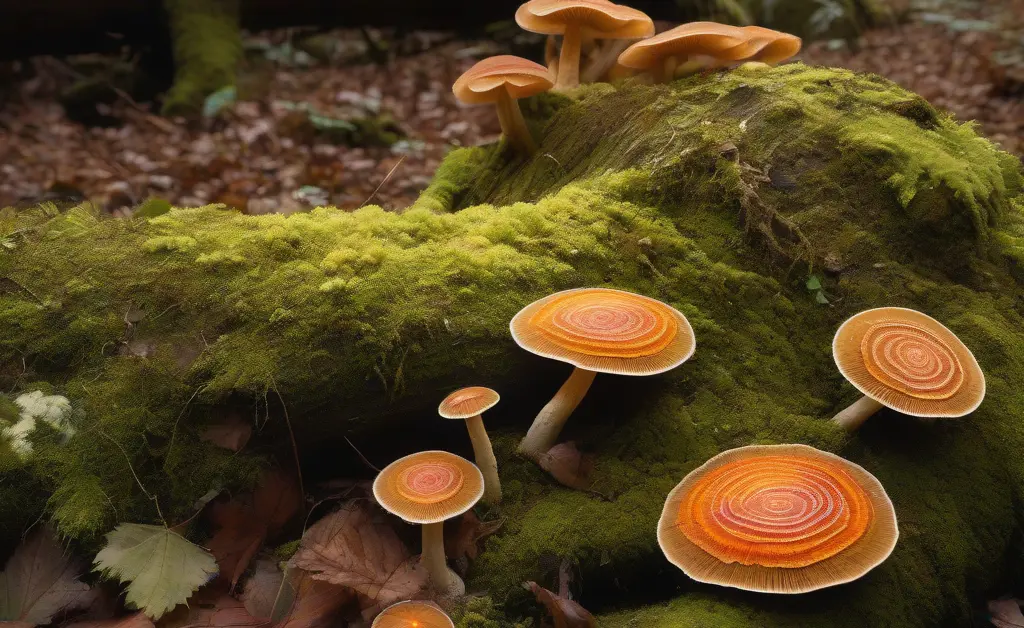
The specific conditions that define where does turkey tail mushroom grow are deeply tied to its host trees and environmental factors. As a saprophytic fungus, Turkey Tail relies on breaking down dead organic matter, primarily wood, to obtain its nutrients. This symbiotic relationship with decaying wood is central to its life cycle and distribution.
Deciduous vs. Coniferous Hosts
Turkey Tail mushrooms exhibit a strong preference for deciduous trees, also known as hardwoods. While they can occasionally be found on conifers, their growth is much more prolific and robust on hardwoods. This preference is likely due to the differing chemical compositions and densities of the wood types, with hardwoods providing a more suitable substrate for the fungus’s enzymes to break down. One might also look for turkey tail mushroom Kentucky on hardwoods in temperate regions.
Preferred Tree Species and Decaying Wood
A wide variety of hardwood species serve as preferred hosts for Turkey Tail. Common examples include oak, maple, beech, birch, and cherry. The key characteristic of these host trees is that they are dead or dying, providing the necessary decaying wood. Turkey Tail fungi are frequently observed on rotting wood, including logs, stumps, and fallen branches, as they play a crucial role as decomposers in the forest ecosystem.
Growing on Deadwood vs. Live Trees
While Turkey Tail mushrooms are occasionally seen on stressed or dying live trees, their primary habitat is deadwood. They are saprophytic organisms, meaning they derive nutrients from non-living organic matter. Dead trees, dead branches, and dead stumps provide the ideal conditions for their mycelial networks to spread and develop the distinctive fan-shaped fruiting body. This preference for deadwood helps to distinguish them from parasitic fungi that infect healthy, live trees. For example, in areas like turkey tail mushroom Ontario can be found on dead trees, dead branches, and dead stumps, which provide the ideal conditions for their mycelial networks to spread and develop the distinctive fan-shaped fruiting body.
Importance of Moisture and Humidity
Moisture and humidity are critical environmental factors for Turkey Tail mushroom growth. High humidity levels in the forest environment support the development of the fungus. The mycelial networks, which are the vegetative part of the fungus, thrive in damp conditions, and the fruiting bodies require consistent moisture to form and expand. Mossy areas within woodlands often provide the ideal microclimates for these fungi due to their retained moisture.
Temperature Preferences for Mycelial Development
Turkey Tail mushrooms generally prefer moderate, temperate temperatures for optimal mycelial development and fruiting. They are less common in extremely cold or hot climates. Their peak growing seasons typically coincide with periods of consistent moisture and mild temperatures, often from late spring through fall in many regions. However, in very mild, humid climates, signs of Turkey Tail presence can be observed year-round.
Light Exposure and Canopy Cover
While Turkey Tail mushrooms do not perform photosynthesis, light exposure still plays a role in their habitat. They are typically found in shaded or partially shaded areas beneath the forest canopy. Dense canopy cover helps maintain the high humidity and consistent temperatures they prefer, protecting the host wood from drying out too quickly. Direct, intense sunlight is not conducive to their growth, hence their prevalence deeper within the woodlands rather than in open, exposed areas.
In conclusion, the Turkey Tail mushroom is a resilient and globally distributed fungus, thriving predominantly in temperate, humid forests. Its preferred habitats include decaying hardwood logs, stumps, and fallen branches, where it acts as a crucial decomposer. Understanding its environmental needs and the types of trees it favors helps us appreciate the widespread answer to where does turkey tail mushroom grow and its vital role in maintaining forest health.
The content provided in this article is intended for informational learning, not clinical application. This information is not intended to diagnose, treat, cure, or prevent any disease. Always consult with a qualified healthcare professional before making any decisions related to your health or incorporating new supplements into your regimen. Individual responses to supplements may vary.
FAQ
— Where can you typically find turkey tail mushrooms in the wild?
You can typically find turkey tail mushrooms growing on dead or decaying hardwood logs and stumps in forests worldwide. This common decomposer thrives in temperate woodlands, playing a vital role in breaking down organic matter. So, if you’re wondering where does turkey tail mushroom grow, look no further than the shady, moist environments of natural forest floors.
— What types of trees do turkey tail mushrooms prefer to grow on?
Turkey tail mushrooms exhibit a strong preference for hardwood trees, particularly those that are already deceased or dying. They are often observed on oak, maple, birch, and beech logs, utilizing the abundant cellulose and lignin as their primary food source. This preference is linked to the specific chemical composition of hardwood, which provides the necessary nutrients for their distinctive growth.
— Are turkey tail mushrooms found globally?
Indeed, turkey tail mushrooms are remarkably widespread and can be found on nearly every continent except Antarctica. This global distribution highlights their adaptability to various temperate and subtropical forest ecosystems. Their ubiquity makes them one of the most common and easily recognizable polypore mushrooms across the world.
— What are the ideal conditions for turkey tail mushroom growth?
Ideal conditions for turkey tail mushroom growth include environments with high humidity and consistent moisture, typically found in temperate forests. They flourish in shaded areas where decaying hardwood is abundant, as this provides a stable substrate and a steady supply of nutrients. These factors combined allow the mycelial network to spread efficiently and produce the characteristic fan-shaped fruiting bodies.
— Can you find turkey tail mushrooms in suburban parks?
Yes, it is quite possible to find turkey tail mushrooms in suburban parks, especially those with mature trees and areas of natural decay. If there are fallen branches, stumps, or dead logs from hardwood trees, these mushrooms can readily establish themselves. Their ability to adapt to disturbed environments and utilize available organic matter makes them a common sight even outside pristine forests.
— Do turkey tail mushrooms grow on living trees or only dead ones?
Turkey tail mushrooms are primarily saprophytic, meaning they thrive on dead or decaying wood, where they break down cellulose and lignin. While they predominantly grow on fallen logs and stumps, they can occasionally be found on living trees that are already weakened or compromised by disease or injury. Their role is largely as a decomposer, helping to recycle nutrients back into the forest ecosystem.